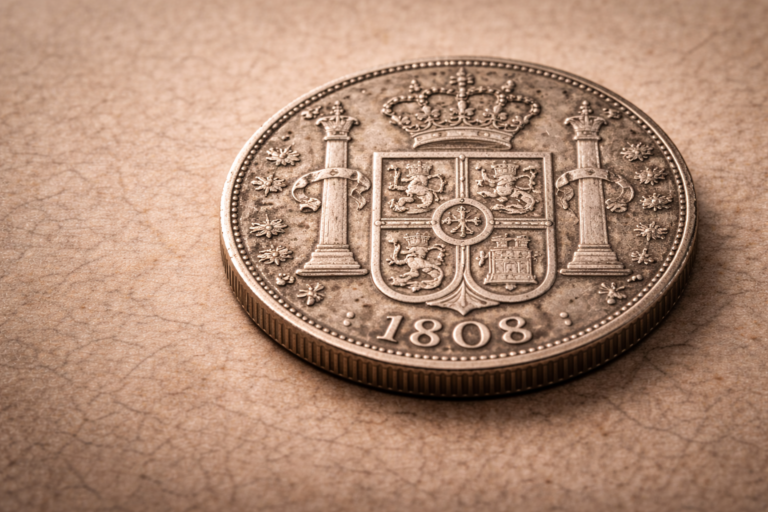
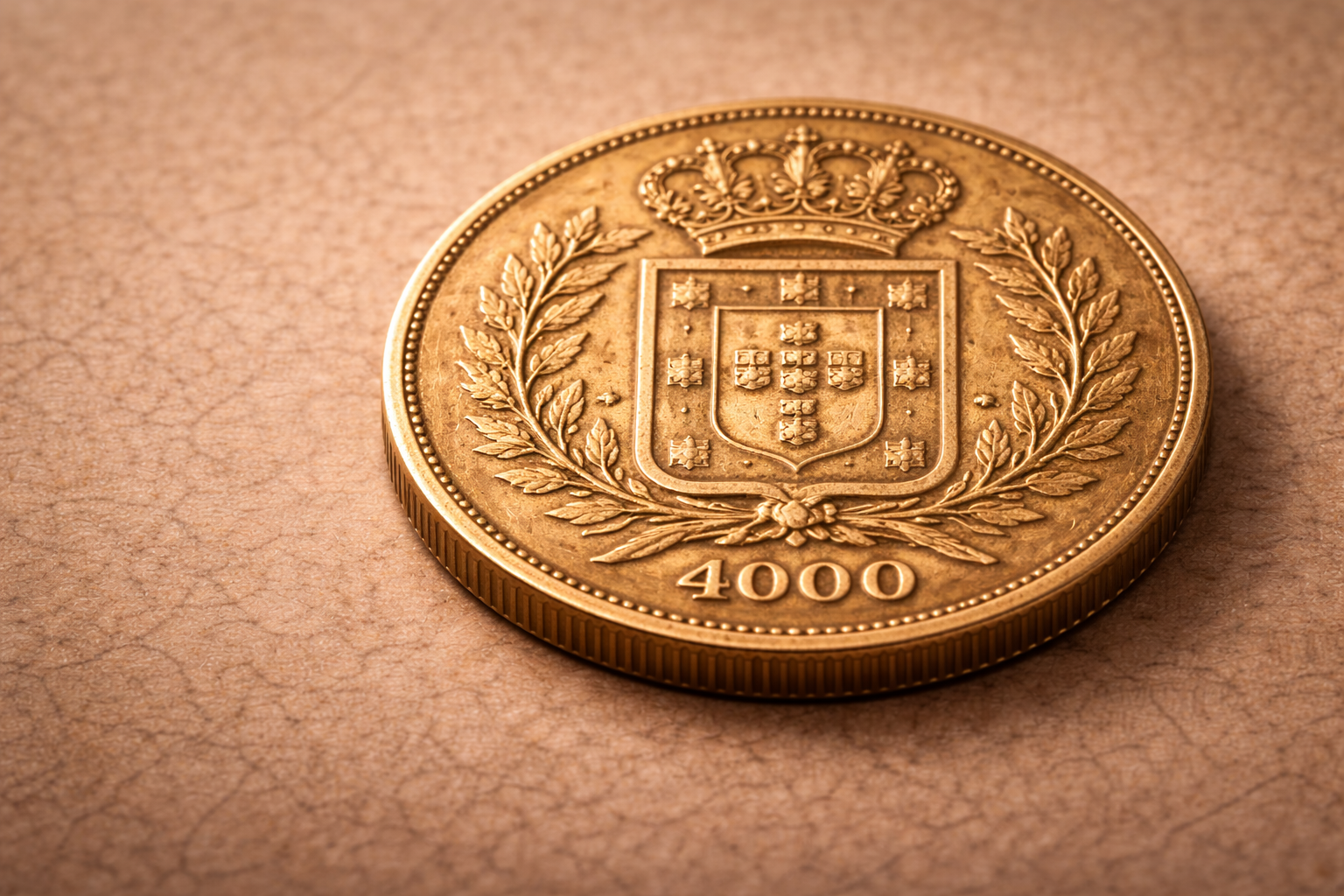
🇧🇷 1822 Brazil Gold 4000 Réis
Estimated reading time: 13 to 15 minutes.
👑 Some coins announce continuity. Others announce rupture. The 1822 Brazil Gold 4000 Réis announced the birth of something entirely new.
Struck at the moment Brazil declared independence, this gold coin did not simply circulate. It declared sovereignty. It marked the transformation of a colony into an empire.
📚 This article explores history, power, and national identity without discussing prices or modern market speculation.
🇧🇷 Brazil on the edge of transformation
In the early nineteenth century, Brazil stood at a crossroads. Unlike many colonies, it had hosted a European royal court on its soil. This unique situation reshaped its path to independence.
When political separation came, it did not arrive through sudden collapse. It arrived through redefinition. Brazil chose empire over fragmentation.
Coins struck in this moment needed to reflect authority instantly. Gold became the medium of choice.
👑 Why gold mattered at independence
Gold carries weight beyond metal. It signals permanence.
For a newly independent Brazil, issuing gold coinage was a statement to the world. It said that authority was not temporary. It said that the new empire expected recognition.
The 4000 réis denomination aligned Brazil with established monetary traditions while asserting its own legitimacy.
🪙 The symbolism behind the 4000 réis
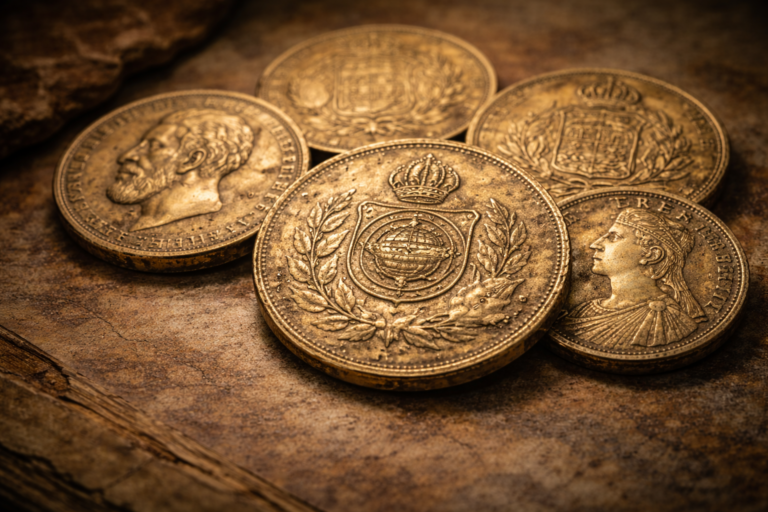
Every element of the coin was deliberate. Design was not decoration. It was communication.
The imagery emphasized continuity of order rather than revolutionary chaos. Brazil did not reject monarchy. It redefined it.
This visual message reassured merchants, governments, and institutions during uncertain times.
🏛️ A coin for an empire, not a market
The 1822 gold issue was not intended for daily exchange. Its purpose was symbolic and institutional.
Large gold coins often served ceremonial, governmental, and diplomatic roles. They reinforced trust among elites and trading partners.
In this way, the coin functioned as political architecture cast in metal.
🌍 Brazil’s position in the global order
Independence did not isolate Brazil. It repositioned it.
By issuing gold under imperial authority, Brazil signaled continuity within global trade networks. The empire sought participation, not withdrawal.
Coins like the 4000 réis traveled as proof of that intent.
🧠 Collector perspective without fixation
Collectors study the 1822 Brazil Gold 4000 Réis for its timing rather than survival.
- 👑 Birth of a new empire
- 📜 Political transition captured in metal
- 🌍 Global recognition through gold
- 🪙 Monetary symbolism over circulation
This perspective echoes interest in other coins shaped by contradiction and transition, such as the Rare 1974 Penny, where historical context defines significance.
🌊 Parallels across regions
Across the world, coins struck during independence moments often prioritize authority over accessibility. They speak to elites and institutions first.
Similar patterns appear in other regions documented in our Oceania coins collection, where distance and transition shaped monetary identity.
⚠️ Reality Check: The importance of the 1822 Brazil Gold 4000 Réis lies in symbolism and political timing, not in everyday circulation.
🏁 The 1822 Brazil Gold 4000 Réis marks the moment Brazil chose empire. It transformed gold into a declaration of sovereignty.
🌅 Closing reflection
Some coins record history. Others announce it.
The Birth Coin of a New Empire did both. In gold, Brazil introduced itself to the world not as a colony, but as a nation with imperial ambition.