🇨🇱 1834 Chile Peso — The Condor and the Rising Republic
Estimated reading time: 12 to 14 minutes.
🦅 When nations are young, they choose symbols carefully. For Chile, the condor became more than an animal. It became a declaration.
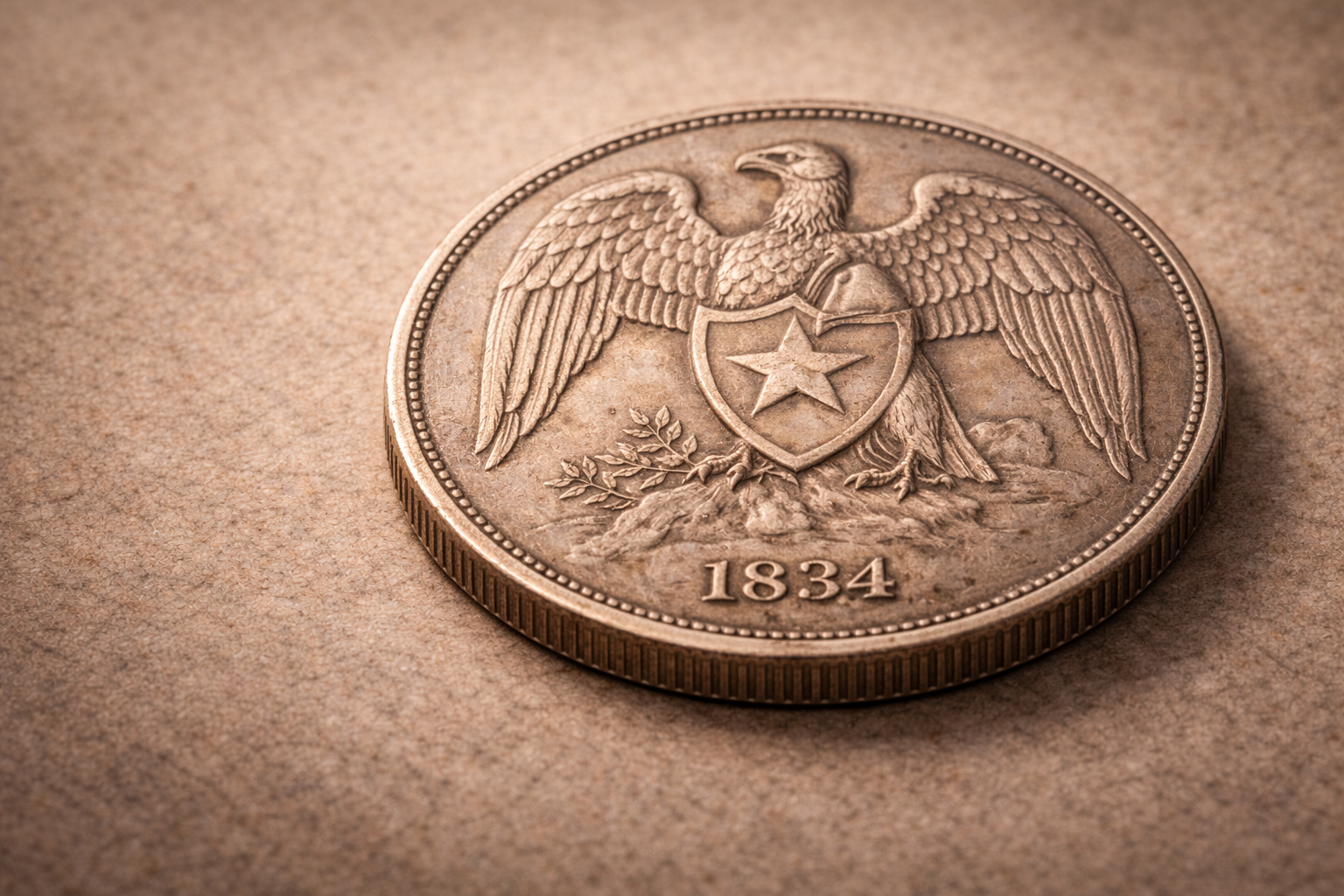
The 1834 Chile Peso reflects a republic learning how to speak in metal. Through imagery, weight, and intent, this coin helped shape how Chile presented itself to its people and to the world.
📚 This article focuses on historical meaning and national symbolism without discussing prices or modern market trends.
🇨🇱 Chile after independence
In the early eighteen thirties, Chile was still defining the structure of its republic. Independence had been achieved, but stability required more than victory. It required institutions, laws, and trust.
Coinage played a quiet but powerful role in this process. Every peso carried a message. Not just about value, but about authority.
🦅 The condor as a national voice
The condor was not chosen randomly. As one of the largest flying birds in the Andes, it symbolized strength, height, and vigilance.
By placing the condor on coinage, Chile aligned itself with the land. The mountains were not barriers. They were identity.
This symbol spoke to citizens who understood geography better than politics. It told them who they were.
🪙 Why the peso mattered
The peso represented order. It replaced fragmented systems inherited from colonial rule.
Uniform coinage allowed trade to stabilize. Markets could trust a shared unit. This trust was essential for a republic seeking legitimacy.
The eighteen thirty four issue helped reinforce that consistency.
🏛️ Design as authority
Design choices were intentional. Nothing was decorative without purpose.
The condor did not appear aggressive. It appeared watchful. This balance mattered. It suggested protection rather than dominance.
For a nation surrounded by regional uncertainty, this visual tone was strategic.
🌄 Geography pressed into metal
Coins travel farther than speeches. A peso could move across valleys, ports, and borders.
Wherever it went, it carried the Andes with it. This made geography portable.
The condor served as a reminder that Chile’s strength came from its land and resilience.
🧠 Collector perspective without obsession
Collectors drawn to the 1834 peso often study it as a political artifact.
- 🦅 National symbolism
- 📜 Early republican identity
- 🏛️ Institutional confidence
- 🌍 Regional independence narratives
This approach mirrors interest in other symbolic coins such as the Rare 1974 Penny, where meaning outweighs circulation.
🌊 Connecting regional stories
Across the southern hemisphere, coins often carried identity before they carried trust.
You can explore similar narratives inside our Oceania coins collection, where symbols and geography shape monetary history.
⚠️ Reality Check: The importance of the 1834 Chile Peso lies in symbolism and timing, not in quantity or circulation speed.
🏁 The 1834 Chile Peso stands as a voice of a rising republic. Through the condor, Chile spoke in metal long before it spoke in global power.
🌅 Closing reflection
The condor does not shout. It observes from above.
That quiet strength defines the 1834 peso. A coin that helped a young republic see itself clearly and present that image to the world.