1977 Penny Facts – Why Millions Still Keep This Coin
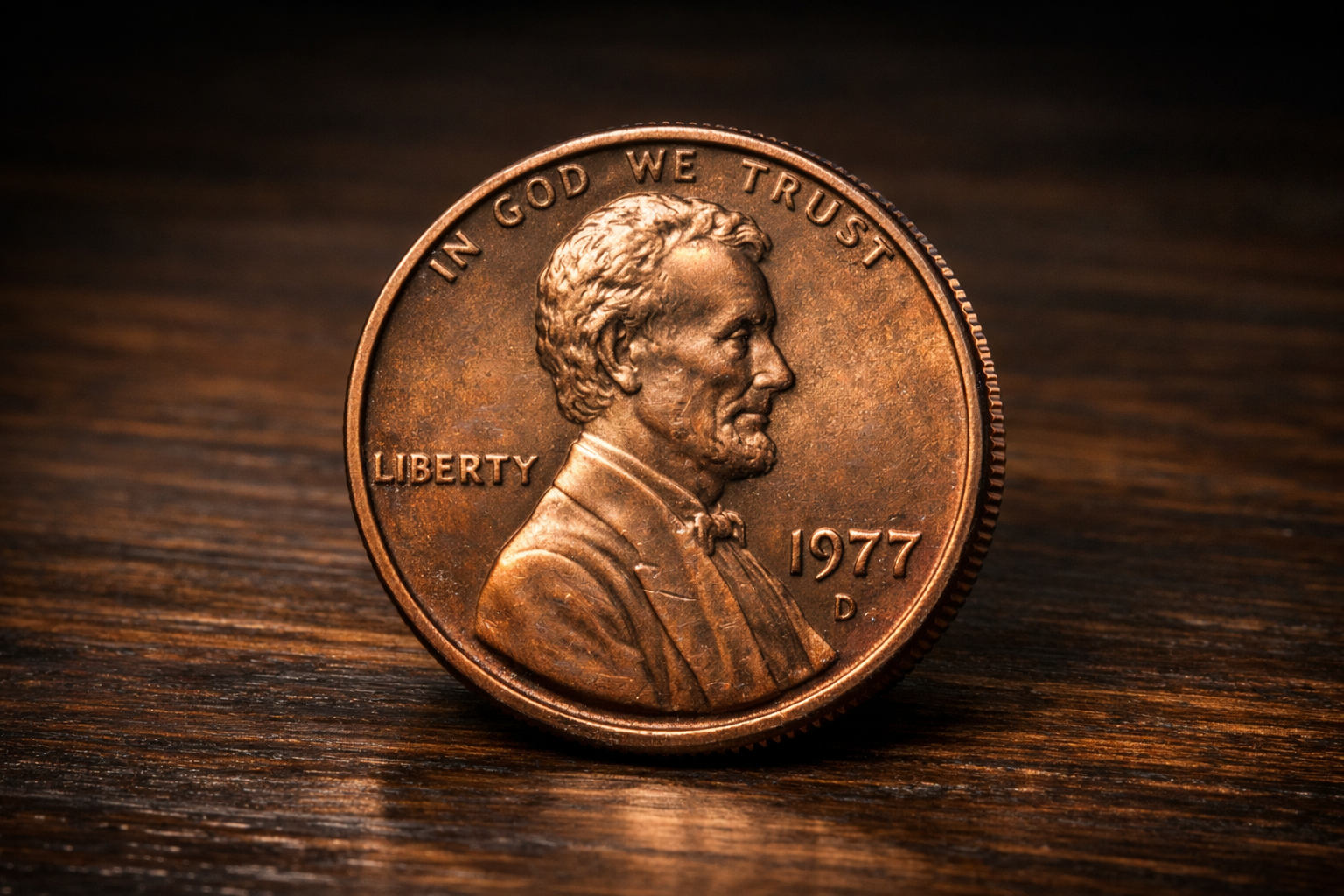
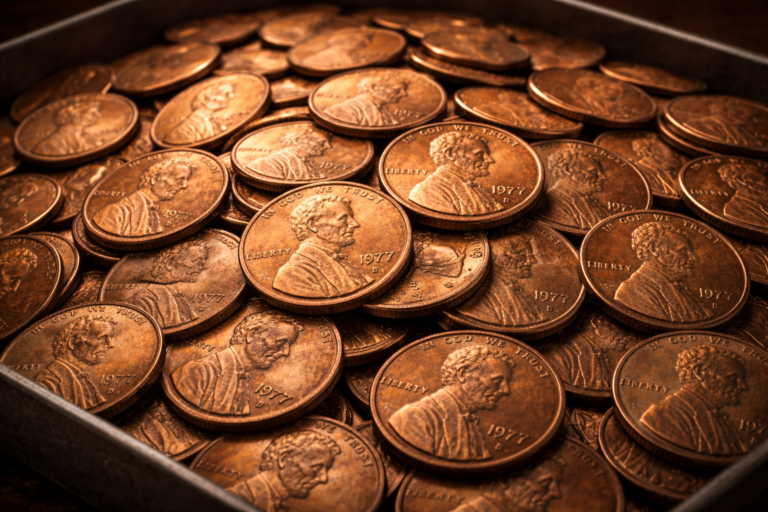
The 1977 penny is one of those coins that feels almost too ordinary to matter. It shows up in old jars, desk drawers, and childhood piggy banks across the United States. And that is exactly why people keep it. Not because it is rare in the dramatic sense, but because it is a small, familiar witness to everyday American life.
This article shares the most useful 1977 penny facts in a clear way. You will learn what the coin is, what you should notice on the design, why it became so common, and what details collectors look for when they take a second look. It is a simple coin with a surprisingly long story.
Table of contents.
- What the 1977 penny is.
- The era behind the coin.
- Design facts. Obverse and reverse.
- Mintmarks and what they mean.
- Why millions still keep this coin.
- Collector angles that make a common coin interesting.
- Mid-article table. Quick facts at a glance.
- Handling and storage tips.
- Related HistoraCoin stories.
- FAQ.
What the 1977 penny is.
A 1977 penny is a Lincoln cent from the period when the reverse still featured the Lincoln Memorial. By nineteen seventy-seven, the Lincoln cent had already become a national routine. It was the coin people received in change without thinking, the coin kids collected without planning, and the coin that quietly circulated everywhere.
It is also a coin that sits at a turning point in the long Lincoln cent timeline. It comes after the dramatic wartime composition changes of the nineteen forties, and before later modern shifts that changed how pennies feel and behave in circulation. In other words, it represents the “classic” modern penny era.
The era behind the coin.
Coins always reflect the world that produced them. In the late nineteen seventies, Americans were moving through a decade shaped by cultural change, energy concerns, and shifting daily habits. The penny did not carry headlines. It carried routine. It was used in vending machines, transit fare boxes, corner stores, and daily cash transactions.
That everyday role is why the 1977 penny feels so personal to many people. If you grew up in the United States, you probably held one without noticing. If you inherited a jar of coins, you almost certainly saw several. Familiarity is part of this coin’s story.
Design facts. Obverse and reverse.
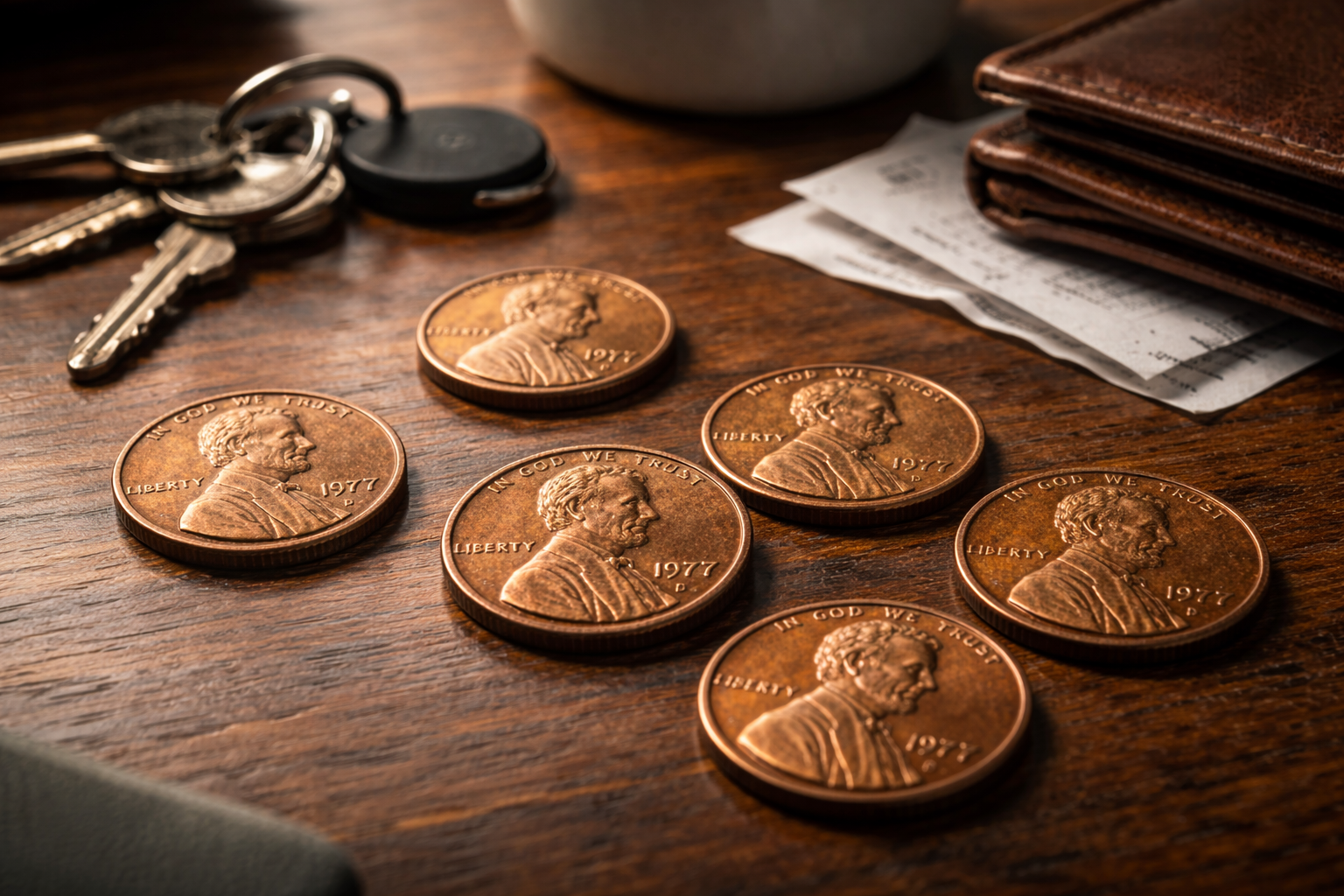
The front of the coin features Abraham Lincoln, a design that has defined the American cent for more than a century. On most 1977 pennies, you will see the word LIBERTY, the date, and the phrase IN GOD WE TRUST. These elements are familiar, but collectors still pay attention to their sharpness and spacing because the smallest differences can reveal how a coin was struck.
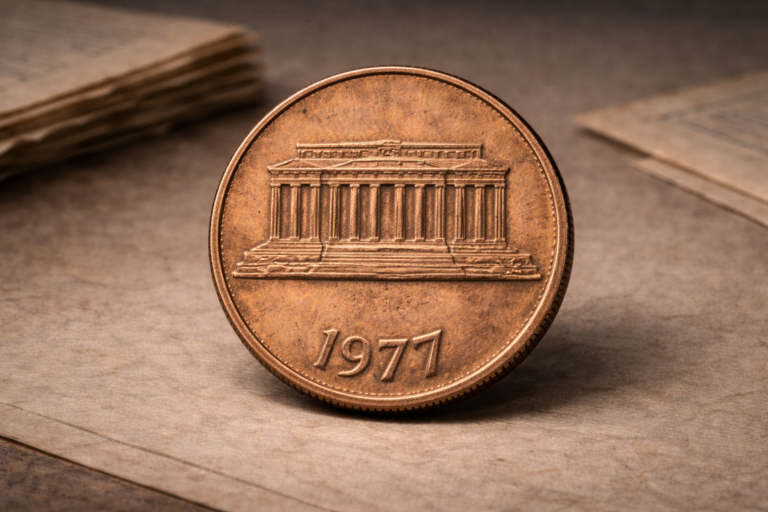
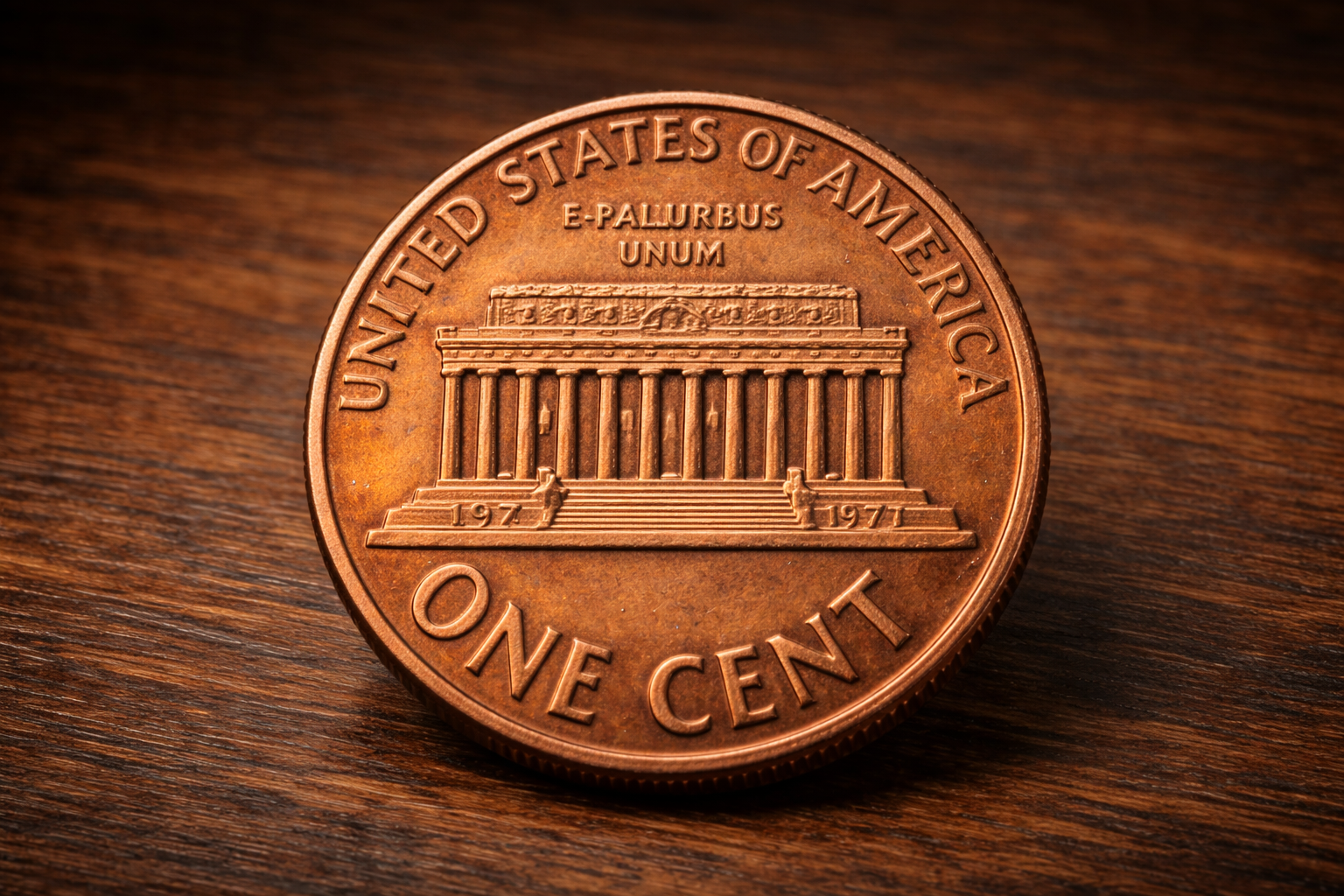
The reverse shows the Lincoln Memorial, a design introduced in the late nineteen fifties and used for decades. If you look closely, the memorial design is packed with fine detail, from the steps to the columns. Many collectors also enjoy the fact that Lincoln appears on both sides, with a tiny Lincoln statue visible inside the memorial on strong strikes.
Mintmarks and what they mean.
The 1977 penny was produced at multiple mints. If a 1977 cent has no mintmark, it is generally associated with Philadelphia production. A D mintmark indicates Denver. These letters are small, but they matter for organizing collections and understanding production patterns.
Mintmarks do not automatically make a coin rare, but they help collectors build structured sets. Many people keep one of each as a memory piece, especially if the coin came from a family collection or a childhood jar.
Why millions still keep this coin.
The simplest answer is that the 1977 penny is easy to find and easy to recognize. People keep what they can touch. A rare coin most people never see feels like a story. A common coin you can hold feels like history you own.
There is also a habit factor. Many families saved pennies for years in jars, thinking they might matter someday. Others kept them as part of childhood coin folders, where the goal was to fill every date and mintmark slot. In that context, the 1977 penny is a “set builder.” It helps complete a timeline.
Collector angles that make a common coin interesting.
Even common coins become interesting when you change the question. Instead of asking “is it rare,” collectors ask “is it sharp,” “is it clean,” “is it well struck,” and “does it show unusual characteristics.” A penny that circulated for years will look different from one that spent decades in a jar. Condition is a story of where the coin has been.
Collectors also watch for unusual strike characteristics, such as doubled details, weak areas, off-center strikes, or planchet issues. Most coins will not show these. But the search itself is part of the hobby. That is why people keep 1977 pennies. They are common enough to explore, yet detailed enough to reward a careful eye.
Mid-article table. Quick facts at a glance.
| Topic. | What to know. | Why it matters. |
|---|---|---|
| Type. | Lincoln cent with Lincoln Memorial reverse. | Places the coin in the long-running modern cent era. |
| Mintmarks. | No mintmark and D are commonly seen. | Helps organize collections and sets. |
| Commonness. | Produced in large numbers for daily circulation. | Explains why so many people still find them. |
| What collectors look for. | Strike quality, surfaces, and unusual characteristics. | Turns a common coin into a learning tool. |
| Best habit. | Do not clean. Store safely if you keep it. | Preserves surfaces and avoids unnecessary damage. |
Mobile note. This table scrolls horizontally on phones to keep the layout readable.
Handling and storage tips.
If you keep a 1977 penny for sentimental or collecting reasons, treat it gently. Hold it by the edges when possible. Avoid rubbing the surfaces. Store it in a simple coin flip or a protective sleeve to reduce scratches and moisture exposure.
The goal is not perfection. The goal is preservation. Many of the most interesting coins are not pristine. They are meaningful because they show real life. A penny that traveled through decades of pockets and drawers is a tiny historical artifact.
A simple conclusion.
The 1977 penny is common, but its story is wide. It is a coin millions touched, saved, and forgot, yet it still connects people to the everyday reality of late twentieth-century America.
Related HistoraCoin stories.
Continue exploring American coins.
If you enjoy modern US coin history, another famous American coin from wartime history is the 1943 copper penny. Read the full story here .
FAQ.
Is the 1977 penny rare.
Most 1977 pennies are common because they were produced in large numbers. Interest usually comes from condition and unusual strike characteristics rather than rarity.
What is on the back of a 1977 penny.
The reverse shows the Lincoln Memorial, a design used for decades on US cents.
Where is the mintmark on a 1977 penny.
The mintmark, when present, appears on the obverse near the date. A D indicates Denver. Many coins show no mintmark.
Should I clean a 1977 penny I want to keep.
It is best not to clean it. Cleaning can change the surface and reduce its appeal for later evaluation.
Is this article safe for AdSense.
Yes. It is educational and historical, with no selling, pricing, or financial advice.