🇨🇰 2009 Cook Islands Titanium Coin — The Ocean’s Modern Miracle
Estimated reading time: 9 minutes.
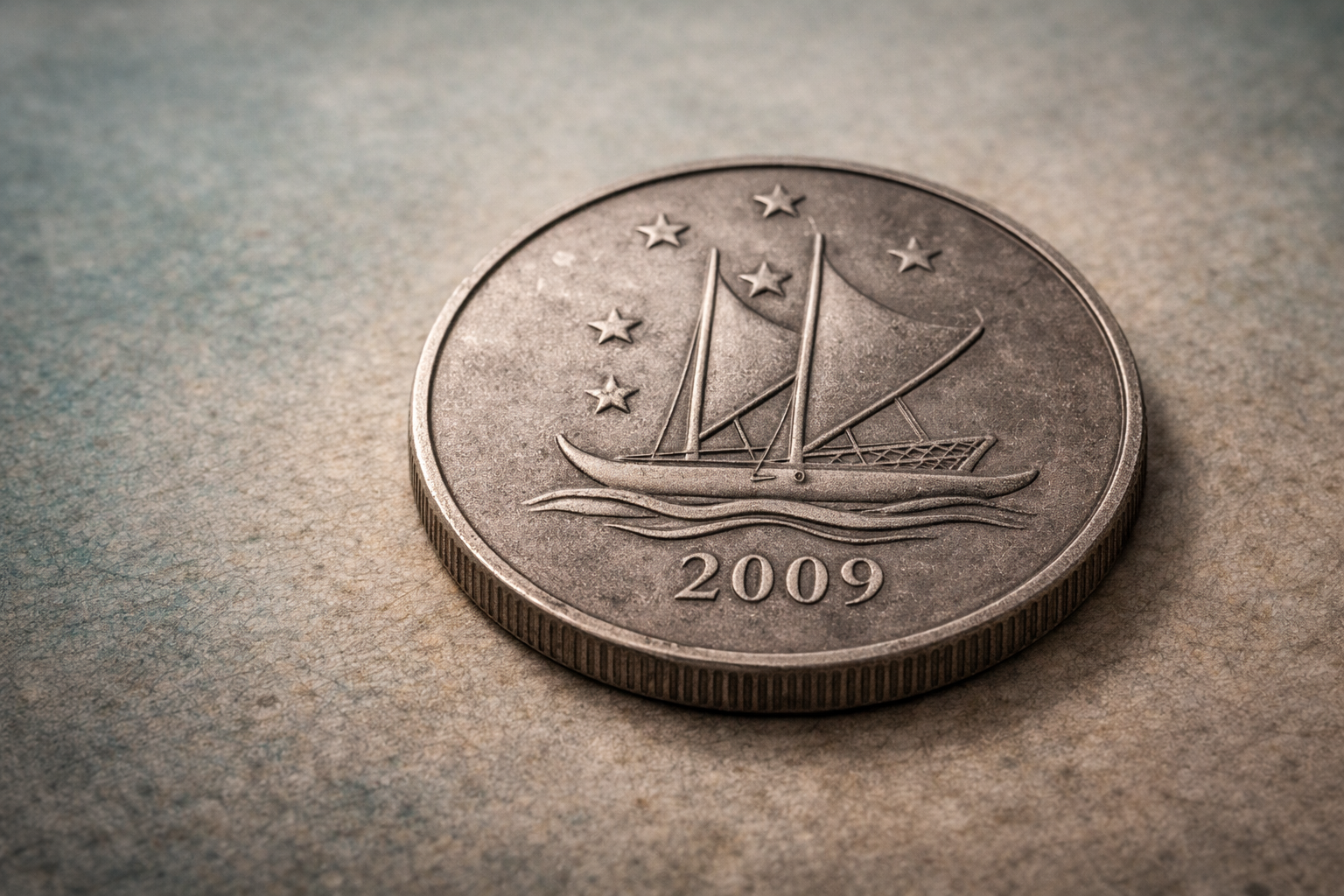
🌊 Coins usually earn importance through age, wear, and survival. But every so often, a coin becomes important for a different reason. The 2009 Cook Islands titanium coin earned its place in modern numismatic history not because it circulated through generations, but because it challenged expectations at a time when physical money itself was being questioned.
📌 Table of Contents
✨ Why This Coin Feels Different
Most modern coins still follow familiar rules. They rely on known metals, predictable finishes, and traditional expectations. The 2009 Cook Islands titanium coin breaks that pattern immediately.
The moment collectors encounter it, the coin feels unusual. Not loud or exaggerated, but quietly unfamiliar. Its surface behaves differently under light. Its tone resists simple categorization. It feels closer to a design object than a circulating coin.
This reaction is intentional. At a time when coins were losing everyday relevance, this issue asked a deeper question. If coins are no longer used daily, what should they become. The answer here was experimentation.
🏝️ Cook Islands as a Modern Minting Laboratory
Small nations often approach coinage differently from major economies. Without the pressure of mass circulation, they have freedom to experiment. The Cook Islands embraced this freedom early.
Rather than copying established templates, the minting program leaned into creativity and technical curiosity. Coins became statements rather than utilities. Each issue carried a question rather than an instruction.
Titanium fits perfectly within this philosophy. It represents risk. It represents modernity. And it represents a willingness to let collectors learn something new.
🧪 Titanium and the Challenge of Coinage
Titanium is admired in engineering, not in traditional coinage. Its strength and corrosion resistance make it valuable in industry, but difficult in minting.
Unlike familiar coin metals, titanium reacts strongly to surface treatment. Small changes in finishing can dramatically alter appearance. For a mint, this means greater complexity and tighter control.
Choosing titanium was not about novelty alone. It was about proving that sovereign coinage could move beyond historical limitations and still remain legitimate.
🌊 The Ocean-Blue Effect Explained
One of the coin’s defining traits is its shifting blue-gray tone. This effect is not paint. It is not a coating.
The color emerges from how titanium interacts with light after specific surface processes. Depending on angle and illumination, the coin can appear calm, deep, or softly reflective.
Collectors often describe the effect as fluid. The coin does not shine aggressively. Instead, it responds quietly, much like the ocean itself.
🎨 Modern Design Language
Material alone cannot carry a concept. Design must support it.
This issue succeeds because its design does not fight the metal. It avoids excessive ornamentation and allows the surface to speak.
The result is coherence. A coin that feels intentional rather than experimental for its own sake.
🧠 How Collectors View This Coin
Serious collectors rarely begin with monetary questions. They begin with meaning.
- Historical role within modern minting.
- Material innovation.
- Surface behavior and originality.
- Documentation and authenticity.
- Narrative strength.
This coin is often kept not because it promises returns, but because it represents a turning point.
💀 Reality Check
Titanium coins attract imitation. Authentic examples typically show subtle variation and refined finishing.
Overly uniform color or exaggerated brightness may indicate alteration or misrepresentation. Original packaging and certification help reduce uncertainty.
🏁 Final Verdict
The 2009 Cook Islands titanium coin stands as proof that modern coins can still shape history. It is remembered not for circulation or age, but for courage.
It reminds collectors that the future also leaves artifacts worth preserving.
❓ FAQ
Why is titanium unusual in coinage
Because it behaves differently from traditional metals and requires more complex finishing control.
Is the blue color artificial
No. It results from how titanium interacts with light after surface treatment.
Why do modern coins matter historically
They mark shifts in technology, design philosophy, and national expression.