Why Governments Always Put Power Symbols on Money
Estimated reading time: 15–17 minutes
Coins have long been more than simple money. For most of history, they were one of the few official tools governments had to communicate power, identity, and legitimacy to the broadest possible audience. Before social media, newspapers, or even widespread literacy, coins carried symbols that said one thing very clearly: “This is who’s in charge here.”
Governments used money not just to facilitate trade but to broadcast authority. A symbol on a piece of metal could travel farther and reach more people than any spoken proclamation ever could. It didn’t matter where you lived—if you used the money, you saw the message.
Quick Takeaways
- Symbols on money signal power and legitimacy
- Coin imagery communicated authority before mass media
- Design choices reflected identity and political messages
- People learned who ruled by looking at coins
- Symbolic language on currency was a universal message tool
Table of Contents
- Why Governments Use Power Symbols on Money
- Fact Card | Symbols as Messages
- What Symbols Meant to People
- Daily Visibility and Reinforcement
- Comparison Card | Symbols vs Everyday Objects
- Global Examples of Symbol Use
- Timeline Insight | From Early Kings to Modern States
- Quote Highlight
- Sources and Methodology
- Final Reflection
Why Governments Use Power Symbols on Money
Symbols are shorthand. They communicate complex ideas through images, patterns, and familiar shapes. On a coin, a symbol could tell you who ruled, what values were important, or what legitimacy that ruler claimed. Governments didn’t use symbols on a whim. Every design choice was deliberate—a way to reach everyone who used that money.
Coins didn’t need literacy to communicate. If a ruler wanted to remind everyone of their power, they didn’t issue a decree. They put their face or emblem on the money. People saw it every day, in every market, every village, every border town.
Fact Card | Symbols as Messages
Power symbols on money served two main purposes: to communicate who held authority and to reinforce that authority through repeated daily use. This worked everywhere coins circulated.
What Symbols Meant to People
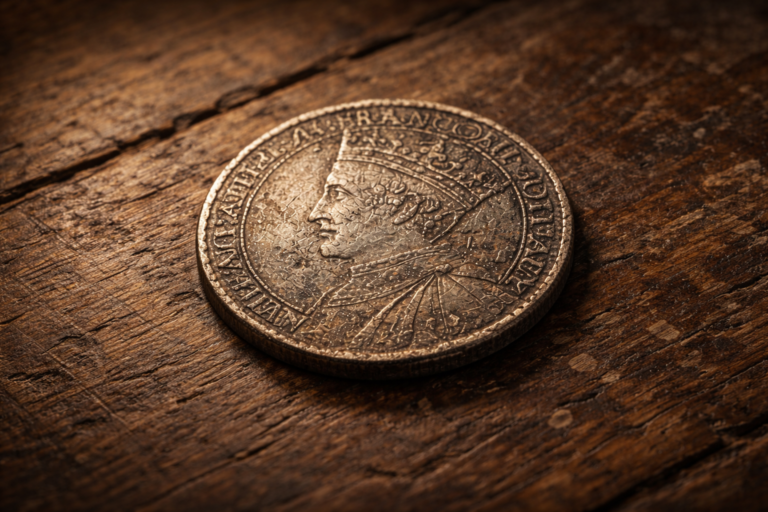
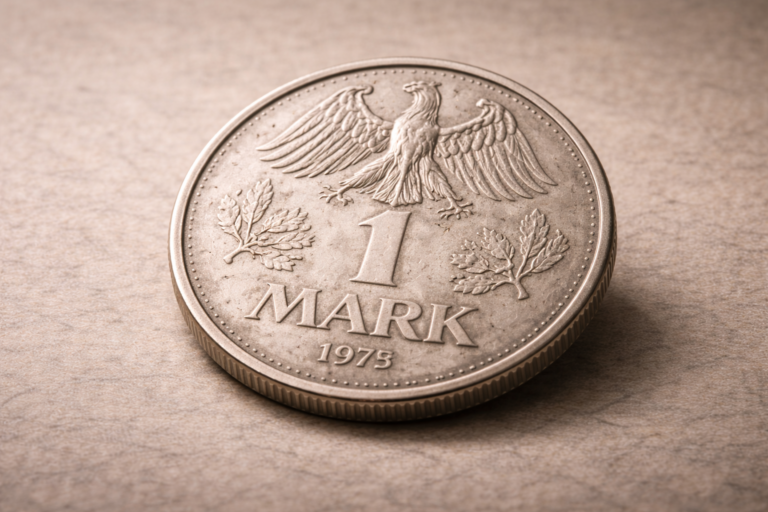
Symbols weren’t random. They were chosen carefully. A crown could signal monarchy. An eagle could signal strength or empire. A religious mark could signal divine authority. People didn’t need words to interpret these signals. They learned through repetition and cultural context.
For communities that used the same currency every day, these designs became part of their visual world. Seeing the same symbol every morning at the market, or every time a wage was paid, slowly built a sense of acceptance. Over time, the symbol became normal, and normal became authority.
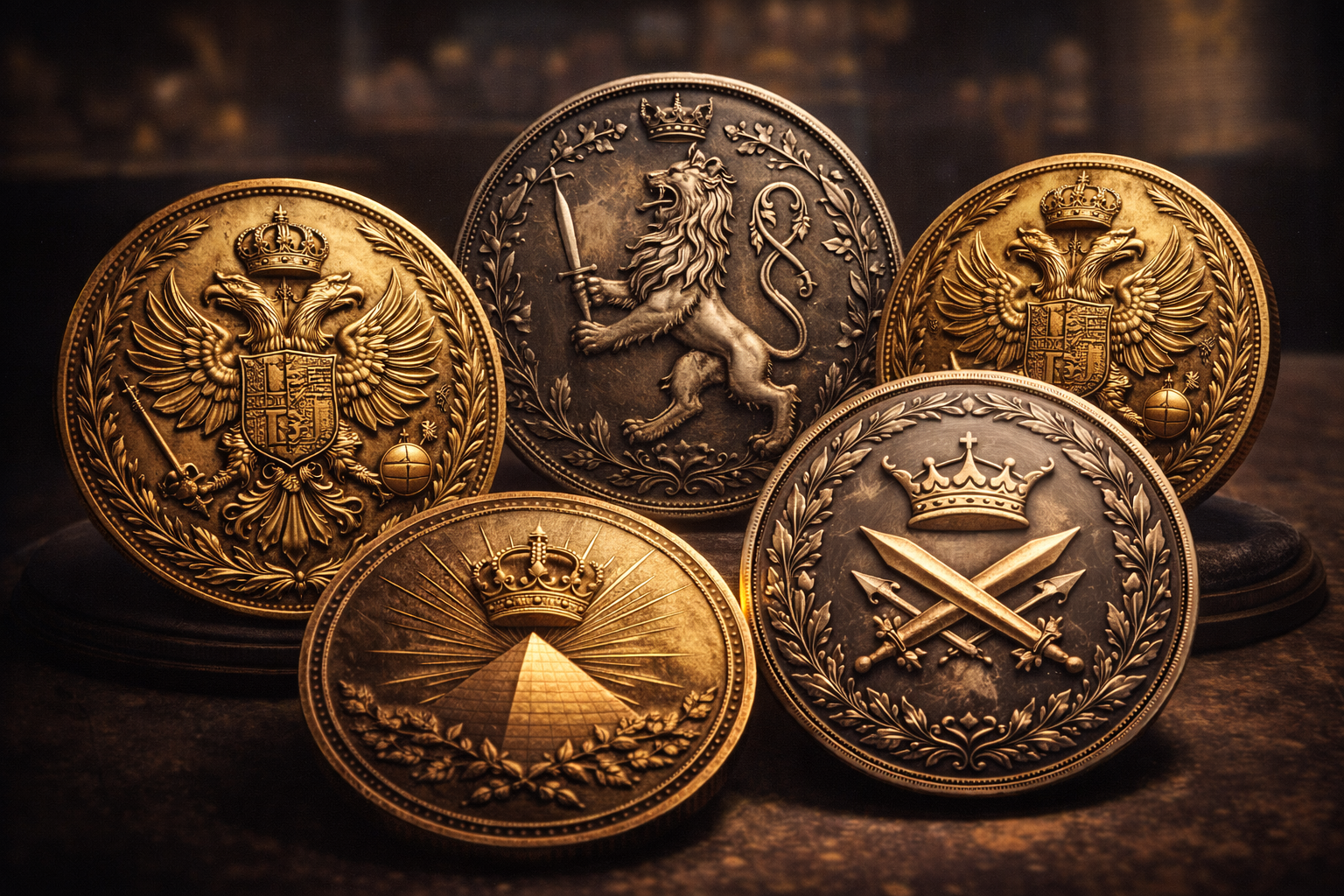
Caption: Power symbols on money reinforce authority through everyday use.
Image credit: HistoraCoin
Daily Visibility and Reinforcement
One of the smartest things governments ever did was use everyday objects as messaging tools. Coins were carried in pockets, purses, and pouches. They changed hands constantly. Every time someone used a coin, they saw the symbol of authority. In this way, coin imagery was one of history’s earliest forms of repeat advertising—except it advertised power, not products.
This visibility mattered because it made authority feel present. Even if people never met their ruler, they saw the ruler’s symbol every day. That familiarity helped build trust and acceptance, even in distant parts of an empire or kingdom.
Comparison Card | Symbols vs Everyday Objects
Symbols on Money
- Seen daily in circulation
- Reach wide populations
- Communicate authority instantly
- Become familiar over time
Symbols on Rare Objects
- Seen by limited groups
- Require special access
- Less effective for broad communication
- Not part of daily life
Global Examples of Symbol Use
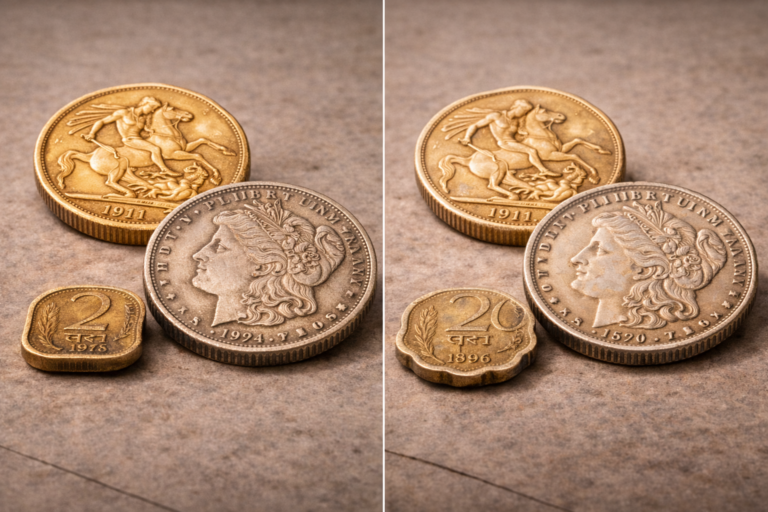
Symbols on money weren’t a local trick. They were global. In Europe, monarchs put their portraits and heraldic devices on coins. In Asia, emperors stamped symbols reflecting longevity and authority. In the Middle East, inscriptions and calligraphic marks emphasized legitimacy. In Africa, designs often reflected regional power structures and trade identities. Each culture used coin symbols to tell a story about who ruled and what mattered.
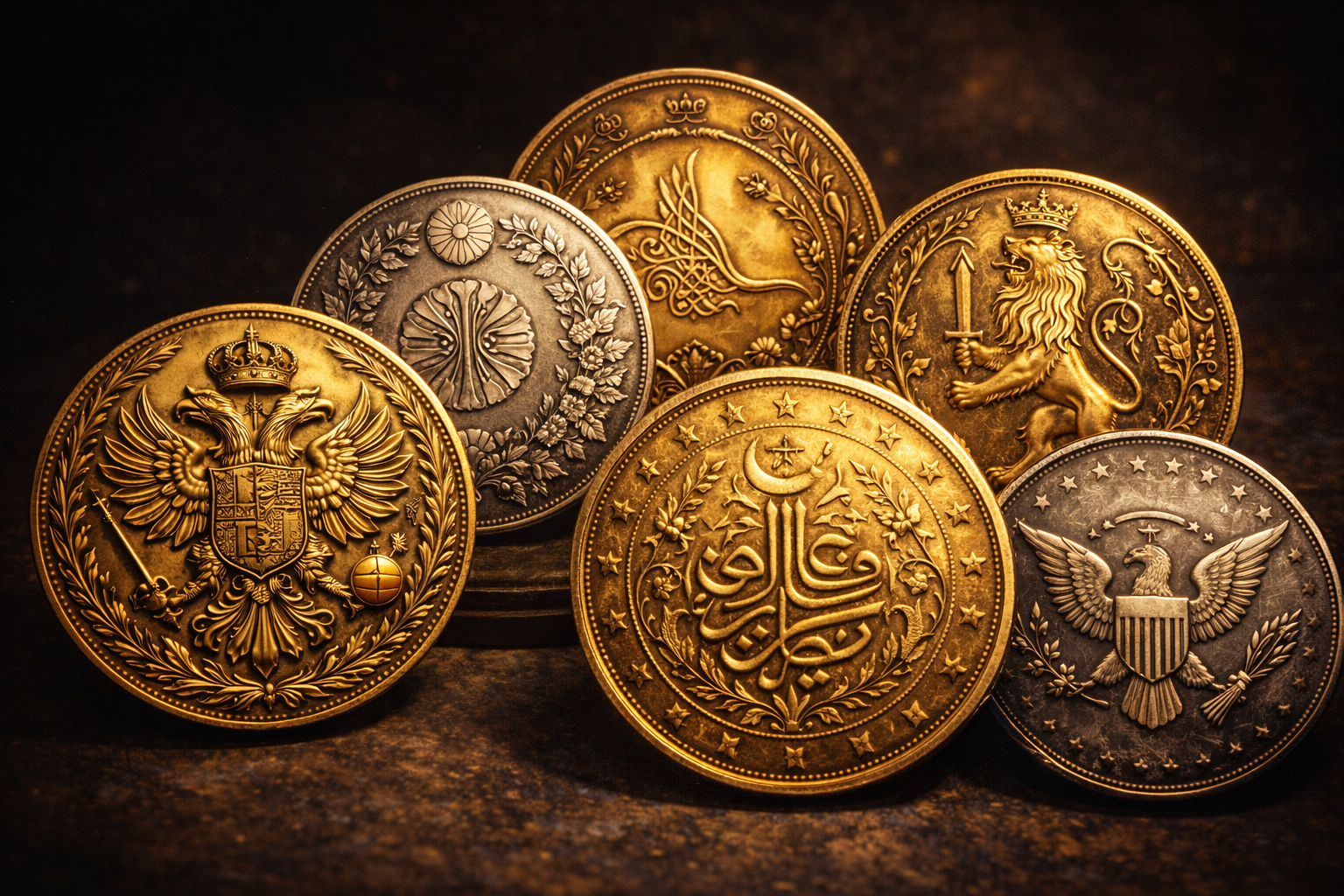
Caption: Across regions, money carried symbols that communicated authority and identity.
Image credit: HistoraCoin
Timeline Insight | From Early Kings to Modern States
- Early eras: Symbols tied to rulers and tribes
- Classical age: Portraits and emblems spread widely
- Medieval period: Heraldry and regional symbols dominate
- Modern states: National icons reinforce identity
Coin symbols evolved with political structures, but their role as authority markers stayed constant.
Quote Highlight
Governments put power symbols on money because coins were one of the most effective ways to reach every person in society with a single visual message.
Sources and Methodology
This article is based on historical founding records, museum archival material, numismatic literature, and comparative study of coin design traditions across multiple cultural regions.
Final Reflection
Symbols on money weren’t decoration. They were communication tools. In societies long before mass media, coins were among the most widely circulated objects people touched. Because of that reach, symbols on coins became one of the earliest ways governments explained who had power and what that power meant.
Next time you hold an old coin, remember: you’re holding more than currency. You’re holding a message—one that was meant to be seen, understood, and remembered by everyone who used it.
Explore more historical coin stories
HistoraCoin explores how coins shaped identity, authority, and everyday life through history.

HistoraCoin Team
HistoraCoin publishes educational, AdSense-safe content exploring coins as historical documents rather than objects of hype.