Roman Coins as Political Tools

Estimated reading time: 17–19 minutes
Roman coins did more than facilitate trade or record economic transactions. They were powerful political tools—objects that spoke to people long before newspapers, pamphlets, or televised speeches. In an empire where literacy was limited and distances vast, coins carried symbols and messages of authority that everyone touched, saw, and used on a daily basis.
Exploring how Roman coins served political purposes reveals how leaders shaped public perception, reinforced loyalty, and communicated power throughout the empire. These small objects played an outsized role in shaping political identity long before modern mass communication existed.
Quick Takeaways
- Roman coins communicated political messages daily
- Symbols represented authority, legitimacy, and unity
- Coins reached every layer of society
- Leaders used coins to reinforce loyalty and influence
- Currency functioned as visual political propaganda
Table of Contents
- Why Coins Were Ideal Political Tools
- Fact Card | Coins and Political Messaging
- Symbols, Portraits, and Authority
- Coins and Loyalty
- Comparison Card | Coins vs Other Political Media
- How Coins Spread Political Influence
- Timeline Insight | Political Messaging Over Time
- Quote Highlight
- People Also Ask
- Final Reflection
Why Coins Were Ideal Political Tools
Coins functioned as a unique form of communication in the Roman Empire because they combined everyday use with a visual language that was broadly understood. Unlike decrees or inscriptions that required reading, coins carried symbols that conveyed information at a glance. The result was political messaging embedded in objects people handled countless times.
Whether someone was buying bread or paying a craftsman, they experienced the same symbols and images that reflected Rome’s leadership and values. This created a type of continuous reinforcement that was unmatched by any other form of communication at the time.
Fact Card | Coins and Political Messaging
Fact Card | Coins and Political Messaging
Roman coins carried political messages through symbols, portraits, and inscriptions that communicated authority, legitimacy, and unity across the empire.
Symbols, Portraits, and Authority
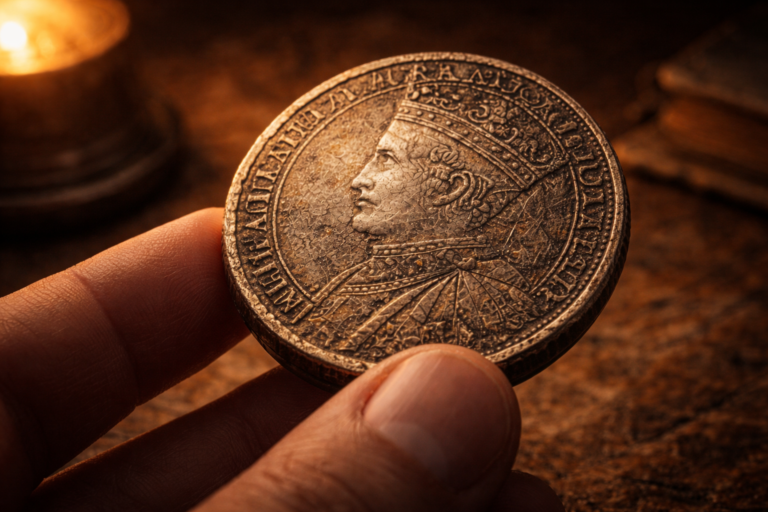
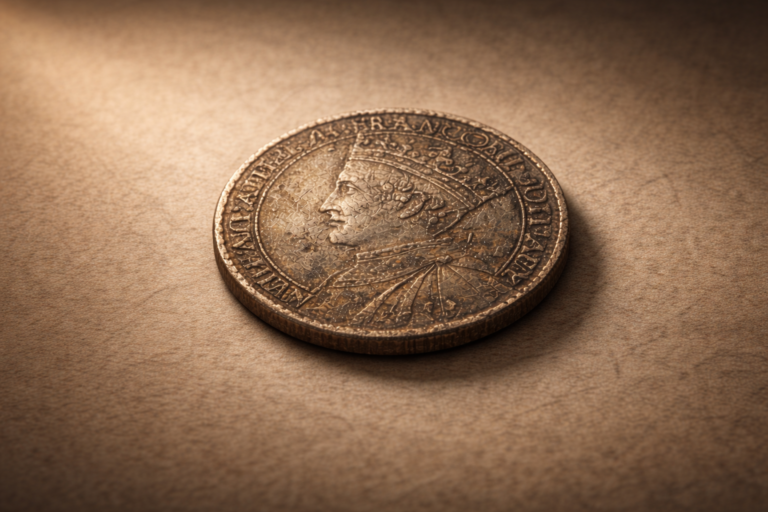
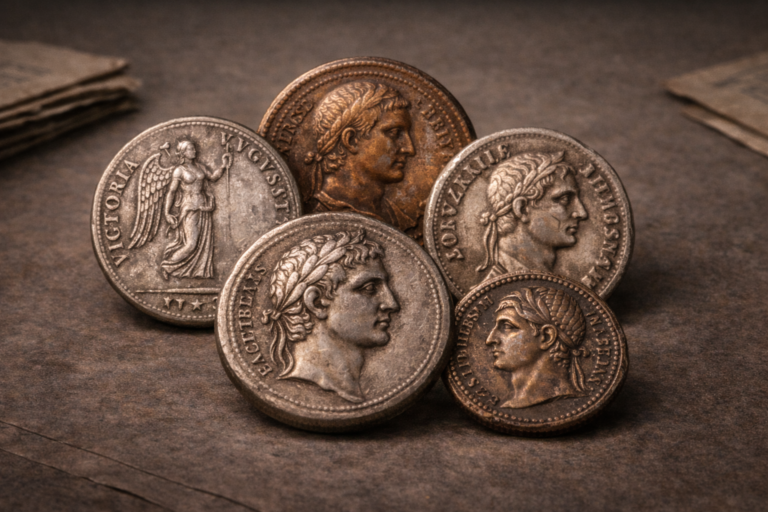
One of the most visible ways Roman coins conveyed political messages was through their imagery. Emperors and rulers often placed their portraits on coins to project authority. These portraits were more than artistic choices—they were widely recognizable symbols of who held power and who the empire acknowledged as legitimate.
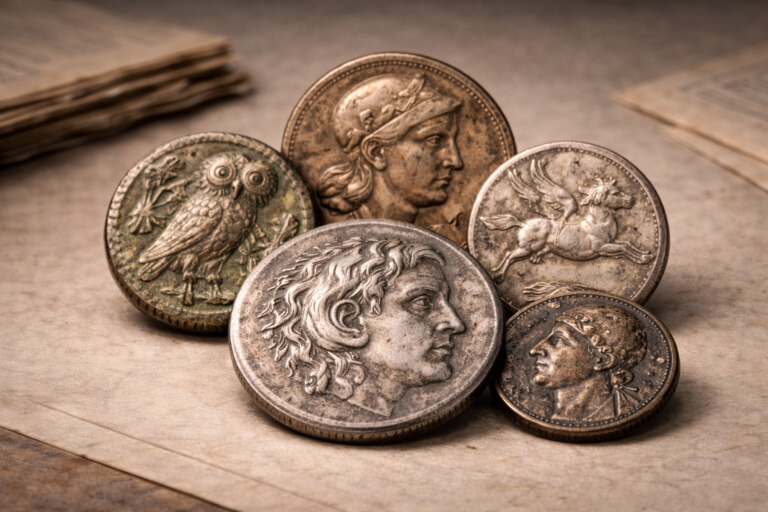
In addition to portraits, political symbols such as eagles, wreaths, deities, and victory motifs reinforced ideas of strength, divine favor, and unity. These designs communicated that the emperor’s rule was supported by tradition, religion, and military success.
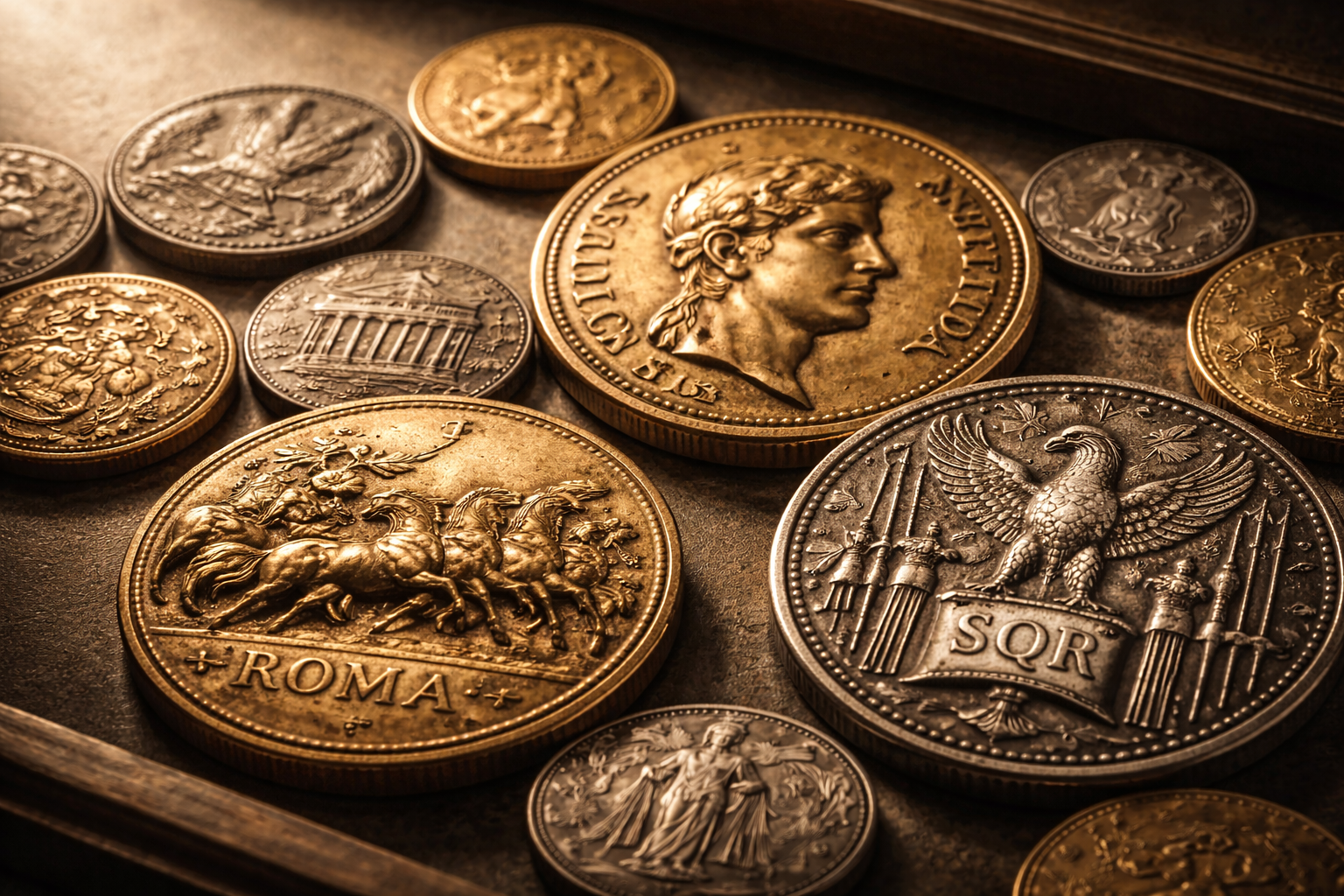
Caption: Political symbols on Roman coins communicated authority and legitimacy to ordinary users.
Image credit: HistoraCoin
Coins and Loyalty
Coins also played a role in building loyalty among the populace. Seeing a ruler’s image reassured people of continuity and stability, especially during transitions of power. Coins could help normalize new leadership by placing the new ruler’s image directly in the hands of ordinary people.
This visual familiarity created a sense of connection. Even those who never saw the emperor in person quickly learned what leadership looked like. In this way, coins extended political communication far beyond elite circles into the everyday experience of citizens and subjects across the empire.
Comparison Card | Coins vs Other Political Media
Coins
- Reached all parts of society
- Handled daily by ordinary people
- Communicated visually without literacy
- Reinforced messages continuously
Other Political Media
- Limited audience
- Often required literacy
- Not part of daily routine
- Messages reached less frequently
How Coins Spread Political Influence
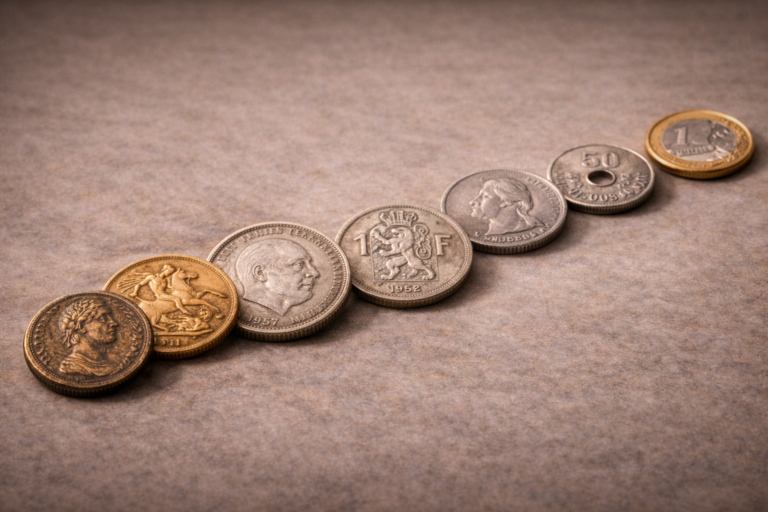
Roman coins didn’t stay confined to one city or region. They traveled with merchants, soldiers, and travelers. Because of this movement, coins helped disseminate political messages far beyond local centers of power. An ordinary person in a far-flung province could see the same coin and the same political symbols as someone in Rome.
This shared experience helped reinforce a common identity and loyalty to the central authority. Coins were political tools not just in the capital but across the entire reach of the empire’s borders.
Timeline Insight | Political Messaging Over Time
- Republic Era: Coins carried civic symbols and early political messages
- Early Empire: Portraits of emperors became standard
- Mid Empire: Symbolic imagery reinforced authority
- Late Empire: Messages adapted to political change and crisis
Quote Highlight
Roman coins were more than money; they were a daily reminder of who ruled and what values that rule stood for.
People Also Ask
Did Roman coins carry political messages?
Yes, imagery and inscriptions on Roman coins communicated authority, power, and legitimacy.
Were coins more effective than other media?
In many ways, yes. Coins reached people daily and did not require literacy to communicate political messages.
Did all rulers use coins politically?
Most Roman emperors used coin imagery strategically to reinforce messages of authority and unity.
Final Reflection
Roman coins were remarkable political tools because they combined everyday use with continuous reinforcement of authority. In a world without mass media, coins provided a visual language of power that everyone interacted with daily.
When we study these coins today, we uncover layers of political communication woven into everyday life—proof that power was communicated not just from the center of government, but through the hands of ordinary people.
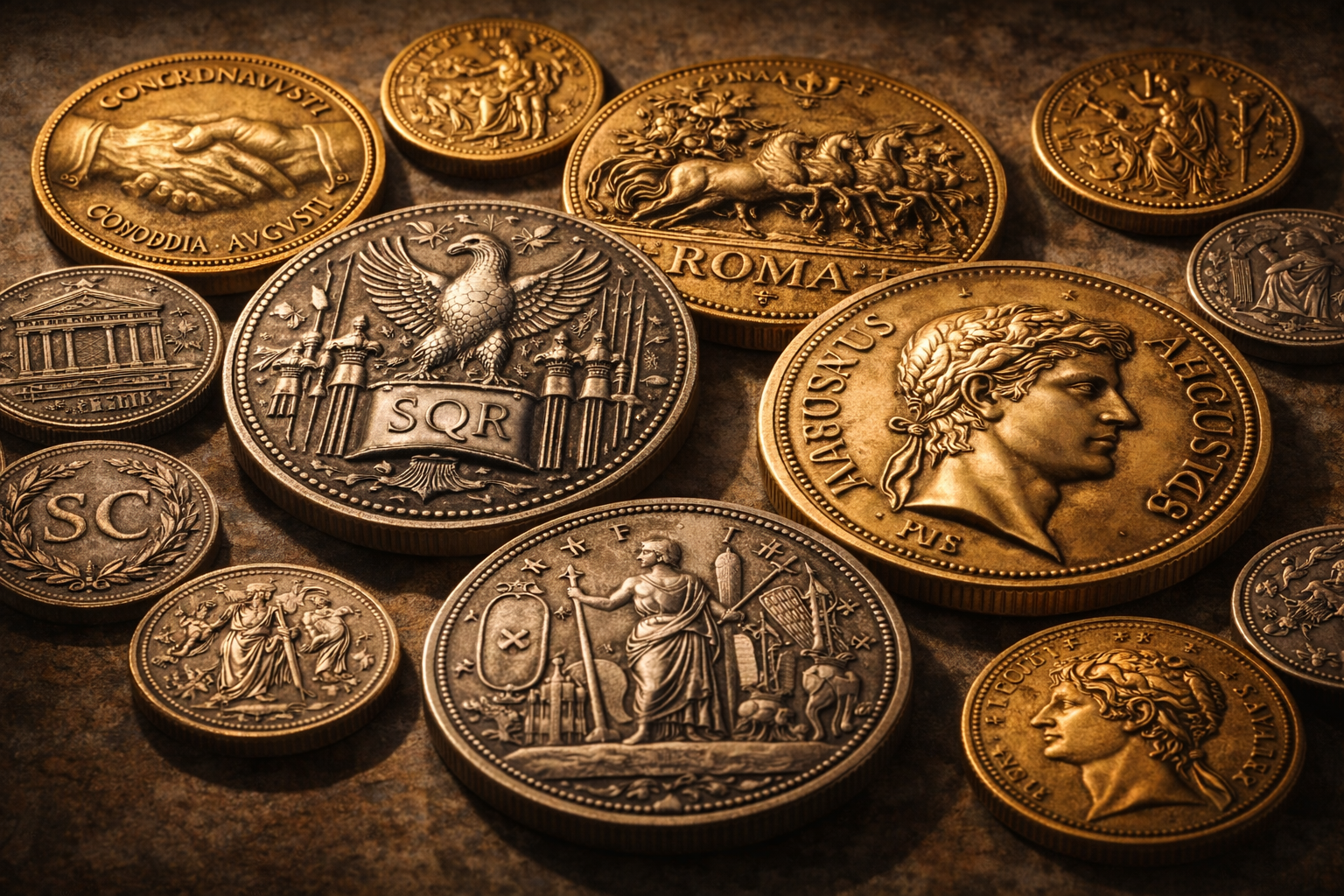
Caption: Roman coins helped spread political influence across regions through shared symbols and imagery.
Image credit: HistoraCoin