The Gold Sovereign that Traveled the World
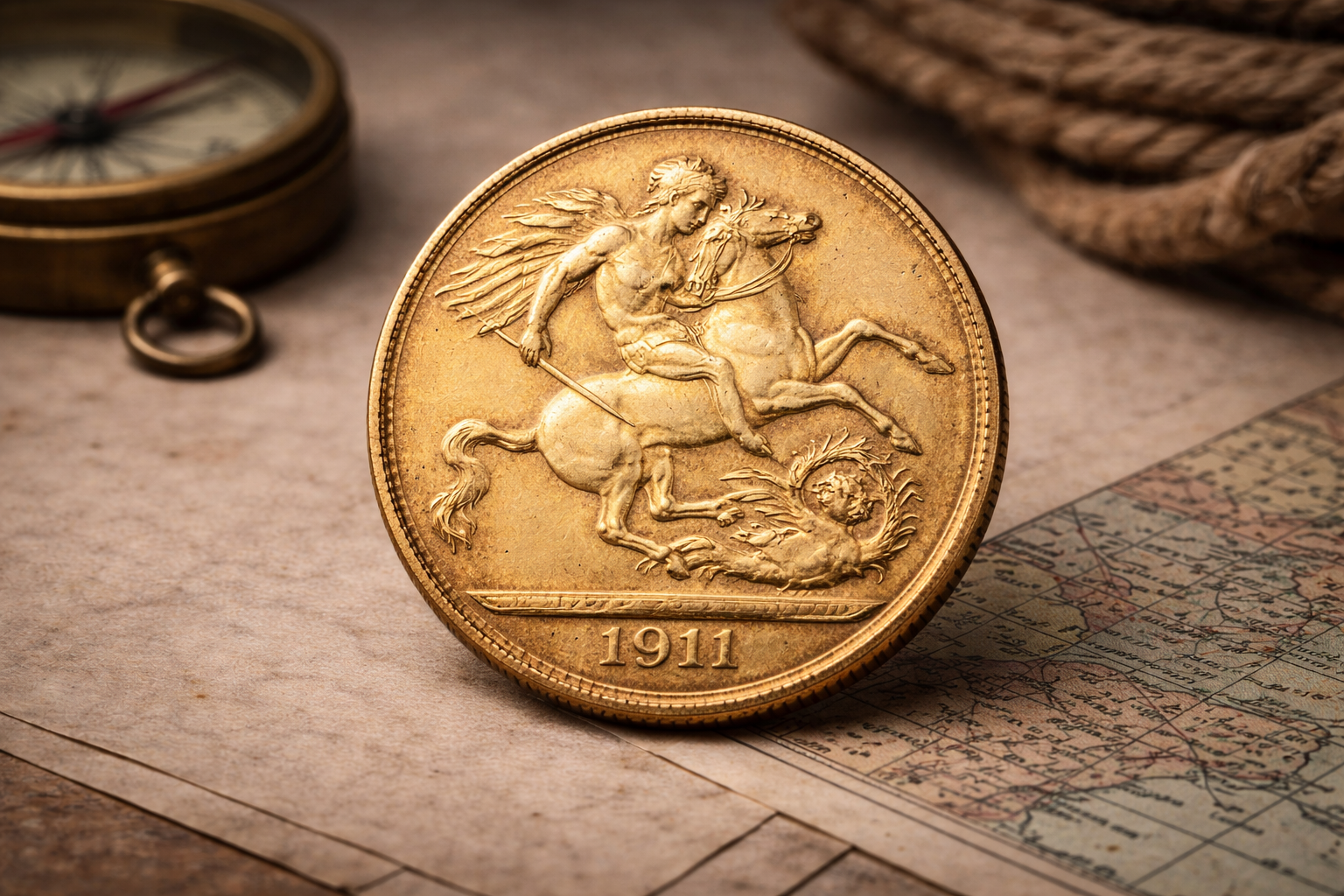
🌍👑 The Gold Sovereign that Traveled the World
How one small gold coin became a big passport—crossing oceans, buying loyalties, and slipping through the fingers of merchants, soldiers, and dreamers.
If you’d asked a Victorian sailor what felt more reliable—the weather forecast or a Gold Sovereign—he’d probably point at the coin. For centuries, the Gold Sovereign wasn’t just money; it was a handshake, a promise, a pocket-sized emblem of British power. Today, I want to tell you its story like we’re chatting over coffee: how a coin born in a royal gamble crossed the globe, changed with the times, survived wars and recessions, and somehow still gleams with the same quiet confidence.
👑 Birth of a Name (1489): A Coin Fit for a King
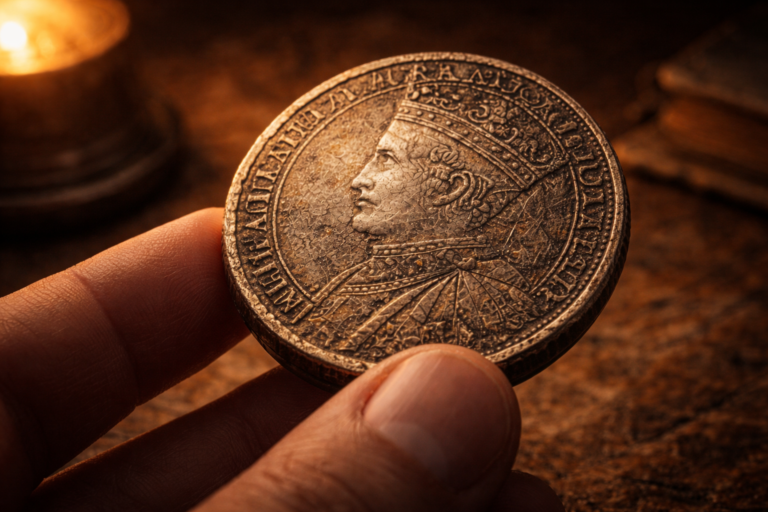
Our story opens in 1489. Henry VII had won the crown after years of civil war, and England needed more than peace—it needed a symbol. So the king commissioned a large, handsome gold coin bearing his throne-seated portrait: the Sovereign. The name wasn’t shy. It declared authority in a way speeches couldn’t. Heavy for its time, rich in gold content, the Sovereign was less about daily shopping and more about prestige—diplomatic gifts, high-value payments, the sort of money that spoke before you did.
Think of it like a royal press release in metal: “Order is back. The crown is stable. England deals in gold again.” That message mattered in Europe’s fractious financial world, where a monarch’s credibility was as valuable as any treasury vault.
🔄 From Pageant to Pocket: The Sovereign Reimagined (1817)
Fast-forward three centuries. The original Tudor-era Sovereign had faded from circulation, replaced and reformed as English coinage evolved. Then, after the Napoleonic Wars, Britain rebuilt its monetary system, and in 1817 a new Gold Sovereign was born under the Great Recoinage. Smaller, practical, beautifully struck, and loaded with symbolism, it featured St. George slaying the dragon—hope riding a horse.
This new Sovereign wasn’t merely a ceremonial chunk of gold; it became the everyday aristocrat of money. Bankers trusted it. Shopkeepers recognized it. Sailors saved it. Around it coalesced the emerging gold standard, a promise that paper claims could be converted into something solid. If paper felt like a promise, the Sovereign was the promise kept.
💡 Why This Coin Mattered (More Than You’d Think)
- Trust you can hold: A Sovereign’s weight and fineness were consistent, so deals moved faster.
- Global acceptability: In a pinch, a Sovereign could travel where banknotes couldn’t.
- Diplomatic shine: Gifts, salaries, and settlements paid in Sovereigns had gravitas.
- Iconography: St. George, the monarch’s profile—signals that resonated from London to Lagos.
In other words, it wasn’t “just a coin.” It was a portable reputation for Britain—and for anyone smart enough to keep a few in a belt pouch.
✈️ Making a World Traveler: The Empire’s Mints
A coin doesn’t travel alone; people carry it. And Britain’s people were everywhere. To smooth trade and shorten supply lines, the Sovereign was minted not only in London but across the empire. Picture this like a constellation of small suns:
- Sydney, Melbourne, Perth: Australian mints turning new-mined gold into instant money.
- Ottawa: Canadian production feeding North American routes.
- Bombay: Briefly striking Sovereigns to serve the subcontinent’s vast markets.
- Pretoria: South African minting that tied bullion to bustling trade.
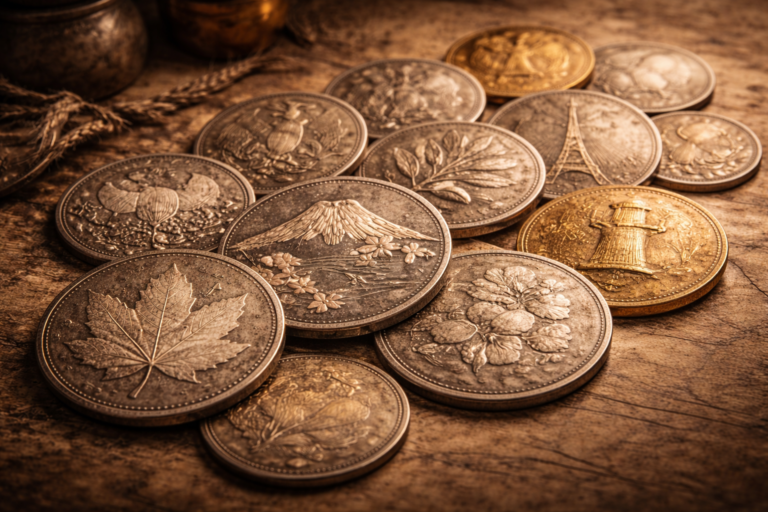
The initials beneath the design—S, M, P, C, I, SA—were like passport stamps. The coin looked the same, felt the same, and spent the same, whether it was struck under Australian sun or London fog. Consistency was the magic trick; it made the Sovereign frictionless across borders.
📖 Scenes from the Road: Little Stories the Coin Could Tell
1) The Trunk in the Attic
Imagine an old family trunk in a Liverpool attic. Inside: a velvet pouch with five Sovereigns, kept by a great-grandfather who sailed out as a deckhand and came back a foreman. The coins weren’t just savings; they were his return ticket if the sea turned against him. In the days before ATMs and international cards, a few Sovereigns could carry you across climates and customs.
2) The Frontier Shopkeeper
On a dusty Australian high street, a shopkeeper takes payment for a crate of tools. He checks the coin’s ring on oak, tests the edge, smiles. The Sovereign clears more than the bill; it clears doubt. He’ll pass it on to a drover tomorrow, who’ll carry it north to the next settlement. Money in motion becomes story in motion.
3) The Soldier’s Private Stash
In a campaign chest, a soldier keeps two Sovereigns separate from his pay—tucked into a leather wallet. He’s seen paper money wilt in the rain and local chits go worthless overnight. But those coins? They’re rainy-day sunshine. They buy a ticket out, a meal in, or a doctor when the nearest help costs more than courage.
⚖️ Victoria’s Glow and the Gold Standard
During Queen Victoria’s reign, the Sovereign reached the height of its everyday power. Banks settled balances with it, merchants priced cargo by it, and the British public learned to hear the subtle music of honest gold on a counter. The wider gold standard—adopted by other nations in varying forms—turned coins like the Sovereign into the hidden gears of global trade.
Was it perfect? No. The gold standard demanded discipline and sometimes cold-blooded decisions from governments. But for millions living their ordinary lives, a Sovereign in the hand felt like the opposite of uncertainty. It was dense with reassurance.
🐉 Design That Speaks: St. George and the Dragon
The Sovereign’s most beloved image is Benedetto Pistrucci’s St. George—cape flying, spear lowered—vanquishing a dragon coiled like fear itself. It’s not subtle. It doesn’t need to be. The message—courage, virtue, victory over chaos—was the perfect myth for a nation knitting steamboats, telegraphs, and trade routes into something like destiny.
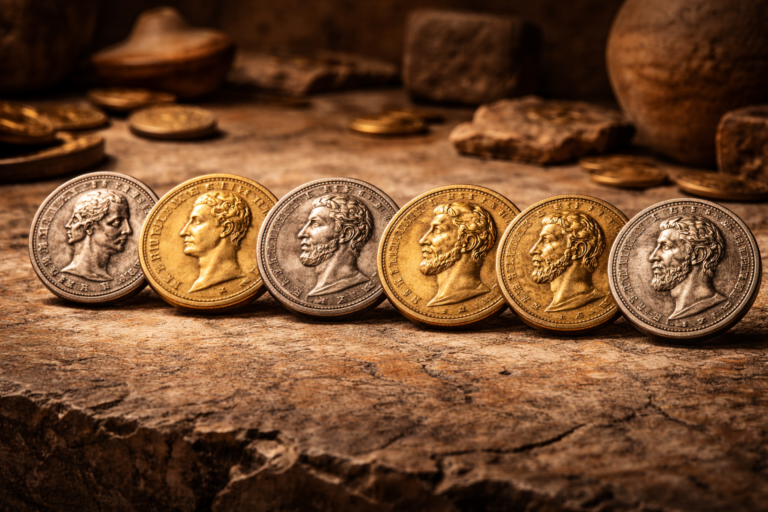
Flip the coin and you meet the monarch of the moment. Over decades, portraits changed: youthful, veiled, crowned, uncrowned—each tiny update a miniature history lesson. You could line up Sovereigns like family photos and watch time pass in 22-carat frames.
⛔ Cracks in the Golden Mirror: Wars, Paper, and Pause
Then the 20th century happened—two world wars, economic shocks, and a growing reliance on paper money and central-bank policy. Gold retreated from daily life. In the First World War, Britain suspended the free convertibility of banknotes into gold. The Sovereign, once a common companion, stepped back from counters and settled into strongboxes and collections.
Was that the end? Not quite. Gold doesn’t vanish; it waits. And people who loved the Sovereign didn’t stop loving it just because policy changed. The coin’s reputation—its honest weight, its classic design—kept it alive in hearts and, quietly, in pockets.
🔁 The Comeback Kid: From Circulation to Icon
In the postwar world, the Sovereign found a second life. The Royal Mint revived it in the 1950s, not as everyday change but as a bullion and commemorative coin. Investors liked its divisibility (far easier to sell a few Sovereigns than a heavy bar), and collectors loved the artistry.
Modern Sovereigns still carry St. George into battle year after year, sometimes with special designs for royal jubilees or anniversaries. They are, in a way, time travelers—contemporary strikes with centuries folded inside them.
🔍 How to Spot the Story in Your Hand
If you ever hold a Sovereign, here’s a quick, friendly checklist—more human than technical:
- Weight & feel: It should feel dense for its size. Gold is persuasive that way.
- Edge & ring: Crisp detail on the rim, a clean ring on wood. Tinny = trouble.
- Portrait & date: Match the monarch and period—Victoria, Edward, George, Elizabeth, Charles.
- Mint mark: Tiny letters can reveal a world tour—London, Sydney, Melbourne, Perth, Ottawa, Pretoria, Bombay.
- Design quality: St. George should look athletic, not fuzzy. Details fade in poor strikes or fakes.
You don’t need to be a numismatist to sense authenticity. The coin is a good teacher. Give it a minute, let your fingers listen, and it will usually tell you whether it belongs.
🎓 What the Sovereign Teaches—Beyond Money
The Sovereign’s journey is really a people story. It shows how trust gets built—slowly, by keeping promises the same way every single time. It shows how symbols matter, because trade is never just math; it’s memory and meaning. And it shows that technology (from steam mints to secure dies) can turn a political vision into something you can jingle in your pocket.
If you strip away the dates and mints, you’re left with this: a small circle of gold that moved across continents because enough people believed it would be worth something tomorrow. That’s not just economics. That’s a human wager.
⏳ Mini Timeline
- 1489: Henry VII’s large ceremonial gold coin debuts—the Sovereign.
- 1817: The modern-sized Gold Sovereign is introduced after the Napoleonic Wars.
- 19th century: Minting spreads across the empire; the coin rides the gold standard’s rise.
- 1914–1918: War accelerates the shift away from gold in daily circulation.
- Mid-20th century onward: The Sovereign returns as bullion/commemorative—an icon reborn.
✨ Little Myths, Honest Truths
You’ll hear legends—Sovereigns sewn into hems for escape, captains paying for fresh water with a single coin, miners in Australia flipping a Sovereign like a challenge coin before heading into the pit. Are all those stories true? Maybe not. Are they believable? Absolutely. That’s the Sovereign’s power: it lives at the intersection of fact and folklore, where money becomes memory.
💬 Today’s Take: Why People Still Care
- Collectors chase mint marks and dates like stamps in a passport.
- Investors value liquidity, recognizability, and the coin’s narrow spread over spot.
- Gift-givers love the symbolism: protection, success, “may fortune go with you.”
- Story-lovers—people like us—enjoy the feeling of holding history that still works.
And yes, modern minting brings proofs, special editions, and mirror finishes that Tudor craftsmen could barely imagine. Yet the feeling remains older than any die: a quiet thrill when gold catches the light.
🗣️ If the Coin Could Speak…
“I’ve crossed oceans wrapped in cloth. I’ve settled debts between men who barely shared a language. I’ve been lost, found, gifted, hoarded, feared, and treasured. I am smaller than a biscuit and heavier than a promise. I am a Gold Sovereign.”
You don’t need to be royal to hear the voice. Just hold one—real or imagined—and let your mind step into a London mint’s bright clatter, a Bombay countinghouse with ledgers open, an Australian assay office warm from the crucible. The coin remembers for you.
🛂 Closing the Loop: A Passport Stamped in Gold
So that’s our friendly tour—no museum whisper, just a conversation between you and a famous traveler. From Henry VII’s statement piece to the 1817 workhorse, from imperial mints to modern collections, the Sovereign has been a steady companion to risk-takers and home-makers alike. It carried ideas of order and credit into markets that didn’t share a parliament or a prayer book. And while it no longer clinks in every till, it still has a way of showing up when stories get told about value and trust.
If you ever find one in a drawer, don’t just ask, “What’s it worth?” Ask, “Where has it been?” Because the answer, more often than not, is: farther than you think.