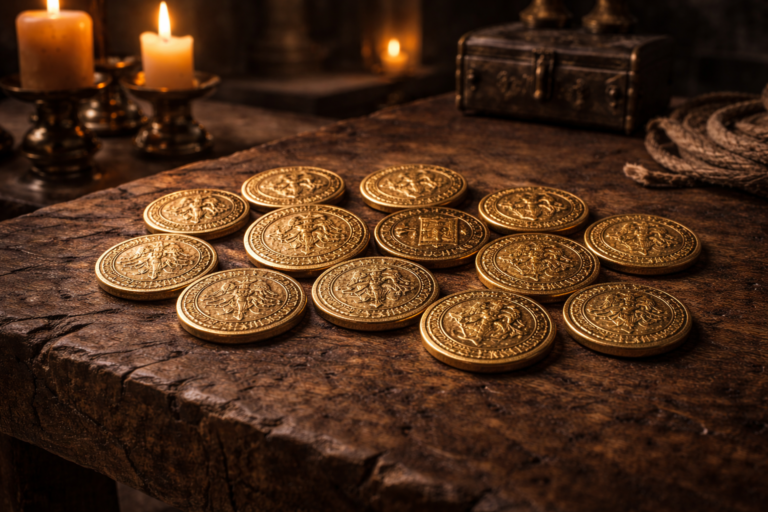
Florentine Florin | The Gold Coin That Powered the Renaissance.
Estimated reading time. 10 to 12 minutes.
Imagine walking into a busy European market in the 1400s with a pouch of coins from your home city. Traders listen to your accent, glance at your clothes, and then do what merchants have always done. They question your money. Not because they doubt you personally, but because in a world of shifting rulers and local mints, trust is a fragile thing.
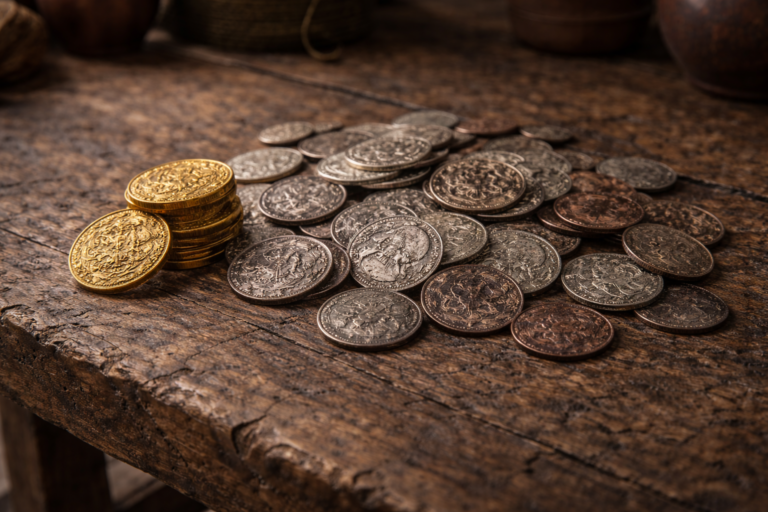
Then you pull out a small gold coin that needs no speech at all. The room changes. The coin is familiar, its weight is respected, and its reputation travels faster than any messenger. That coin was the Florentine florin. It helped power the Renaissance in ways most people never notice.
Table of Contents.
- Why the florin mattered in the 15th century.
- Florence before the Renaissance spotlight.
- A design that worked like a contract.
- Gold, weight, and the mechanics of trust.
- How banking turned a coin into a system.
- Where the florin traveled, and why.
- Rivals and cousins, ducat, écu, and the rest.
- From coin to workshop, how money fed art.
- What the florin meant to ordinary people.
- Myths, misconceptions, and the real story.
- The florin’s legacy in modern money thinking.
- FAQ.
Why the florin mattered in the 15th century.
The Renaissance is often introduced through paintings, cathedrals, and famous names. But every golden age rests on something quieter. Logistics. Contracts. Wages. Reliable trade. When people say Florence helped ignite a cultural transformation, they are also saying Florence managed to organize trust across distance. A merchant in Bruges needed to believe that a coin from Florence would hold its value tomorrow. A textile buyer in London needed to believe the same coin would be accepted again in the next port. A banker needed to move funds without hauling chests through bandit territory.
The florin mattered because it solved a basic problem that kept repeating across medieval Europe. Local coinage often depended on local politics. A new ruler could change standards. A mint could quietly reduce purity. A city in crisis could try to stretch its metal. Each change might help a treasury for a season, but it damaged the larger network. Once suspicion enters a market, every transaction becomes slower. People weigh and test coins more aggressively. They discount unfamiliar pieces. They raise prices to cover risk.
The florin, in contrast, became a kind of shortcut. It carried a reputation for consistent gold content and recognizable imagery. That combination gave it an unusual power for its size. It reduced the number of questions a merchant had to answer. It lowered friction in deals. It allowed contracts to be written with fewer conditions. In a world where trade already faced storms, tariffs, and wars, lowering friction was not a small advantage. It was a competitive edge.
The florin did not create the Renaissance by itself. No coin can. What it did was help build an environment where long distance commerce felt safer, and where capital could move with fewer obstacles. Art and innovation often follow the paths where capital can breathe.
Florence before the Renaissance spotlight.
Florence was not an empire stretching across continents. It was a city state with ambition, talent, and a very sharp sense of reputation. Its merchants were skilled, its guilds were organized, and its banking houses understood something that was still new for much of Europe. Money is not only metal. Money is a promise people agree to believe.
You can see this in how Florentine power formed. It came through trade in textiles, through networks of credit, and through the ability to coordinate deals across borders. Banking families and merchant guilds did not simply handle coins. They handled confidence. They kept ledgers, made loans, settled disputes, and funded shipments that might take months to pay back. The city learned to think in systems.
In that setting, a stable gold coin was a strategic tool. It could travel where Florentine armies did not. It could negotiate where diplomats were unwelcome. It could build relationships between strangers who shared no language. When a coin becomes a symbol of reliability, it becomes a form of soft power.
A design that worked like a contract.
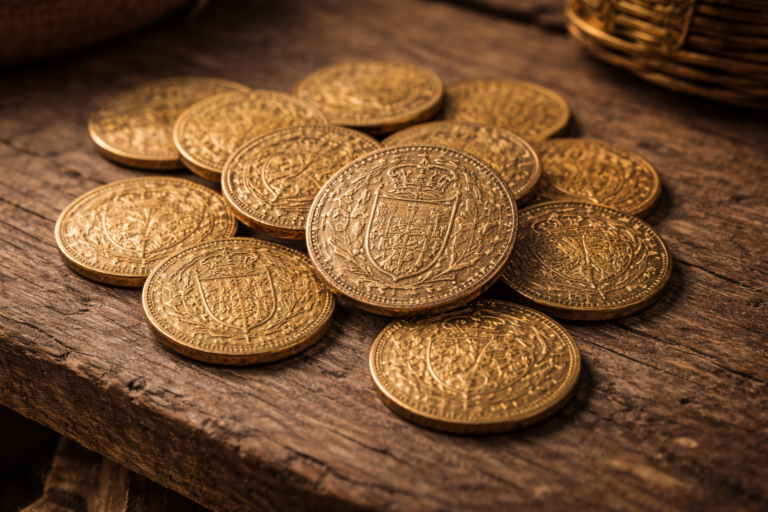
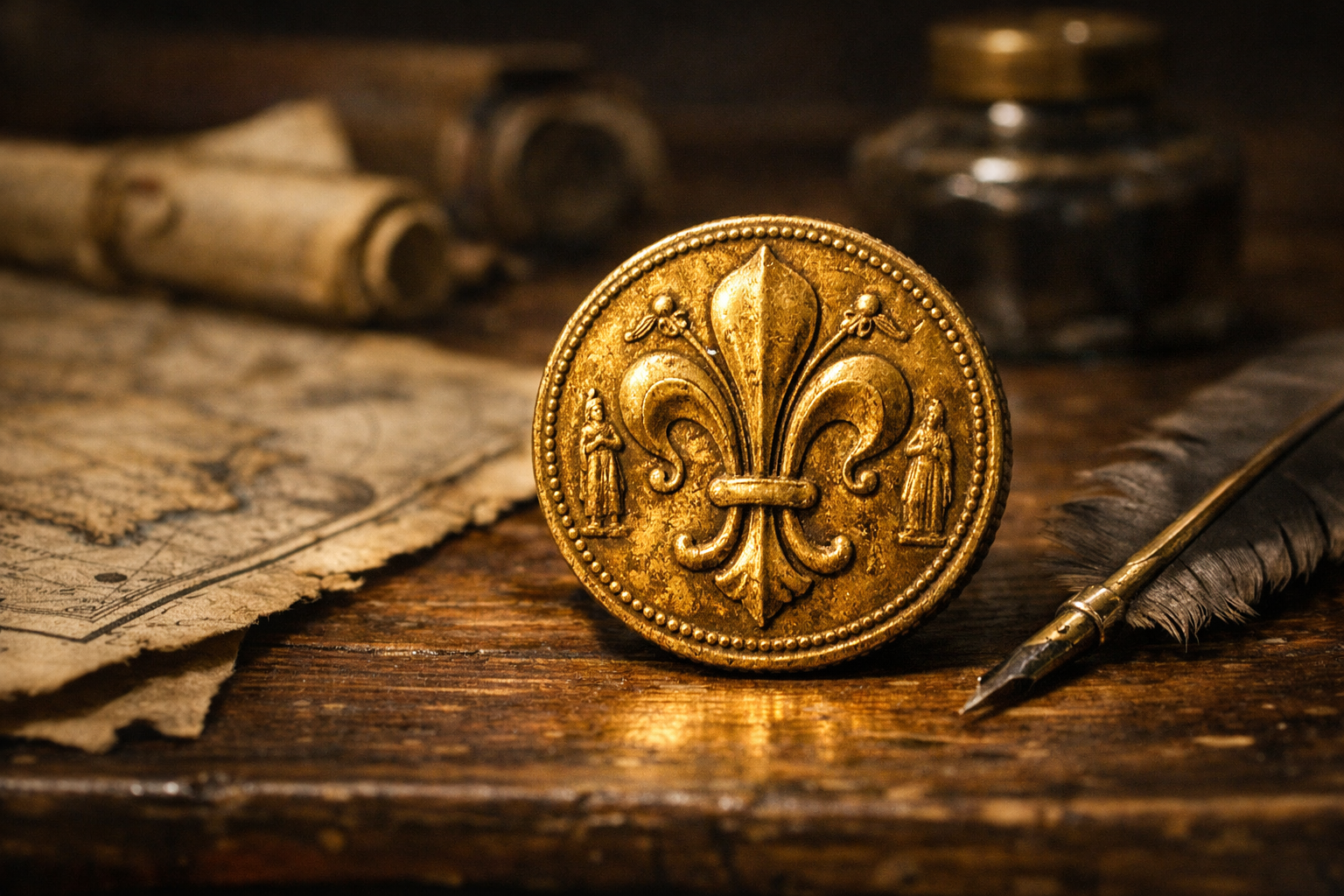
Coins are often treated as tiny art pieces, and they are. But in active commerce, a coin’s design is closer to a contract that can fit in your palm. A good design helps people identify the piece quickly. It discourages counterfeiting by requiring skill. It links the coin to a known authority. It becomes a visual signature.
The florin’s imagery became part of its credibility. It was not just decoration. It was recognition. Think about what recognition means in a medieval market. There are no standardized ID cards. News travels slowly. Fraud is not a rare event. Anything that speeds up recognition saves time, and time is money even when money is metal.
Once a coin is recognized, the next question is quality. That question was answered, again and again, by the florin’s reputation for consistent gold. Reputation is built through repeated experience. If merchants weigh and test a coin for years and consistently find it trustworthy, they begin to trust it without testing every time. That shift, from constant checking to confident acceptance, is how a coin becomes a standard.
A famous coin is not famous because it is pretty. It is famous because people stopped arguing about it.
Gold, weight, and the mechanics of trust.
To understand the florin, it helps to picture a deal on a dock. A ship arrives. Goods are unloaded. A buyer wants to pay. The seller wants assurance. In that moment, trust becomes physical. Trust is weight. Trust is color. Trust is the ring of metal. Trust is the certainty that the coin in your hand will still be accepted after the ship is gone.
Gold had unique advantages. It is durable. It does not corrode like many metals. It is divisible and easily carried in high value amounts. But gold also invites trouble. It is tempting to clip. It attracts counterfeiters. It encourages mints to shave purity when budgets tighten. A gold coin’s value is always in conversation with human behavior.
The florin built a habit of confidence. In busy markets, habits matter. If a coin reliably measures out value, merchants begin to prefer it. Once a preference becomes widespread, the coin’s acceptance becomes self reinforcing. People accept it because others accept it. That sounds obvious now, but it was a major advantage then.
This is where the florin becomes more than a Florentine object. It becomes a European tool. It is a piece of Florence that can live inside contracts written far away. It is a portable statement that some standards can be stable, even when politics are not.

How banking turned a coin into a system.
Here is the twist many people miss. The florin’s power was not only in the coin itself. It was in the institutions that surrounded it. Florence helped develop banking practices that made commerce feel safer. When a coin is stable, it becomes easier to build credit around it. When credit becomes reliable, trade expands. When trade expands, wealth increases. When wealth increases, patrons can fund workshops, scholars, architects, and everything we now call the Renaissance.
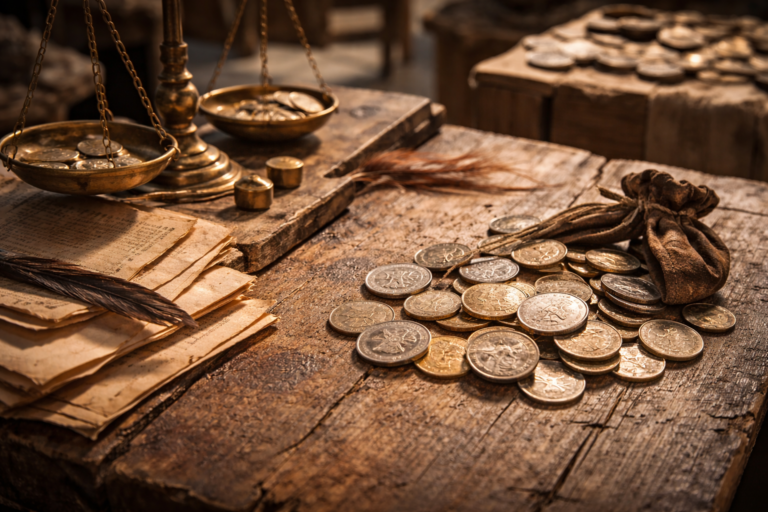
Banking is often imagined as cold and modern, but medieval banking was deeply personal. A name mattered. A family’s reputation could be worth more than a chest of coin. Letters carried trust across distance. Ledgers recorded memory when memory alone would fail. In a way, early banking was a technology of credibility.
The florin fit that world beautifully. It was a unit people could rely on when writing obligations. It offered a familiar measure across regions that otherwise used different local coinage. It helped reduce confusion in exchange and settlement. It provided a language shared by merchants who did not share a border.
Picture a merchant who wants to buy wool in one region and sell finished cloth in another. They need short term funds. They need predictable settlement. They need a way to promise payment without hauling dangerous treasure across roads. A respected gold coin made it easier to create those bridges.
Where the florin traveled, and why.
A coin becomes powerful when it is welcomed beyond its home. The florin did not stay inside Florence. It moved through trade networks that connected Italian city states with Northern Europe, the Mediterranean, and major fairs. Wherever merchants gathered, money had to negotiate acceptance. The florin earned its seat at those tables.
Why did it travel well. Because it reduced uncertainty. In places where merchants met only seasonally, a reliable coin mattered even more. Temporary markets like fairs needed fast deals. Nobody wanted to waste hours arguing about purity. A coin that could be accepted quickly had real value beyond the gold itself.
The florin also benefited from Florence’s role in luxury goods and finance. When a city produces things other cities want, its money follows. The coin becomes part of the city’s reputation. The reputation becomes part of the coin’s acceptance. This is a loop, and it is exactly the kind of loop that builds standards.
Rivals and cousins, ducat, écu, and the rest.
The florin was not alone. The 1400s were full of experiments in coinage, and several pieces became famous across borders. Venice had its ducat, a gold coin that became legendary in trade. France produced gold issues like the écu in different forms across time. England struck silver and gold in systems shaped by its own politics. The Holy Roman Empire included many mints with their own strategies.
So what made the florin stand out. Not perfection, but consistency and timing. A good coin needs a strong issuer, a stable standard, and networks that carry it outward. Florence had the networks. It also had a culture of commercial discipline shaped by guilds and banking houses. When these elements align, a coin can become a reference point for others.
Another difference was how merchants talked about the florin. Merchants did not need to love it. They needed to predict it. The florin became predictable. In markets, predictability is often more valuable than beauty.
From coin to workshop, how money fed art.
Now we arrive at the human side. The Renaissance was not an abstract concept. It was work done by people who needed food, materials, and time. Artists needed apprentices. Sculptors needed stone and metal. Architects needed teams, scaffolding, and long planning horizons. Scholars needed manuscripts, ink, and quiet rooms. None of those things appear by magic. They appear when someone pays.
Wealth created through commerce and finance made patronage possible. When merchants and bankers accumulated capital, they could commission art that would outlive them. They could fund buildings that would mark their names. They could invest in institutions that would educate the next generation. This is where the florin becomes symbolic. It represents the flow of resources that made the cultural shift sustainable.
Think of a workshop receiving payment for a commission. That payment might come through a chain of transactions that began in a distant market. The merchant sells goods, settles accounts, pays taxes, and then supports a project at home. A stable coin helps that chain hold together. If the chain breaks, the workshop waits. If the chain holds, the workshop thrives.
Even when artists were not paid directly in florins, the system of money and credit that coins supported shaped the environment. The Renaissance required momentum. Momentum requires confidence. Confidence often requires stable tools. The florin was one such tool.
What the florin meant to ordinary people.
It is easy to imagine the florin only in the hands of bankers and elite merchants. But currencies create ripples through society. A respected gold coin influences the value of other coins. It affects wages indirectly. It shapes prices at market. It influences how people store savings. In cities connected to trade, even those who never held a gold coin could feel its effects.
For a craftsman, stability meant something simple. It meant tomorrow’s wage was less likely to be eaten by sudden shifts in coinage. For a shopkeeper, it meant fewer arguments at the counter. For a family saving for a marriage dowry, it meant a clearer sense of what their savings represented. In that way, monetary trust becomes social trust.
There is also a psychological side. When money is unreliable, people behave defensively. They hoard. They avoid long term deals. They prefer quick trades. They distrust strangers. When money is more reliable, people take longer views. They invest. They expand their networks. They plan. That shift helps explain why certain cities become engines of change.
Myths, misconceptions, and the real story.
The florin is sometimes treated as if it were a magic key. It was not. It faced counterfeiting attempts like any valuable coin. It existed in a complex ecosystem of coinage, exchange rates, and political events. Wars disrupted trade. Plagues reduced populations. Rival cities competed fiercely. None of that disappears because a coin is good.
Another misconception is that a famous coin automatically made everyone richer. Economic benefits were uneven, as they always are. Some families gained immense power. Some workers remained vulnerable. Some rural regions stayed outside the main networks. A strong currency tool can expand opportunity, but it does not guarantee fairness.
The real story is more interesting. The florin shows how money can become a reputation. It shows how design, metal, and institutions interact. It shows how trust can be built in a world where trust is expensive. And it shows how cultural achievements often rest on practical systems that most history summaries ignore.
When you see Renaissance brilliance, remember the invisible layers beneath it. Shipping routes, accounting practices, contracts, and a few trusted standards that made long distance cooperation easier. Coins are small, but their networks are huge.
The florin’s legacy in modern money thinking.
We live in a world where money is often digital, and yet the same principles remain. People still look for stability. Markets still punish uncertainty. Reputation still acts like a currency. Standards still emerge when enough people agree that a tool is reliable.
The florin’s legacy is not that it looks elegant, though it does. Its legacy is that it demonstrates how a monetary standard can be built through consistency and trust. It also demonstrates how a city with strong networks can project influence without conquering territory. That idea, influence through economic credibility, feels very modern.
It also explains why collectors and historians keep returning to the florin when they study the fifteenth century. It is a window into the shift from medieval fragmentation toward early modern coordination. It sits at a crossroads where commerce, finance, and culture begin to amplify each other.
The Renaissance was many things at once. It was art. It was politics. It was philosophy. It was competition. But it was also logistics and trust. The florin belongs in the story because it helped make trust portable.
FAQ.
What was the Florentine florin.
It was a widely respected gold coin issued by Florence that became a trusted reference in European trade during the 1400s. Its strength came from consistent standards and strong commercial networks.
Why did merchants trust it.
Because merchants experienced it as predictable. Over time, repeated confirmation of its quality reduced the need for constant testing, which made transactions faster and safer.
Did the florin create the Renaissance.
No single coin can create a cultural movement. The florin helped support the conditions that allowed commerce and capital to flow more smoothly, which made large scale patronage easier.
What is the modern lesson.
Stability and reputation are powerful. Standards form when enough people share confidence in a tool, and that confidence grows through consistency over time.
If you want to explore how meaning, trust, and attention shaped coins across history, these two stories connect directly with the world that made the Florentine florin possible.