Trade Routes of Ancient South America
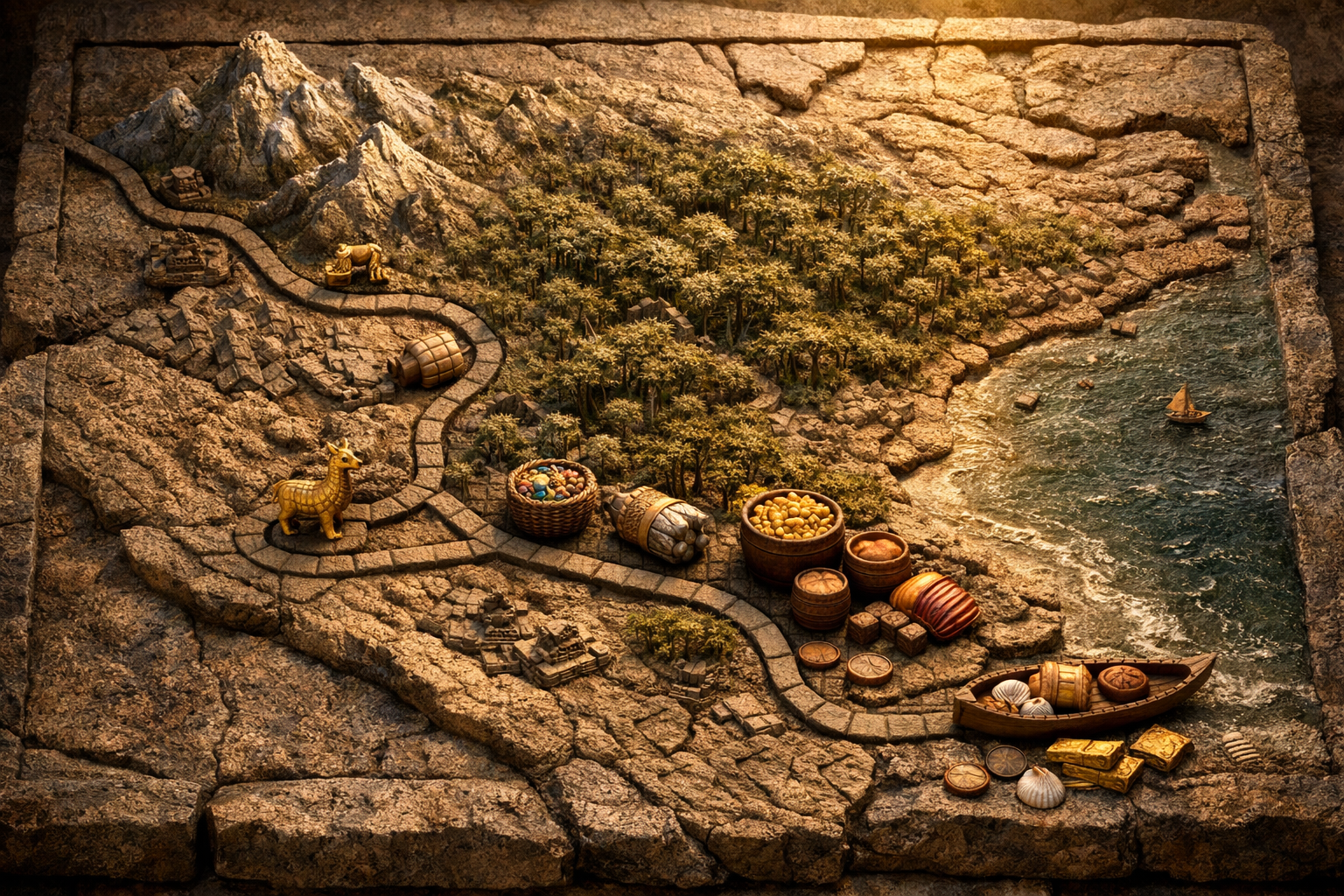
Ancient South America did not need coins to build serious trade. It needed routes. Paths across high ridges. River corridors through rainforest. And a shared habit of trusting what kept arriving the same way, season after season.
When people imagine early exchange, they often picture a simple barter scene. Two strangers meeting by chance. One offers a bundle. The other offers a tool. They agree and walk away. Real trade networks were the opposite. They were repetitive. They were mapped in memory. They were reinforced by relationships and obligations. And the routes themselves became the backbone of value.
If you want the bigger picture of life before coins, start here. It makes the routes in this article feel even more real. Before Modern Money in South America.
Table of contents.
Why routes mattered.
A valuable object that stays in one place is a treasure. A valuable object that moves is a message. Movement spreads standards. It spreads expectations. It teaches people what to look for and what to reject. Over time, the route itself becomes a filter that improves reliability. Fragile goods break. sloppy tools fail. dishonest claims get remembered. What survives repeated travel becomes trusted.
South America offered intense geography. Mountains that rise sharply. Coasts that shift between dry and lush. Forests so dense that rivers feel like the only streets. That geography did something powerful. It made scarcity local. A resource could be abundant in one zone and rare two valleys away. Trade was not optional. It was the practical solution to living in different climates close together.
Andean corridors and highland exchange.
The Andes created a vertical world. Communities could live within sight of each other and still inhabit different climates. Higher zones offered cold weather crops and herding products. Lower zones offered warmer crops and materials. Coastal routes introduced marine goods that felt almost magical inland. This encouraged constant exchange up and down mountain corridors.
Traders and carriers did not always behave like modern merchants. Some moved as part of communal obligations. Some exchanged to support ceremonies. Some carried goods as a sign of alliance between groups. But across those motives, the pattern stayed consistent. Goods moved on predictable paths. People expected seasonal arrivals. And those expectations created a stable rhythm. Rhythm is the quiet beginning of an economy.
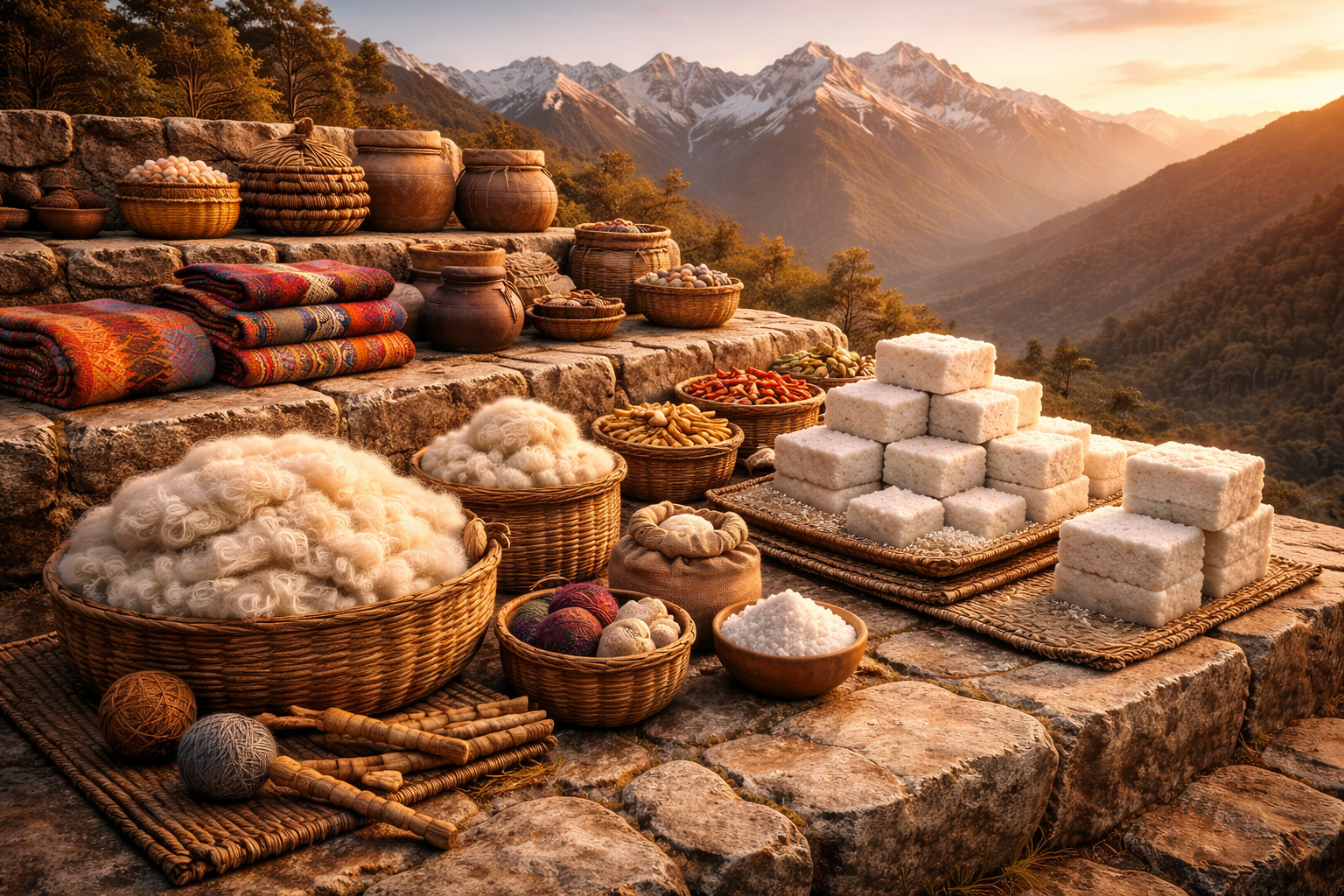
Think about what it takes to move value across steep terrain. It favors goods that are light for their importance. It favors items that signal quality quickly. It favors objects that can be counted, stacked, bundled, or measured by sight. A woven piece can show craftsmanship instantly. A metal object can signal durability. A special shell can stand out the moment it catches light.
Amazon waterways and river trade.
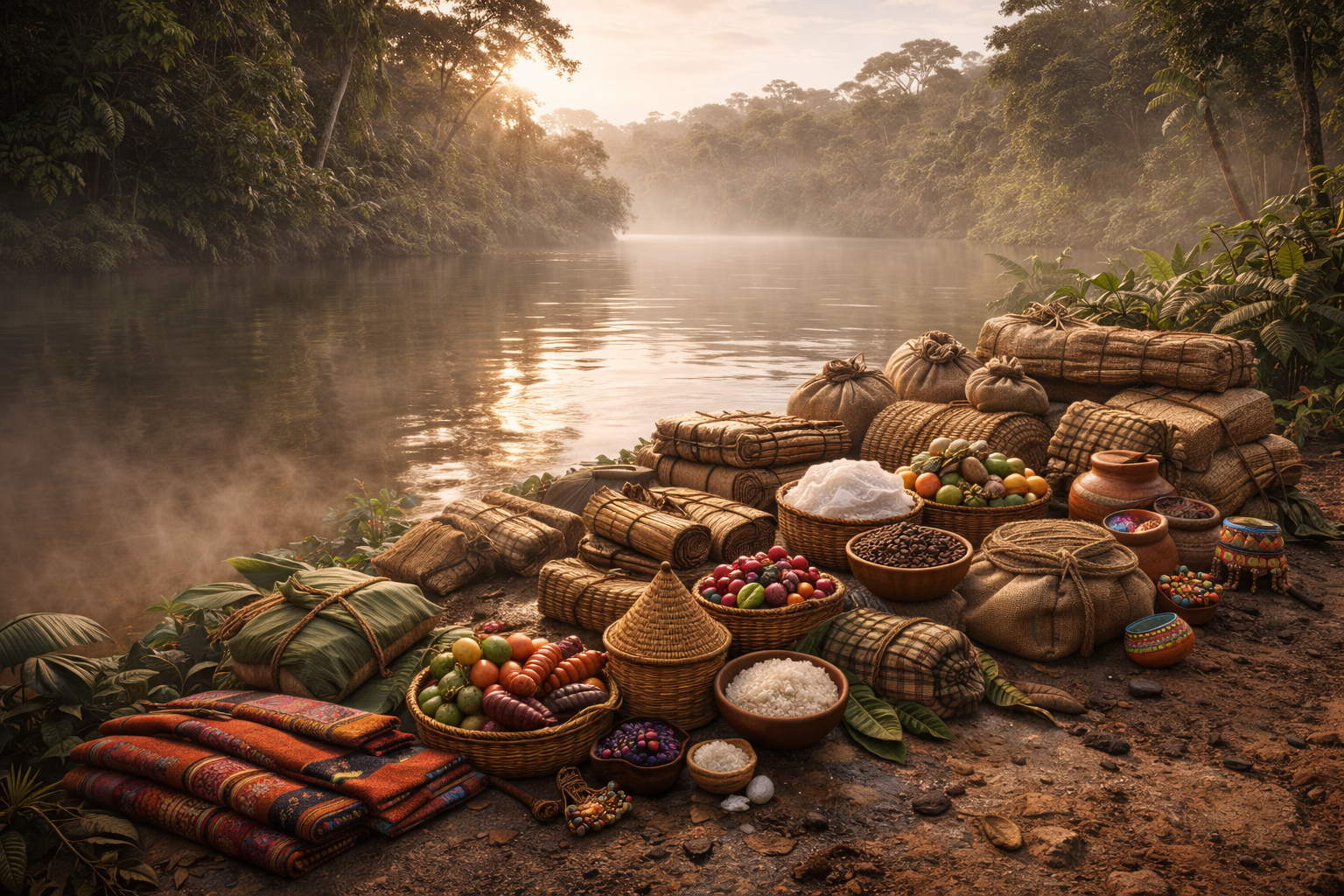
The Amazon basin offered a different map. Rivers acted like roads. Tributaries connected communities the way side streets connect neighborhoods. Travel was still difficult, but the water created a natural direction and speed. Goods could move farther with less strain than mountain climbing. That made rivers perfect for repeated exchange.
River trade also shaped the style of goods that moved. Bundles mattered. Portable packs mattered. Items that resisted humidity mattered. So did goods with strong cultural meaning, because those meanings traveled with the object. A rare pigment could carry status. A feather bundle could carry identity. Botanical goods could carry both daily utility and ceremonial value.
What goods traveled best.
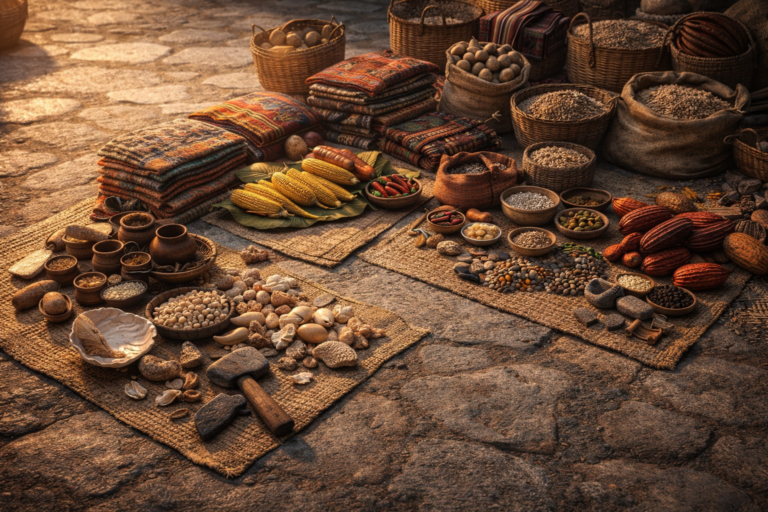
Not everything can behave like money. Even before coins, communities learned which items were better at carrying value. Some were prized for rarity. Some for usefulness. Some for symbolism. The strongest candidates did something special. They held value in more than one context. They could be used, gifted, displayed, and exchanged without losing their meaning.
| Trade friendly goods. | Where they moved best. | Why routes favored them. |
|---|---|---|
| Textiles and woven goods. | Highlands and multi zone routes. | Visible skill, bundle friendly, easy to compare and store. |
| Salt and mineral materials. | Mountain corridors and valleys. | Essential for life, divisible, and reliable in demand. |
| Metal tools and copper objects. | Areas with metallurgy and long distance exchange. | Durable, re usable, and signals practical value quickly. |
| Shells and marine items. | Coast to inland routes. | Rare inland, easy to recognize, tied to prestige and ritual meaning. |
| Feathers, pigments, and symbolic items. | River networks and elite exchange. | Status value, hard to obtain, and culturally powerful. |
Mobile note. The table scrolls horizontally on phones to keep the layout clean.
How trust formed without coins.
Coins solve one big problem. They compress trust into a small object. But trust existed long before metal disks. It lived inside relationships, repeated contact, and public reputation. If a trader returned every season with consistent goods, people learned to rely on that pattern. If a community broke obligations, neighbors remembered. Value was social memory with practical consequences.
This is why routes are such a big deal. A route creates repetition. Repetition creates comparison. Comparison creates standards. Over time, a good becomes more than a good. It becomes a reference point. When someone says a textile is fine, people know what fine means, because they have seen it before. When someone offers a bundle of salt, people can judge it quickly. These are early forms of pricing, even without numbers.
Before coins, value often worked like a shared language. The route was the classroom. Every trip taught people what was real, what was fair, and what was worth carrying again.
What trade felt like in daily life.
Trade was not only about far away journeys. It also shaped daily decisions. What you planted. What you stored. What you saved for a festival. What you offered when a guest arrived. Exchange systems made communities feel connected even when they lived in different landscapes.
In many places, exchange was tied to reciprocity. You gave now with the expectation of balance later. That balance could be material, social, or ceremonial. It was not casual. It was structured. And in a way, it could be stricter than coin trade. Coins can hide selfish behavior. Reciprocity systems keep score through reputation.
If you want to zoom out and see how exchange systems themselves behaved like early money, this story continues perfectly from here. Early Exchange Systems in South America.
What these routes taught early money.
When coins finally spread, they did not replace a blank space. They entered a world that already understood standards. People already understood reliability. They already understood that value needs shared agreement. Routes had been doing that work for generations.
The lesson is that money is not just an object. It is an infrastructure of trust. Coins are one tool inside that infrastructure. Routes are another. Networks are another. Repetition is another. Ancient South America shows this clearly. The geography was intense, yet exchange stayed organized. Because people built systems that turned movement into stability.
If you are building the South America Coins picture from the ground up, these two links connect directly with today’s routes.
FAQ.
Did ancient South America have trade routes before coins.
Yes. Long before coins were common, communities relied on mountain corridors and river networks to move goods and maintain shared standards of value.
What made a good travel well across the Andes.
Durability, bundle friendly shape, and easy recognition. Textiles, salt, and useful tools often worked because people could compare quality quickly and trust them across repeated trips.
Why were Amazon rivers important for trade.
Rivers acted like highways. They connected distant groups and allowed repeated exchange, which helped goods and standards spread faster than isolated local barter.
How did people trust exchange without coins.
Trust came from repetition, reputation, and social obligations. Routes created predictable contact, and predictable contact created standards that communities recognized and defended.