Markets of Ancient South America
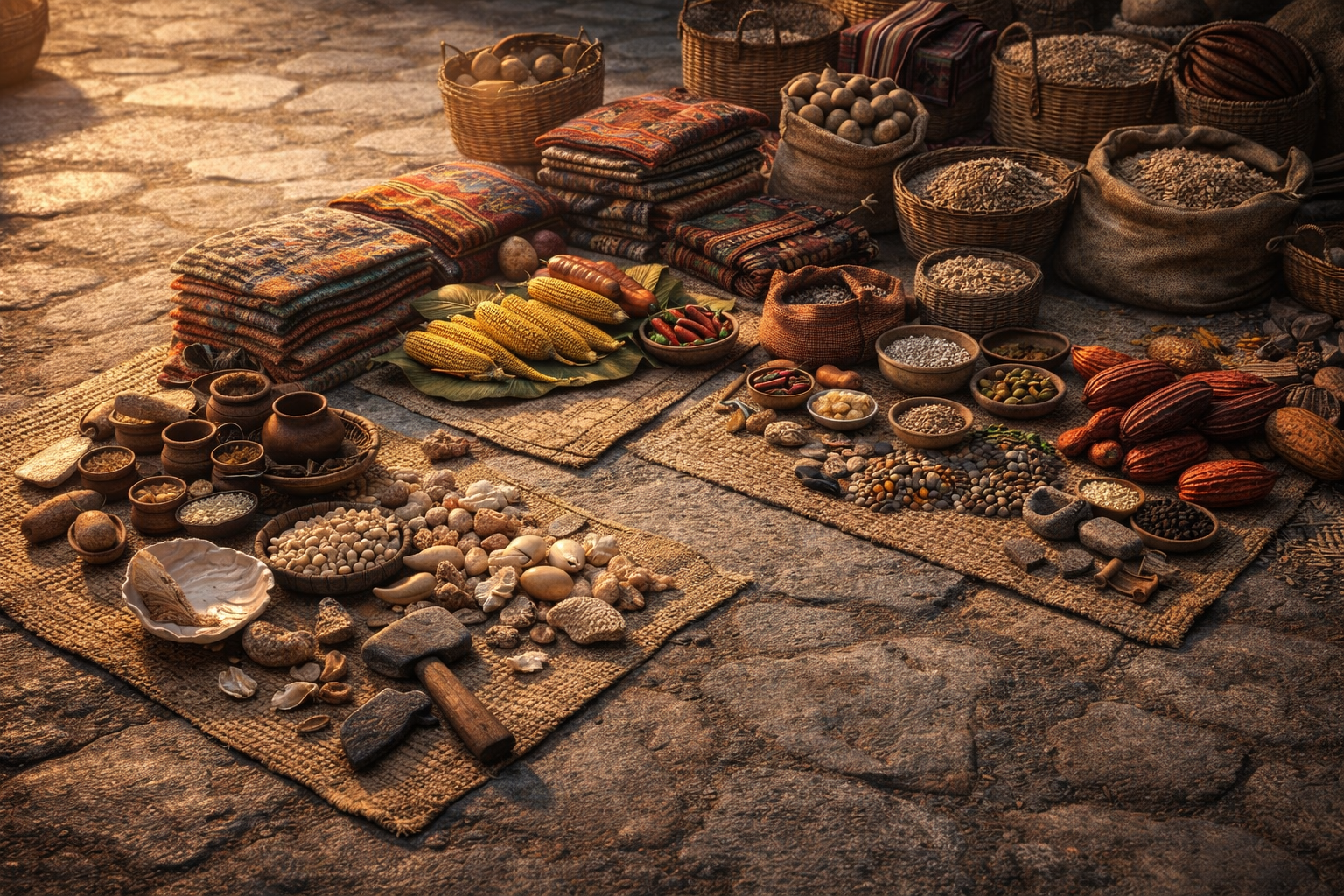
Ancient markets in South America were not only places to trade goods. They were places to trade trust. People arrived with familiar bundles, recognized quality with trained eyes, and left with more than items. They left with relationships reinforced.
When you picture an ancient marketplace, try to picture sound and rhythm, not coins. The real currency was reputation. The real price tag was consistency. And the real “payment” was often a blend of goods, promises, and social balance.
If you are following the South America Coins series in order, this article fits right after these two stories. Before Modern Money in South America. Early Exchange Systems in South America.
Table of contents.
What an ancient market really was.
In modern life, a market is often reduced to buying and selling. In ancient South America, a market day was closer to a social event that happened to include exchange. People met to confirm alliances, share news, arrange future help, and display what their community could produce. Exchange was the visible surface. The deeper function was social stability.
That is why markets felt organized even without written prices. People came with expectations. They knew which goods typically matched which needs. They knew which traders were honest. And they knew that a fair exchange today meant an easier exchange next season.
How people judged quality without numbers.
Coins are excellent at hiding human judgment. You can pay without speaking. But ancient markets required judgment because the value lived in the object. The weave in a textile mattered. The smell and dryness of a bundle mattered. The craftsmanship of a tool mattered.
Over time, markets trained people to agree on standards. This is one reason markets are so important in the history of money. They create repeatable comparisons. And repeatable comparisons slowly become cultural measurement.
What sold well and why.
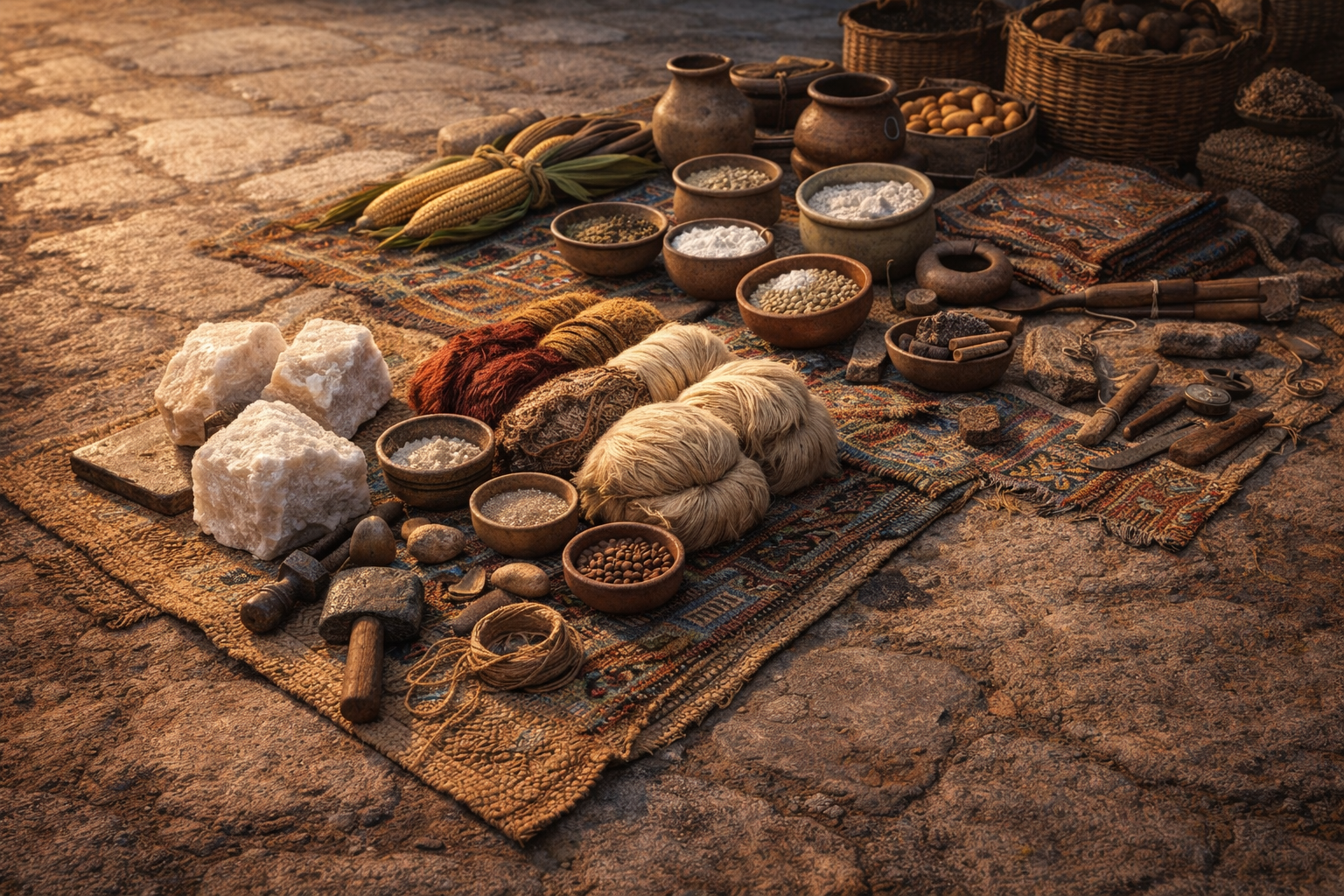
The goods that performed best in a market shared a few traits. They were recognized quickly. They were useful in daily life. They were portable enough to carry home. And they could be compared with confidence. That last detail matters. If you cannot compare something, you cannot trust it.
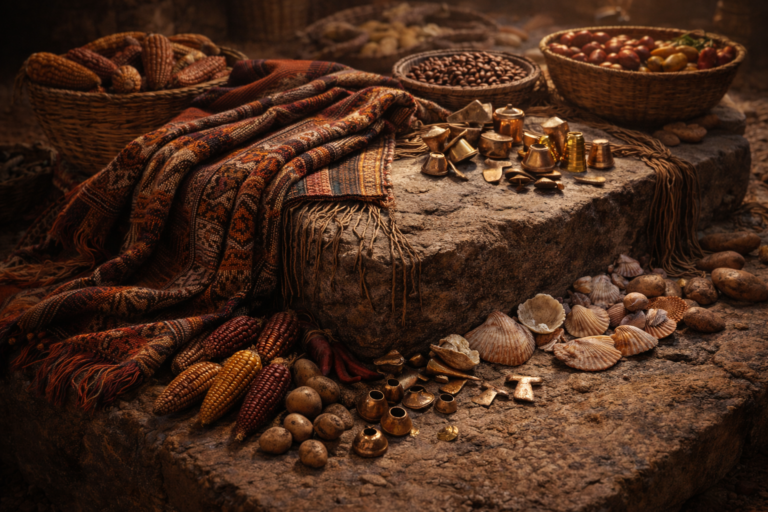
| Market goods. | Why people wanted them. | What made them “market friendly”. |
|---|---|---|
| Textiles and woven goods. | Clothing, gifting, and status. | Quality visible, easy to store, easy to trade again. |
| Salt and minerals. | Daily necessity and preservation. | Divisible, reliable demand, easy to carry in measured portions. |
| Tools and crafted items. | Work and household survival. | Craftsmanship can be inspected before exchange. |
| Botanical bundles. | Food, ritual, and practical use. | Portable, countable, and familiar to most visitors. |
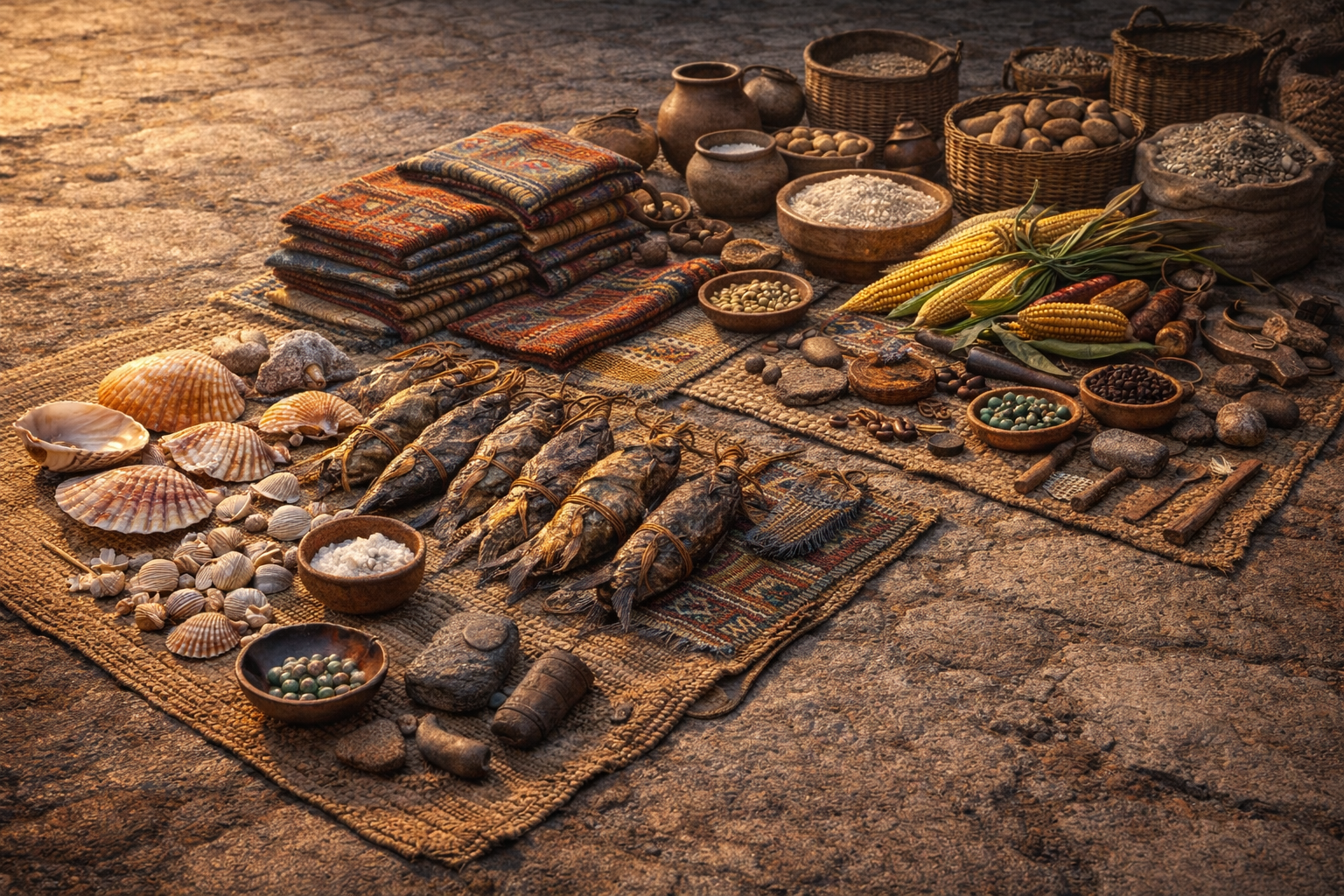
| Shells and coastal goods. | Prestige and symbolism inland. | Distinctive appearance and strong cultural meaning. |
Mobile note. The table scrolls horizontally on phones to keep the layout clean.
Routes, visitors, and repeating standards.
Markets did not exist in isolation. They were supported by routes. When routes were reliable, markets became predictable. Predictable markets created repeat visitors. And repeat visitors created shared standards. That is how “local” exchange slowly becomes “regional” exchange.
A coastal visitor arriving inland brought goods that felt rare. An inland visitor arriving near water brought textiles or minerals that could be scarce locally. Each arrival reinforced the idea that value can travel. And once people accept that value can travel, they start to treat certain goods as reference points, almost like early currency.
Fairness rules people protected.
A market only works when people believe it is fair enough to return. In ancient South America, fairness was protected through public behavior. If someone repeatedly offered low quality goods, the market noticed. If someone broke a promise, networks remembered. In a way, the market itself was the enforcement.
This is why many exchanges were framed as reciprocity. You did not always “win” in the moment. You maintained balance over time. That balance made the community stable. And stability made the market possible.
How markets prepared people for coins.
When coins eventually entered South America, markets were ready. People already knew how to compare. They already knew how to recognize standards. They already knew how to punish cheating socially. Coins did not create those skills. Markets trained them.
Coins simply compressed many market judgments into a smaller object. But the mind of the market remained the same. Trust still mattered. Quality still mattered. And networks still mattered.
These two stories connect directly with today’s market world.
FAQ.
Were ancient markets in South America organized.
Yes. They were organized through reputation, repeat visitors, and shared standards about quality, fairness, and accepted goods.
How did people set value without coins.
Value was set through comparison, recognized quality, and social balance over time. Markets trained communities to agree on what was fair.
Did markets disappear when coins arrived.
No. Markets continued. Coins simply added another tool for exchange, especially with outsiders who did not share local trust networks.
Why are markets important for coin history.
Markets created standards and habits that made coins easier to adopt. People already understood trust, quality, and shared measurement long before coinage became common.