Early Roman Coins and the Birth of Roman Money
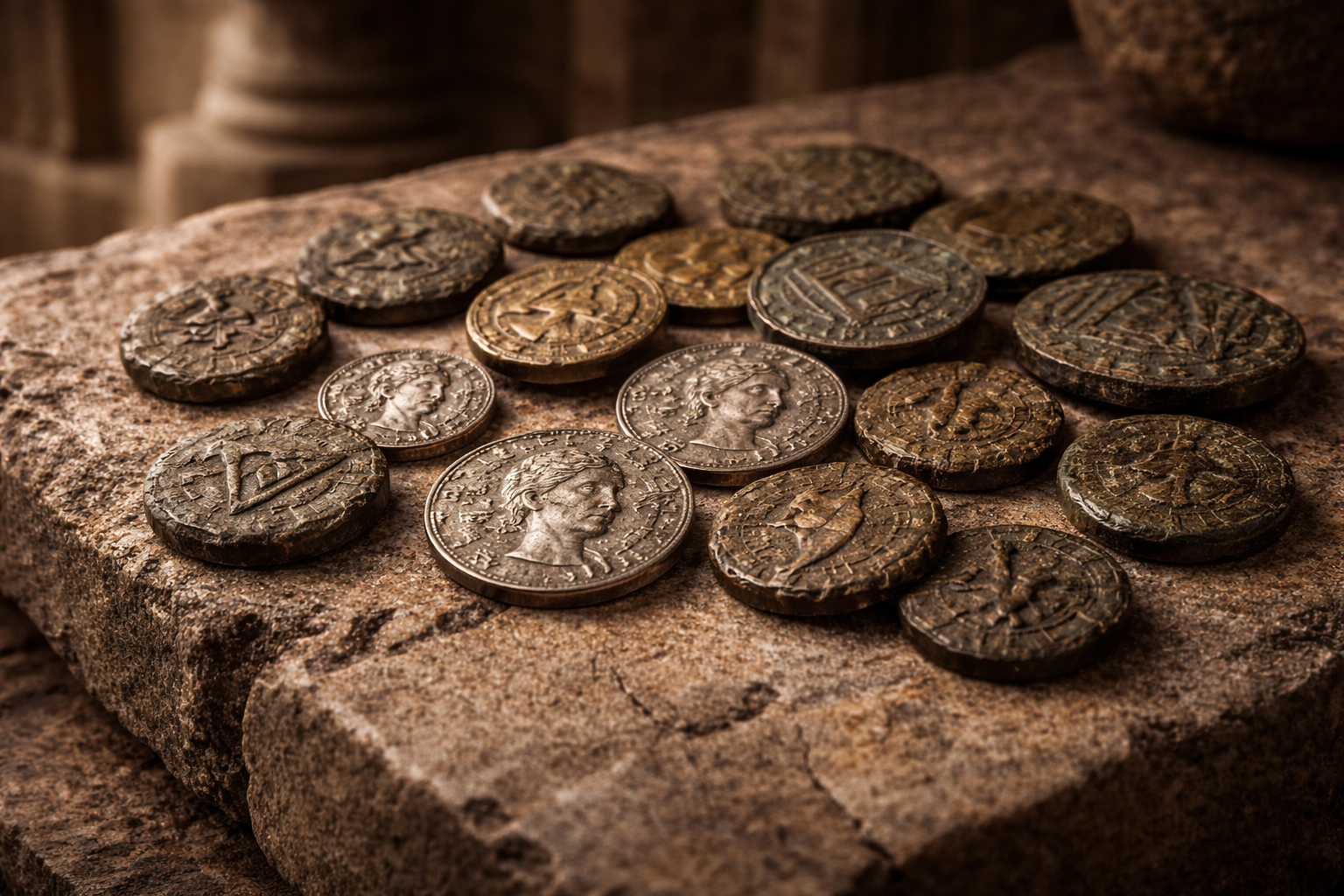
The story of Roman coins is not only a story about metal. It is a story about how a growing city learned to measure trust, pay for effort, and move value across distance. Rome did not wake up one morning with a perfect monetary system. It experimented, adjusted, and slowly built a language of money that could travel with its power.
If you hold an early Roman coin, you are holding a practical decision. How do we pay people reliably. How do we trade with strangers. How do we make a promise that can survive the next market day. This article follows that transformation, from heavy bronze to the moment silver changed everything.
Table of contents.
- Before coins. Value without a stamped unit.
- Bronze as a foundation. When weight mattered most.
- Why Rome needed coins as it expanded.
- Early Roman coin types and what they meant.
- The silver turning point. A new speed of exchange.
- How early Roman money felt in daily life.
- A simple timeline table.
- What coins changed and what they did not.
- FAQ.
Before coins. Value without a stamped unit.
Every coin system begins with a problem that daily life cannot solve forever. In very early exchange, people can trade object for object. Grain for tools. A service for a share of food. A promise for a future favor. This works in small circles where everyone recognizes everyone. It becomes harder the moment you have strangers, larger markets, or regular public payments.
Early Rome lived inside that transition. The city grew. Trade increased. Wars required supplies and organization. The old ways did not vanish, but they started to strain. A community can handle informal exchange for a long time. But once you need repeatable payments, you need something more portable than sacks and more precise than memory.
This is where metal enters the story. Not because metal is magical. Because metal can carry value in a compact form. It can be weighed. It can be stored. It can be moved across a road without spoiling. Metal becomes a bridge between trust and distance.
Bronze as a foundation. When weight mattered most.
The earliest Roman monetary world is deeply connected to bronze. Bronze was practical and familiar. It fit a society that measured value by weight rather than by portrait. In that phase, money is close to raw material. People care more about how heavy it is than what picture is on it.
Think of it like building a house. Before you decorate the walls, you need a foundation. Roman bronze served that role. It gave people a consistent reference for exchange and payment. It also allowed larger transactions to be handled more cleanly than pure barter.
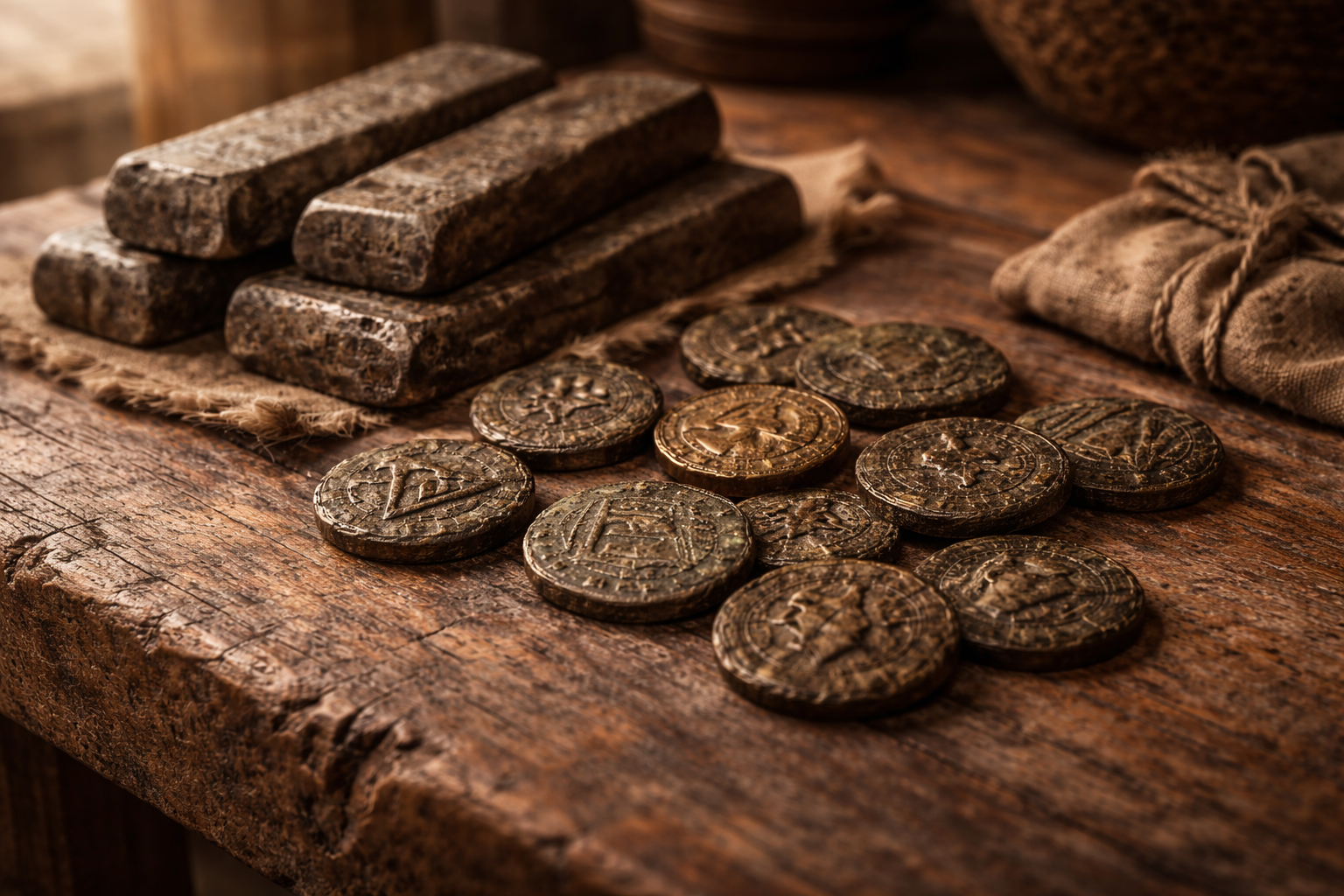
Bronze money also reflects what Rome was at that time. A society where local trade mattered. A society where practical objects were respected. A society where reliability mattered more than beauty. If you want to understand why early Roman money looks heavy and simple compared to later imperial issues, the answer is not artistic taste. The answer is function.
In a weight based culture, the key skill is measurement. People learn to judge metal by feel. They learn to compare pieces quickly. They learn what is fair in a public setting. This is the quiet training ground for everything that comes later. By the time Rome starts striking more standardized coins, the population already understands something crucial. Money needs shared agreement.
Why Rome needed coins as it expanded.
Now picture Rome growing beyond its earliest borders. Expansion changes the economy even before it changes the map. More movement means more strangers. More soldiers means more regular payments. More trade means more complex deals. A heavy bronze system works, but it is slow and cumbersome when transactions multiply.
Armies accelerate monetary change. When you have to feed people, equip them, and keep their morale stable, you need predictable payment. You also need payment that can travel. A coin becomes a solution because it is a promise you can carry. It is not only metal. It is a social contract in a portable form.
Trade does the same thing. When markets connect multiple regions, value needs a common language. Otherwise every exchange becomes a long negotiation. Coins shorten that negotiation. They reduce friction. And the moment friction drops, trade becomes more frequent.
Early Roman coin types and what they meant.
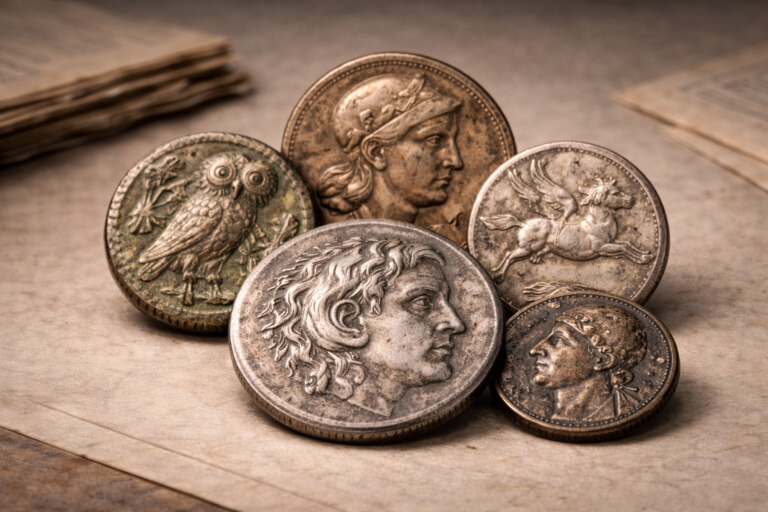
When Roman money begins to look more like what we call coinage, it starts to combine two worlds. The older world of weight and metal. The newer world of standardization and recognizable types. The designs begin to matter, not only for decoration, but for recognition. Recognition reduces doubt. Doubt is the enemy of a fast market.
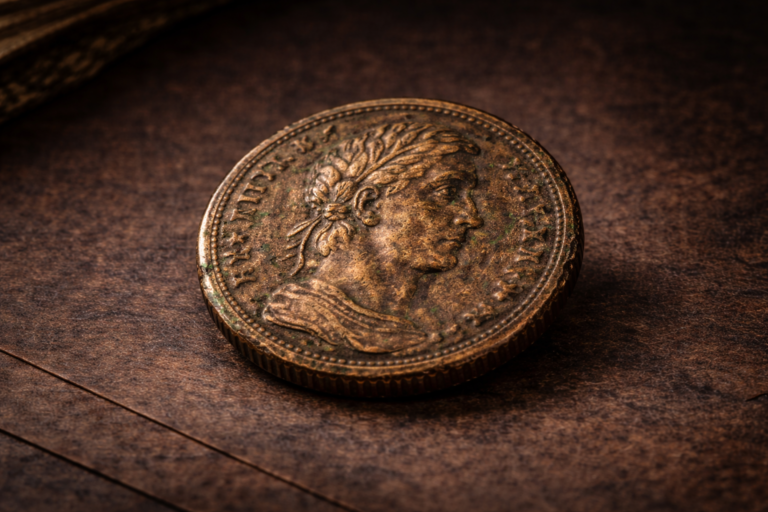
Early Roman issues often focus on strong symbols rather than personal portraits. That makes sense. Portraits are intimate. They demand a political culture where faces represent authority in public space. Early Rome is building toward that. At first, it needs symbols that feel collective and stable.
Even in this phase, the deeper story is not design. The deeper story is standard. A standard coin type says, this is what one unit feels like. This is what one unit weighs like. This is how you recognize it quickly. That speed of recognition is one of the greatest innovations coinage provides.
The silver turning point. A new speed of exchange.
Bronze can build a system. Silver can accelerate it. The moment silver becomes central to Roman coinage, the entire rhythm changes. Silver is higher value per weight. That means you can carry more purchasing power in a smaller space. Soldiers can be paid more efficiently. Merchants can settle larger deals without hauling heavy loads. Taxes and public payments become easier to measure.
This is one reason the transition from bronze to silver feels like a leap, not just a step. It is not only a new metal. It is a new logistical tool. It changes what is convenient, and convenience shapes behavior. When convenience improves, people use money more often. When they use money more often, the state can rely on it more.
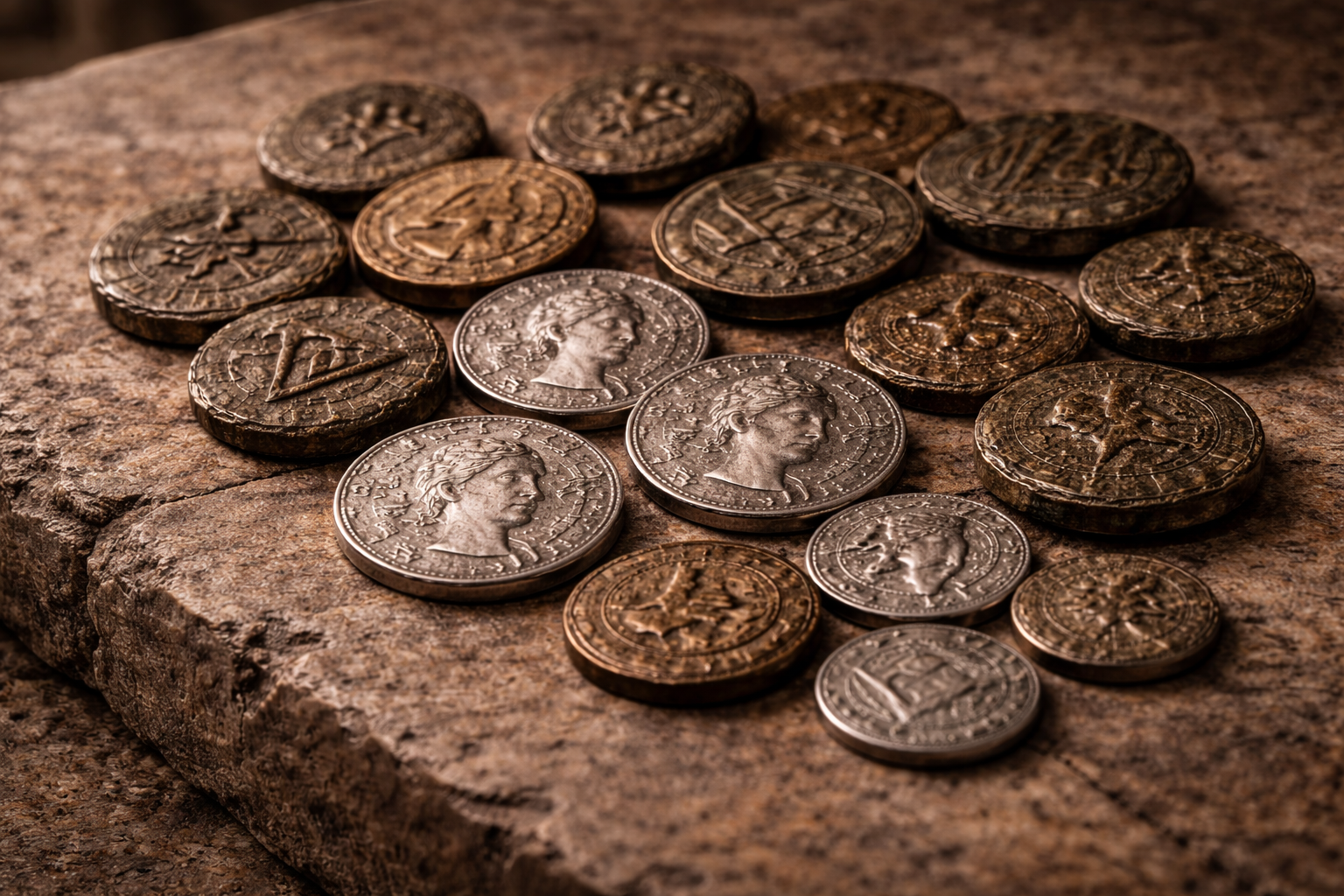
Silver also encourages wider acceptance. In many ancient trade networks, silver travels well because it is recognized beyond local borders. That matters for a Rome that is increasingly connected to other Mediterranean economies. A coin that can be trusted outside your neighborhood is a powerful tool. It is a passport for value.
How early Roman money felt in daily life.
It is easy to talk about coinage like a government decision. But the real test of money is daily life. Can a person use it without fear. Can a market accept it without constant argument. Can a worker understand it without special training. Early Roman money passes those tests slowly, through repetition.
Picture a market scene. A vendor is not thinking about monetary theory. They are thinking about whether the piece of metal in front of them is honest. Whether it feels right. Whether it matches what they accepted last week. Money becomes real when it becomes routine. Routine is built through thousands of small choices, not one official announcement.
This is also where coin design becomes a practical feature. A familiar symbol helps someone accept a coin quickly. The quicker the acceptance, the smoother the market. Smooth markets attract more trade. More trade strengthens the system. It is a loop that grows stronger as Rome grows.
Soldiers experience money differently. For them, money is reliability. A promised payment means the state can ask for discipline and endurance. When payment is regular, an army becomes more stable. When an army is stable, expansion becomes more possible. Coins are not just economic objects in this setting. They are political tools.
A simple timeline table.
The details of Roman coin history can become very technical. But the overall arc is simple. Rome begins with heavy bronze and weight based thinking. Standardization increases. Silver becomes more important as the state and trade networks expand. The system becomes more efficient, and efficiency reshapes daily life.
| Stage. | What dominated. | What it solved. | What it enabled. |
|---|---|---|---|
| Early exchange culture. | Goods, promises, and weighed metal. | Local trade and basic payments. | Repeatable exchange inside close communities. |
| Bronze foundation. | Bronze value measured by weight. | More predictable payments and storage of value. | Wider trade with fewer disputes. |
| Standardized coin types. | Recognizable units and consistent issues. | Faster market acceptance and easier counting. | Higher trade volume and easier public accounting. |
| Silver transition. | Higher value coinage in smaller form. | Large scale payments and long distance settlement. | Expansion friendly logistics and broader acceptance. |
Mobile note. The table scrolls horizontally on phones to keep the layout clean.
What coins changed and what they did not.
Coins changed speed. They changed reach. They changed how Rome could organize payments and trade. But coins did not erase older habits overnight. People still relied on relationships, reputation, and local expectations. Money does not replace human behavior. It adapts to it.
Coins also made measurement easier. Once you have a standardized unit, accounting becomes possible on a bigger scale. That can support public projects, armies, and long distance commerce. But it can also support tighter control. Standard units allow taxes and obligations to be counted and demanded. This is not a moral statement. It is simply what measurement makes possible.
If you are following Ancient Roman Coins History as a series, the next natural step is to explore how Rome used coin imagery as messaging. Once the system is stable, the coin becomes a moving surface for identity. That is where money and power start to blend openly. But the foundation is always the same. People accept what they trust. And trust grows when the world becomes more predictable.
You asked to include both links. Here they are, placed inside the standard related stories card.
FAQ.
Did Rome always use coins.
No. Early Roman exchange relied on goods, obligations, and weighed metal. Coins grew in importance as Rome expanded and needed faster, more reliable payments.
Why was bronze important in early Roman money.
Bronze worked well for a weight based system. It was practical, familiar, and supported daily exchange before the coin system became faster and more standardized.
What changed when silver became central.
Silver made high value payments easier to carry and settle. It helped Rome handle larger scale trade and organization, especially when expansion increased the need for portable value.
Did coins replace older exchange habits overnight.
No. Even with coinage, people continued relying on reputation, relationships, and local standards. Coins mainly improved speed, reach, and repeatability.