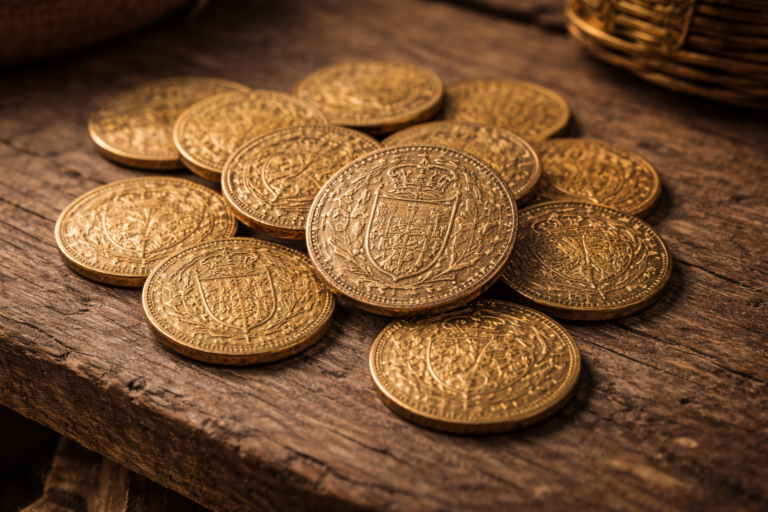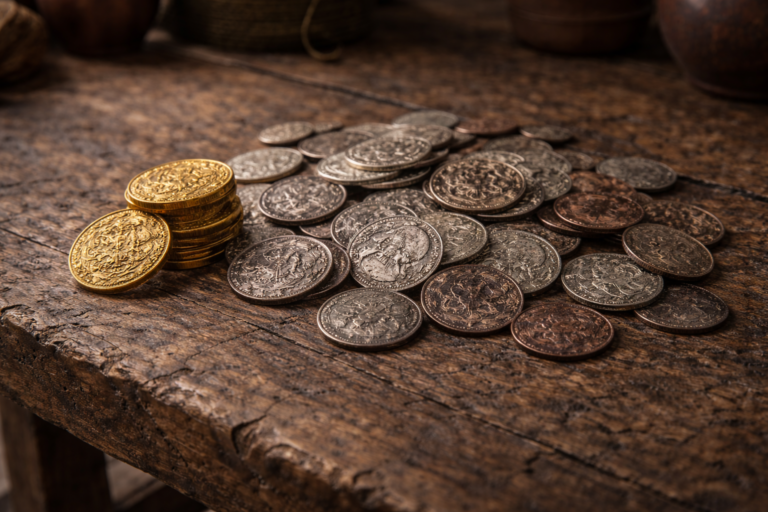
Middle Ages Gold Coins
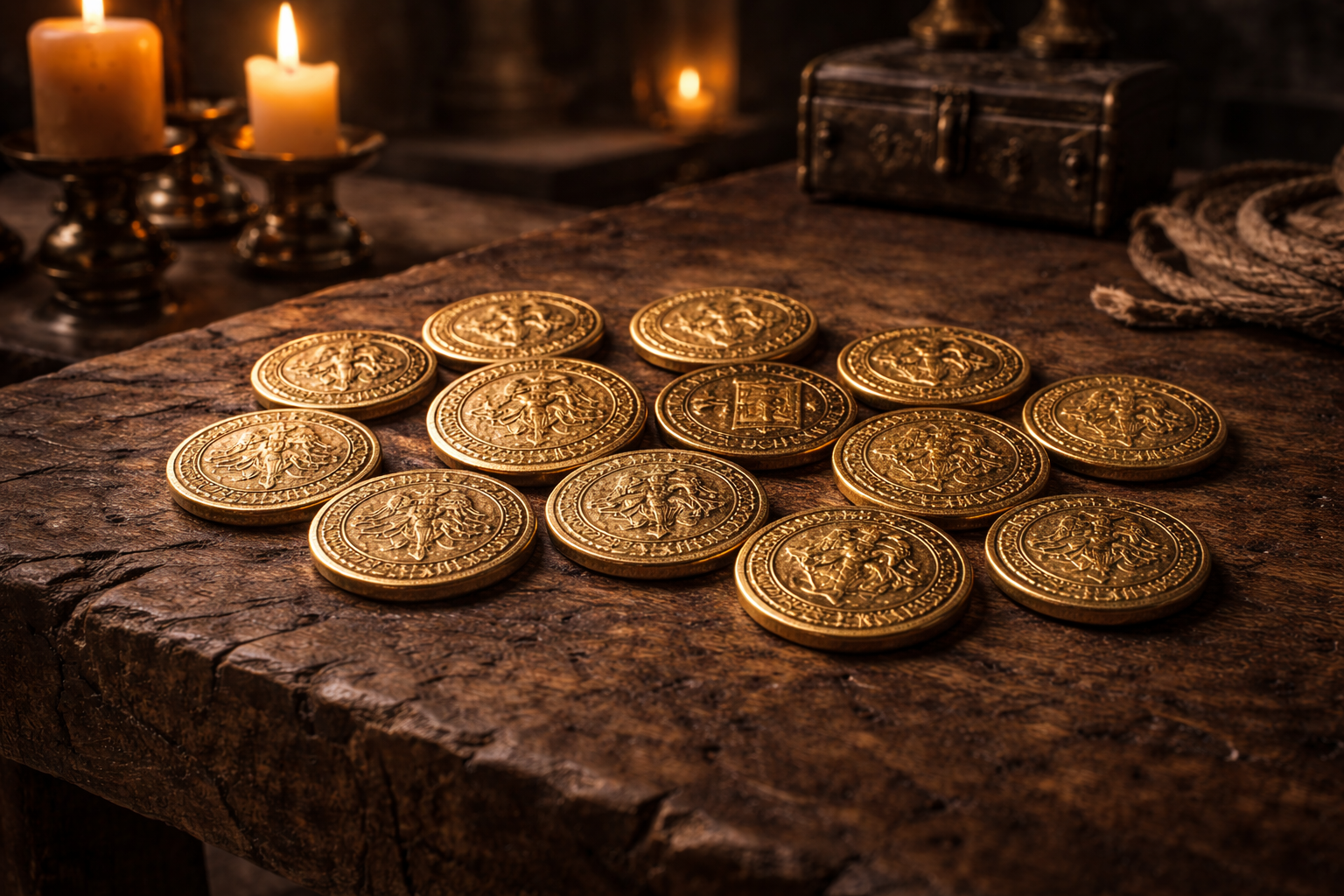
Gold coins in the Middle Ages were not “everyday pocket change” for most people. They were closer to high trust tools that moved big value across distance, risk, and reputation. If you want to understand medieval trade, you follow the gold.
This article is a practical guide to what medieval gold coins actually did. We will look at daily life, taxes, wages, and long distance trade, and why gold became a language of power. Along the way, you will see how trust was designed into metal.
Table of contents.
- What counts as “Middle Ages” gold.
- Why gold returned to European coinage.
- Gold coins in medieval daily life.
- How gold shaped medieval trade.
- Taxes, ransom, and the power behind gold.
- Trust and power behind medieval gold.
- Mid-article table. Where gold actually appeared.
- What collectors notice first.
- Related HistoraCoin stories.
- Share this story.
- FAQ.
What counts as “Middle Ages” gold.
When people say Middle Ages, they usually mean roughly the fifth century to the fifteenth century in Europe. Gold existed the whole time, but gold coinage changed shape across those centuries. In many regions, early medieval economies leaned heavily on silver and on non coin exchange. Later, especially from the high medieval period onward, gold coinage reappeared in a powerful way.
That comeback mattered because it changed the scale of transactions people could complete in a single object. A gold coin was compact value. It could move wealth faster than a bag of small silver coins. It could cross borders more easily. And it was harder to ignore in a political or tax context.
Why gold returned to European coinage.
Gold coinage did not “return” because medieval people suddenly became richer overnight. It returned because trade networks grew more ambitious, cities became denser, and states learned to finance themselves with greater precision. When merchants need to settle large balances, and when governments need to collect large taxes, a high value coin becomes a practical tool.
There is also a material reality that never disappears. Gold is durable. It does not rust. It survives long travel and long storage. And in many parts of the medieval world, it had a cross cultural reputation that made it easier to accept than unfamiliar local silver. If you are a merchant meeting strangers, you want money that needs fewer explanations.
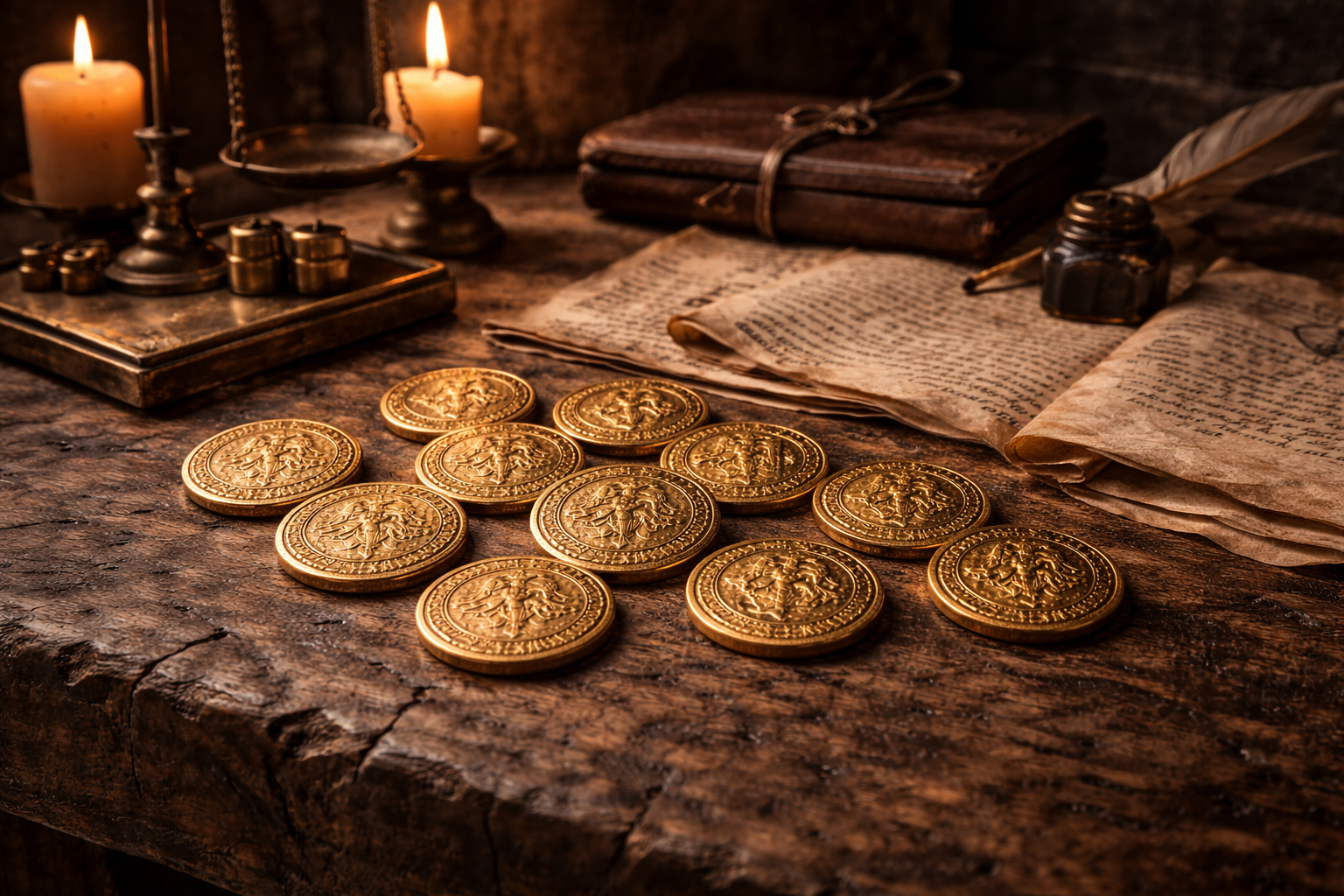
In the background, the Mediterranean never stopped being a gold connected world. Gold moved through Byzantium, through Islamic dynasties, and through African trade networks. European mints did not exist in isolation. They watched what worked. They learned from foreign coins already trusted by merchants. And once the economic pressure was strong enough, local gold issues became part of the system.
Gold coins in medieval daily life.
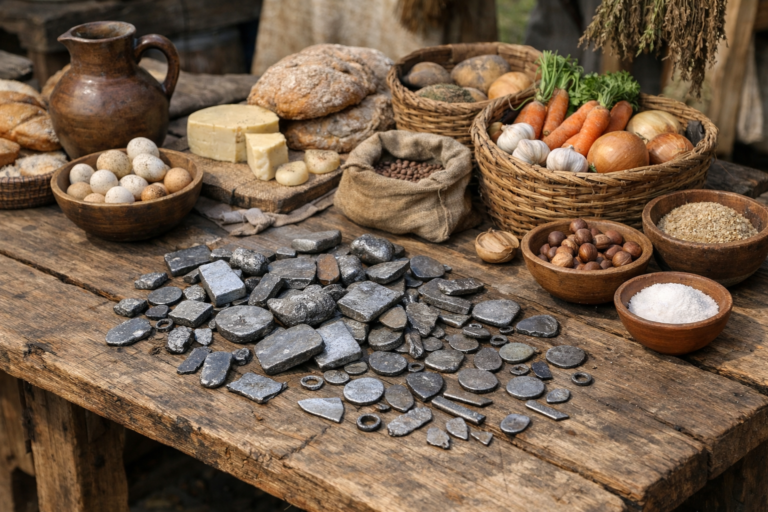
Here is the honest truth. Most medieval people did not buy bread with gold. They bought bread with smaller silver, sometimes with local small change, and sometimes with credit arrangements that never involved a coin in the moment. Daily life was full of small obligations and routine purchases. Gold did not fit that scale for most households.
But gold still touched daily life, even for people who rarely held it. It touched life through moments when the normal routines broke. A tax collector arrives. A rent is due. A daughter’s marriage arrangement is negotiated. A merchant pays a wholesaler. A traveler needs safe money for a long journey. A monastery receives a donation. These are the moments when gold becomes real.
Another daily life angle is wages. Gold wages existed, but they were not the normal experience for most laborers. They were more likely for elite service, specialized roles, or large contracts. If you imagine a world where everyone is paid in gold, you will misunderstand medieval inequality. Gold coinage makes inequality more visible, because it can hold huge value in one piece.
How gold shaped medieval trade.
Medieval trade was not one simple road with a friendly market at the end. It was a chain of risk. Banditry existed. Shipwreck existed. Political borders existed. And the biggest risk of all was simple disagreement, because a stranger can always claim your money is not good enough.
Gold coins helped reduce that argument. Not because everyone trusted every gold coin, but because gold created a common language for negotiation. Weight. Purity. Familiar design. Known mint reputation. These things are legible even when people do not share a language. If you can test a coin and compare it to a known standard, you can trade without love. You only need enough trust to complete the deal.

This is where the idea of trust becomes practical. A merchant might accept a gold coin not because he loves the ruler on it, but because he believes other merchants will accept it tomorrow. The coin becomes social proof. In a way, it is medieval network effect, stamped into gold.
If you want an interesting comparison inside HistoraCoin, look at how ancient and medieval coins show up far from where they were made. Coins travel with people. That is why some medieval pieces later appear in unexpected places, including North American contexts discussed in this story. You can read that angle here: ancient and medieval coins used in Canada.
Taxes, ransom, and the power behind gold.
Gold is never only economic. It is political. The medieval state, whether a kingdom, a city republic, or a church authority, learned that gold simplifies extraction. If a government can demand a tax in high value coin, it reduces the chaos of collecting a mountain of small pieces. It also reduces the ability of a taxpayer to negotiate by paying in awkward forms.
Gold also lives in the world of crisis payments. Ransoms. Fines. Diplomatic gifts. War finance. If you read medieval chronicles, you will notice how often wealth is described in gold terms even when the details are messy. Gold becomes shorthand for “serious money.”
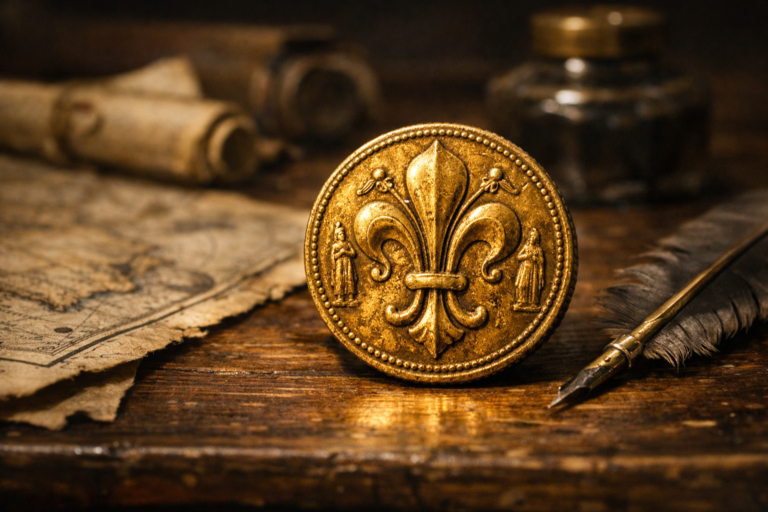
That is why medieval gold coins often carry confident iconography. Crowns. Crosses. Saints. Strong lettering. Heraldic shields. These are not random. They are signals meant to be read quickly. They say, this coin belongs to an authority that expects to be obeyed.
Trust and power behind medieval gold.
A medieval gold coin is a small technology. It solves problems. It makes value portable. It makes value testable. It makes value legible through design. It also makes value political, because the design ties metal to a name.
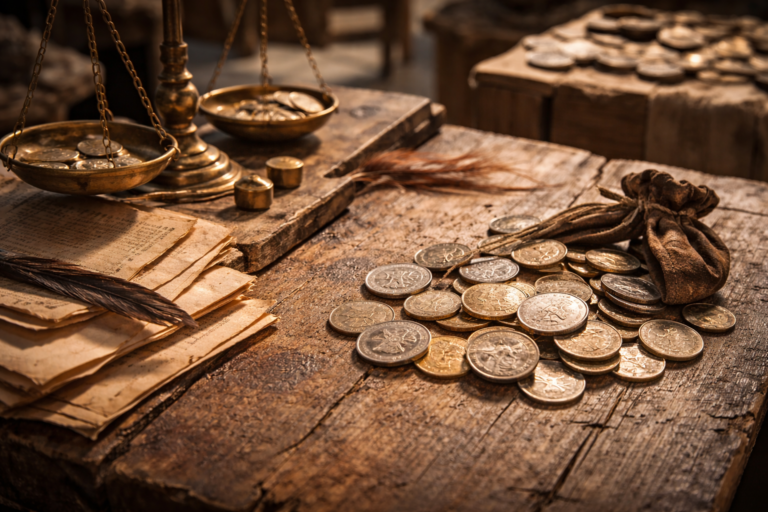
In practice, trust was not blind. Merchants used scales. They watched for clipping. They compared known examples. They negotiated discounts if a coin looked worn or suspicious. You can think of it as a constant dance between acceptance and verification. The coin is trusted, but it is also checked.
Mid-article table. Where gold actually appeared.
| Situation. | Who used gold most. | Why gold made sense. |
|---|---|---|
| Long distance trade settlements. | Merchants, financiers, major guild networks. | High value in small space, easier cross border negotiation. |
| Taxation and state finance. | Authorities and taxpayers with assets. | Efficient collection and clearer accounting. |
| Elite payments and large contracts. | Nobility, court service, specialized roles. | Gold communicates status and settles big sums cleanly. |
| Religious gifts and endowments. | Patrons, monasteries, church treasuries. | Durable wealth that stores well over time. |
| Crisis payments like ransom and fines. | States, armies, nobles, wealthy households. | Fast settlement in moments where delay is dangerous. |
Mobile note. This table scrolls horizontally on phones to keep the design clean.
What collectors notice first.
Collectors often fall in love with medieval gold for one reason. It looks like confidence. Even when a coin is small, the message is loud. The designs are meant to be read at speed. The metal looks like permanence. And the coin feels like it belongs to a world where money and identity are tied together.
If you want to read a medieval gold coin like a historian, ask three questions. Who is the authority behind it. What community was meant to trust it. And what problem did it solve at the time. That mindset turns a beautiful object into a story.
A practical tip for storytelling.
When you describe a medieval gold coin, describe the moment it was needed. A merchant settling a shipment. A tax payment at the city gate. A noble turning land rents into portable wealth. The coin becomes more human when it has a scene.
Related HistoraCoin stories.
If you enjoyed this topic.
Continue with this connected story about how ancient and medieval coins later appear in North American contexts: Ancient and medieval coins used in Canada.
FAQ.
Were medieval gold coins used by ordinary people every day.
Usually not. Most everyday purchases were handled with smaller silver, local change, or credit. Gold appeared more in large payments, taxes, and long distance trade.
Why did medieval rulers put religious symbols on gold.
Because symbols are fast trust. A cross, a saint, or a clear royal title communicates authority and legitimacy in a single glance, which helps acceptance in trade.
How did merchants check gold coins in the Middle Ages.
They used scales, compared known examples, and watched for clipping, unusual wear, or suspicious surfaces. Trust existed, but verification was normal.
Did gold coins matter for medieval taxation.
Yes. Gold makes large obligations easier to collect and account for. It also reduces negotiation, because the value is concentrated and legible.
What is the best way to study medieval gold without myths.
Focus on function. Ask what problem the coin solved, who needed it, and where it moved. That approach stays grounded and still makes the story exciting.