
Gold Coins in Medieval Daily Life

Gold coins in the Middle Ages rarely lived in the “small purchase” world. Yet they still shaped daily life more than most people realize. Even when a household never held gold, gold often sat quietly behind the biggest decisions.
This article explains where medieval gold truly appeared. Not in myths, not in dramatic treasure scenes, but in rent, wages, debt, travel, and the everyday pressure of settling accounts. If you want to picture medieval money honestly, you start with the moments when life demanded certainty.
Table of contents.
- What “daily life” really means for gold.
- Who actually touched gold coins.
- Where gold appeared in ordinary routines.
- Credit first, gold last.
- Travel, safety, and portable value.
- Household savings and crisis payments.
- Mid-article table. Everyday situations that pulled gold into view.
- Common misunderstandings about “everyday” gold.
- Related HistoraCoin stories.
- Share this story.
- FAQ.
What “daily life” really means for gold.
When people hear “gold coins in medieval daily life,” they often imagine gold changing hands in every market stall. That picture is usually wrong. Medieval daily life had a money ecosystem. Small needs were handled with smaller coins, barter-like exchange, or credit that relied on local relationships. Gold lived in a different layer.
Daily life, in this context, means the recurring obligations that shaped a household’s stability. Rent. Taxes. A major purchase that mattered for survival. A debt that could not stay open forever. A payment made at the end of a long chain of credit. These events might not happen every day, but they were part of the ordinary rhythm of life. Gold showed up when that rhythm required a clean conclusion.
Who actually touched gold coins.
Gold coins tended to move through specific hands more frequently. Merchants who settled large balances. Skilled professionals who handled valuable goods. Officials connected to taxation or civic finance. Wealthy households with property income. Religious institutions receiving donations. Travelers who needed a portable store of value.
This does not mean ordinary people never saw gold. Gold could appear during seasonal rent collections, during a family inheritance, or during a rare but serious purchase. But it is important to understand the social pattern. Gold coins concentrated where large obligations and long distance connections were common.
A realistic mental image.
Think of gold moving through the town like a “high value current.” It passes through fewer hands, but when it passes, it changes the outcome of bigger decisions.
Where gold appeared in ordinary routines.
Gold appeared in medieval life in places that feel surprisingly normal once you stop looking for drama. A landlord collecting a large rent. A merchant paying a wholesaler after weeks of market sales. A craft workshop settling a costly supply purchase. A family paying a fee tied to land, legal status, or protection. Gold was often part of the serious side of life, where the margin for disagreement was small.
Gold also shaped how people thought about value. Even if payment was made in mixed coins, gold could define the standard. People might describe a large debt “in gold,” then pay the sum using whatever coinage was available, calculated against that gold reference. In that way, gold influenced daily life even when it was not physically present.
Credit first, gold last.
One of the most overlooked truths about medieval daily life is how much it relied on credit. In tight communities, people knew each other. Trust could run on reputation and memory. A baker might allow payment later. A farmer might accept delayed settlement after a harvest. A trader might keep a running account with repeat customers.
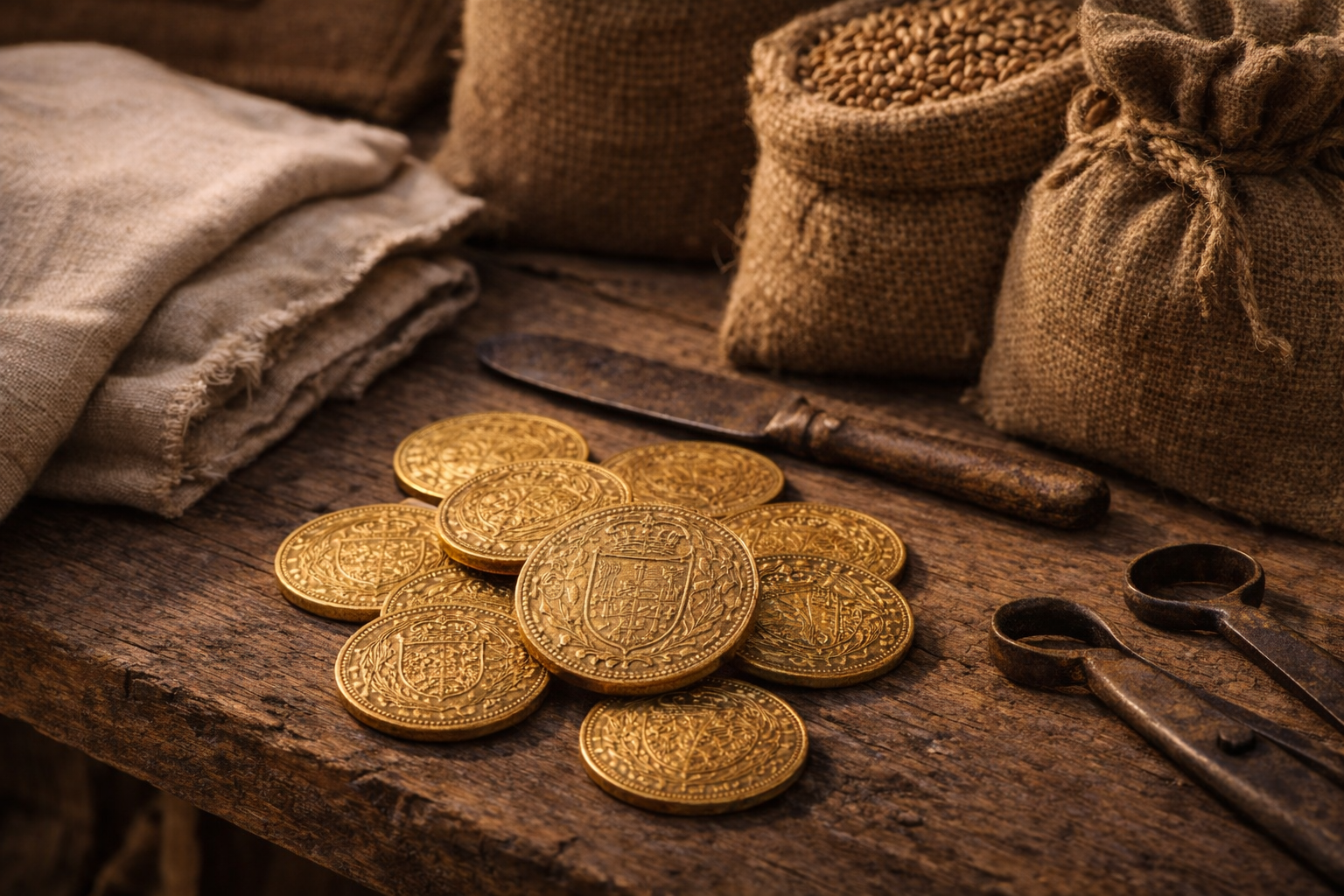
Gold coins often entered the story at the end. Not to start the relationship, but to close the books. When accounts had to be settled cleanly, gold’s concentrated value helped. Instead of counting hundreds of smaller pieces, a few high value coins could finalize an agreement. Gold made closure easier.
Travel, safety, and portable value.
Travel in the Middle Ages was risky. Roads could be dangerous. Borders could shift. Local coin types could confuse outsiders. In that environment, the portability of gold mattered. A few coins could hold meaningful value without adding weight or bulk.
For travelers, gold was not about showing off. It was about surviving unpredictability. If you needed to pay a large fee quickly, settle a sudden debt, or secure a service far from home, gold gave you options. And because gold was widely respected, it reduced the friction of negotiating value with strangers.
Household savings and crisis payments.
Medieval households that had access to wealth often used gold as a form of savings. Not because they planned to spend it every week, but because they understood durability. Gold kept its identity through time. It was harder to ruin, harder to ignore, and easier to transport in an emergency.
This is where gold becomes deeply personal. A family might keep a small set of gold coins for the worst moment. A medical crisis. A legal crisis. A sudden tax burden. A ransom demand. A forced journey. Gold coins did not need to circulate daily to shape daily life. They shaped life through the promise of security.

Mid-article table. Everyday situations that pulled gold into view.
| Everyday situation. | Why gold appeared. | What it solved. |
|---|---|---|
| Rent and large seasonal obligations. | The sum was too large for routine small coin counting. | Faster settlement with less dispute. |
| Merchants settling wholesale accounts. | Accounts built up over weeks and needed a clean close. | Compact value for final balance payments. |
| Travel and unexpected fees. | Strangers needed a trusted form of value. | Portable money that reduced negotiation friction. |
| Household savings and emergencies. | Gold stored value well and moved easily if needed. | Security in crisis moments. |
| Taxes, fines, and legal payments. | Authorities preferred efficient high value settlement. | Clear, enforceable payment standard. |
Mobile note. This table scrolls horizontally on phones to keep the layout clean.
Common misunderstandings about “everyday” gold.
The biggest misunderstanding is that gold must be common to matter. Gold mattered because it was decisive. It entered the story when a decision could change a household’s future. It functioned like an anchor behind the rest of the money system.
Another misunderstanding is assuming gold was always trusted without question. Medieval people verified value whenever they could. They weighed coins. They watched for clipping. They negotiated based on wear and reputation. Gold was trusted, but trust was practical, not naive.
The most honest summary.
Gold coins were not everywhere. But when they appeared, they changed the outcome. That is why they belong inside the story of medieval daily life.
Related HistoraCoin stories.
Continue exploring.
Two more HistoraCoin stories will appear here automatically in your “Related HistoraCoin stories” card, following your fixed publishing workflow.
FAQ.
Did ordinary people use gold coins for daily shopping.
Usually no. Small purchases were typically handled with smaller coinage or credit. Gold appeared more in large obligations, settlements, and serious payments.
Why did gold still matter if it was not common.
Because gold settled big problems. It helped end uncertain accounts, supported travel and trade, and stored value for crisis moments.
What is the most common place gold entered daily life.
Large settlements like rent, wholesale trade balances, taxes, and emergency payments are some of the most common situations where gold became visible.
Were medieval people able to verify gold coins.
Yes. They used weighing, comparison, and negotiation based on wear and reputation. Trust was real, but verification was normal.
Is it accurate to call gold “everyday money” in the Middle Ages.
It is more accurate to call gold a settlement and security tool. It shaped everyday life through major obligations rather than routine shopping.