How many gold coins in medieval daily life
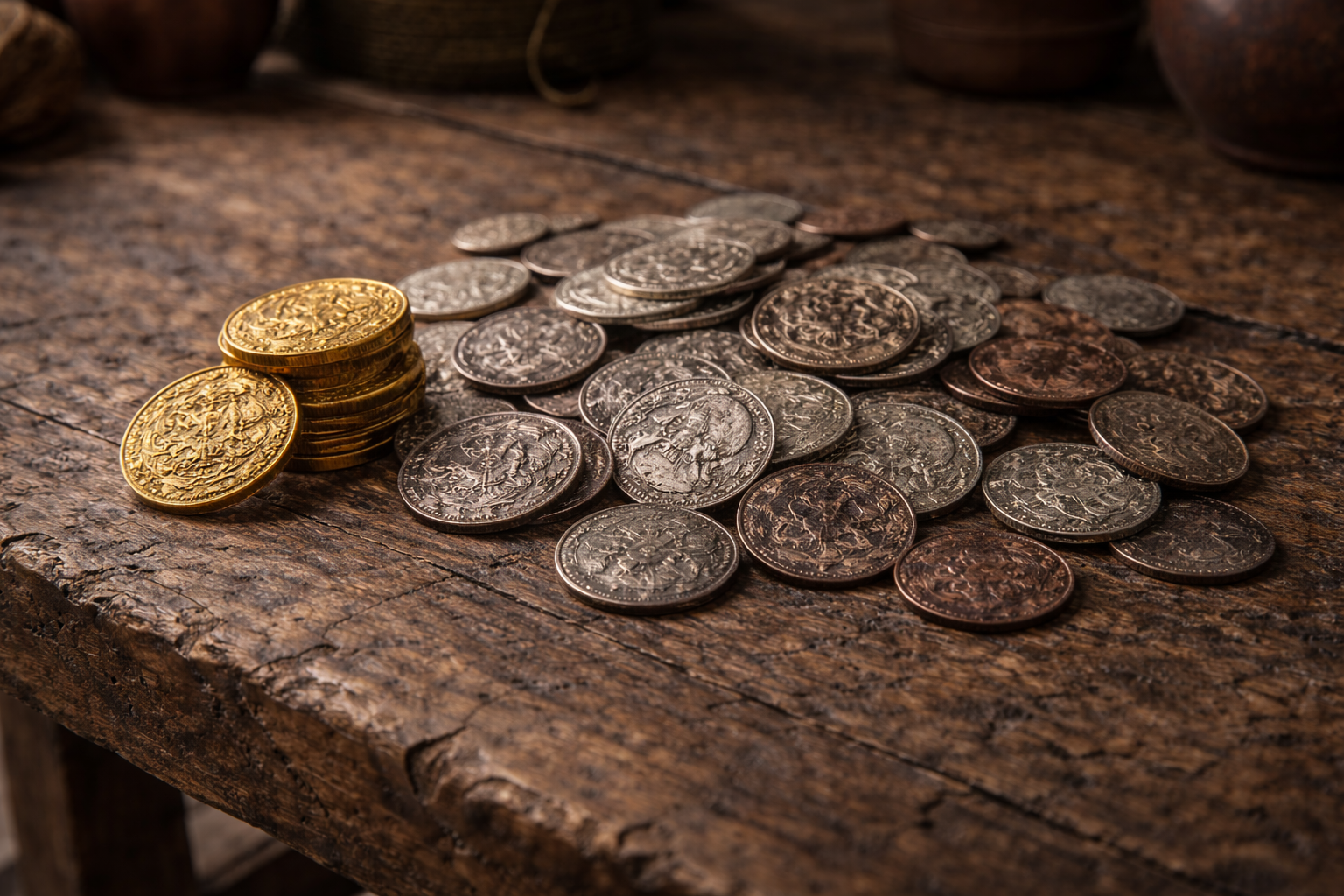
The honest answer to “how many gold coins were in medieval daily life” is not a neat number. It depends on the place, the century, and the social layer you are talking about. Gold was real money, but it was not the everyday “counting coin” for most people.
What we can do, though, is something better than a fake statistic. We can map where gold actually appeared, how often it surfaced in ordinary routines, and why silver and smaller coinage carried most daily transactions. Once you see the pattern, the question becomes clearer and more accurate.
Table of contents.
- Why this question does not have one number.
- What “daily life” means in a medieval money context.
- Gold in quantity. Small.
- Gold in impact. Huge.
- Where gold actually showed up.
- Why silver and small coinage dominated.
- Mid-article table. When you were most likely to see gold.
- How to answer “how many” without inventing numbers.
- Related HistoraCoin stories.
- Share this story.
- FAQ.
Why this question does not have one number.
A medieval town did not operate with one national currency and one predictable supply. Coinage moved with trade, war, taxation, migration, and politics. A coastal city could see more gold because merchants and foreign coins passed through. A small inland village might see almost none, because local life was handled through small coins and relationships.
The Middle Ages also lasted many centuries. Gold coinage became more prominent in some regions later in the period, especially where long distance trade expanded and cities gained power. So the number of gold coins “in daily life” in one century can look completely different in another.
What “daily life” means in a medieval money context.
Daily life does not only mean buying bread or paying for candles. In medieval life, the “daily” economy included recurring obligations that shaped survival and stability. Rent. Local taxes. Debts that rolled forward until settlement. Travel fees. Payments to secure labor, supplies, or protection. These were normal pressures, even if they were not paid every single day.
Gold coins appear most often in the moments where the sum is large enough that smaller coin counting becomes inefficient, or where trust needs to be made visible. That is why gold is not an everyday shopping coin for most people, but it still belongs in the story of everyday medieval life.
Gold in quantity. Small.
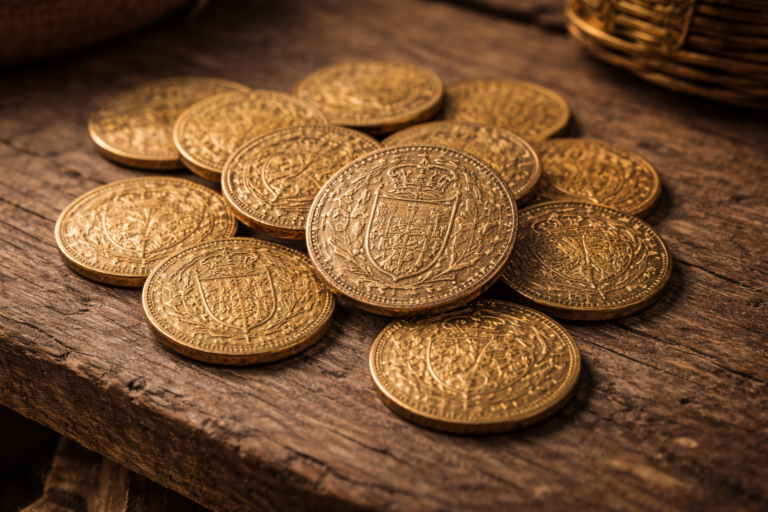
If we answer your question in a single sentence, it would be this. In most medieval settings, there were far fewer gold coins circulating than silver and smaller coinage. That is not a guess. It is a structural reality. A gold coin holds a lot of value in one piece. You do not need many of them to represent significant wealth.
This is why people who look for “how many” often feel disappointed. They want a big number. But the correct historical picture is often the opposite. A small number of gold coins could dominate an economy’s high value layer, while thousands of smaller coins handled daily counting.
Gold in impact. Huge.
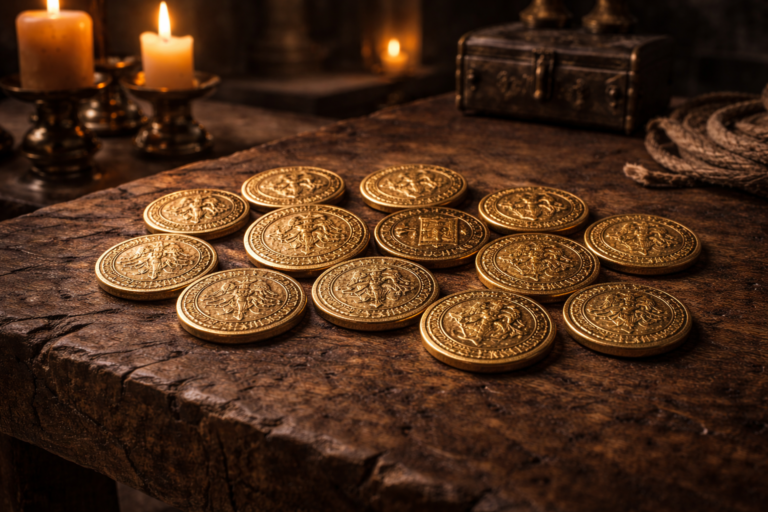
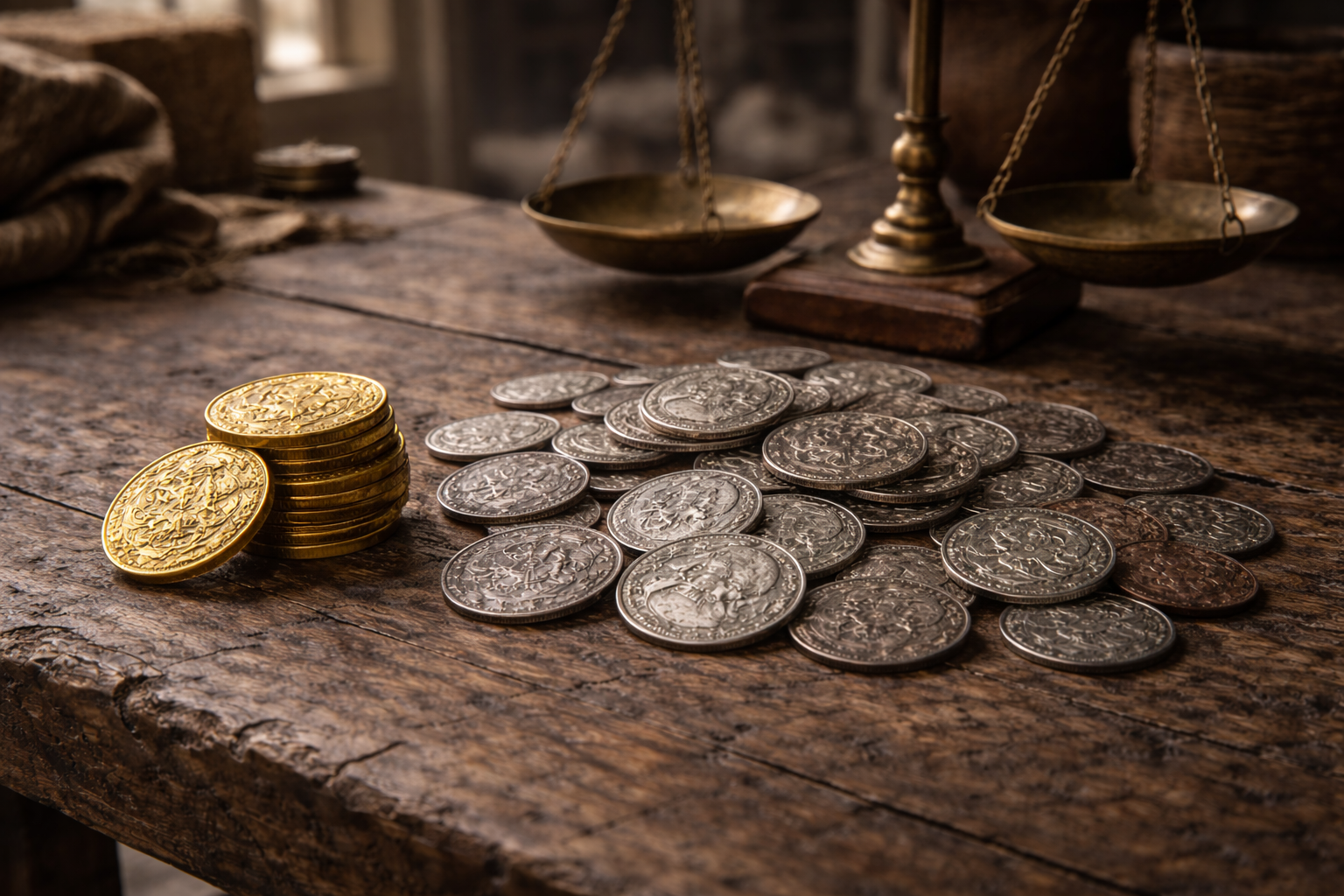
Even when gold coins were few, their impact was large because they solved different problems. Gold helped settle large balances. It helped store value across time. It helped travel and trade move across borders where local coins were not trusted. It also helped states collect and account for revenue with less friction.
This is the key mindset shift. The right question is not only “how many.” The right question is “when did gold matter.” Gold mattered when the stakes were high and the cost of disagreement was high. That is why a few coins could shape the outcome of rent collection, wholesale trade, or an emergency payment.
Where gold actually showed up.
In practical terms, gold showed up in medieval life in recurring categories. Larger rent payments and seasonal obligations. Wholesale settlements between merchants. Travel and cross border fees. Taxes and state finance, especially when sums were large. Religious donations and endowments in wealthier circles. Crisis payments like fines, legal settlements, or ransom demands.
Notice what these categories have in common. They are not tiny purchases. They are moments of settlement. Gold fits the settlement moment because it concentrates value and makes value visible. That visibility matters when trust is fragile or when an authority needs the payment to be clear.
Why silver and small coinage dominated.
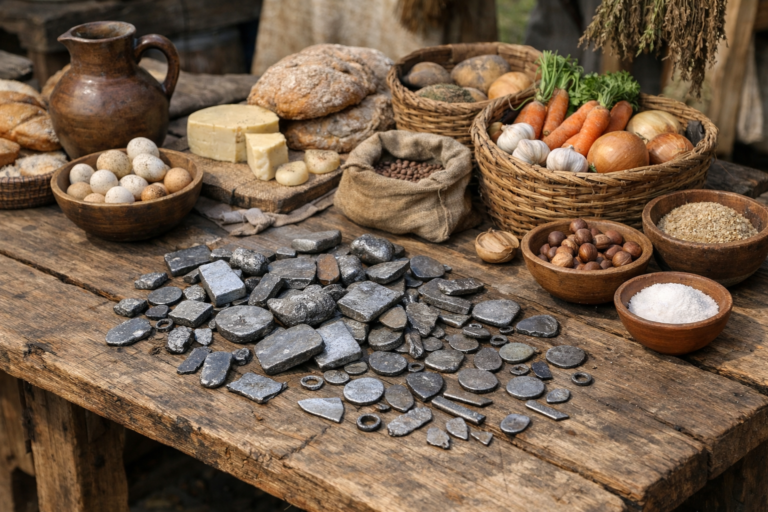
Silver and small coinage dominated daily life for the simple reason that most daily needs were small. Bread, basic goods, minor services, and routine transactions require coins that can “make change.” If a gold coin represents too much value, it becomes awkward in normal shopping. You either cannot divide it, or you must rely on complicated exchange and counting.
Small coinage also fits local trust. In villages and neighborhoods, credit and reputation could do a lot of the work. A small coin might serve as a token, a reminder, or a partial payment, with the rest settled later. Gold was not necessary for that social rhythm. It was necessary when the rhythm broke and settlement became urgent.
Mid-article table. When you were most likely to see gold.
| Situation. | How common gold was. | Why it appeared. |
|---|---|---|
| Small daily shopping. | Rare for most people. | Gold was too high value for routine change making. |
| Rent, large seasonal obligations. | More likely in wealthier contexts. | High value settlement with fewer coins. |
| Wholesale trade settlements. | Common among merchants. | Gold reduces friction in large balance payments. |
| Travel and cross border payments. | Occasional but important. | Portable value that strangers respected. |
| Taxes, fines, legal settlements. | Varies by region and status. | Authorities preferred clear, efficient settlement. |
| Household savings and emergencies. | Small quantities, high meaning. | Gold stored value for crisis moments. |
Mobile note. This table scrolls horizontally on phones to keep the layout clean.
How to answer “how many” without inventing numbers.
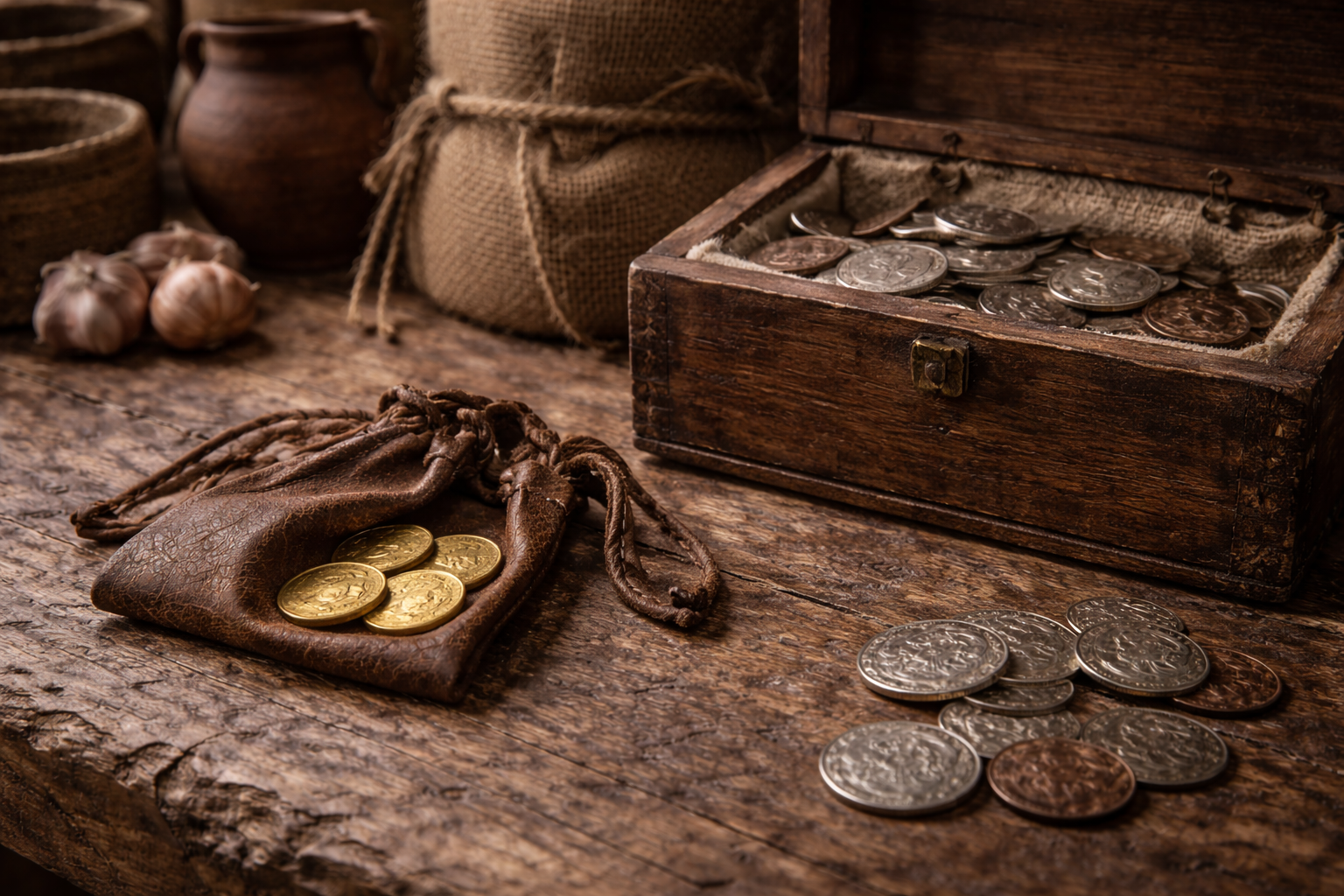
If you want a historically honest answer, you can answer in layers instead of a single number. First, say that gold coins were far fewer in quantity than silver and small coinage in most medieval settings. Second, explain that gold appeared mainly in high value settlements and serious obligations, not routine shopping. Third, add that the frequency depended heavily on region, century, and social status.
This is not avoiding the question. It is respecting the reality of medieval economies. The truth is more useful than a fake statistic, because it helps you picture medieval life correctly. Gold coins were not everywhere. But they mattered when life demanded certainty.
A simple one line answer you can trust.
In most medieval daily life, gold coins were few in number, but they appeared at key settlement moments where large value and trust mattered most.
Related HistoraCoin stories.
Continue exploring.
Two more HistoraCoin stories will appear here automatically in your “Related HistoraCoin stories” card, following your fixed publishing workflow.
FAQ.
Is there a single number of gold coins used in medieval daily life.
No. The number depends on region, century, and social class. Gold was generally scarce in quantity compared to silver and small coinage, but it played a major role in large settlements.
Did ordinary people carry gold coins every day.
Usually not. Most routine purchases were handled with smaller coinage and credit. Gold appeared more often in major obligations, travel, and serious settlements.
Why were gold coins few but still important.
Because each gold coin represented high value. A small number of coins could settle large debts, store wealth, and support long distance trade where trust was limited.
What is the most common context where gold appeared.
Large settlement moments like rent, wholesale balances, taxes, legal payments, and emergency situations are some of the most common contexts where gold became visible.
What is the most accurate way to describe gold in medieval daily life.
Gold was a settlement and security tool. It shaped everyday life through major obligations and high value moments rather than routine shopping.