Five things that were used before money was invented
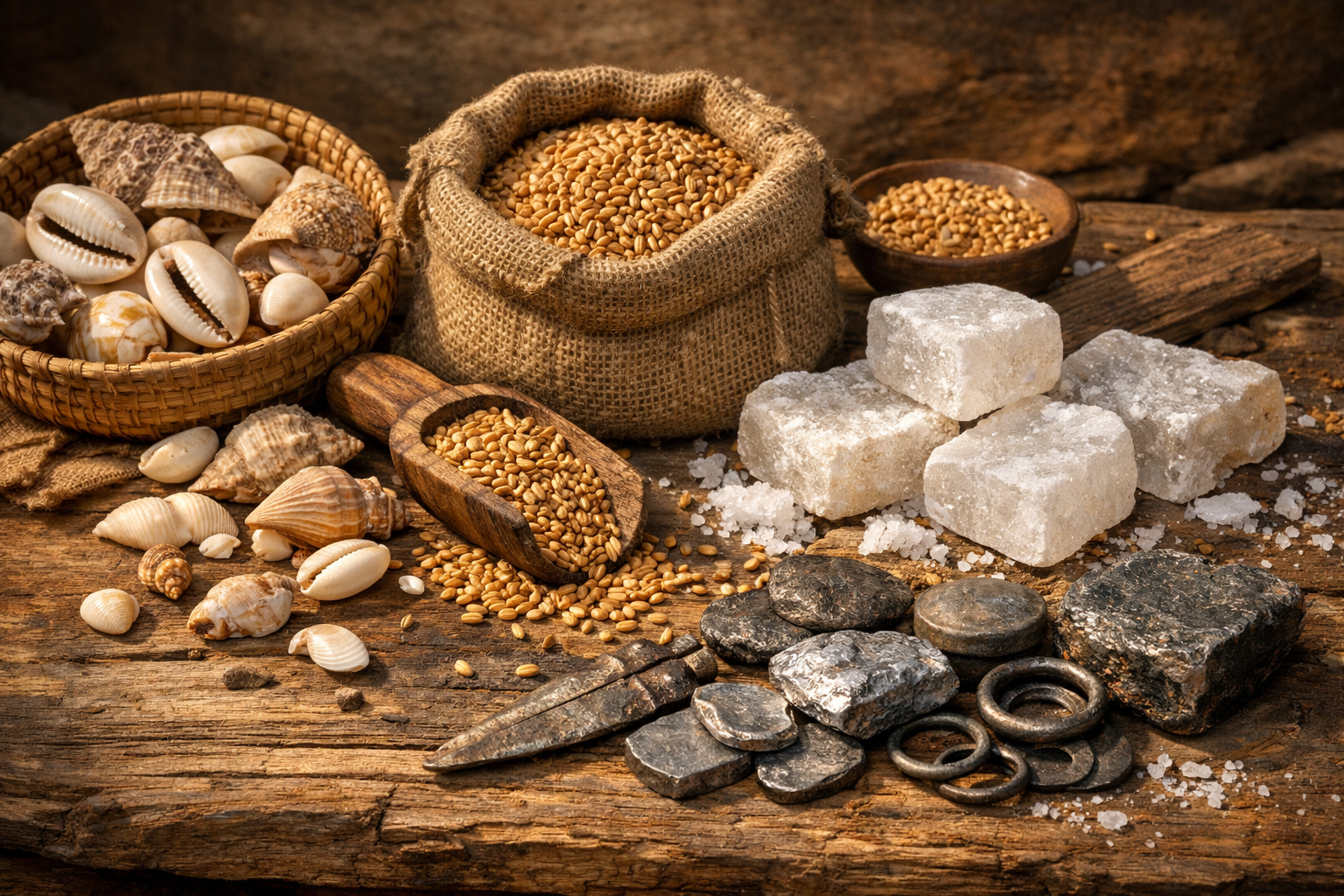
Before coins existed, people still traded, traveled, and built trust across communities. They simply did it with objects that could carry value in a way others recognized. Money was not “invented” in one day. It was slowly shaped by daily problems that needed better solutions.
This article breaks down five things people used before money was invented, and why each one worked for a while. Some were portable. Some were measurable. Some were durable. And all of them reveal the same truth. People were searching for a shared language of value long before the first coin was struck.
Table of contents.
What people needed before money.
Early exchange was not “primitive” in the way people often imagine. It was smart and adaptive. But it had a recurring problem. If you want to trade regularly, you need something that can do three jobs at once. It needs to store value over time, move value across distance, and measure value in a way both sides accept.
When a society does not yet have coins, those jobs are done by whatever object fits local life. The object must be recognized. It must be hard to fake. It must be practical to carry. And it must be valuable enough that people bother to accept it. The five examples below succeeded because they matched those needs in different environments.
1. Shells.
Shells, especially those that were attractive and hard to obtain inland, became powerful exchange items in many regions. Their strength was social recognition. If a community agreed that a particular shell “counts,” that agreement becomes a shared language. Shells are also lightweight, easy to carry, and relatively consistent in appearance.
The weakness of shells is scale and geography. If shells become easy to access, their usefulness as a value store can weaken. That is why shells often worked best when supply was naturally limited, or when the shells traveled far from their source. In those contexts, shells could represent effort and distance, which made them respected.
2. Grain and measured food.
Food is one of the most direct forms of value. Grain can be stored, measured, and used by everyone. That made it a natural way to settle obligations, especially in agricultural societies. Grain could be paid as rent, used as wages, and recorded as a measure of wealth.
The downside is obvious. Grain spoils, attracts pests, and takes up space. It also varies in quality. So while grain can work as a local value system, it struggles to function as portable money for long distance exchange. Still, as a measured and socially recognized unit, grain helped early economies run before coinage was widespread.
3. Salt.
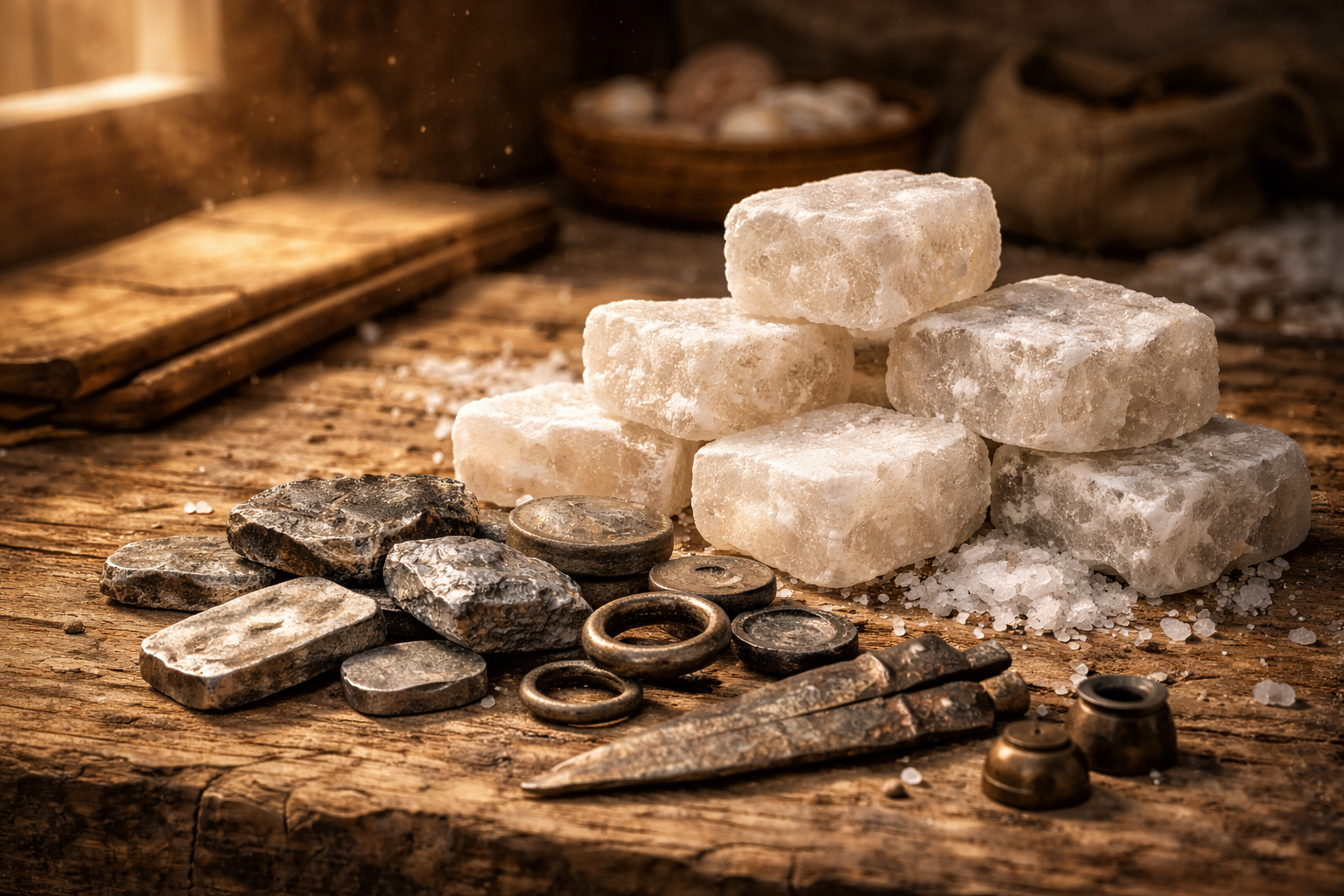
Salt sounds ordinary today, but for many historical societies it was essential. It preserves food, supports health, and is needed in daily life. That practical importance made salt a respected exchange item. In some regions, salt’s value was tied directly to survival, which makes it powerful as a trade good.
Salt also has a “divisible” advantage. It can be measured in small quantities. That makes it flexible. But it has weaknesses too. It can be damaged by moisture and it can be bulky. It works best when there is stable demand and a controlled supply. Those conditions helped salt act like proto-money in certain times and places.
4. Metal pieces by weight.
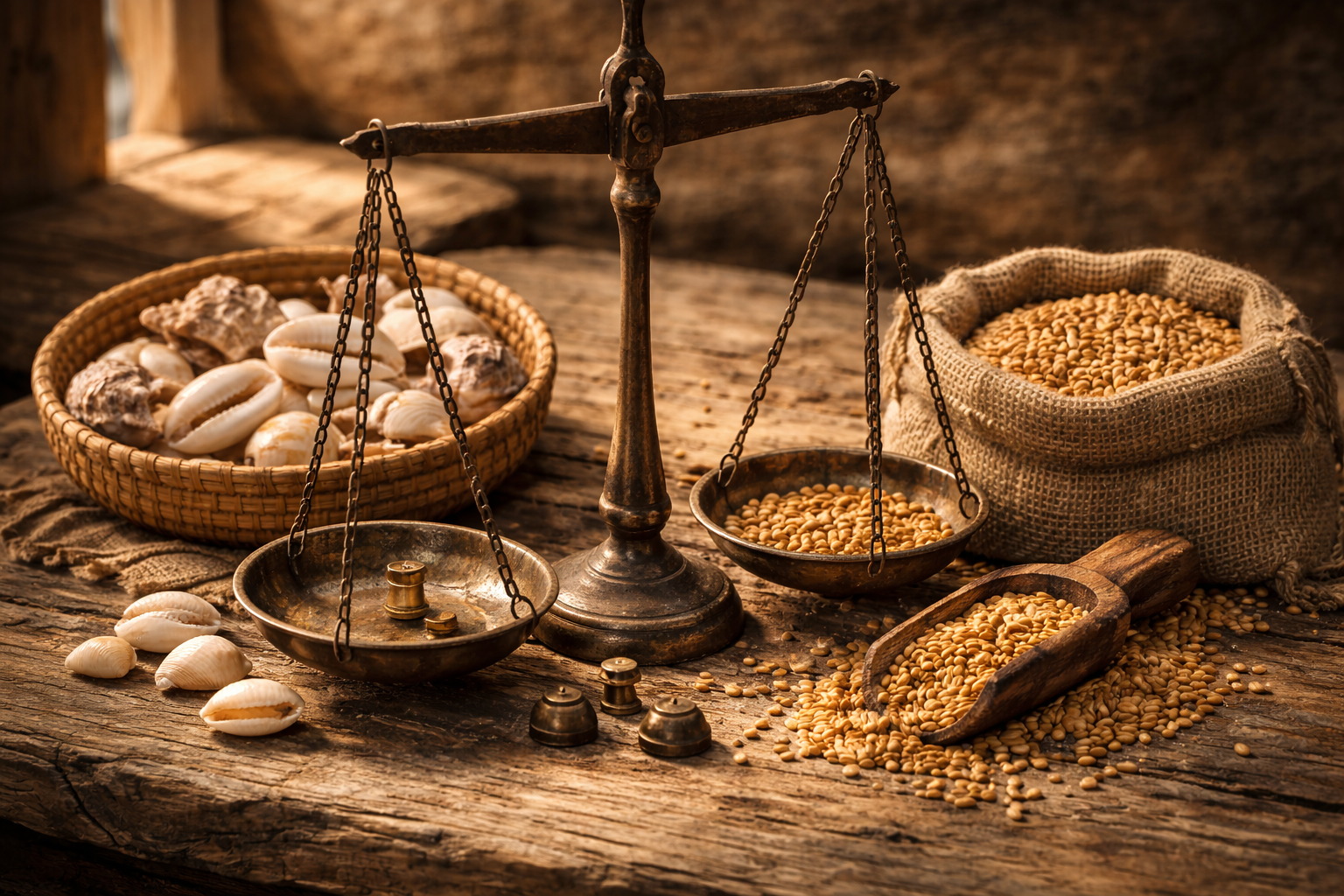
Before coins, metal often played a money-like role simply because it is durable. Metal can be stored for long periods without spoiling. It can be divided. It can be weighed. And it can carry value across distance. That makes metal an excellent candidate for early standardization.
Many societies relied on metal pieces, rings, or fragments measured by weight. This is a crucial bridge between “goods as value” and “coins as money.” The problem is trust. If you are trading metal by weight, you need trusted scales and some way to judge purity. That verification cost is one reason why stamped coinage eventually became so powerful. A stamp reduces the need to argue every time.
5. Livestock.
Livestock can represent wealth because it produces ongoing value. Animals provide labor, milk, wool, and status. In many early societies, livestock played a major role in measuring wealth and settling large obligations. It is easy to understand why. An animal is visible, valuable, and socially meaningful.
But livestock is not convenient money. It needs feeding. It can get sick. It is not easily divisible. And transporting it for trade is slow and risky. That is why livestock works best for large value exchange in stable local contexts, but not as a universal medium for frequent trade.
Mid-article table. Why these worked and where they failed.
| Thing used before money. | Why it worked. | Where it struggled. |
|---|---|---|
| Shells. | Portable, recognizable, socially agreed value. | Supply changes and regional limitations. |
| Grain and food measures. | Universal demand, measurable, useful. | Spoilage, bulk, quality variation. |
| Salt. | Essential good, divisible, stable demand. | Moisture damage, bulk, supply swings. |
| Metal by weight. | Durable, portable, storable, divisible. | Purity disputes and verification cost. |
| Livestock. | Visible wealth, productive value, strong status role. | Not divisible, hard to transport, needs care. |
Mobile note. This table scrolls horizontally on phones to keep the layout clean.
Why coins eventually won.
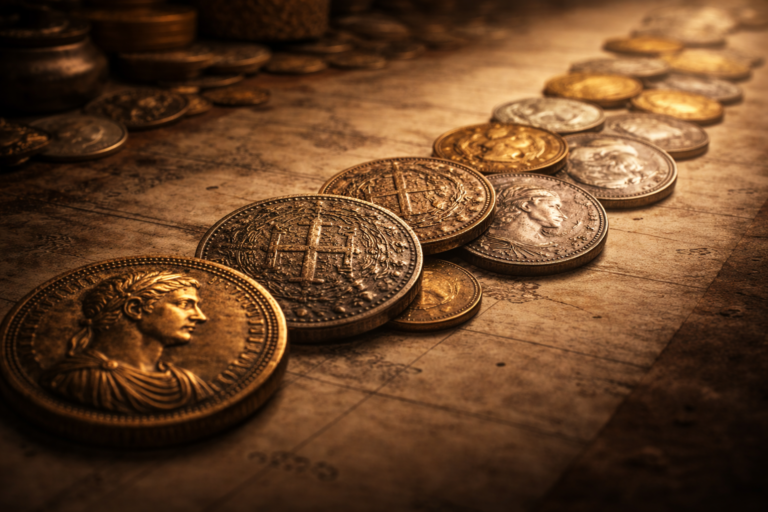
Coins did not succeed because earlier systems were “wrong.” Coins succeeded because they reduced friction. A stamped coin is a shortcut for trust. Instead of weighing and debating purity every time, you accept the authority behind the stamp. That makes trade faster and makes taxation easier.
Coins also scale well. They are durable. They are portable. They are countable. They can be minted in standardized units. Once a society builds a reliable coin system, it becomes difficult for earlier exchange objects to compete in speed and clarity. That is why coinage became one of the strongest technologies of ancient and later economies.
The big takeaway.
Before money, people used what they trusted. Money was invented when societies found a way to make trust portable, measurable, and repeatable.
Related HistoraCoin stories.
Continue exploring.
Two more HistoraCoin stories will appear here automatically in your “Related HistoraCoin stories” card, following your fixed publishing workflow.
FAQ.
Were people only using barter before money.
Not always. Many societies used proto-money items like shells, measured grain, salt, metal by weight, or livestock to make exchange more repeatable than direct barter.
Why did shells work as an exchange item.
They were portable, recognizable, and socially agreed upon as valuable, especially when supply was naturally limited or distant from the source.
Why was metal by weight an important step toward coinage.
Because it introduced durability, portability, and measurement, but still required verification of purity. Coin stamps later reduced that verification cost.
Why did coins replace many earlier systems.
Coins made trust portable. They standardized units, reduced negotiation, and made trade and taxation faster and clearer.
Is this topic safe for AdSense.
Yes. It is historical and educational, focused on early exchange systems and the origins of money, without prices, selling, or financial advice.