Why Early Exchange Systems Failed and Led to the First Coins
Long before coins, people already solved the problem of exchange in creative ways. They used objects everyone respected, from shells to grain to salt to metal. But those systems had limits that became impossible to ignore once trade expanded and societies became more connected.
This article explains why early exchange systems failed, what exactly broke as economies grew, and how those weaknesses pushed people toward one powerful idea. Standardized coins that could be trusted quickly, counted easily, and accepted repeatedly.
Table of contents.
- The real problem that coins solved.
- What came before coins.
- Why goods-based exchange hit a wall.
- The hidden cost of verification.
- Metal by weight and why it was not enough.
- Why a stamp changed everything.
- Mid-article table. Common failures and the coin solution.
- Coins as trust technology.
- Related HistoraCoin stories.
- FAQ.
The real problem that coins solved.
When trade is small and local, exchange can run on relationships. People know each other. They can rely on memory, reputation, and informal credit. But as soon as trade crosses neighborhoods, borders, or cultures, a new problem appears. Strangers need a shared language of value.
That shared language must do three jobs at once. It must store value without spoiling. It must move value without becoming impossible to carry. And it must measure value in a way that reduces arguments. Coins did not replace early systems because they were fashionable. Coins replaced them because they reduced friction at every step.
What came before coins.
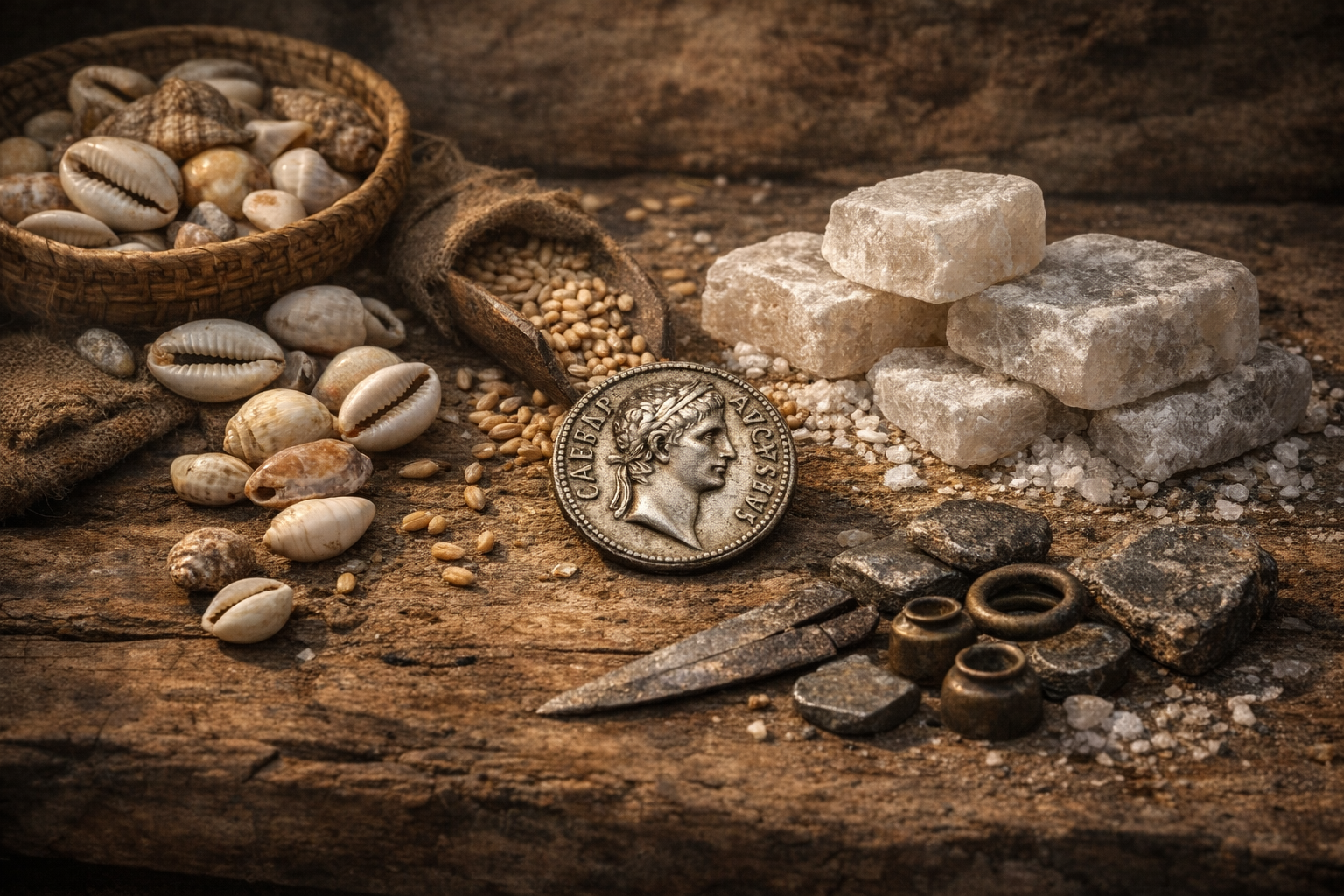
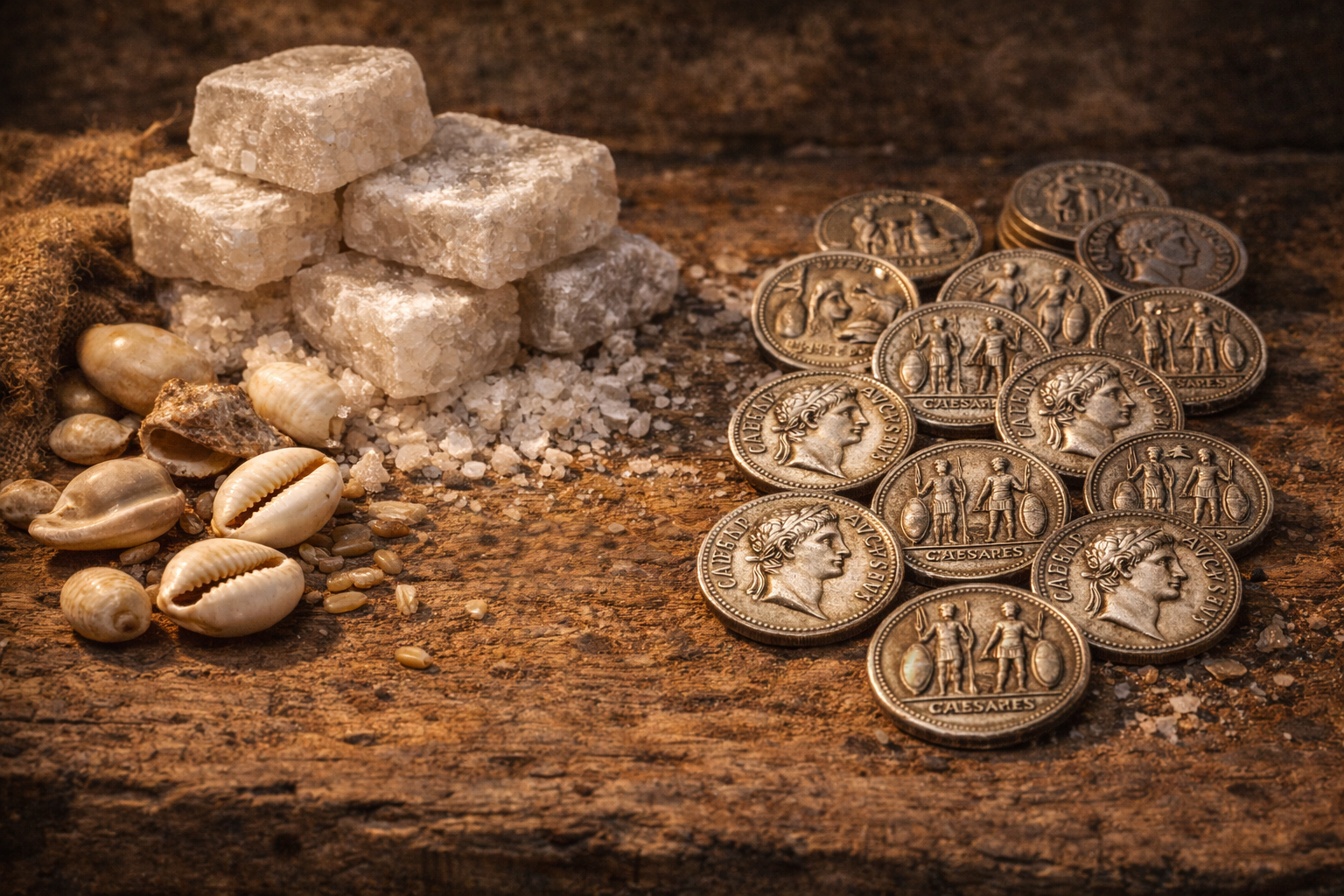
Before standardized coinage became common, many societies relied on what we can call proto-money. These were objects that people accepted repeatedly because they were useful, respected, and socially recognized. If you want a clean overview of the most famous examples, this companion article lays it out clearly: early exchange systems like shells, grain, salt, and metal .
These systems were not random. They were logical choices for their environments. Grain works well where farming is central. Salt works where preservation and health matter. Shells work where supply is limited and recognition is strong. Metal works because it is durable and portable. The problem is that each one breaks in a predictable way once an economy grows.
Why goods-based exchange hit a wall.
Goods-based exchange struggles with everyday reality. Many goods spoil. Many goods are bulky. Many goods vary in quality. And many goods are difficult to divide without losing usefulness. Those weaknesses are manageable in small communities, but they become painful in larger networks.
Imagine trying to settle a large long-distance trade deal with a good that can rot, leak, or lose quality in travel. Or imagine paying a complicated tax obligation with something that changes value depending on local harvest conditions. In a growing economy, people need a stable tool. That is why goods-based exchange often remains important locally, but cannot carry the entire system.
The hidden cost of verification.
Even when a good is valuable, it still has a problem. How do you prove it is real and fair in a transaction with a stranger. Verification takes time. It takes tools. It takes expertise. And it creates conflict when two people disagree.
This is where early exchange systems begin to fail in a predictable pattern. The more verification a system requires, the slower trade becomes. And slow trade is expensive. People do not just want value. They want value that can move quickly without endless testing.
Metal by weight and why it was not enough.
Metal by weight looks like the perfect compromise. It is durable. It is portable. It can be divided. It does not spoil. Many societies used metal pieces, rings, or fragments measured on scales as a proto-coin solution.
But metal by weight still suffers from verification costs. You must trust the scale. You must judge purity. You must argue about wear, clipping, or unusual surfaces. This creates a world where every serious payment becomes a small negotiation. Over time, societies searched for a shortcut that could remove most of that negotiation.

Why a stamp changed everything.
A stamped coin is a brilliant idea because it compresses trust into a symbol. The stamp does not magically remove every risk, but it changes the default. Instead of verifying everything from zero, people begin from a shared assumption. This coin represents a defined unit. This authority stands behind it. This piece is meant to be accepted.
Coins make value countable. They make value transportable. They make value easier to tax, record, and exchange. And most importantly, they make repeated trade faster. Once trade speeds up, economies grow. That growth then reinforces coinage even more. The system becomes self-strengthening.
Mid-article table. Common failures and the coin solution.
| Early exchange limitation. | What it caused. | What coins improved. |
|---|---|---|
| Spoilage and storage risk. | Value loss over time, unstable saving. | Durable, long-term value storage. |
| Bulk and transport difficulty. | High cost to move value across distance. | Portable units with high value density. |
| Quality variation. | Arguments, inconsistent exchange terms. | Standardized units meant to be consistent. |
| Verification cost. | Slow trade, constant negotiation. | Stamp-based trust shortcut and faster acceptance. |
| Hard division of value. | Awkward “change making” in daily exchange. | Multiple denominations and countable units. |
Mobile note. This table scrolls horizontally on phones to keep the layout clean.
Coins as trust technology.
The deepest way to understand coinage is to see it as a technology of trust. Coins made trust portable. You could carry it in your pocket instead of carrying a personal relationship. That does not mean relationships disappeared. It means trade no longer depended on them as much.
Once coins exist, they reshape daily life. They shape wages. They shape markets. They shape taxes. They shape power. And they also shape memory, because coin images preserve the symbols a society wanted people to accept. That is why coins are not just money. They are historical documents designed for everyday use.
The big takeaway.
Early exchange systems worked until economies demanded speed, scale, and standardized trust. Coins answered that demand by turning value into portable, countable agreement.
Related HistoraCoin stories.
Continue exploring.
Two more HistoraCoin stories will appear here automatically in your “Related HistoraCoin stories” card, following your fixed publishing workflow.
FAQ.
Did barter exist before money.
Yes, but many societies also used proto-money items that made exchange more repeatable than direct barter, such as shells, measured grain, salt, and metal by weight.
Why did metal by weight not solve everything.
Because it still required constant weighing and purity verification. That verification cost slowed trade and created disputes, especially with strangers.
What did the coin stamp change.
It reduced negotiation by creating a shared assumption about unit and authority. It made repeated exchange faster and easier to record.
Were early exchange systems useless.
No. They were logical solutions for their environments. They simply struggled to scale when trade expanded and verification became expensive.
Is this article safe for AdSense.
Yes. It is historical and educational, focused on exchange systems and the origins of coinage, without selling, prices, or financial advice.