1977 Penny Errors to Look For – Small Details That Make This Coin Interesting
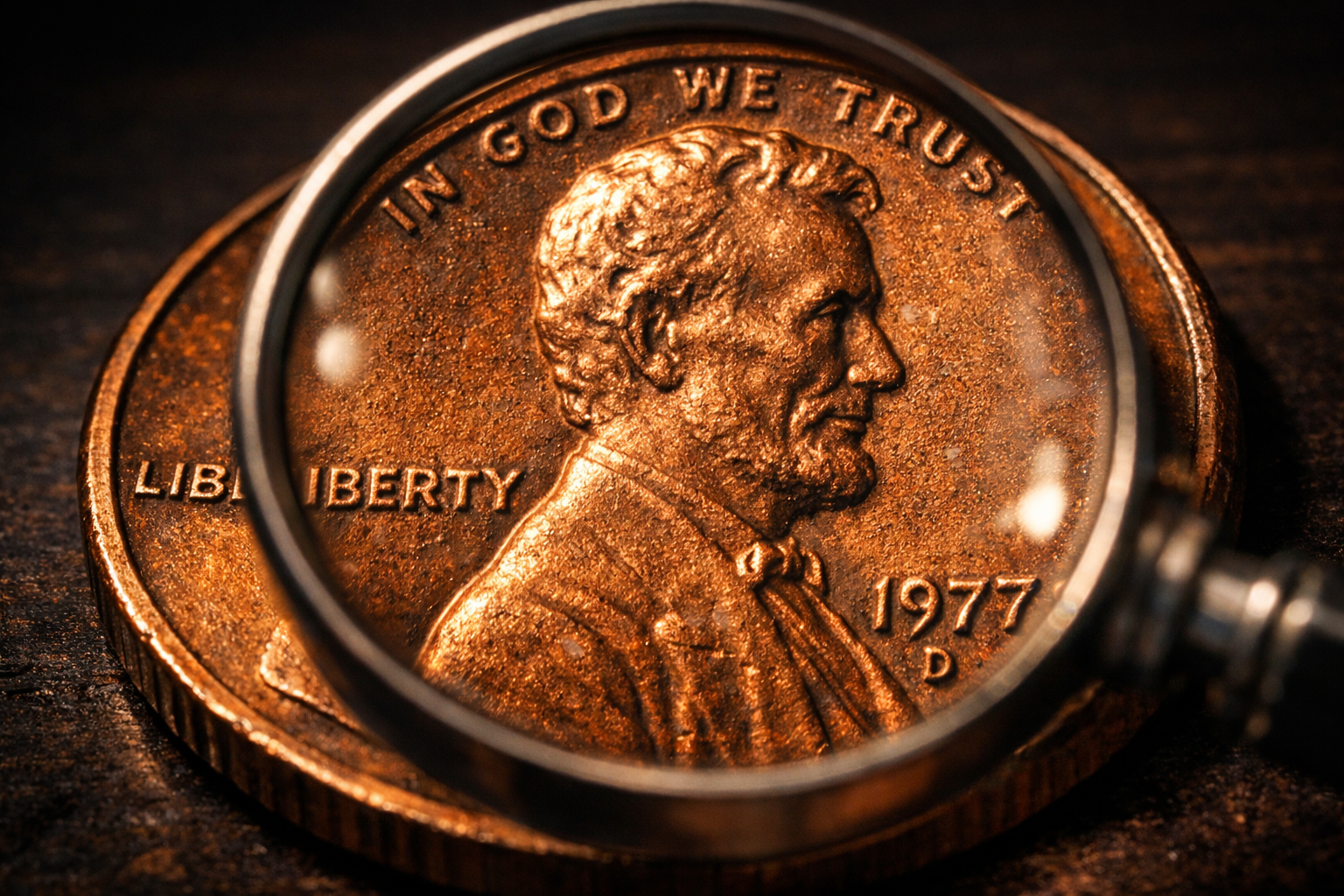
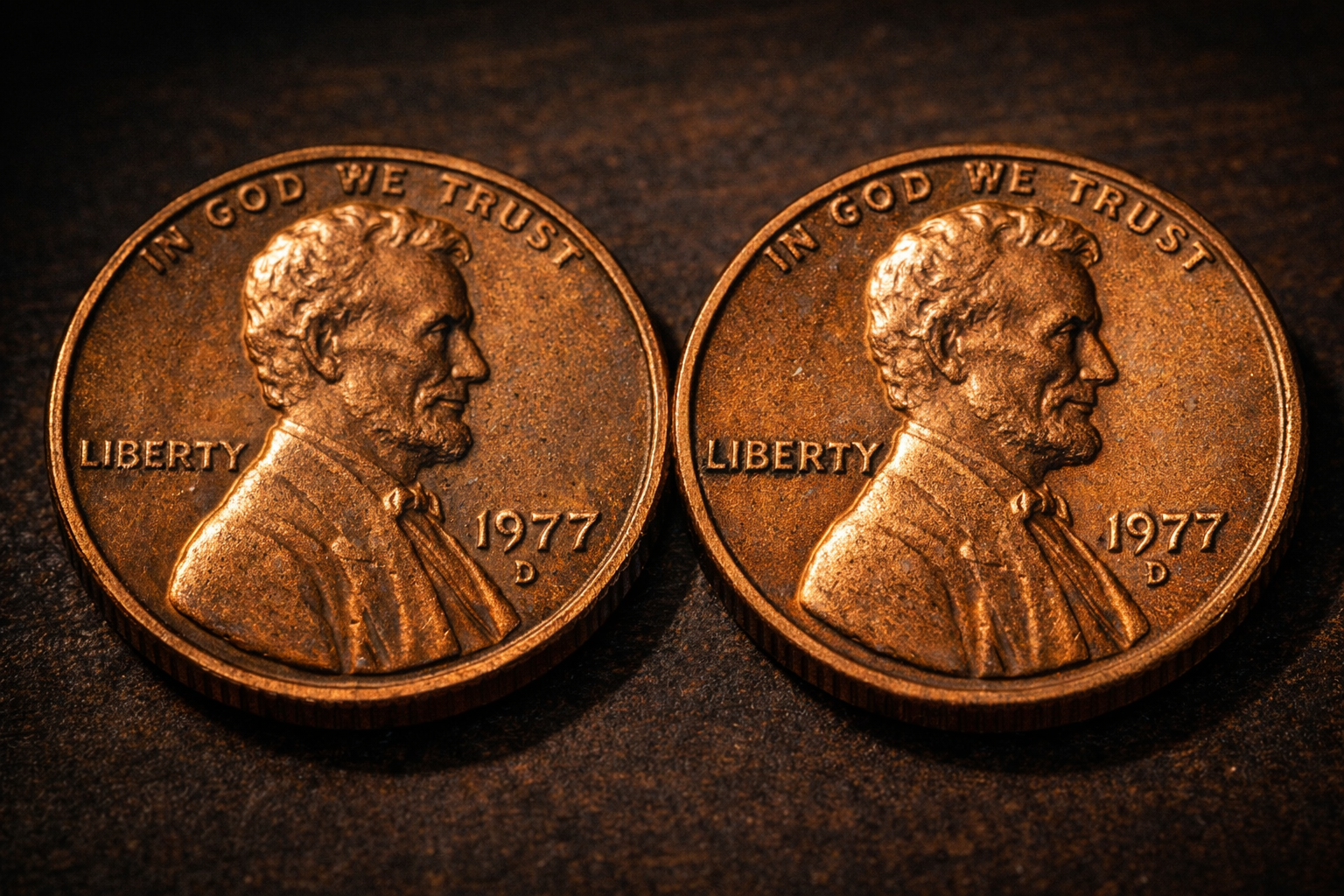
Most 1977 pennies look completely normal. That is the point of a working circulation coin. But if you have ever stared at a handful of cents under a lamp, you already know the secret. Two coins from the same year can look slightly different, even when neither one is rare. Those small differences are where the hobby starts.
If you are new to this coin, begin with the full guide to 1977 penny facts . And if you are wondering why the date is so common, read are 1977 pennies rare . This article focuses on one clear goal. What errors and minting variations are worth learning to spot, without turning the search into guesswork.
Table of contents.
- Errors vs damage. The most important lesson.
- Doubling. What it can look like.
- Off-center strikes. The easiest to recognize.
- Clipped planchets. When the blank is incomplete.
- Weak strike and die wear.
- Die cracks and small die breaks.
- A simple checklist for beginners.
- Mid-article table. Quick identification guide.
- Safe handling and storage.
- Related HistoraCoin stories.
- FAQ.
Errors vs damage. The most important lesson.
Before you look for a specific error, you need one core rule. A mint error happens during the minting process. Damage happens after the coin leaves the press. This difference matters because damage can mimic almost anything.
A scratched surface can look like a doubled line. A dent can look like an off-center rim. Corrosion can create strange texture that looks “rare” on camera. Mint-made characteristics usually appear in a consistent, structured way. Post-mint damage tends to look random, messy, and uneven across the design.
Doubling. What it can look like.
Doubling is one of the most searched topics for Lincoln cents. The reason is simple. When it is real, it can be visible on letters and numbers. But “doubling” is also the most misunderstood category because there are different kinds.
One kind comes from the die itself. Another kind comes from movement during the strike. And a third kind is not an error at all, but a normal mechanical effect that can create a shadow-like look on lettering. The safest beginner approach is to look for clear, consistent doubling on key areas such as the date and the strongest letters.
Off-center strikes. The easiest to recognize.
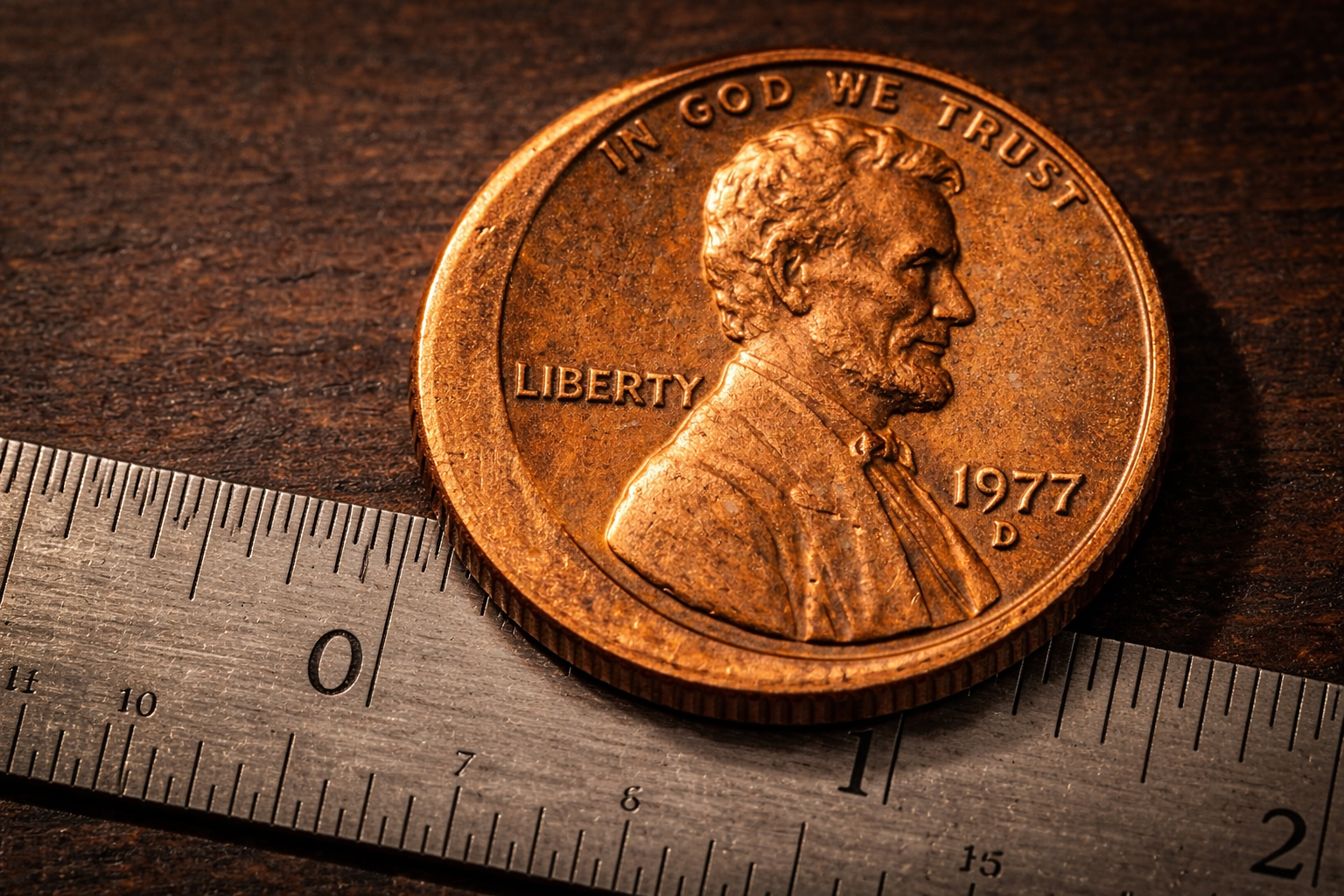
Off-center strikes are among the easiest minting variations to spot because they change the coin’s alignment. Instead of the design sitting perfectly centered within the rim, it shifts so part of the design is closer to one edge. In more dramatic cases, part of the design may be missing from the flan.
Minor off-center strikes can be subtle, especially on worn coins. The best way to notice them is to compare the distance between the rim and the lettering at multiple points around the coin. If one side has a noticeably wider margin, you may be looking at an off-center strike rather than damage.
Clipped planchets. When the blank is incomplete.
A clipped planchet happens when the coin blank is missing a small curved section before it is struck. The missing section is part of the metal itself, not a bite taken after the coin is minted. This is why clipped planchets often have a smooth, curved missing area rather than jagged damage.
The key is shape. A true clip often looks like a gentle curve, as if a small crescent was removed. If the “missing piece” looks sharp, torn, or uneven, it is more likely damage.
Weak strike and die wear.
Not every interesting coin is an error. Sometimes a coin looks different because the die was worn, or the strike pressure was slightly weak. This can soften details, especially in high points and fine lines.
On a Lincoln cent, a weak strike can make parts of the lettering appear faint or incomplete, even when the coin has little wear. That is one reason collectors compare multiple coins from the same year. You learn what “normal sharpness” looks like and what looks unusually soft.
Die cracks and small die breaks.
Dies are tools, and tools wear and crack. When a die develops a small crack, it can leave a raised line on the coin. These lines can look like tiny lightning streaks, often running from the rim into the design.
The most important clue is that die cracks are raised, not cut in. A scratch is usually incuse, meaning it cuts into the surface. A die crack is part of the strike, meaning it rises above the field. Good lighting and a careful angle can help you tell the difference.
A simple checklist for beginners.
If you have a small pile of 1977 pennies, here is a beginner-safe routine. It does not require special tools, just patience and good light.
- Sort by condition first. Set aside the cleanest examples.
- Check the date and key letters for consistent doubling.
- Compare rim spacing around the coin to spot off-center alignment.
- Look for smooth curved clips that seem part of the original blank.
- Use angled light to see whether strange lines are raised or scratched in.
- Take clear photos before forming a conclusion.
Mid-article table. Quick identification guide.
| What you see. | Often means. | Quick check. |
|---|---|---|
| Lettering looks doubled in the same direction. | Possible doubling or strike effect. | Look for consistent, repeated shapes on multiple letters and the date. |
| Design is shifted closer to one rim side. | Possible off-center strike. | Compare rim spacing at four points around the coin. |
| Smooth curved missing section on the edge. | Possible clipped planchet. | Check if the curve looks original, not torn or jagged. |
| Fine details look soft without heavy wear. | Weak strike or die wear. | Compare with another 1977 cent in similar condition. |
| A thin raised line runs from rim inward. | Possible die crack. | Use angled light to confirm the line is raised, not scratched in. |
Mobile note. This table scrolls horizontally on phones to keep the layout readable.
Safe handling and storage.
If you set aside a coin because it looks unusual, handle it gently. Hold it by the edges. Store it separately so it does not pick up new marks. A simple coin flip or protective sleeve is enough for basic preservation.
The goal is not to prove a rare discovery instantly. The goal is to learn the minting process and keep the coin honest. A well-preserved common cent can teach you more than a damaged “maybe error” ever will.
Final takeaway.
The best 1977 penny errors to learn first are the ones you can recognize with your eyes. Off-center alignment, consistent doubling-like patterns, and clean planchet clips. Start small, compare many coins, and let the details teach you.
Related HistoraCoin stories.
Keep exploring the 1977 penny cluster.
For the basics, read the full guide to 1977 penny facts . And for the big picture on commonness, read are 1977 pennies rare .
FAQ.
Are most 1977 penny “errors” real.
Most are not. Many unusual-looking coins are damaged after leaving the mint. True mint-made characteristics tend to be consistent and structured.
What is the easiest variation to spot.
Off-center strikes are usually the easiest because the design alignment changes and rim spacing becomes uneven.
How can I check doubling safely.
Compare multiple coins in good light and look for repeated, consistent shapes on the date and lettering, not random scratch lines.
Should I clean a coin to see the details.
It is best not to. Cleaning can create scratches that mimic errors and can remove original surface clues.
Is this article safe for AdSense.
Yes. It is educational and historical, focused on minting details and visual characteristics, with no selling, pricing, or financial advice.