Tiny Details on the 1973 Canadian Penny – How Small Design Differences Appeared
Estimated reading time: 14 minutes
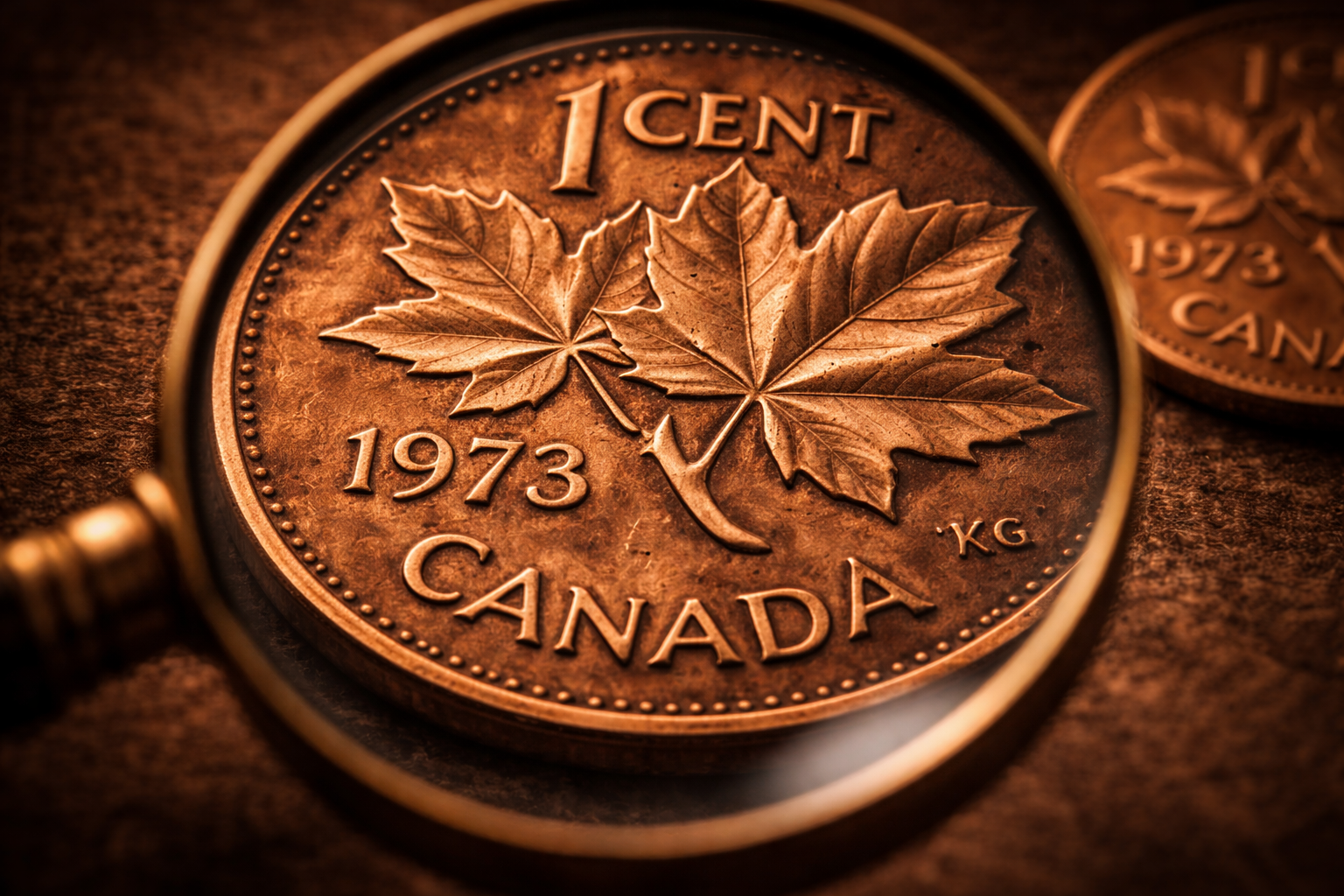
At first glance, a 1973 Canadian penny looks straightforward. A familiar portrait on one side, a maple leaf on the other, and lettering designed to be readable in everyday use. But the more time you spend with real coins from circulation, the more you notice something surprising. Two pennies from the same year can look slightly different, even when the overall design is the same.
This article is a practical guide to those tiny details. It explains how small design differences appear, what they usually mean, and how to describe them in a clear, historically useful way. You will not need special equipment to begin. You just need patience, good light, and the habit of comparing coins side by side.
- What Counts as a Tiny Detail
- Why Small Differences Appear in the Same Year
- Where to Look First on a 1973 Penny
- Lettering Shape and Spacing
- Maple Leaf Lines and Surface Clarity
- Rim, Edge, and Strike Quality
- Wear Versus Variation
- A Simple Comparison Method Anyone Can Use
- Quick Reference Table for Common Observations
- How These Details Fit the Bigger Penny Story
- Related HistoraCoin Stories
- FAQ
What Counts as a Tiny Detail
A tiny detail is any small visual feature that changes the look of a coin without changing the coin’s basic identity. On a 1973 Canadian penny, the core identity stays the same. The portrait remains recognizable. The maple leaf remains the central symbol. The legends and date remain in the same places. Tiny details live inside that structure.
Some examples are easy to spot once you know what to look for. A letter might look slightly thicker. The spacing between two letters might be a little tighter. The maple leaf veins might appear sharper on one coin and softer on another. The rim might look more defined, or the border might seem a little flatter. These differences can come from several normal causes, and they are part of what makes real world coinage interesting.
The goal is not to turn a common coin into a mystery. The goal is to learn how to observe. When you can describe small details clearly, you can compare coins across years, understand production realities, and connect what you see to the historical life of the coin in circulation.
Why Small Differences Appear in the Same Year
Coins are produced through industrial processes that prioritize consistency, but consistency has limits. A year like 1973 involves large scale production. Dies are created, used, and eventually replaced. Dies can wear. Metal blanks can vary slightly. Strikes can be strong or slightly softer depending on pressure and alignment. None of this requires an unusual explanation. It is how mass production works.
Think of dies as tools with a working life. A fresh die can produce crisp detail. As it strikes more blanks, it gradually loses sharpness. A worn die can create lettering that looks softer, and fine design lines can become less distinct. When a die is replaced, the new die might not be perfectly identical in every microscopic curve, even if it follows the same approved design. Those small tool differences become visible when you compare coins.
Environmental factors also matter. Coins in circulation develop surface marks, smoothing, and discoloration from daily handling. That can make two coins look different even if they started identical. That is why this article separates wear from variation later on. It helps you avoid mixing the history of production with the history of circulation.
If you want the larger cultural context that explains why the penny mattered as a daily object in the first place, read why the 1973 Canadian penny still matters. Tiny details become more meaningful when you remember that these coins were constantly used in real life.
Where to Look First on a 1973 Penny
When you examine a coin, it helps to start with consistent checkpoints. These are areas that tend to reveal differences quickly. On the 1973 Canadian penny, the best checkpoints are lettering, the maple leaf line work, and the rim. These features react strongly to die wear and strike strength, and they also show the impact of circulation.
Start by looking at the date. Not because it changes, but because it gives you a baseline for line sharpness. Then look at a few letters in the legend. Letters have curves, corners, and internal spaces that show detail clearly. After that, move to the maple leaf veins. Fine lines will quickly show whether a strike was crisp or soft. Finally, look at the rim. A strong rim often indicates a strong strike, while a weak rim can reflect softer striking or heavy wear.
If you are examining multiple coins, try to keep your light angle consistent. Small details can appear or disappear depending on how light hits the surface. Consistent lighting is one of the simplest tools you can use.
Lettering Shape and Spacing
Lettering is one of the most useful places to spot tiny differences. It is made of repeated shapes, and repeated shapes make comparison easier. When you look at two coins side by side, ask a few questions. Do the letters look equally thick. Are the edges sharp or slightly rounded. Is the spacing between letters consistent.
A slightly thicker letter appearance can happen for more than one reason. It might be a strong strike. It might be a die that has a slightly different contour. It might also be the effect of wear, where surface smoothing makes outlines seem broader. The solution is to compare multiple areas, not just one letter.
Spacing is another useful clue. If spacing looks uneven, check whether you are seeing real spacing differences or the illusion created by light, marks, or uneven toning. When spacing differences are real, they are typically subtle. They rarely change the reading of the text. They change the feel of it.
A practical approach is to pick one letter pair that appears on every coin, then compare it across your examples. If you see the same style differences repeated across multiple coins, you are likely seeing something tied to production rather than random circulation marks.
Maple Leaf Lines and Surface Clarity
The maple leaf is the visual center of the reverse side, and it contains both broad shapes and fine lines. This makes it excellent for studying tiny detail differences. Broad shapes tend to survive wear. Fine lines reveal strike strength and die condition.
Look closely at the veins inside the leaf. On a crisp example, those lines appear more defined, with clear separation between the raised lines and the field. On a softer example, the lines may blend slightly into the surface. That does not automatically mean a different design. It can simply mean a worn die or a softer strike. The key is consistency across the coin. If the leaf lines are soft and the lettering is also soft, you are likely seeing strike and die effects rather than a special variation.
Also pay attention to the field around the maple leaf. The field is where marks and surface texture show up. Some coins may show a smoother field due to circulation. Others may show more original texture. Field appearance can affect how sharp the leaf lines look, because contrast changes what your eyes pick up first.
Rim, Edge, and Strike Quality
The rim is often overlooked, but it is one of the best indicators of strike quality. A strong rim gives the coin a framed look. A weaker rim can make the design feel flatter, even if the design itself is the same. On many circulation coins, rim definition varies widely because rims take the most physical abuse during use.
Edge and rim detail also help you separate wear from production. A coin with a very soft rim and heavy surface smoothing likely spent a long time in circulation. A coin with a strong rim and crisp detail likely had less circulation or simply had a stronger strike from the start. This is why you should avoid judging one feature in isolation. Use a pattern of features.
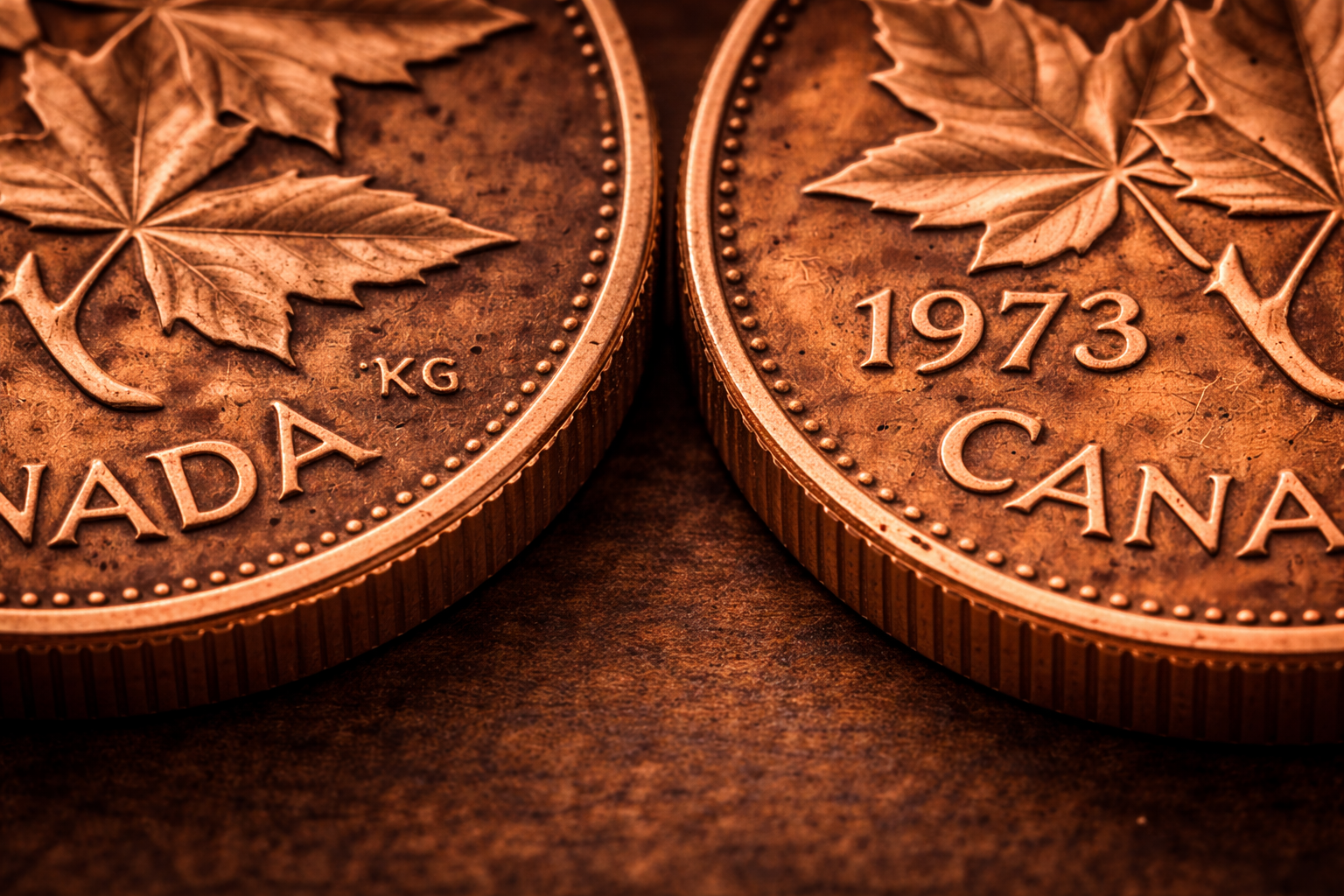
When you examine the rim, look for uniformity. Is the rim equally strong all the way around, or does it fade in certain areas. Fading can come from uneven strike pressure, misalignment, or later wear. A uniform rim with crisp interior detail often indicates a well struck coin.
Wear Versus Variation
One of the most common mistakes in coin observation is treating wear as a design difference. Wear changes a coin’s appearance in predictable ways. High points flatten first. Fine lines soften. Letter edges become rounded. The field picks up marks and smoothing. These changes can make one coin look different from another, even if both came from the same die style.
A real production related difference is more stable. It tends to show up the same way across multiple coins that share the same die characteristics. For example, if you consistently notice a slightly different letter shape across several coins that are otherwise crisp, you may be seeing a difference linked to die preparation or die replacement.
A simple trick is to compare the coin’s highest points with its protected areas. Protected areas are places that do not rub as easily. If both the highest points and protected areas are soft, you may be seeing a weaker strike or worn die. If only the highest points are soft but protected areas still look sharp, you are more likely seeing circulation wear.
A Simple Comparison Method Anyone Can Use
You do not need special tools to start. Use a clean surface, a consistent light source, and two or three coins. Place them side by side with the same orientation. Look at one feature at a time in the same order. This prevents your eyes from jumping around and missing patterns.
Use this order. Date, lettering, maple leaf veins, rim. Repeat the same order for each coin. If you want to be more systematic, take a quick note for each feature. You can use simple labels like crisp, medium, soft. This turns casual observation into a repeatable method.
If you have coins from nearby years, include one as a control. Comparing 1973 to a nearby year can help you separate year to year design evolution from within year variation. Even when designs remain similar, small shifts in style and production can show up over time.
If you want a deeper storytelling perspective on how the year became a reference point in discussions and why people focus on it, read the story behind the 1973 Canadian penny. This article stays focused on what you can see and how to describe it clearly.
Quick Reference Table for Common Observations
| Feature | What to compare | What it can indicate | How to describe it clearly |
|---|---|---|---|
| Lettering thickness | Choose the same few letters on each coin | Strike strength, die condition, or surface smoothing | Thicker looking lettering, sharper edges, rounded edges |
| Letter spacing | Look at gaps between specific letters | Die differences or visual effects from marks and light | Tighter spacing, wider spacing, consistent spacing |
| Maple leaf veins | Check inner lines and line separation | Die wear, strike softness, or circulation smoothing | Crisp vein detail, softened lines, blended lines |
| Field texture | Inspect open areas around the leaf and lettering | Circulation marks and handling history | Smooth field, marked field, original texture visible |
| Rim definition | Compare rim strength around the full edge | Strike quality, wear, or uneven pressure | Strong rim, weak rim, uneven rim |
| Overall clarity | Judge the balance of sharp and soft areas | General strike and die state | Crisp overall, mixed clarity, generally soft |
How These Details Fit the Bigger Penny Story
Tiny details feel small until you place them inside a larger narrative. The 1973 Canadian penny is one chapter in a much bigger story about Canadian identity, design language, and daily economic life. Observing small differences teaches you how that story was physically produced. It shows you that coins were not abstract symbols. They were manufactured objects that had to work reliably at scale.
To connect this close up study to the wider timeline, start with learn more about the hidden story of Canadian pennies. That pillar guide explains why the penny mattered as a national object. This article explains how that object reveals its production and circulation history through small visual clues.
It is also worth remembering that tiny differences do not exist in a vacuum. They exist because coins moved through real life. They were handled, stacked, counted, and carried. That daily use is part of why people still recognize the maple leaf and the portrait as familiar images. The coin was present.
Related HistoraCoin Stories
FAQ
Do tiny differences mean a different official design
Usually no. Most tiny differences come from normal production realities such as die wear, die replacement, and strike strength. They can still be historically useful because they reflect how coins were actually made.
What is the fastest way to spot differences on a 1973 penny
Compare two coins side by side under the same light. Check lettering thickness, maple leaf vein clarity, and rim definition in that order.
How can I tell wear apart from production related differences
Look for patterns across multiple features. If high points are worn but protected areas remain sharp, wear is likely the main factor. If the entire coin looks soft, a weaker strike or worn die may be involved.
Why do rim details matter in comparison
Rim definition often reflects strike quality and circulation history. A stronger rim can frame the design and make the coin look sharper, while a weaker rim can make details appear flatter.
Where should I go next for the larger context
Use the pillar guide to understand the full historical story of Canadian pennies, then read the daily life focused 1973 article to connect technical details with how the coin was used in real routines.