What U.S. Coins Were Made of 90 Percent Silver
Estimated reading time: 15 minutes
For decades, American coins were not just money. They were made from real precious metal. Before nineteen sixty five, many everyday coins in the United States contained ninety percent silver, making them both practical currency and valuable metal at the same time.
Today, these coins are no longer found in circulation, but they remain some of the most important pieces in American numismatic history. Understanding which U.S. coins were made of ninety percent silver reveals how money once held intrinsic value and why this system eventually changed.
What Does 90 Percent Silver Mean
When a coin is described as ninety percent silver, it means that most of its composition consists of pure silver, with the remaining ten percent usually made of copper to improve durability. Pure silver alone is too soft for everyday use, so this alloy allowed coins to last longer in circulation.
This composition became the standard for U.S. coinage for many decades. It offered a balance between intrinsic value and physical strength, making it ideal for daily transactions.
Why U.S. Coins Used Silver
Silver has historically been one of the most trusted forms of money. Long before modern banking systems, people relied on precious metals to store and exchange value. The United States followed this tradition by using silver in its coinage system.
Coins made from silver gave people confidence. The value of the coin was not just symbolic. It was backed by the metal itself. This made American coinage both practical and reliable.
If you want a deeper look at how silver coins shaped American history, you can explore our guide to old U.S. coins made of silver.
Major U.S. Coins Made of 90 Percent Silver
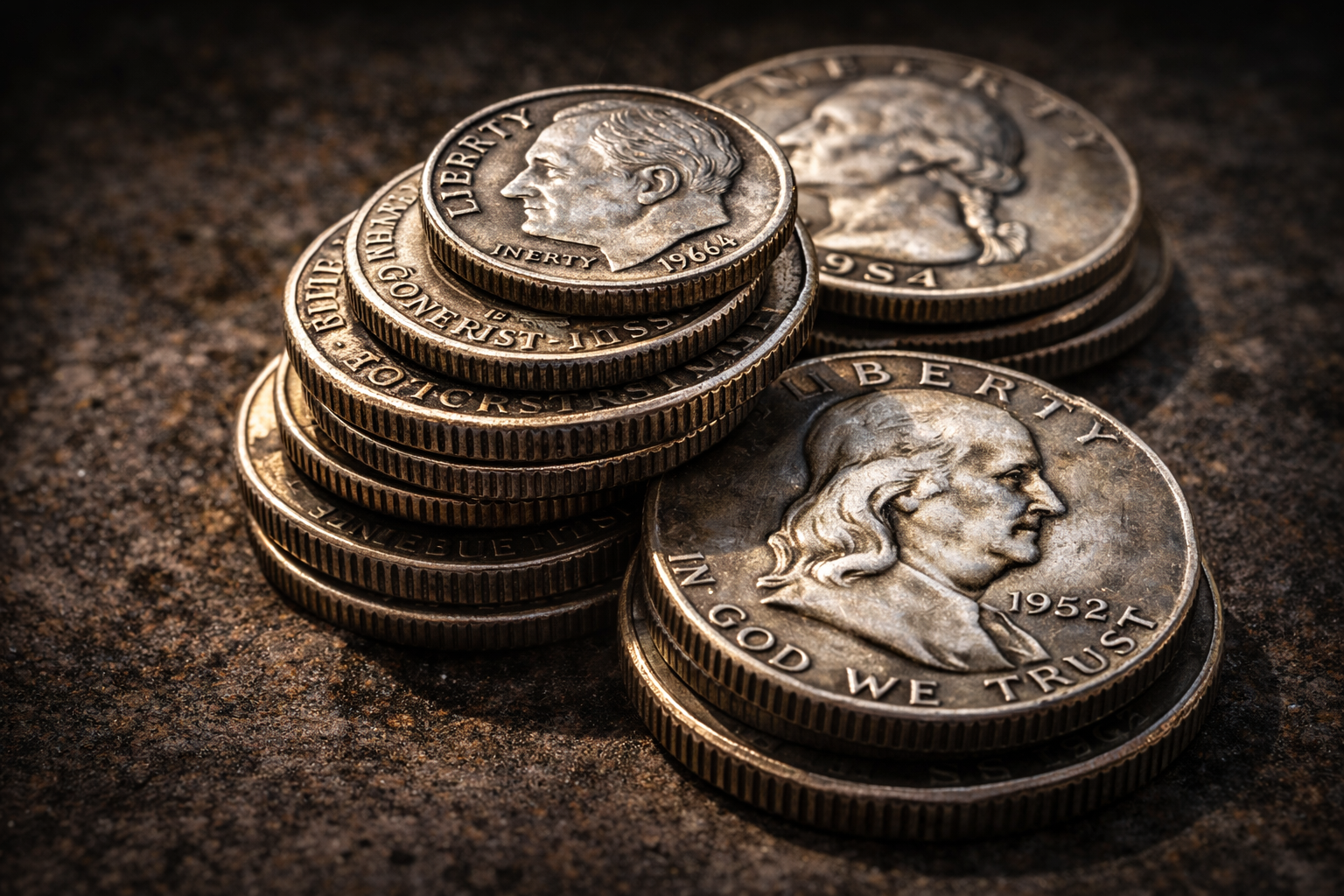
Before nineteen sixty five, several major coin denominations were produced using the ninety percent silver standard. These coins were widely used in everyday transactions across the country.
Dimes
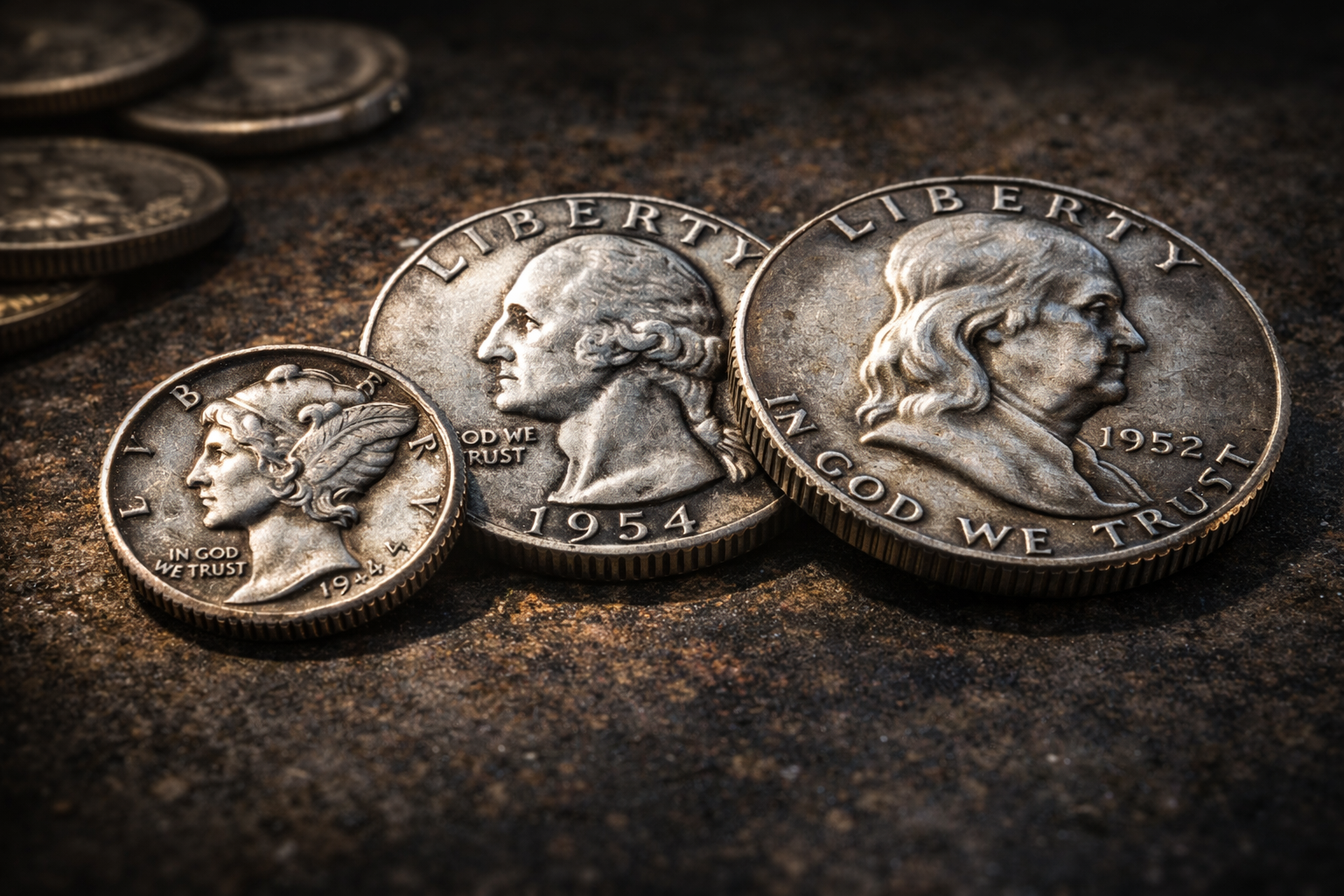
Silver dimes were among the most commonly used coins. Designs such as the Mercury dime and early Roosevelt dime were struck in ninety percent silver and circulated heavily.
Quarters
The Washington quarter, introduced in nineteen thirty two, also followed the ninety percent silver composition. It quickly became one of the most recognizable coins in the United States.
Half Dollars
Half dollars, including the Franklin half dollar and early Kennedy half dollars, were also made from ninety percent silver before the composition change.
Silver Dollars
Large denomination coins such as the Morgan dollar and Peace dollar were also struck in ninety percent silver. These coins were often used in larger transactions and later became popular among collectors.
Famous Silver Coin Designs
Many of the most iconic designs in American coinage history were created during the silver era. These designs are still admired today for their artistic detail and historical significance.
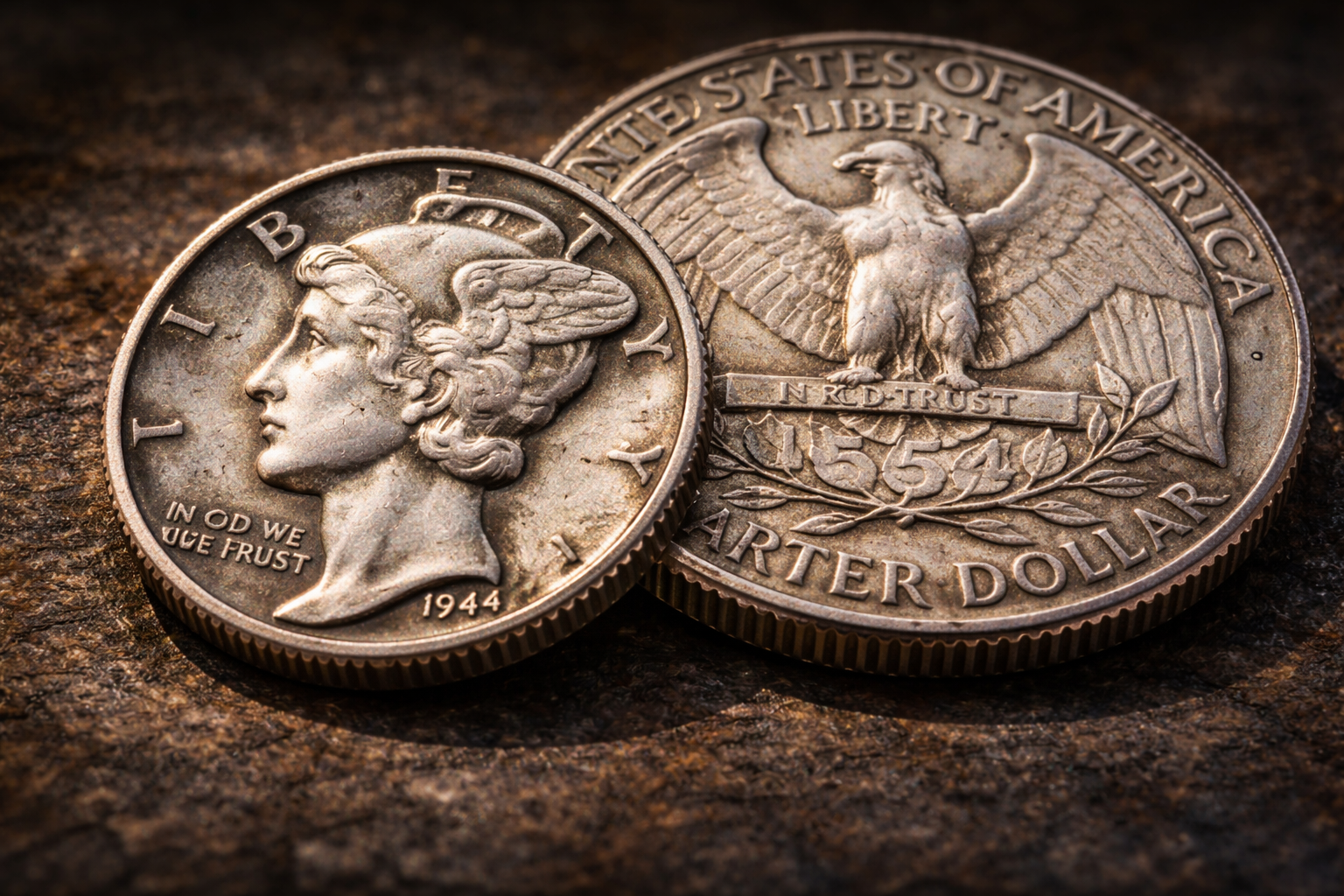
The Mercury dime featured a winged Liberty head symbolizing freedom of thought. The Washington quarter honored the first president of the United States. The Morgan dollar displayed a powerful image of Liberty that reflected the spirit of the nation.
These coins were not just currency. They were pieces of art that reflected American identity and values.
Why Silver Was Removed
By the early nineteen sixties, the rising price of silver created a serious challenge. The metal inside coins was becoming too valuable compared to the face value of the coins themselves.
This led to hoarding, as people began saving silver coins instead of spending them. To solve this issue, the government passed the Coinage Act of nineteen sixty five, which removed silver from most circulating coins.
You can read more about this transition in our article on why the United States stopped using silver coins.
How to Identify 90 Percent Silver Coins
Identifying silver coins is easier than many people think. One of the simplest methods is to examine the edge of the coin. Silver coins typically have a solid silver-colored edge without any copper stripe.
Another method is to check the date. Coins minted before nineteen sixty five are usually made from ninety percent silver, depending on the denomination.
For a complete guide, visit our article on how to identify old U.S. silver coins.
Silver Coin Timeline
| Period | Composition |
|---|---|
| Before 1965 | 90 percent silver coins widely used |
| 1965–1970 | 40 percent silver in half dollars only |
| After 1971 | No silver in circulating coins |
Related HistoraCoin Stories
FAQ
Which U.S. coins were made of 90 percent silver
Dimes, quarters, half dollars, and silver dollars minted before 1965 were typically made of 90 percent silver.
Are all pre-1965 coins silver
Most dimes, quarters, and half dollars are silver, but pennies and nickels are not.
Why did the U.S. stop using silver coins
Rising silver prices and coin shortages made it impractical to continue using silver in everyday currency.
Are 90 percent silver coins still valuable
Yes, they are valued for their silver content and historical importance, especially among collectors.