The Italian 50 Lira and the Echo of a Forgotten Era
Somewhere in a drawer in Rome, Milan, Naples or a small town overlooking olive groves, an Italian 50 lira coin may still be waiting. It once moved through cafés filled with conversation, busy tram stops, family-owned shops and old railway stations. For years it did nothing remarkable. It simply passed from one hand to another, paying for tiny pieces of daily life. Then the lira disappeared, and the coin became something else entirely – an echo from a forgotten era.
This is the story of that echo. The Italian 50 lira was never the largest or most celebrated coin in the country. It did not shine in showcases or stand on ceremonial tables. It lived in pockets, purses and cash drawers. It felt the warmth of countless hands and heard words spoken in crowded streets, quiet kitchens and late-night cafés. Today, when we look at it again, we are not just seeing metal. We are listening to the remains of the world it once served.
Estimated reading time: 9–10 minutes
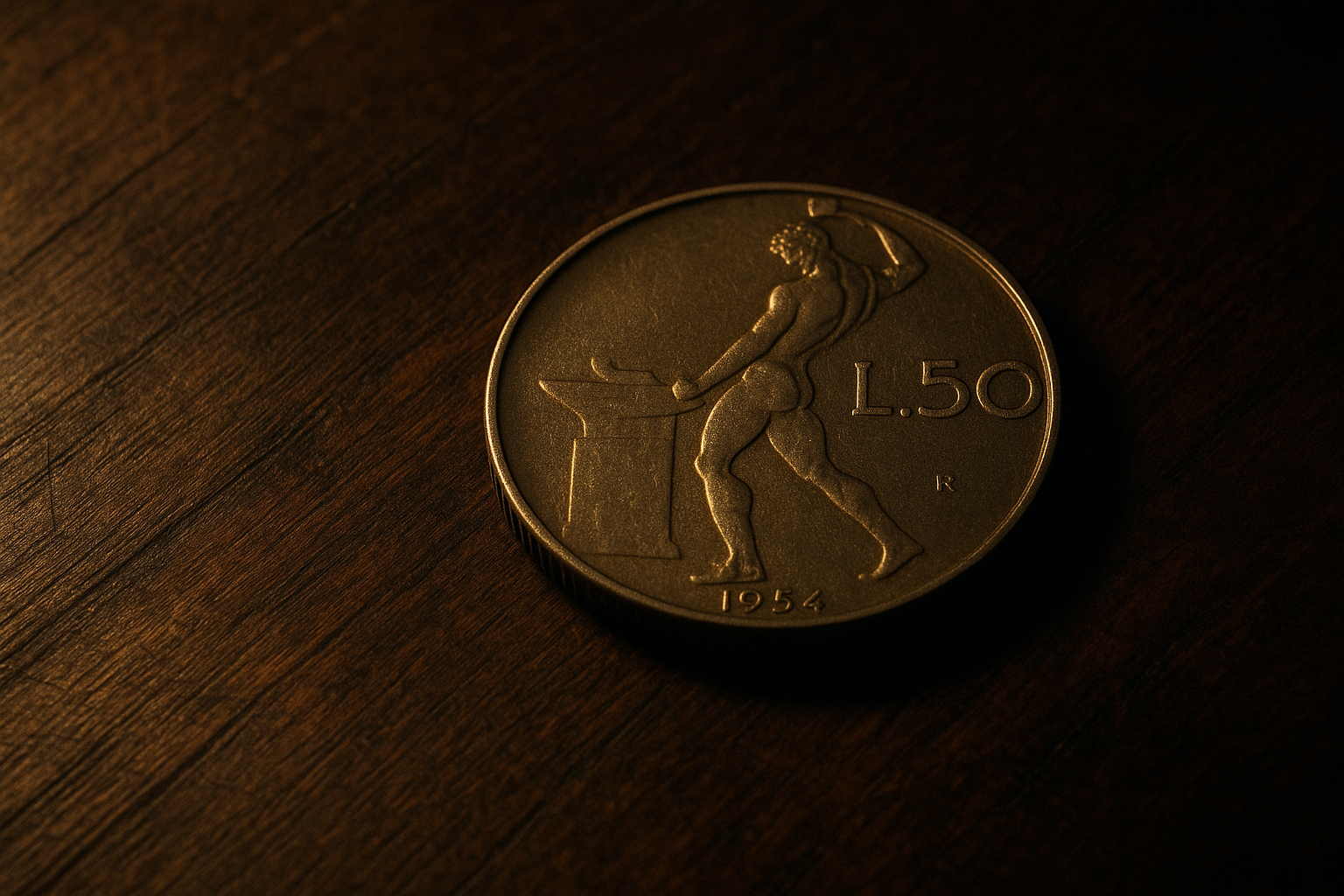
Image credit: HistoraCoin
The Echo of a Forgotten Era Begins
Every currency carries with it the rhythm of the time it belongs to. The Italian lira was no exception. For decades, it beat like a quiet pulse beneath the life of the country. Notes and coins changed hands in bakeries, post offices, train stations and family-run businesses that had watched several generations grow up. The 50 lira coin sat near the lower end of that system, yet it felt the entire movement above it.
At first, the coin was simply new. It left the mint in bright stacks, travelled in sealed bags to banks and then into cash drawers. Cashiers broke rolls of coins open at the start of a long day, filling metal trays with pieces that glinted under fluorescent lights. The 50 lira coin lay there waiting for the first customers to arrive, unaware that it would eventually become a relic of a vanished monetary world.
As years passed, the edges of each coin softened. Their surfaces grew less shiny and more complex, marked by faint scratches and patches of wear. What began as a fresh product from a mint slowly turned into something else, shaped directly by the lives it passed through. That is where the echo begins. Not in the moment of creation, but in the long, unremarkable service that followed.
Life in the Days of the Lira
To understand the Italian 50 lira coin, it helps to imagine the world of the lira as a whole. Picture an early morning in an Italian city decades ago. A newsstand opens its shutters, a barista unlocks the doors of a small bar, the smell of coffee and fresh bread begins to drift into the streets. People head to work on buses, trams or scooters, with coins in their pockets and a routine that feels familiar and solid.
A worker might stop at the bar for a quick espresso, placing coins on the counter and exchanging a few words with the person behind it. A student might stop at a kiosk for a newspaper or notebook. In a small town, someone might buy bread from a bakery that has known their family for years. In each case, the 50 lira coin might be part of the change, leaving or entering a hand in a moment that seems too ordinary to remember.
Later in the day, the same coin might find itself in the pocket of a bus driver collecting fares along a crowded route, or in the cash register of a small grocery shop where shelves are lined with familiar brands. It might pass across the counter of a tobacco shop, or be left on a café saucer as someone pays and steps back out into the street under the afternoon sun.
The story of this coin is not only written in text. It also lives in moving images and voice. In the video below from the HistoraCoin channel, you can follow the Italian 50 lira through a visual journey that brings its era back to life:
Design and Symbolism on the 50 Lira Coin
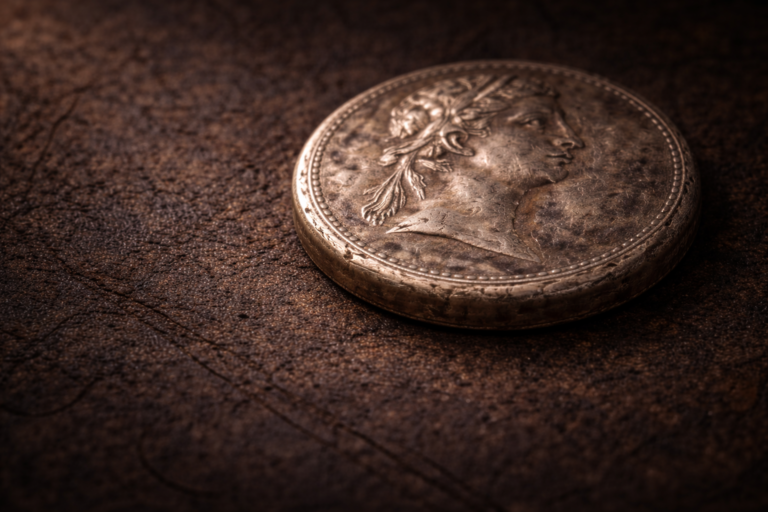
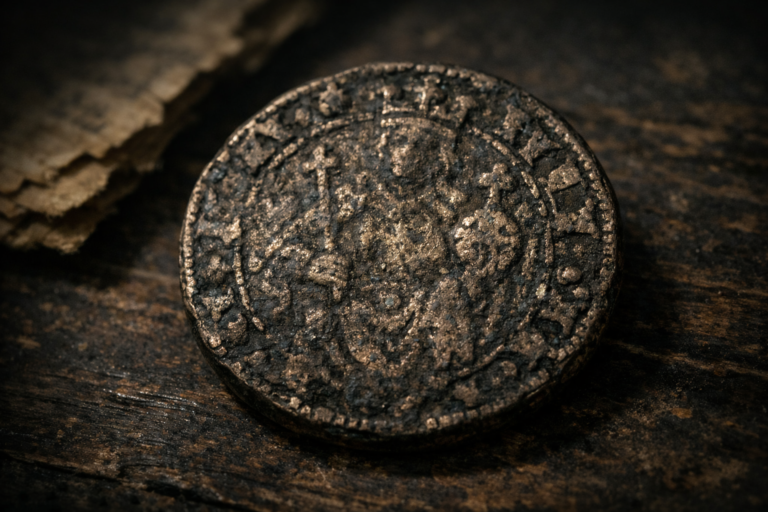
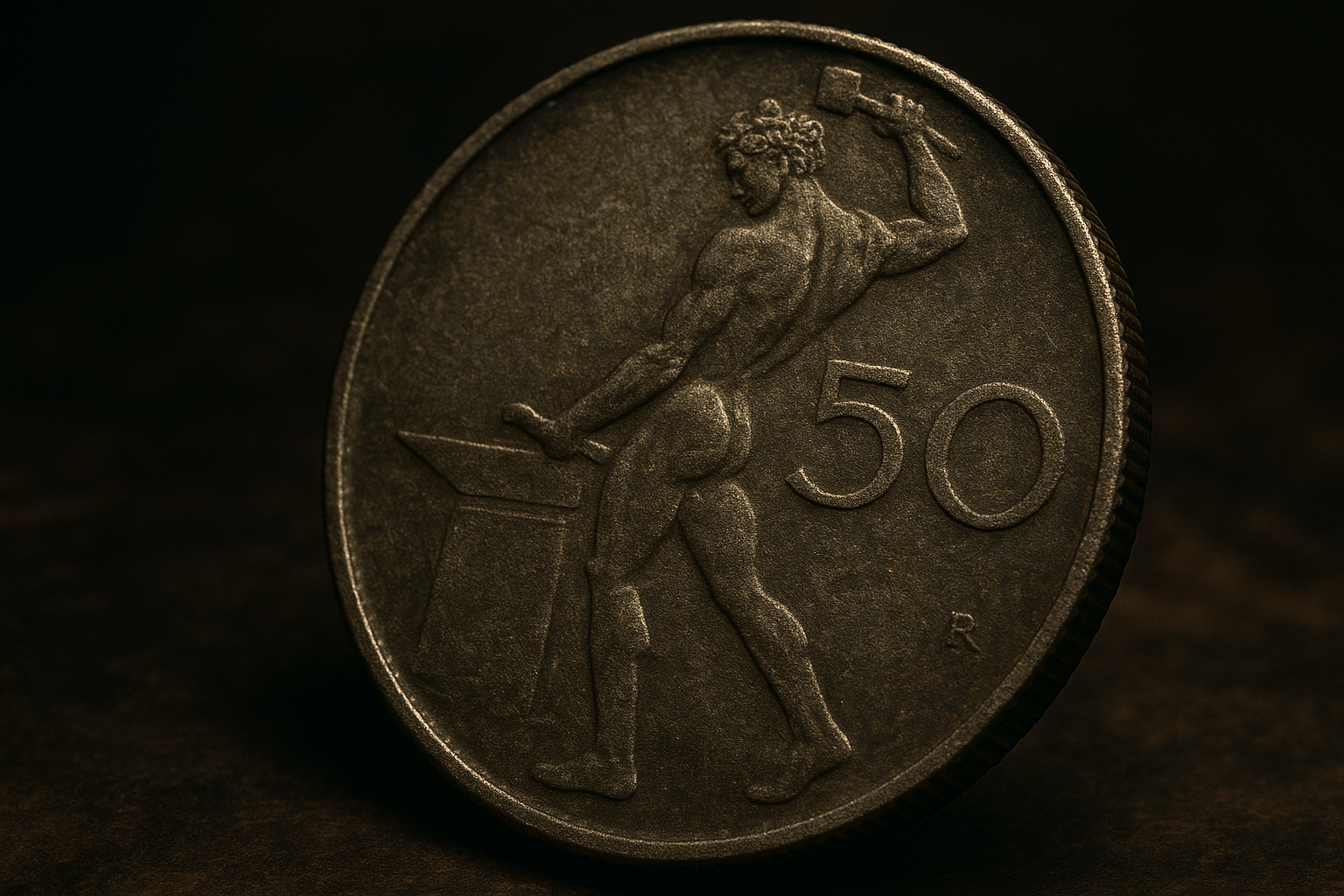
One of the most striking things about the Italian 50 lira coin is how much character it holds in a small space. The design is compact, but it carries a clear sense of the era that produced it. The images and lettering reflect choices about modernity, tradition and national identity. Even someone who does not speak Italian can feel that the coin belongs to a particular cultural landscape the moment they see it.
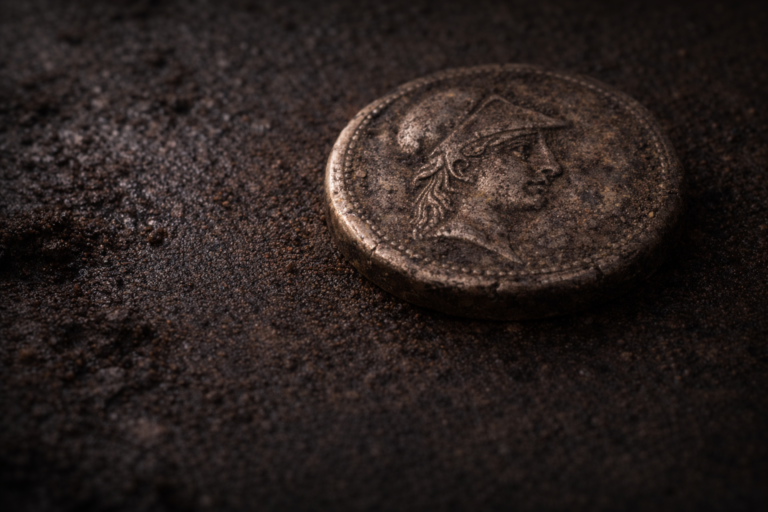
Italian coinage often found a balance between classical influences and contemporary lines. Human figures, tools, plants and symbols were rendered in a style that felt both timeless and distinctly twentieth century. The 50 lira followed this trend, with strong shapes and clean contours that worked well on a small surface. Its size made it comfortable between fingers and easy to distinguish by touch alone.
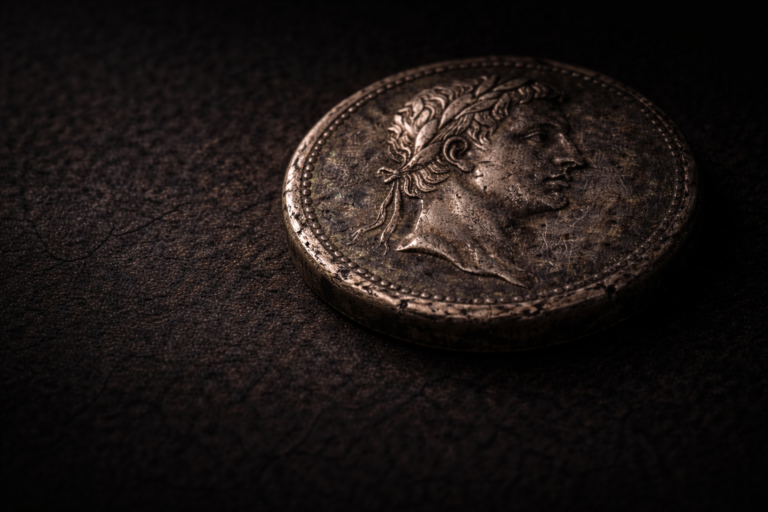
The details of the design tell their own story. The arrangement of text, the style of the numerals, the way the national name appears, the relationship between image and blank space all speak of design decisions taken by artists and officials. Over time, collectors and historians have learned to read these details as clues. They reveal when the coin was made, which aesthetic principles were in fashion, and how Italy wished to present itself in metal during that period.
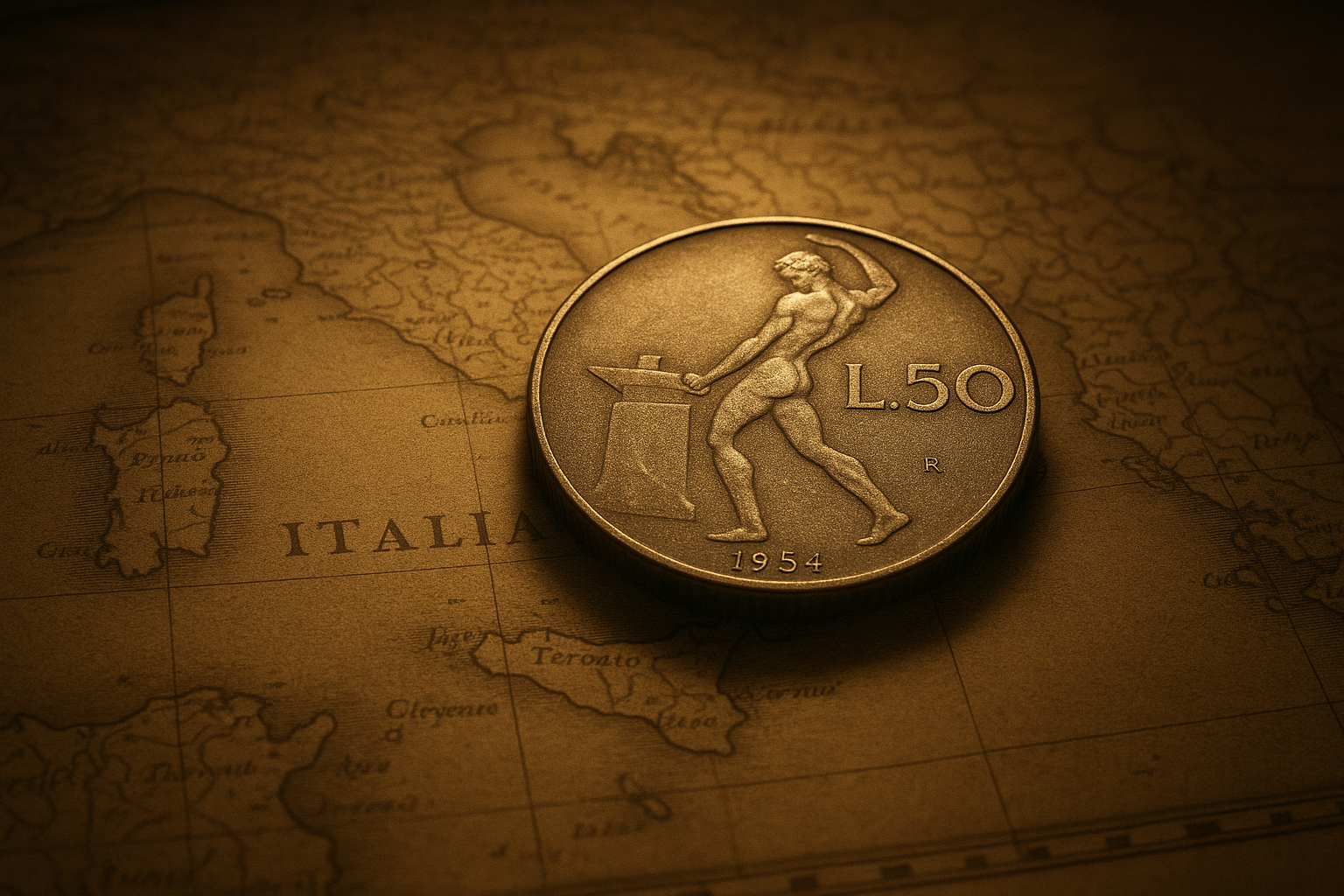
Image credit: HistoraCoin
Streets, Cafés and Everyday Journeys
The Italian 50 lira coin did not belong to glass cases or locked drawers. It belonged to the streets. It moved through narrow alleys lined with hanging laundry, through squares where children played football until voices called them in, and along boulevards where traffic lights blinked above streams of cars and scooters.
In cafés, coins rested on white saucers next to cups stained by espresso, their surfaces catching reflections from overhead lights and polished metal machines. In gelato shops, they were counted out by families treating children on hot afternoons. In railway stations, they slid across the counters of kiosks selling drinks, snacks and small items to travelers waiting for their train to be announced.
On buses and trams, the sound of coins dropping into metal boxes became part of the city’s soundtrack. Sometimes they stayed in drivers’ hands as change was given out with practiced speed. Sometimes they fell under seats and disappeared for weeks, only to be discovered during cleaning. A 50 lira coin might cross a city several times in a single day, chained to the routes of commuters, students and visitors.
All these movements left no direct record. They live instead in the worn surfaces and softened edges of the coins that survived. When you hold a heavily circulated 50 lira piece, you are touching those missing days, those noisy mornings and quiet nights that have drifted past but left themselves pressed into the metal.
Changing Times and the Slow Fade of the Lira
No currency lasts forever. The lira, which had been present through wars, rebuilding and growth, eventually reached a point where it would be replaced. Discussions, agreements and plans prepared the way for a new system. For people who had lived their whole lives counting in lira, the change felt both exciting and unsettling. Charts appeared explaining conversions. Cashiers and customers adjusted together.
During this transition, the Italian 50 lira coin found itself in a strange position. It was still accepted in shops and still recognized instantly, but it stood on a bridge between two worlds. Some people began to keep a few coins aside as mementos. Others spent them right up until the last official days, not imagining that one day they would miss the familiar weight and appearance of the lira.
After the change, the coins began to disappear in stages. Some were collected and removed from circulation. Others were thrown into drawers, jars and boxes. A few were carried abroad by tourists or Italians who moved to other countries, where they ended up in small containers along with metro tickets, postcards and photographs from earlier years. Months turned into years, and the sound of lira coins in daily life faded until it vanished altogether.
The 50 lira coin did not change during this process. What changed was its context. Once an everyday object, it became a piece of a closed chapter, a small memory that people discovered again only when circumstances brought it back into their hands.
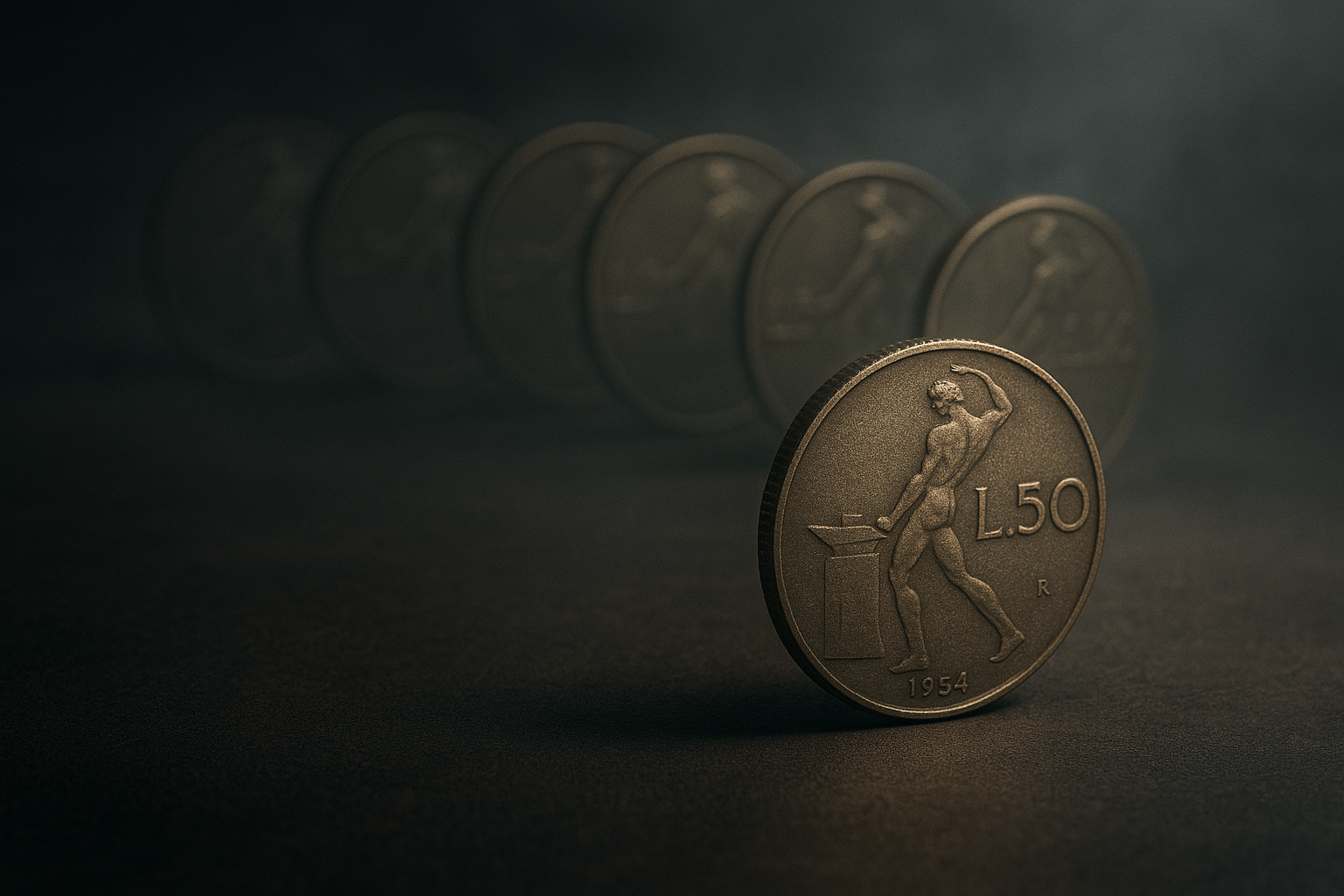
Image credit: HistoraCoin
From Pockets to Memories and Drawers
Many Italian 50 lira coins made their final journey not through shops or stations, but through the quiet spaces of private homes. They ended up in bowls on entry tables where keys and small objects were dropped after long days. They sat for years in purses that were never used again, or in the pockets of coats hanging at the back of wardrobes.
Sometime later, often during cleaning, moving or sorting out a relative’s belongings, someone would find them. A handful of coins at the bottom of a drawer. A neatly folded purse with lira pieces still inside. A small tin filled with mixed coins from different years. The person who opened these containers might pause, turn a 50 lira coin in their fingers and feel themselves drawn back to earlier days.
For those who grew up with the lira, these discoveries can trigger powerful images. Shop fronts that no longer exist. Cafés that changed owners. Streets that looked different, filled with cars and signs from past decades. For those born later, the coins feel like artifacts from a time they have only heard described. In both cases, the 50 lira serves as a bridge between memory and imagination.
Some people decide to keep the coins in small containers, not as investments or objects to trade, but as quiet reminders of the world they came from. A few may place them in albums or cases alongside stamps and other keepsakes. Others are simply returned to drawers, where they wait again for the next pair of curious hands.
The Italian 50 Lira Seen From Today
Looking at the Italian 50 lira coin from the present, it is easy to forget how unremarkable it once seemed. Modern systems of payment move silently through cards and screens, and the sound of coins is less common in busy city life. Against this background, the 50 lira feels almost like a message from a slower world, one where the weight and feel of money were a daily experience.
Collectors may examine the coin for dates, mint variations and design changes. Historians may place it in timelines of political and economic shifts. People who lived through the lira years may hold it and think less about official events and more about personal memories. A specific café, a particular street, a certain journey home at night. The same coin can mean different things depending on who is looking at it.
What unites these perspectives is the recognition that the 50 lira is a witness. It does not speak, but it carries evidence. It shows how Italy chose to represent itself on small everyday objects. It shows how long some designs remain in use, and how quickly they can vanish once the system around them changes.
In this sense, studying the coin is not just about understanding Italy’s currency. It is about understanding how societies handle continuity and change, how they move from one era to another, and how ordinary people experience those transitions in the smallest details of everyday life.
Final Reflection – The Soft Echo of a Small Coin
The Italian 50 lira and the echo of a forgotten era are inseparable. The coin is not only an object made of metal. It is a record of countless mornings and evenings, of quick purchases and slow conversations, of tram rides and station platforms, of family trips and solitary walks through city streets.
When you hold this coin in your hand today, you are holding a fragment of that world. The marks on its surface are not just signs of wear. They are traces of lives lived in the days of the lira. They remind us that history does not exist only in books, monuments or grand speeches. It also lives in the small, quiet things that people touch every day without noticing.
The echo that comes from the 50 lira is soft, but it is clear for those who listen. It speaks of a country in motion, of streets filled with voices and footsteps, of kitchens where radios played in the background, of cafés where time seemed to pause for the length of a single espresso. It speaks of a system that ended, but left behind pieces that still carry its rhythm.
For anyone who loves coins and the stories they tell, the Italian 50 lira offers a simple invitation. Turn it slowly between your fingers. Look at its images and letters. Think about the journeys it may have taken before it reached you. In that quiet moment, the forgotten era it belongs to will feel a little closer, and its echo will sound just a little louder.
For more journeys into the stories behind historical coins from around the world, visit HistoraCoin.