1967 Singapore 50 Cents – The Maritime Coin with a Hidden Past
In 1967, Singapore was a young nation standing between the open sea and a rapidly changing world. Cargo ships moved in and out of its busy harbour, fishing boats traced quiet lines along the coast, and new buildings rose above streets that still remembered an earlier time. In the middle of this transformation, a silver-coloured coin began to appear in pockets and cash drawers – the 1967 Singapore Lion-Fish 50 cents coin, a small piece of metal that carried the story of water, trade and identity.
To most people who used it, the coin was just part of everyday change. It paid for meals at hawker stalls, bus rides across the city, and small items in neighbourhood shops. Yet its design was anything but ordinary. On one side, a powerful lionfish moved through imagined currents, its fins spread like a living emblem of strength beneath the waves. On the other, symbols of a growing nation signalled that Singapore was ready to shape its own future.
This article does not focus on charts or market discussions. Instead, it follows the journey of this coin as a storyteller. It explores why the lionfish was chosen, how the coin was used, and how it quietly guarded the memory of Singapore’s waters long after it left circulation.
Estimated reading time: 11–12 minutes
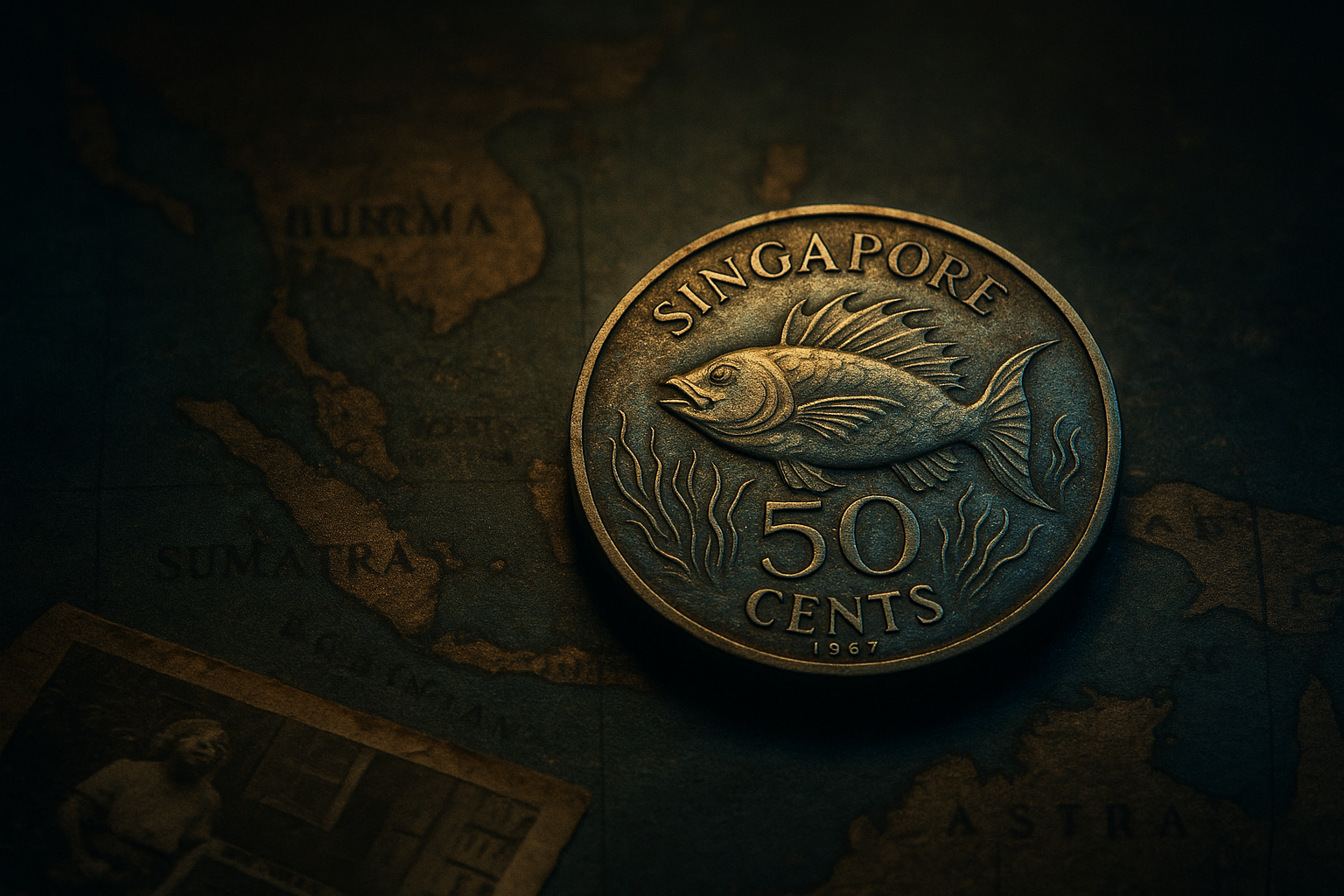
Image credit: HistoraCoin
Singapore in 1967 – A Young Nation by the Sea
In 1967, Singapore was only a few years into its journey as an independent state. The wounds of the past were still fresh, but the determination to build something new was even stronger. The city’s identity had always been linked to the sea. Ships from distant places moved through its harbour, bringing goods, people and stories. The coastline was not just a border – it was a lifeline.
Fishing communities relied on the surrounding waters for their livelihoods. Dock workers and sailors formed the beating heart of the port. Markets near the harbour sold fresh seafood alongside spices, rice and household essentials. In this environment, the idea of placing a powerful sea creature on a national coin felt natural, almost inevitable. The lionfish on the 50 cents piece captured that connection between survival, danger and beauty beneath the waves.
The late 1960s were also a period of transformation. New infrastructure projects, changes in housing and rapid urban development reshaped the skyline. Yet underneath these changes, small details like coins remained constant. They moved silently through the pockets of workers, students, shopkeepers and visitors, acting as daily reminders of a shared national story still being written.
Birth of the Lionfish Coin – Why 50 Cents Mattered
The decision to introduce a 50 cents coin with a distinctive lionfish design was both practical and symbolic. Practically, this denomination played an important role in everyday exchanges. It was large enough to be noticeable and useful for many common transactions, and small enough to be part of everyday change.
Symbolically, the coin provided an opportunity to express something deeper about Singapore’s character. Around the world, many nations use animals on their coinage, but the choice is always meaningful. By selecting a lionfish – a creature linked to the sea but also known for its striking appearance and defensive strength – the designers created a visual metaphor for a small but determined country surrounded by powerful currents.
When the coin first entered circulation, it would have appeared bright and sharp, with clear edges and a strong image that caught the light. Bank clerks broke open rolls, shopkeepers filled their tills and customers quickly became familiar with the new design. Few of them likely thought about what it meant at the time, yet over the years, the lionfish would become closely associated with a specific chapter in Singapore’s story.
Design of the Lionfish – Movement, Power and Grace
The most striking feature of the 1967 50 cents coin is the lionfish itself. It does not sit still on the surface; it seems to move. The fins spread out like a crown around its body, the stripes flow across its form and the tail curves as though tracing an invisible current. Even in simple metal relief, the fish looks alive, alert and ready.
The choice of a lionfish is interesting for several reasons. It is a creature associated with strength and caution. Its spines and markings act as both a warning and a display. In the context of a young maritime nation, the design suggests that Singapore understood the risks of its environment but was prepared to face them with confidence.
Around the lionfish, the rest of the design brings order and balance. The denomination “50 CENTS” and the name “SINGAPORE” frame the central image, while the date below anchors the coin to a particular moment in time. Together, these elements transform a small piece of metal into a carefully constructed symbol of identity, geography and ambition.
Metal, Weight and Feel – Holding the Coin in Your Hand
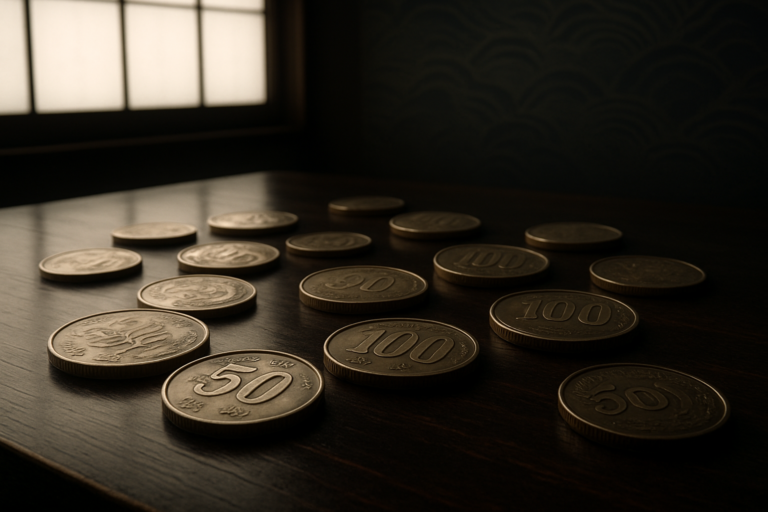
Physically, the 1967 Lion-Fish 50 cents is a substantial coin. Its size and weight give it presence in the palm. When placed on a table beside smaller denominations, it stands out as something more deliberate, more solid. The ridged edge offers a reassuring grip, and the metal surface carries a cool touch when first picked up.
Newly minted coins would have had a clean, silver-coloured appearance, but time adds its own character. As the years passed, many coins developed subtle changes in tone – light patches where fingers held them, small scratches from contact with other metal surfaces and faint marks from being dropped, stacked or slid across counters. These details do not take away from the design; they add a layer of history on top of it.
When you tilt such a coin under light, the lionfish seems to emerge and retreat depending on the angle. The raised parts catch the brightness first, while the recessed parts stay slightly darker. This play of light and shadow makes the coin feel more like a tiny sculpture than a simple tool of trade.
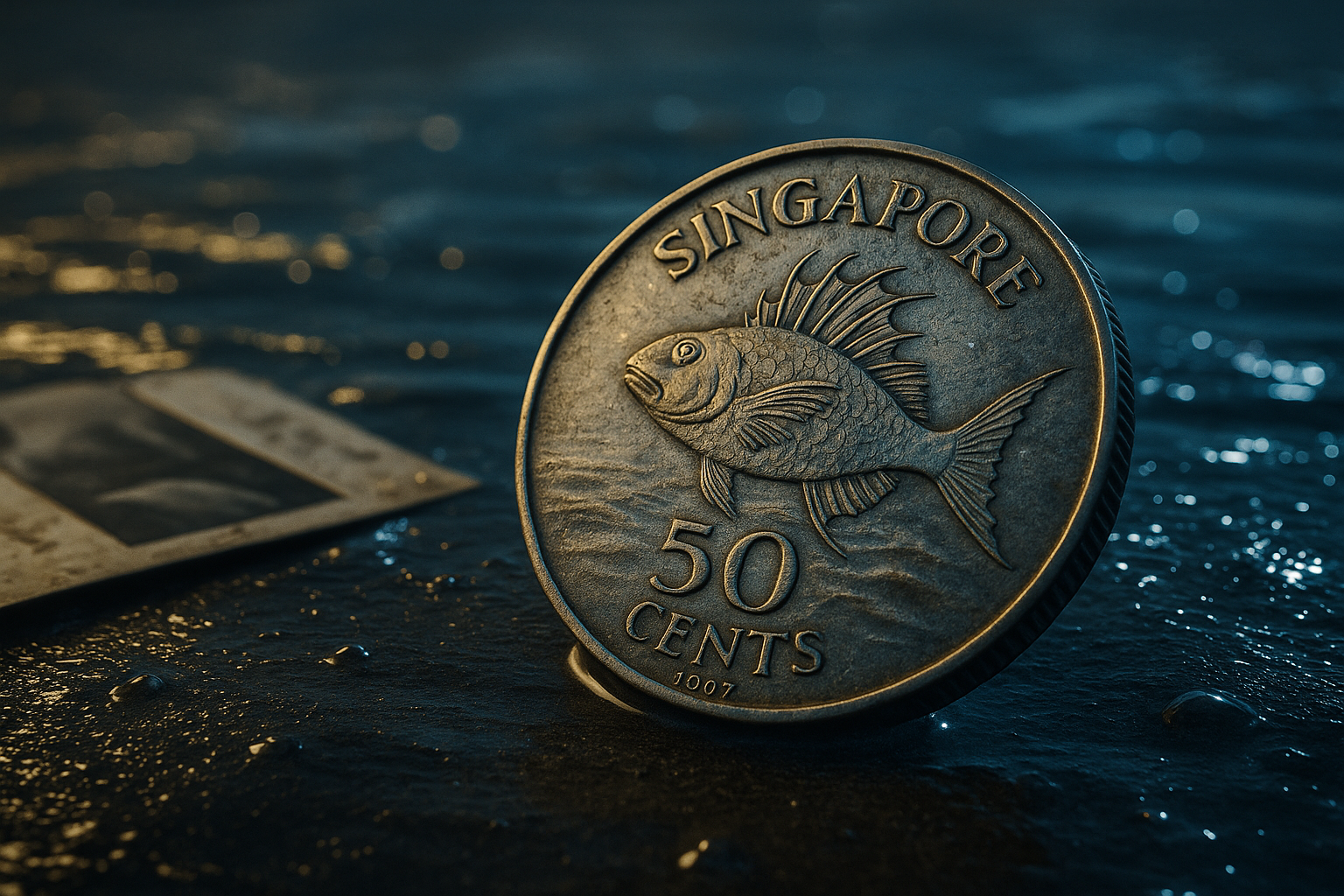
Image credit: HistoraCoin
Guardians of the Waters – The Maritime Story Behind the Design
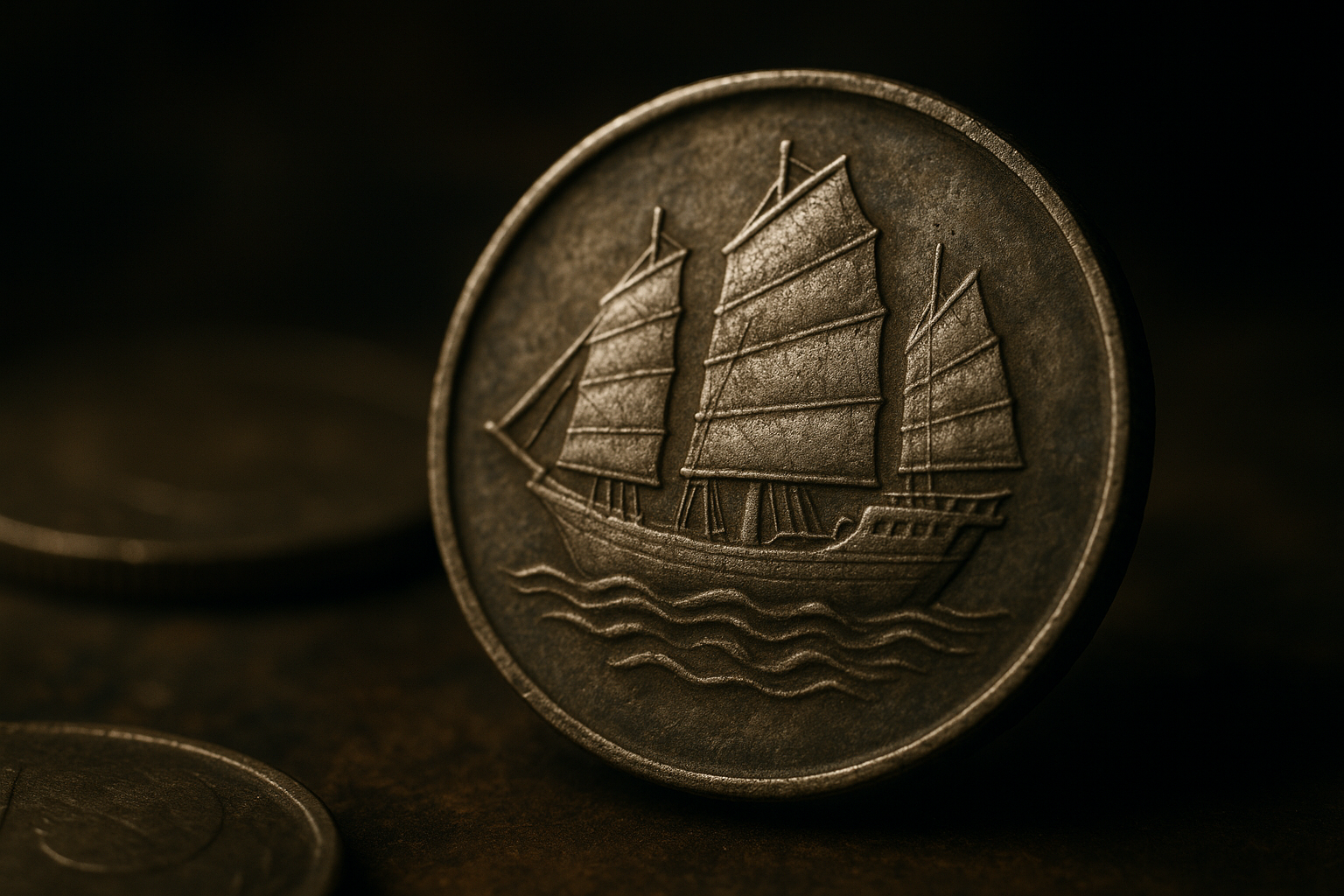
Singapore’s story cannot be told without the sea. For centuries, its location has made it a natural meeting point for traders, sailors and travellers from across Asia and beyond. The Lion-Fish coin captures this maritime legacy in a single image. The fish does not float in abstract space; it seems to patrol unseen waters, a guardian of routes and harbours.
The sea around Singapore has always been both a source of opportunity and a place of risk. Changing tides, storms and shifting political conditions shaped the lives of those who depended on it. By placing a powerful sea creature on one of its coins, Singapore acknowledged this dual nature – the sea as both partner and challenge.
For coastal communities, the lionfish on the coin may have felt familiar. It echoed the sight of real fish seen in markets, on hooks or in nets. For city dwellers further inland, the design acted as a reminder that the water’s edge was never far away and that the nation’s strength remained closely tied to its maritime routes.
Hawker Stalls, Markets and Harbour Lights – Everyday Life with the Coin
To understand the Lion-Fish coin as part of real life, it helps to imagine a day in 1960s Singapore. Early in the morning, market stalls opened, their tables filled with fruit, vegetables, fish and spices. Customers moved between them, holding baskets or bags, calculating what they could take home. The 50 cents piece might pay for a generous bowl of noodles, a few essential items or a shared meal between friends.
At hawker centres, stall owners kept coins in small trays, metal tins or cloth pouches. The sound of change being counted and exchanged formed part of the constant background music of the place. The Lion-Fish coin, with its distinctive size and weight, would have stood out as it was picked up, turned over briefly and then passed along.
Near the harbour, workers finishing long shifts might have used the coin for a meal, a drink or a practical necessity before heading home. In quieter neighbourhoods, families would have seen it while settling small household expenses or giving older children a bit of pocket change. In each case, the coin was present in everyday interactions, linking the maritime image on its surface to the lives of those who lived within sight of the water.
Voices of the Past – Imagined Journeys of a Lionfish Coin
Every surviving Lion-Fish coin has its own unwritten story. One might have travelled almost exclusively within a single district, passing between the same shops and families for years. Another might have crossed borders, carried by a visitor or seafarer who took it back to another country as a small reminder of Singapore’s port.
Picture a student carrying one in a pocket on the way to school, absent-mindedly tracing the shape of the fish during a long bus ride. Or a shopkeeper recognising a particular coin by a scratch near the date, noticing it reappear days or weeks later after moving through many hands. These little details are almost impossible to document, yet they are part of what makes the coin feel alive in memory.
Sometimes, coins like this appear in family stories. A relative might keep one in a small box along with old photographs, tickets and letters. They do not necessarily talk about its official details; instead, they remember where and when it first came into the family’s possession. Over time, the coin becomes a silent witness to reunions, relocations and the slow accumulation of years.
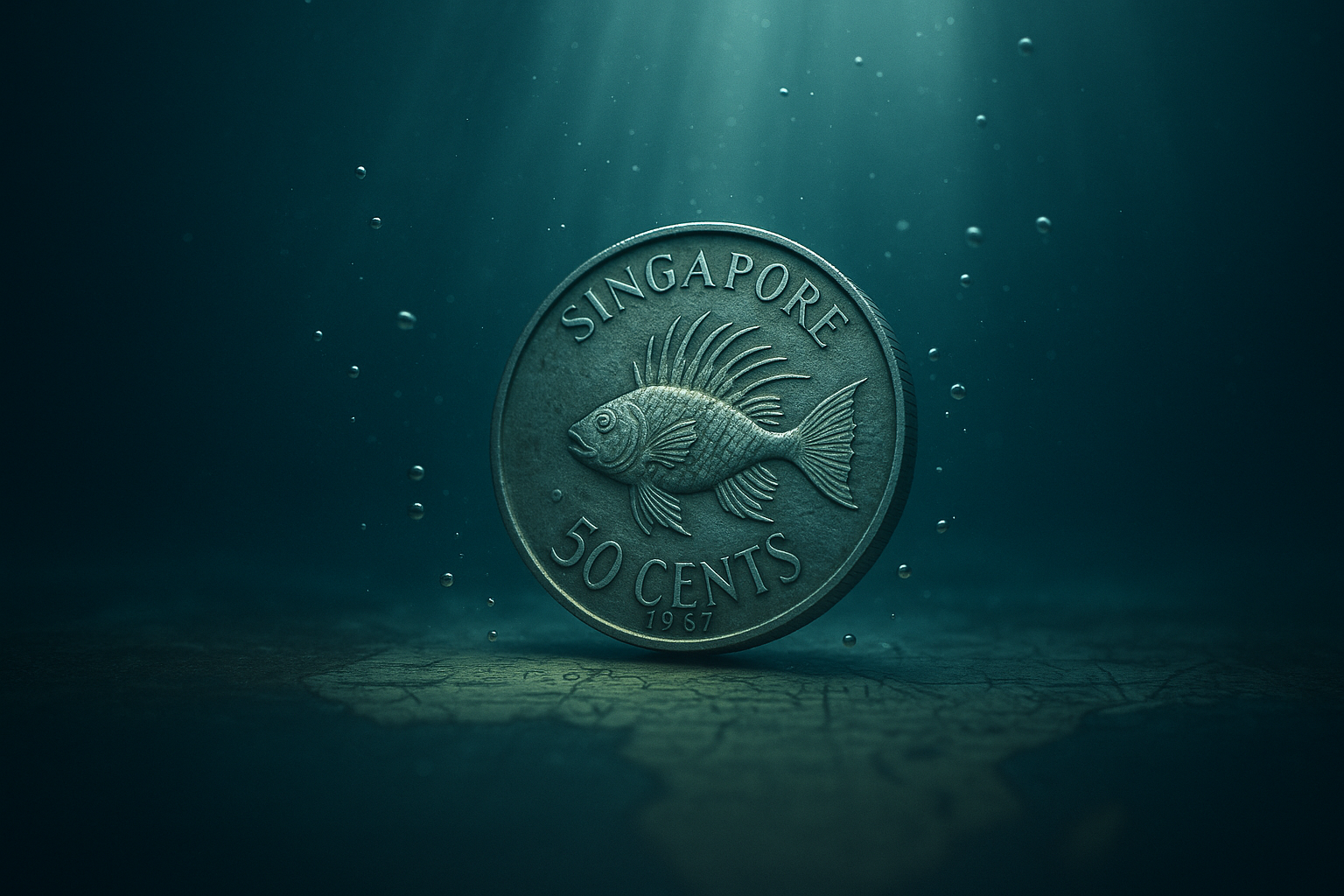
Image credit: HistoraCoin
Changing Times – From Silver-Coloured Coins to a Modern City
As Singapore developed through the late twentieth century, many aspects of daily life changed. New buildings rose higher, roads expanded, technology advanced and financial systems became more complex. Eventually, the patterns of coin production and usage shifted as well. Designs were updated, materials adjusted and some denominations saw their roles evolve.
For older generations, the Lion-Fish coin became part of a remembered past. It belonged to an era when cash played a central role in every transaction, when counting change was a routine part of shopping and when the faces and symbols on coins were noticed because they passed through so many hands each day.
For younger generations, encountering the coin for the first time often happens in a different context – not in a shop, but in a drawer, a collection, a family box of keepsakes or an article like this one. Instead of being a normal part of life, it appears as a relic, a small, solid fragment of a Singapore that existed before their time.
How Some Lionfish Coins Survived the Tide of Time
Not all Lion-Fish coins survived the years. Many were gradually withdrawn from circulation, damaged or misplaced. Those that remain often did so thanks to simple acts of care or forgetfulness. Someone might have placed a few coins into a jar and never emptied it. Another person might have kept a coin in a desk drawer because they liked the design, then forgotten about it as life moved on.
When such coins are found again, they often feel strangely fresh, as though they have been paused in time. The date still reads 1967, even if the world around them has changed beyond recognition. The lionfish still swims across the surface, guarding waters that may no longer look the same but remain important to the nation’s identity.
For people who enjoy history, each recovered coin becomes an invitation to explore. It prompts questions about where it travelled, who used it and what the world looked like when it first left the mint. The answers may be incomplete, but the act of wondering deepens our connection to the past.
Looking at the Coin Today – History in the Palm of Your Hand
Today, the 1967 Lion-Fish 50 cents coin can be appreciated in a way that was almost impossible when it first appeared. Back then, it was too familiar and too ordinary. Now, distance in time has turned it into a small piece of visual history. Its design captures a specific moment when Singapore was defining itself as a maritime nation with global aspirations.
Collectors and curious readers examining the coin might start by simply turning it in their hands, noticing the way light moves across the fish’s fins, the clarity of the lettering and the balance of the overall composition. Then they might think about the harbour, the markets, the ships and the people who once used this coin without giving it a second thought.
For those who like to combine visual learning with reading, videos about Singapore’s history and currency can provide valuable context. One example is available here:
Watch a Singapore history and coinage themed video on YouTube
.
It helps bring to life the setting in which coins like the Lion-Fish 50 cents quietly moved through daily life.
Whether encountered in a collection, a family box or an educational setting, the coin encourages viewers to slow down and look more closely. In a world dominated by screens and instant transactions, holding a physical piece of the past offers a different kind of connection – calm, tactile and reflective.
Final Reflection – The Coin That Guarded Singapore’s Waters
The Lion-Fish 50 cents coin that once moved through Singapore’s streets and markets now stands as a symbol of endurance. It reminds us that even small objects can carry the weight of history. Its design honours the waters that shaped the nation, the people who depended on them and the challenges faced during a crucial period of growth.
When you look at this coin today, you see more than a denomination. You see the outline of a young city, the glow of harbour lights on evening waves and the steady movement of ships arriving and departing. You see families eating at crowded stalls, workers returning home after late shifts and children learning to recognise the images that represent their country.
The lionfish on the coin may be frozen in metal, but the story it represents continues to move. It flows through memories, photographs, old documents and conversations between generations. In that sense, the coin still guards Singapore’s waters – not as a physical protector, but as a keeper of stories that remind the nation where it came from and how far it has travelled.
For more journeys into the stories behind historical coins from around the world, visit HistoraCoin.