The Mirror Coin – The Reflection of Lost Souls
The Mirror Coin – The Reflection of Lost Souls
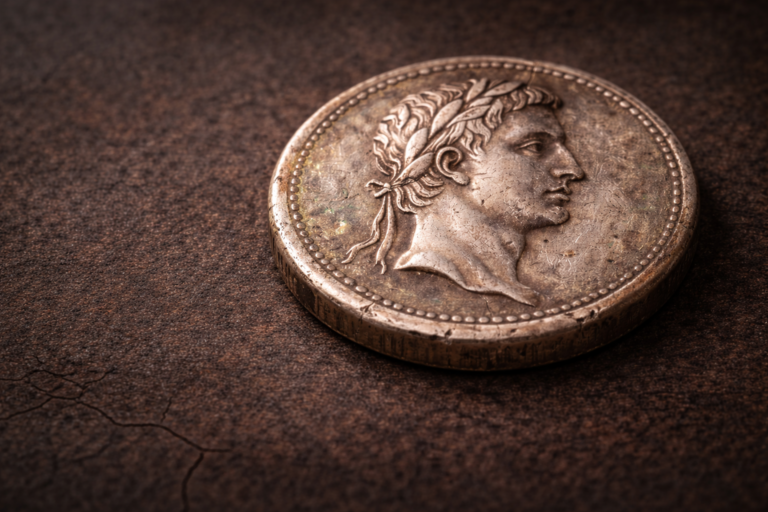
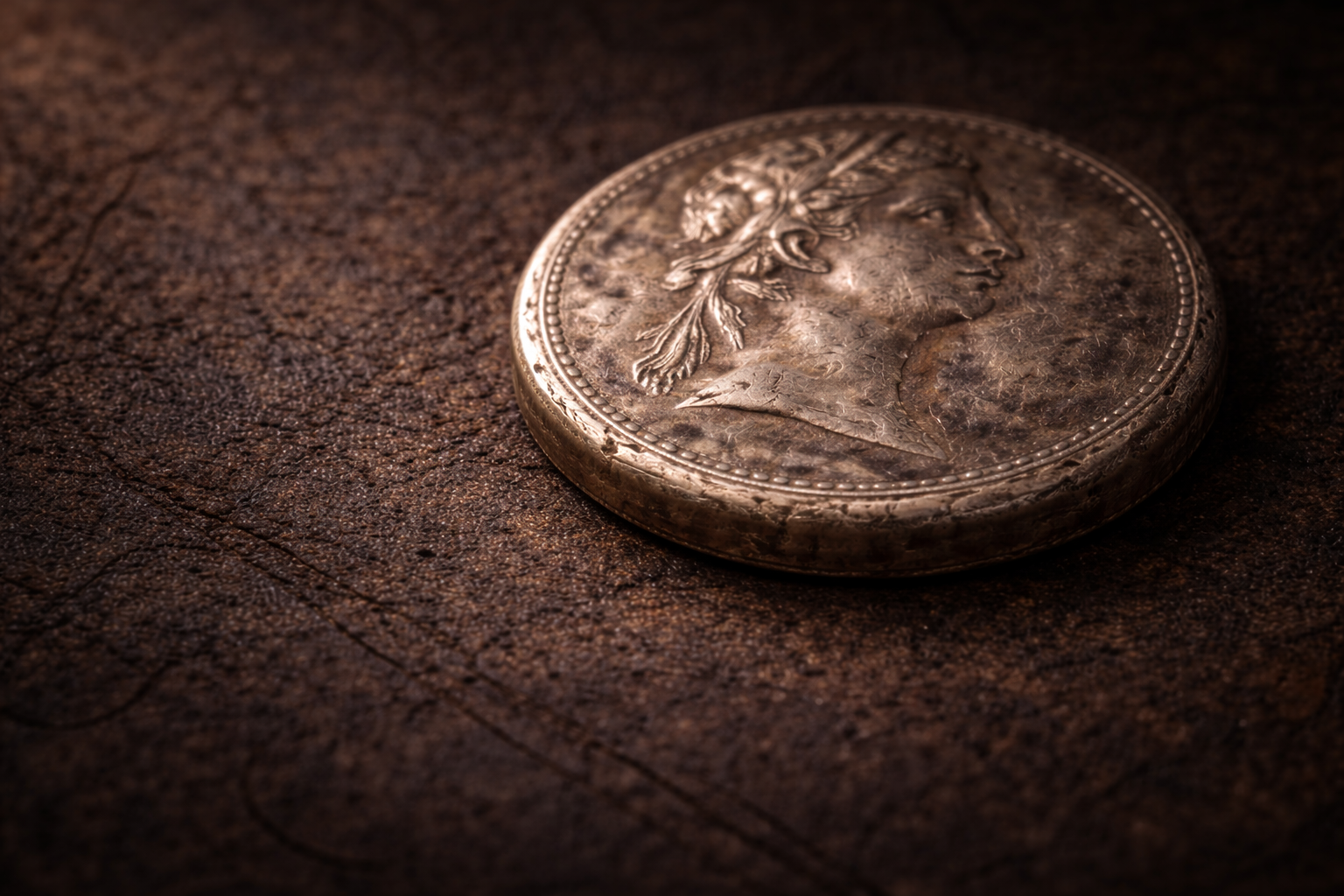
They called it The Mirror Coin—a piece of silver so perfectly polished that it caught not only the light, but the shadows behind it. For centuries, it lay buried beneath the soil of a forgotten Roman tomb, unseen and untouched, until a single mistake brought it back into the world.
It began with a storm.
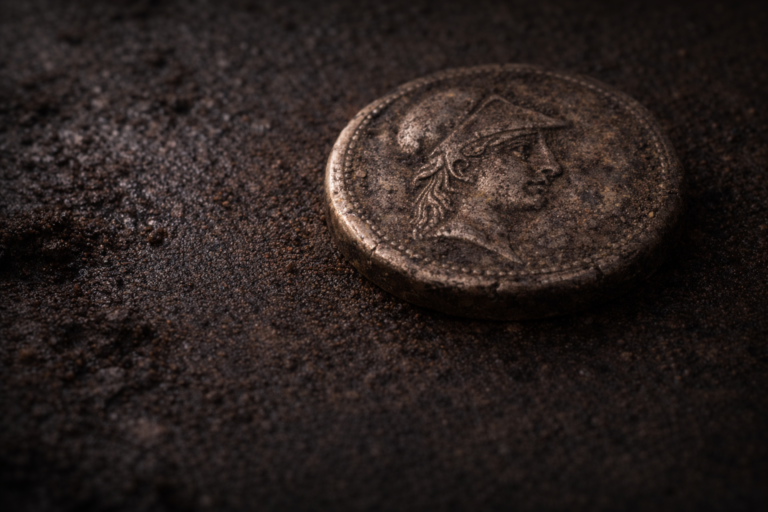
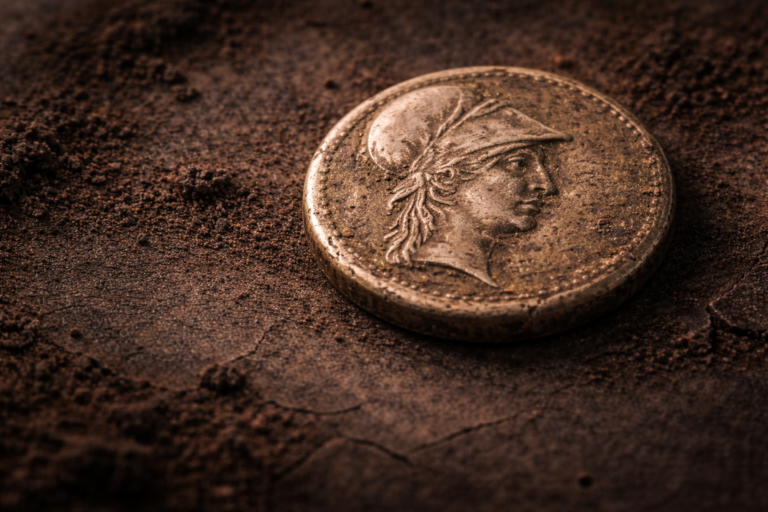
In the outskirts of what was once the ancient city of Eboracum—modern-day York—construction workers unearthed a sealed chamber in the ruins of an old Roman fort. The room was empty except for a stone pedestal, a broken bronze lamp, and a small leather pouch coated in black dust. Inside the pouch lay a single denarius, brighter than the moonlight that struck it.
At first, the archaeologists assumed it was a ceremonial coin. But when Dr. Helena Varros, the lead researcher, held it under her field lamp, something strange happened. Her reflection appeared on the surface—then blinked.
The First Reflection
Helena was not the kind of woman to believe in superstitions. She had excavated mummified soldiers, unearthed ancient curses etched in stone, and cataloged relics soaked in blood. But that night, as she examined the coin under her tent, she couldn’t shake the feeling that the silver was breathing. The mirror-like surface rippled faintly, as if it held water, and for a split second, she thought she saw someone standing behind her—someone whose face she could not recognize.
She blamed the fatigue, the long nights, the flicker of the lamp. Yet when she showed the coin to her team the next morning, the air inside the tent turned cold. Every camera lens pointed at the coin fogged instantly. The digital readings failed. Even their generator cut out for exactly thirteen seconds.
And then came the whisper.
“Return what you took.”
The Inscription Beneath the Shine
When they examined the coin closely, they noticed faint letters engraved along its edge—barely visible to the naked eye. The Latin read: “Speculum Animarum.” The Mirror of Souls.
According to Roman myth, mirrors were gates between the living and the dead. Reflective metal, especially silver, was believed to capture fragments of a person’s essence—their anima. Some emperors, obsessed with immortality, were rumored to fund experiments where mirrors were forged in sacred rites to preserve the soul within.
Helena’s team suspected this coin might have been part of such a ritual. The reverse side bore no emperor’s face—only a hollow circle where the reflection itself became the image. It was as though the coin was incomplete without the gaze of the one who held it.
The Journal of Titus Varros
That evening, while searching the nearby ruins, Helena discovered a fragment of parchment sealed in a clay jar. Written in archaic Latin, it appeared to be the journal of a Roman nobleman named Titus Varros—a name uncannily similar to her own. The entries spoke of a forbidden ritual conducted under the guidance of the Vestal priestesses during a solar eclipse.
“The gods no longer hear our prayers,” Titus wrote. “But perhaps they can see them. If reflection is the path to remembrance, I shall leave a piece of myself in silver, that my eyes may never close.”
The last line was smeared, but one phrase could still be read clearly: ‘And should any mortal look upon it, my soul shall see them too.’
The Night of the Second Reflection
By the fifth day, Helena’s demeanor had changed. She began speaking to herself during cataloging, murmuring in half-Latin sentences. Her colleagues joked that she was becoming like the ancient scholars she studied—but her eyes had lost their warmth. Cameras caught her staring into the coin for hours, whispering in a voice just low enough that no one could make out the words.
One night, a technician entered her tent to deliver equipment and found her sitting motionless, holding the coin before her face. The light from her lamp cast a trembling halo around her, but what the technician saw in the reflection made him drop the camera.
There were two faces in the silver.
One was Helena’s. The other was not.
By dawn, Helena Varros was gone. Her tent was empty except for her recorder, still running. On the final tape, her voice could be heard clearly:
“He’s here. He says he’s been waiting for me. I can see him now. In the mirror… he looks just like me.”
After that, the excavation site was sealed. The artifact was transferred to the National Museum under restricted access, and the official report described the incident as a “psychological breakdown.” But the recording was never released, and neither was the coin.
At least, not officially.
The Collector
Five years later, the coin resurfaced in the private collection of a London antiquities dealer named Marcus Ellery. No one knew how he acquired it; rumors said he bought it through a silent auction from a retired museum curator. What was certain is that Ellery was obsessed with reflection—his mansion was filled with polished silver trays, mirrored walls, and glass display cases that multiplied his image a hundred times over.
Within a month of owning the coin, Ellery began to change. His letters to colleagues grew erratic, full of strange symbols and mirrored handwriting that could only be read backward. He claimed the coin was “speaking” to him through his reflection—that it showed him fragments of other lives, other deaths, as if he were peering through a window rather than into a mirror.
Neighbors reported screams at night and flickering lights that pulsed like heartbeats. When police finally entered his home, they found every mirror shattered—except for one: a small glass dome that protected the coin. Beneath the fractured reflections, Ellery’s final message was scrawled across the wall in silver paint:
“He saw me. Now I see them all.”
The Mirror Coin vanished again after that night. No record of it exists in any official archive, though collectors whisper that it occasionally appears in private hands—never for long. Each owner leaves behind a trail of broken mirrors and cold rooms where whispers echo without mouths.
The Legend Grows
Historians now debate whether the Mirror Coin ever truly existed, or if it was simply another Roman superstition wrapped in the fog of time. Yet, even skeptics admit there are patterns too precise to dismiss. Ancient burial records in Eboracum describe “a vessel of silver eyes” interred beneath the temple of Apollo—a poetic phrase, perhaps, or a literal warning.
In the shadow of that same temple, archaeologists continue to find shards of reflective metal, unlike any alloy known from the period. Each piece seems to distort its surroundings, bending light in unnatural ways—as if trying to remember what it once reflected.
Some say the Mirror Coin was the last attempt of man to conquer death—not through gods, nor prayer, but through the permanence of one’s own image. If true, it succeeded far too well.
The Final Reflection
Imagine holding it now—feeling the cold silver press against your palm, its surface smooth and waiting. You tilt it toward your face, expecting only your reflection. But what if, just behind your eyes, someone else is watching back?
In every legend, the Mirror Coin returns when someone dares to look too long—when curiosity outweighs fear. Perhaps that is its curse, or perhaps it is our own: the eternal hunger to see beyond the glass, even when we know the darkness might gaze back.
Some stories end when the hero buries the artifact, breaking the curse. Others end when he keeps it, believing he can resist. But in the tale of the Mirror Coin, there is no ending—only reflection. One that deepens each time it’s told.
And if the light in your room flickers while you read this, don’t turn around too quickly. Sometimes, it’s not the coin that finds you… it’s the gaze you left behind.
Reality Check
While no confirmed Roman artifact matches the description of “The Mirror Coin,” there are historical references to specularium—highly polished silver mirrors used by nobles and priests. Ancient Romans indeed believed reflections could capture fragments of the soul, and they often covered mirrors in funerals to prevent the spirit of the dead from being trapped. Several denarii from the first century AD were known for their unusual reflective finishes, possibly linked to ritual or funerary use. Though no cursed mirror coin has been found, the myth draws chilling parallels to these real practices.
Final Thought
Legends survive because they mirror us—our fears, our vanity, our longing to outlive time. Whether the Mirror Coin was real or imagined, it reflects one undeniable truth: every soul seeks to be remembered. And sometimes, remembrance demands a price.
🔗 Watch more mysterious coin legends on the HistoraCoin YouTube Channel