🇦🇺 1966 Wavy 20 Cent — The Accidental Rarity That Shocked Australia
1966 Wavy 20 Cent — The Accidental Rarity That Shocked Australia
A country can change its money overnight, but it cannot control every tiny detail that slips through the machines. In Australia’s first year of decimal coins, one small curve inside a single digit quietly escaped into circulation. Decades later, that curve became a national conversation. This is the story of the 1966 Wavy 20 Cent, explained with history, design logic, and careful identification steps, without turning the article into a price chase.
Also, if you enjoy “impossible coin” mysteries, see: Rare 1974 Penny | The Coin That Shouldn’t Exist.
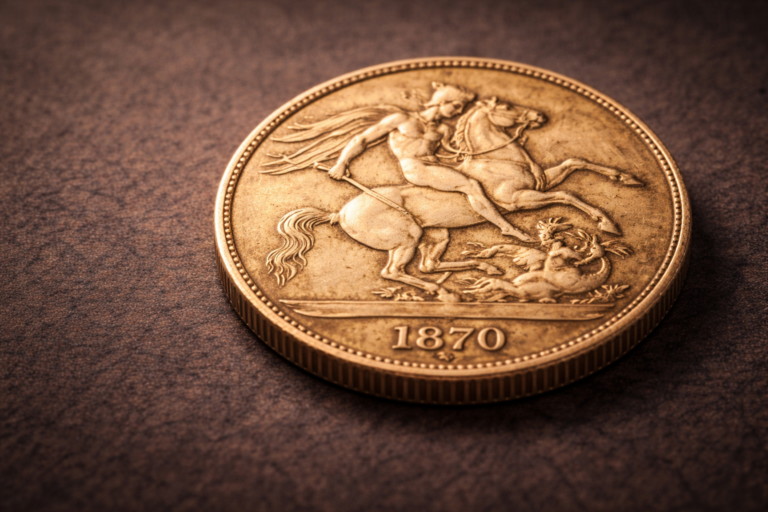
1870 Sydney Sovereign | The Lost Gold of the Empire.
1935 New Zealand Waitangi Crown | The Coin That Never Circulated.
📚 Table of Contents
- Why 1966 mattered so much in Australia
- What “Wavy 2” actually means
- How a tiny die detail becomes a national rarity
- The 20 cent design, and why it hides clues
- How to identify a true Wavy 20 Cent safely
- Common myths that waste collectors’ time
- Collector perspective without price obsession
- Handling, storage, and documentation
- Reality Check
- FAQ
- Final reflection
🇦🇺 Why 1966 mattered so much in Australia
Before 1966, Australians used pounds, shillings, and pence. It was a system tied to older British tradition. It worked, but it was complicated for everyday math. When the country moved to decimal currency, everything had to be redesigned, re taught, and produced at scale. New denominations had to feel familiar enough for trust, but modern enough to mark a new chapter.
Decimal changeovers create a perfect storm for unusual varieties. The mint must produce enormous quantities fast. Tooling is new, dies are under pressure, and quality control must balance speed with accuracy. In that environment, small differences can appear. Most of the time, they are corrected quickly. Occasionally, a small batch escapes, and history is born in silence.
🧭 Why errors show up during transitions
New designs, new dies, fast production, and massive demand. Even careful systems can miss a subtle detail that is technically acceptable.
🧠 Why people notice them later
You need time for collectors to compare coins, build references, and realize a “normal” piece is not actually normal.
🌊 What “Wavy 2” actually means
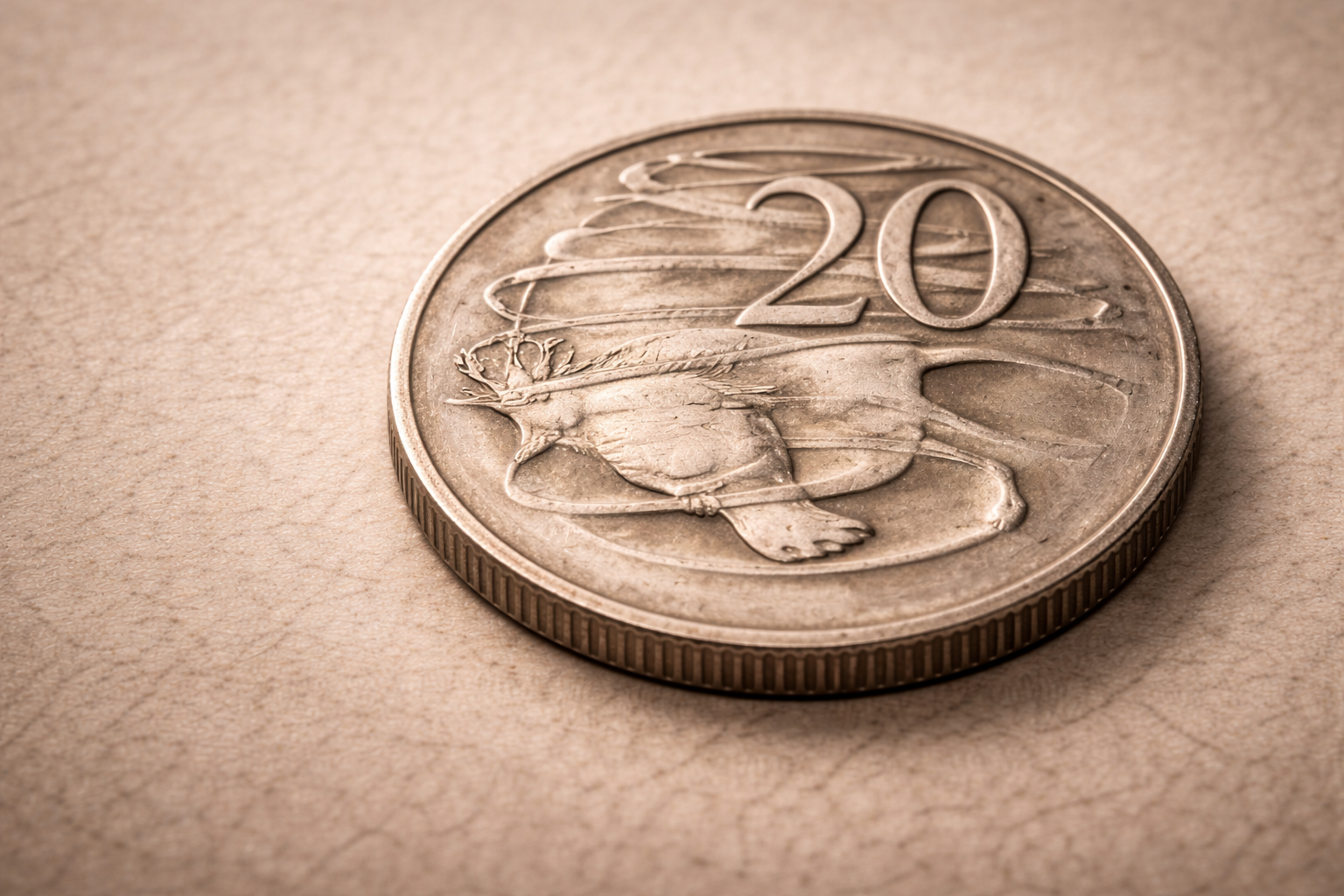
The phrase “Wavy 20 Cent” sounds dramatic, but the visual difference is small. On the 1966 twenty cent coin, look at the number 2 in the date. On the variety collectors call “Wavy 2,” the baseline of that digit has a gentle curve. It does not look broken or jagged. It looks like a natural wave, as if the bottom line of the 2 is slightly flowing instead of straight.
The key is that the curve is part of the die design as it was used. It is not damage on the coin. It is not a scratch. It is not metal bending. It is a consistent shape that repeats across genuine examples.
Think of it like handwriting. Two people can write the same number, but one writes a perfectly straight line, and the other writes it with a soft curve. The “Wavy 2” is that second style, frozen into the die, then repeated into the metal.
🏭 How a tiny die detail becomes a national rarity
Coins are not “printed.” They are struck. A hard metal die carries the design. A blank coin planchet is pressed between dies with immense force. The result is an instant transfer of design. If a die has a small defect, or if an early die state has a different shape, every coin it strikes will share that feature.
In the original article file, the core explanation is simple: the wave came from a damaged or imperfect die used early in production, then replaced after a limited run :contentReference[oaicite:1]{index=1}. Whether we describe it as a damaged master die or a particular die state, the practical outcome is the same. A short window of production created a visually consistent variety.
The most important part of this story is not romance. It is process. Mints do not stop the world for a tiny curve if the coin still functions as money. If the detail does not affect denomination readability, it can pass. Later, collectors identify it as a variety, because collectors care about consistency and difference.
🔍 A useful mental model
A minting variety is usually a “repeatable fingerprint” from a specific die or tooling choice. Random damage is usually unique to a single coin. The Wavy 2 is prized because it is repeatable.
🎨 The 20 cent design, and why it hides clues
Many people expect rare coins to look obviously different. The Wavy 20 Cent teaches the opposite lesson. The design of the twenty cent coin is busy enough that your eye naturally goes to the main image, not to a small line inside a numeral. That is why so many examples lived normal lives in pockets, jars, and cash registers.
This is also why it became such a famous modern variety. It is a coin that almost anyone could have held. It is close enough to ordinary that people did not panic. But it is different enough that, once you notice it, you cannot unsee it.
Another reason the variety is hard for beginners is lighting. Under harsh light, a straight line can look curved. Under soft light, a curved line can look straight. That is why serious identification requires consistent viewing conditions, and ideally, magnification.
💡 Lighting tip
Use a single strong lamp from the side, then rotate the coin slowly. A real die feature stays consistent as you rotate.
🔎 Magnification tip
A basic loupe is enough. You are not hunting micro text. You are checking the shape and depth of a line.
🧪 How to identify a true Wavy 20 Cent safely
Let’s do this in a calm, practical way. The goal is not to convince yourself you have a rarity. The goal is to eliminate false positives. Many collectors lose time because they start with excitement and skip verification.
✅ Step 1. Confirm the basics
- Make sure the coin is a 20 cent piece.
- Confirm the date is 1966.
- Clean your viewing surface and wash your hands, or wear cotton gloves if you prefer.
✅ Step 2. Focus only on the “2” in the date
Do not scan the whole coin. Your brain will invent patterns when it is looking for “rare.” Go directly to the 2 and compare what you see to a straight baseline. On a genuine Wavy 2, the baseline curve looks smooth and intentional.
✅ Step 3. Compare with a known straight example
If you have another 1966 twenty cent coin, place them side by side. Comparison is the fastest way to learn. Without comparison, even experienced eyes can doubt.
✅ Step 4. Look for “natural depth” not a scratch
A scratch is usually sharp, uneven, and interrupts the metal surface. A die feature is typically smooth, with consistent depth. If the curve looks shallow on one end and sharp on the other, be cautious.
✅ Step 5. Photograph it the right way
If you plan to ask a collector group, post a clear close photo of the date area. Use a phone tripod if possible. Avoid heavy filters. The goal is clarity, not drama.
🧯 Common myths that waste collectors’ time
Modern coin varieties create predictable myths. Let’s clear them so your next checks are faster and smarter.
❌ Myth 1. Any curved line means Wavy 2
False. Lighting, wear, and camera angle can create fake curves. The genuine variety has a consistent, smooth wave shape.
❌ Myth 2. Cleaning helps reveal the wave
False. Cleaning can damage surfaces and create misleading reflections. Identification should be done on the coin as it is.
❌ Myth 3. If it is worn, it cannot be real
False. These coins circulated. Wear does not erase the variety, it just makes viewing harder.
❌ Myth 4. The wave should look extreme
False. The famous part of this variety is how subtle it is. If it looks cartoonish, be cautious.
🪙 Collector perspective without price obsession
It is tempting to ask one question first: “Is it valuable.” But that question tends to ruin the experience and the research. A better first question is: “Is it real, and what does it represent.” The 1966 Wavy 20 Cent represents a specific moment. Not ancient empire. Not medieval trade. A modern nation redesigning money and moving fast.
That is why the coin is emotionally powerful for collectors. It is a rarity that does not require you to travel to a museum. It could be found in a family jar. It sits at the intersection of everyday life and hidden detail. That intersection is where modern collecting becomes addictive.
Another reason collectors love it is that it teaches discipline. You cannot identify it by “feel.” You must verify. You must compare. That process makes you sharper, and once you master it, you start noticing other varieties with more confidence.
🧩 What the Wavy 2 teaches you
Real collecting is pattern recognition with humility. You search for difference, but you respect how often your eyes can be fooled.
🧤 Handling, storage, and documentation
If you think you found a true Wavy 20 Cent, treat it like evidence. Not because it is fragile, but because your future self will thank you. Documentation turns a lucky find into a verifiable story.
📦 Storage basics
- Use a non PVC coin flip or an inert capsule.
- Store it in a cool, dry place away from sunlight.
- Avoid tape, glue, or stapled cardboard that touches the coin.
📝 What to write down
- Where it came from, jar, inherited set, change, or collection.
- Date you discovered it.
- Clear photos of both sides, plus a close photo of the date area.
- Any comparison photo next to a straight baseline example.
One practical note. If you ever choose to show it in a community, do not start with claims. Start with questions and photos. The best collectors respect calm evidence.
💀 Reality Check
Only the Canberra Mint coins have the wavy “2.” Perth Mint coins from the same year are straight. Always check the baseline carefully under magnification. Counterfeits often show shallow or uneven curves. Real ones have a smooth, natural wave :contentReference[oaicite:2]{index=2}.
🛡️ A safe authenticity mindset
When a variety becomes famous, replicas follow. The safest approach is to assume nothing. Use comparison, use magnification, and avoid being rushed by anyone online. If you ever feel pressured, step back. Real collecting rewards patience.
❓ FAQ
Is every 1966 twenty cent coin a Wavy 2.
No. Most 1966 coins are normal. The Wavy 2 is a specific variety that requires visual confirmation on the baseline of the digit 2 in the date.
Can wear hide the wave.
Heavy wear can make the detail harder to see, but it usually does not erase it completely. Better lighting and magnification can help.
Should I clean the coin to make the curve clearer.
No. Cleaning often creates reflections and scratches that confuse identification and harms the surface. Use proper light and a loupe instead.
What is the fastest way to avoid a false positive.
Compare your coin to a normal 1966 twenty cent coin under the same light. If the baseline difference is not obvious during comparison, you should be cautious.
Does the Wavy 2 mean the coin was struck off center or double struck.
No. It is not an “impact error” like off center strikes. It is a variety tied to die details, so the rest of the strike can look perfectly normal.
🌟 Final reflection
The 1966 Wavy 20 Cent is not legendary because it is old. It is legendary because it proves how easily history can hide in plain sight. A nation changed its currency. Machines worked fast. People spent coins without thinking. And one tiny wave survived, waiting for someone patient enough to notice.
If you want to keep exploring this “quiet rarity” theme across Oceania, the next two reads pair beautifully with this story. One is about imperial gold that traveled far from home. The other is about a ceremonial coin that barely touched circulation. Together, they show the full range of how coins become important, not through price alone, but through purpose, movement, and memory.
1870 Sydney Sovereign | The Lost Gold of the Empire.
1935 New Zealand Waitangi Crown | The Coin That Never Circulated.
📂 Browse more: Oceania Coins.
End.