When Canada Printed the Wrong Nickel – 1951 Error Story 🇨🇦
⏱️ Estimated Reading Time: 6 minutes
When Canada Printed the Wrong Nickel – 1951 Error Story
In 1951, a small coin from Canada made a big mistake. What was meant to be a celebration of progress turned into one of the country’s most famous numismatic errors. This is the story of how the 1951 Canadian Nickel became a lesson in history — and in irony.
🇨🇦 A Year of Celebration and Change
The year 1951 marked the 200th anniversary of nickel metal’s discovery. To celebrate, the Royal Canadian Mint decided to issue a special five-cent coin — replacing the traditional beaver design with an image of a nickel refinery and a bold atomic symbol in the background. It was meant to represent Canada’s modern scientific spirit and contribution to industry.
But while the new design was in full swing, the Mint accidentally continued using the old beaver dies for part of the year — creating a dual issue that confused the public and thrilled collectors.
🪙 Two Designs, One Year
In total, two distinct nickels were produced in 1951:
- The “Nickel Refinery” commemorative design — celebrating 200 years of nickel.
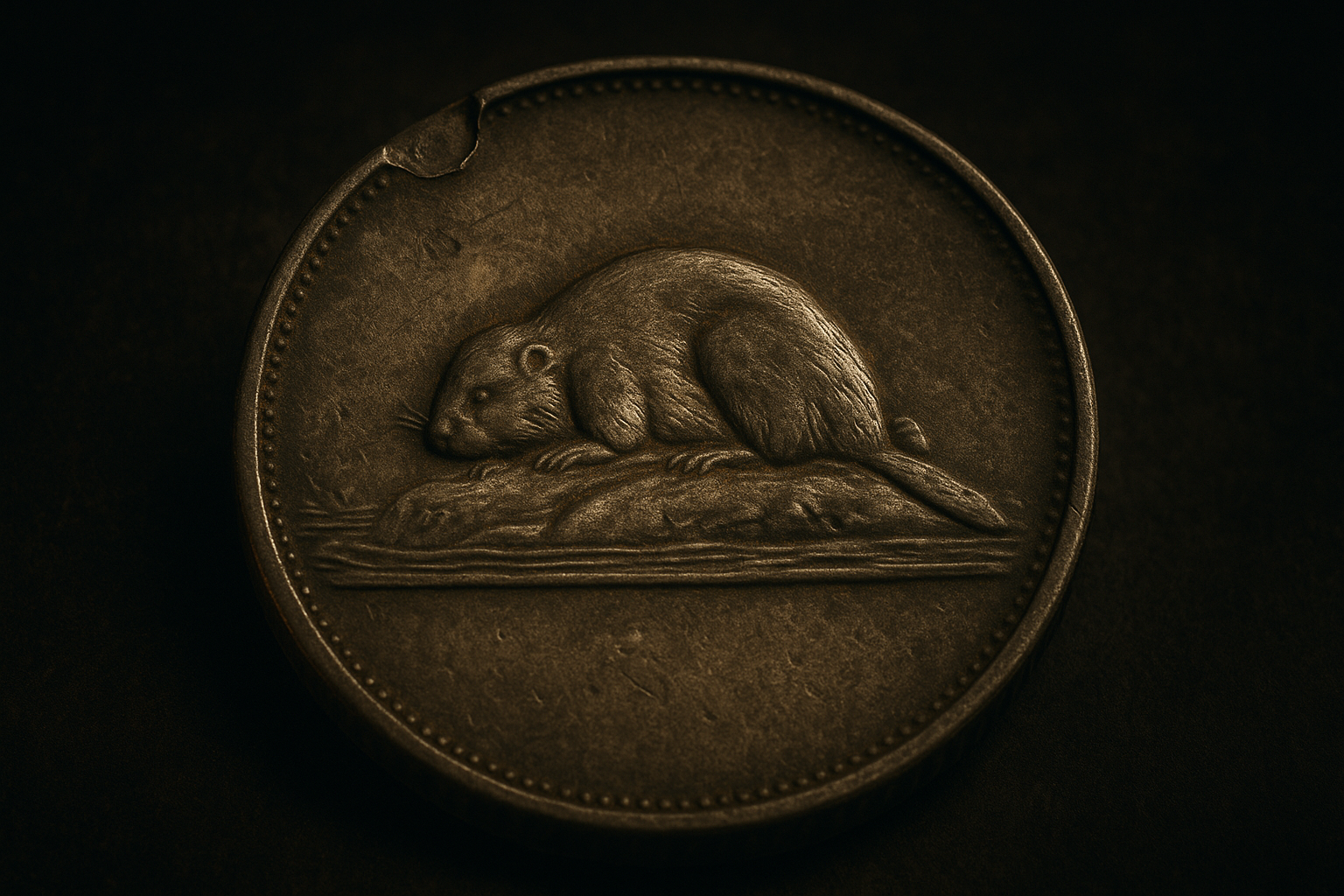
- The traditional beaver design — a leftover die accidentally used for a short time.
Both carry the same year, but their meaning could not be more different. One looked forward to Canada’s industrial future; the other, back to its national wildlife heritage.
⚙️ The Composition Switch
Adding to the confusion, 1951 was also the year Canada shifted from pure nickel to chromium-plated steel due to the Korean War’s metal shortages. This meant some of the coins were struck on nickel planchets, others on steel — multiplying the number of varieties and errors.
Today, collectors recognize six main variations of the 1951 nickel, including both designs and both metal compositions.
🔍 The Rare Error That Started It All
Among the most valuable are the 1951 Beaver Nickels mistakenly struck later in the year, long after the refinery design should have replaced them. These coins are extremely scarce, as only a few rolls escaped into circulation before the dies were recalled. High-grade examples can reach $2,000–$5,000 at auction.
🇨🇦 Quick Facts About the 1951 Canadian Nickel
The 1951 nickel was struck at the Ottawa Mint and features King George VI on the obverse. Two reverse designs exist: the Beaver on a log (standard issue) and the Nickel Refinery with atomic symbol (commemorative issue). Both were minted in nickel and steel varieties. Its diameter is 21.2 mm, with a weight ranging from 3.9 to 4.5 grams depending on composition.
⚖️ Reality Check
Not every 1951 nickel is rare. Most common beaver nickels are worth under $1, but refinery commemoratives in top condition — especially proof-like examples — can fetch hundreds. Collectors should look for the chromium-plated steel planchets and sharp detail in the atomic symbol for the most valuable strikes.
🔥 Final Verdict
The 1951 Nickel Error reminds us that even the smallest mistakes can leave the biggest marks. What began as a celebration of science became one of Canada’s greatest coin mysteries — a tale of two nickels, one nation, and a mix-up that collectors will never forget.
Visit HistoraCoin.com for more legendary stories from the world of rare coins.