Africa’s Lost Coins and Forgotten Legends
In crowded markets from Lagos to Nairobi, in quiet villages far from highways, and in coastal cities watching the waves of the Atlantic and Indian Oceans, small coins once moved through African hands without attracting attention. They paid for bread at roadside stalls, bus fares along dusty routes, and tea in cafés where conversations drifted into the night. Most of those coins did their work, disappeared, and were forgotten. A few survived – not in headlines, but in drawers, jars, and memories – becoming Africa’s lost coins and forgotten legends.
This is not a list or a ranking. It is a journey across a continent as seen through metal circles that recorded the passing of days. The coins of Africa watched empires fade, borders shift, and new nations emerge. They witnessed independence celebrations, ordinary workdays, and long evenings under unfamiliar skies. Each piece was created for simple use, yet some now stand like quiet markers in the long story of African history.
Estimated reading time: 9–10 minutes
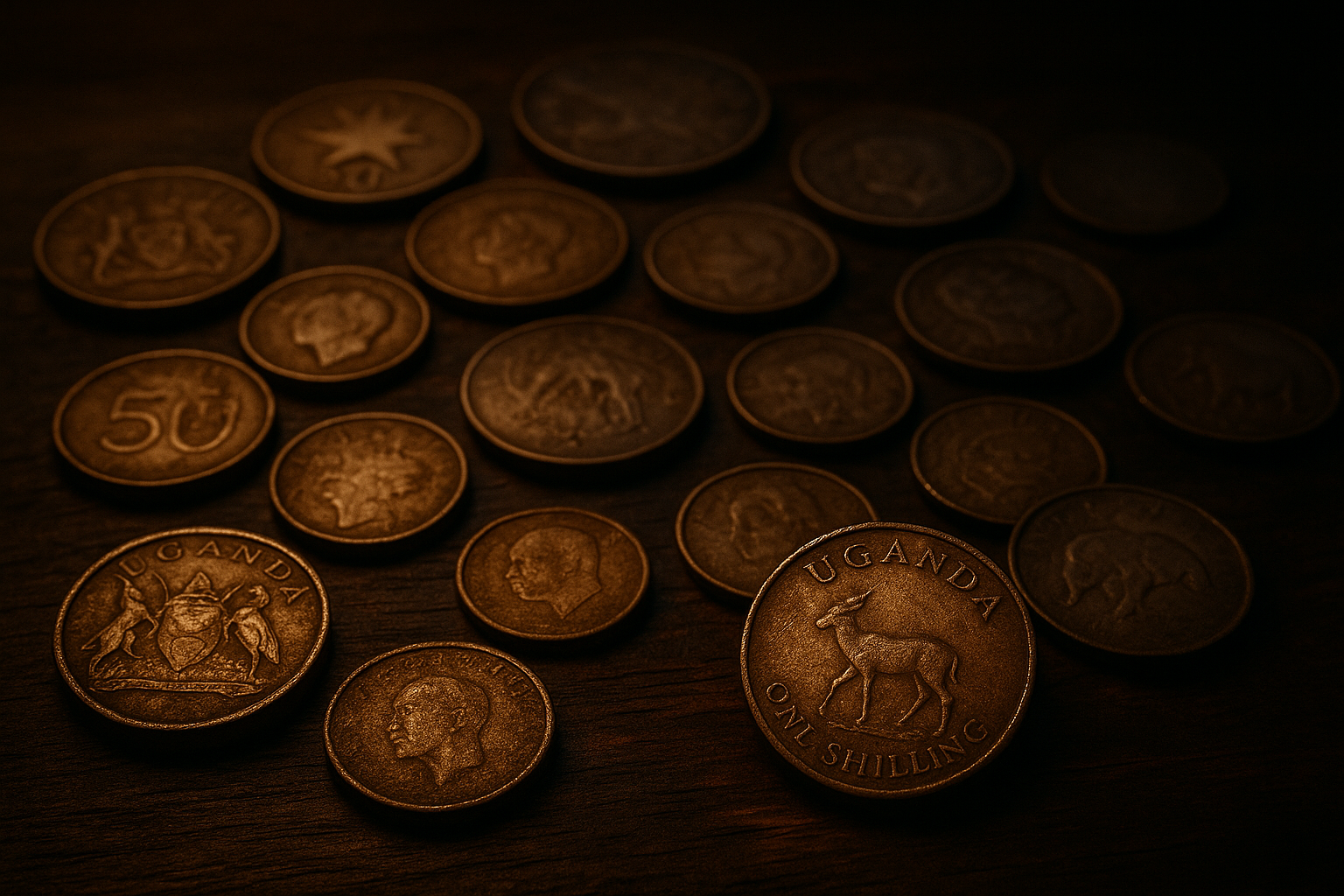
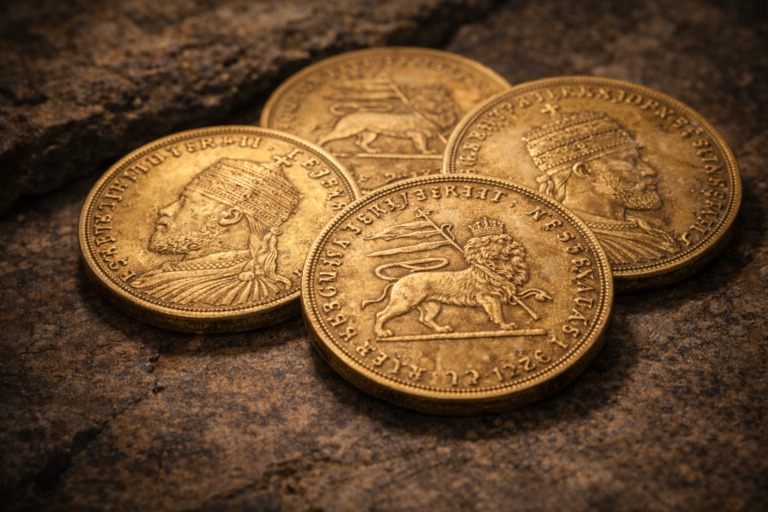
Image credit: HistoraCoin
A Continent Reflected in Metal and Light
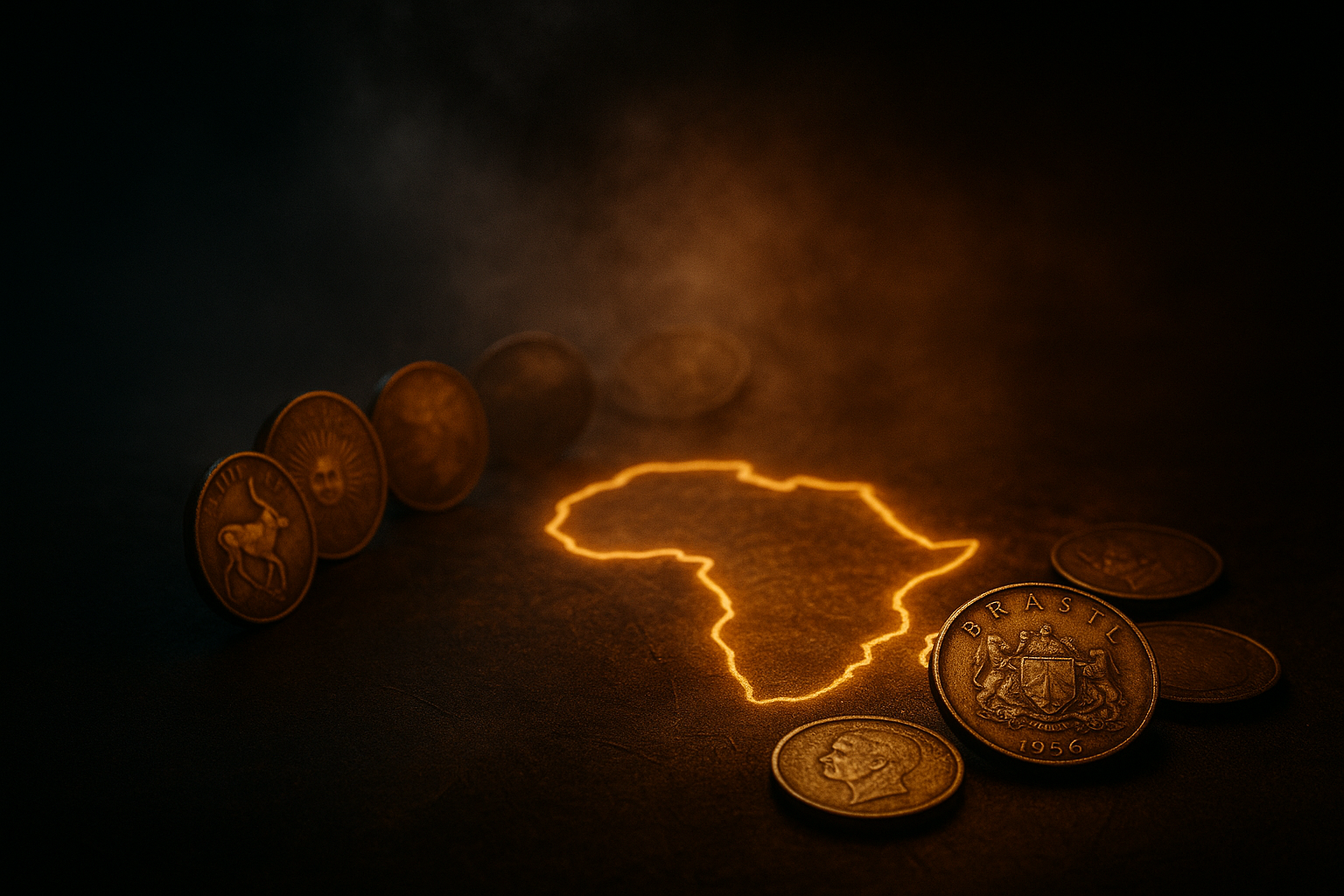
Africa is often described in terms of its landscapes and languages, its deserts and forests, its coasts and crowded cities. Yet another map lies hidden in its coins. Each piece is a tiny mirror, reflecting not just a denomination, but a particular moment in time, a political mood, or a cultural choice. Together, African coins form a scattered archive of how the continent has seen itself and been seen by others.
Some coins carry designs shaped by distant capitals, struck during periods when outside powers controlled local mints. Others were born from newly independent governments that wanted to express identity with fresh symbols and mottos. You can hold two coins from the same land and feel the distance between them – one echoing a concealed past, the other announcing a different future.
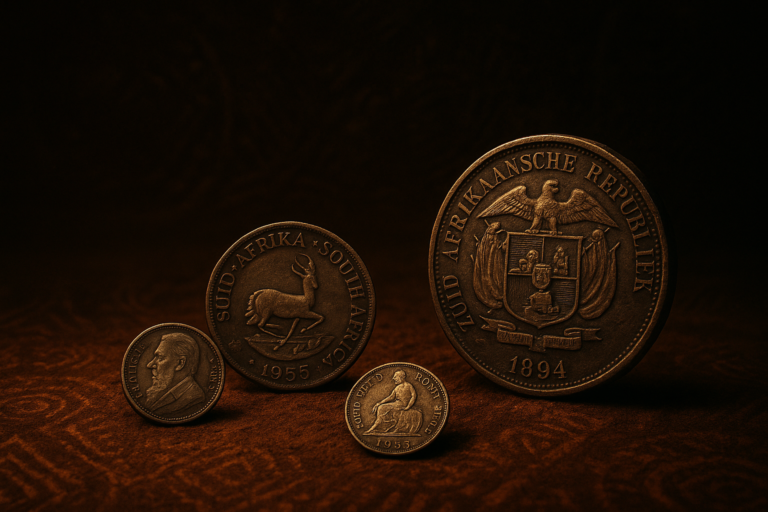
Spread across a table, African coins from different countries and decades look like a constellation. Their colours range from pale silver tones to deep copper and gold hues. Their edges can be smooth or milled, round or multi–sided. Some are thin and light, others thick and heavy. All these variations speak of different choices and circumstances in the places where they were created and used.
From Empires to Nations – How African Coinage Changed
For much of modern history, many African regions used coins bearing portraits, shields, and inscriptions chosen far away. Colonial administrations introduced pieces that fitted their own systems, often with little regard for local imagery. These coins circulated in markets and towns, serving daily needs while quietly reinforcing the presence of distant authorities.
As independence movements grew stronger during the twentieth century, a new era of coinage began. Countries that gained sovereignty wanted to see their own symbols and words on the coins passing through people’s hands. New series were introduced, often featuring national emblems, local wildlife, historic dates, or phrases in local languages. With each redesign, the coinage of a country became more closely tied to its own voice.
The transition was not always immediate. In some places, older colonial pieces continued to circulate alongside the new designs for years, creating a mix of faces and emblems in the same pocket. A person counting change at a small shop might unknowingly hold a quiet summary of their country’s political transformation – older coins carrying one message, newer ones carrying another.
Over time, as older series were withdrawn or simply worn out, the coins bearing local symbols became more common. Yet a few of the earlier pieces did not vanish entirely. They survived in small numbers, tucked away in boxes or jars, where they would later be rediscovered as physical reminders of a complicated past.
Markets, Stations, and Everyday Journeys
To understand why certain African coins feel legendary now, it helps to picture the everyday spaces they once passed through. In open–air markets, they moved across rough wooden tables piled high with fruit, grains, and spices. Vendors counted them quickly, sliding them into metal tins while calling out prices and greetings in the heat of midday.
At bus stations and taxi ranks, coins rattled in the pockets of drivers waiting for their vehicles to fill. Passengers handed them over through open windows, receiving small tickets or quick nods in return. In train stations lit by early morning light, coins passed through the hands of commuters who stood in line, half awake, thinking of their workday ahead.
In roadside cafés, coins landed on saucers next to cups of tea or coffee, leaving faint rings of moisture on the table as they were picked up again. In schoolyards, they were traded among children for snacks, marbles, or simple toys. On long road journeys crossing national borders, coins from different countries ended up in the same wallet, quietly documenting the path taken.
Each of these moments left no written trace, yet together they shaped the history of the coins themselves. The edges grew smoother, designs softened, and surfaces collected tiny marks. When we look at an old African coin today, we are seeing the result of countless such exchanges – the physical record of a working life spent in markets, stations, and streets.
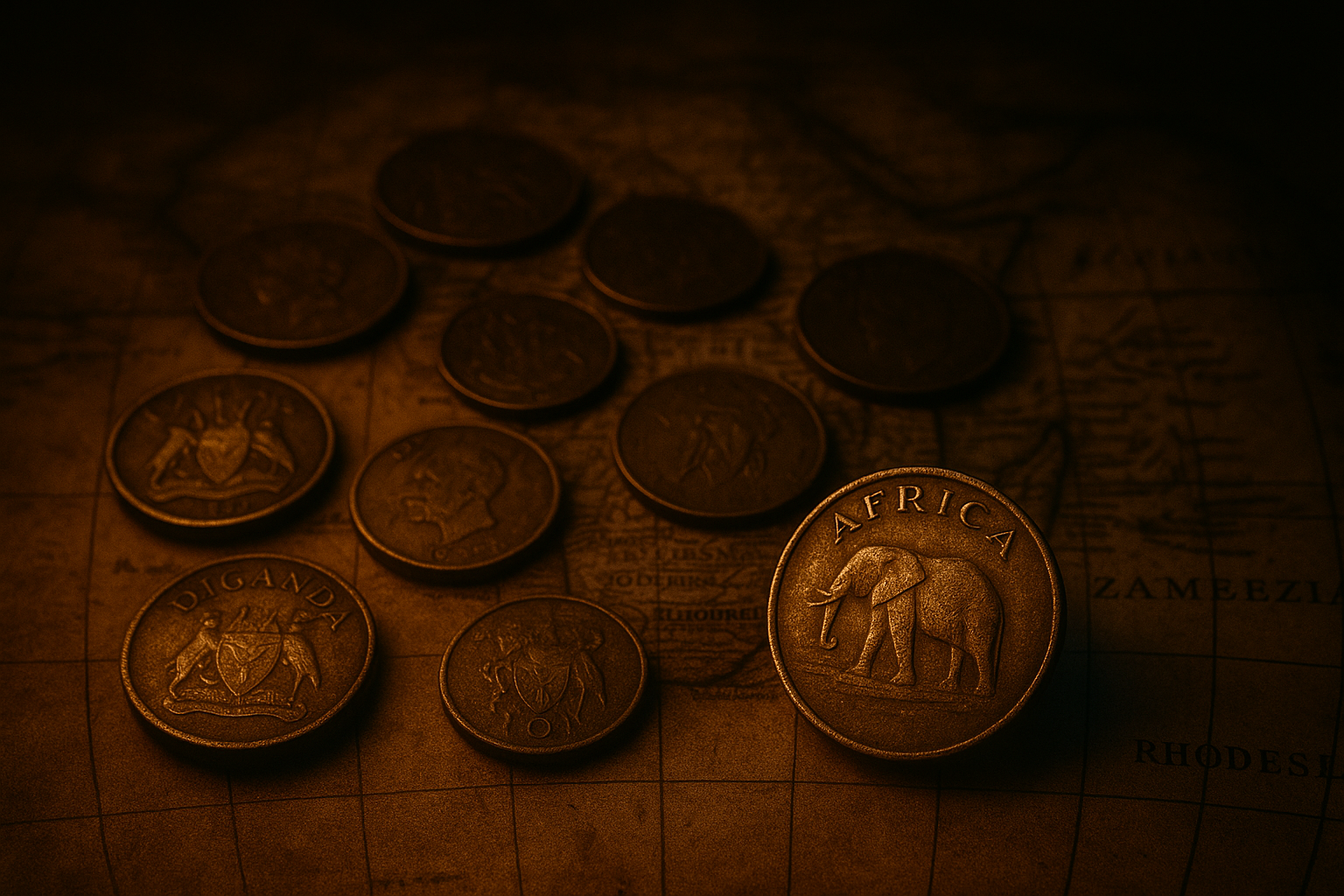
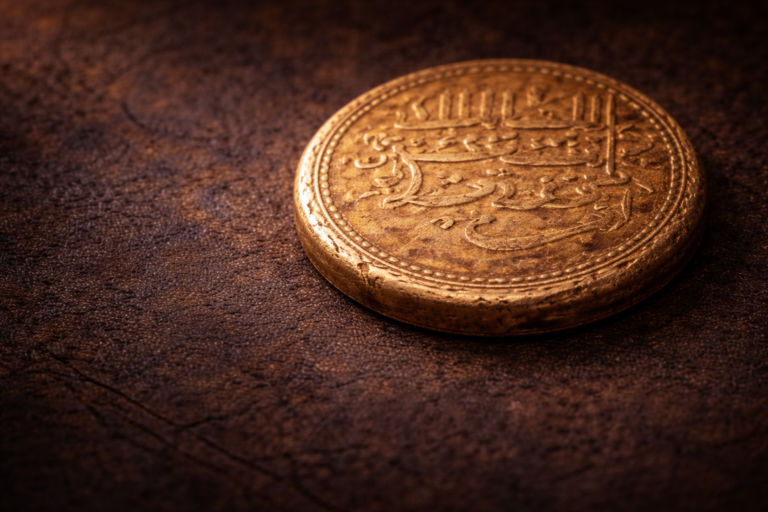
Image credit: HistoraCoin
Symbols and Stories on African Coins
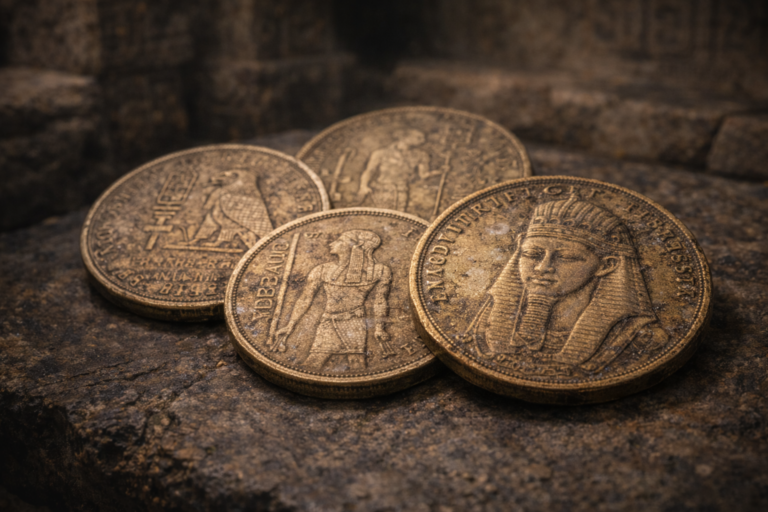
African coins carry a wide range of images, each chosen with care. Portraits of leaders appear on many pieces, linking the currency to specific periods and governments. Elsewhere, stylised animals – antelopes, lions, birds, and fish – speak of local wildlife and landscapes. Agricultural motifs such as coffee branches, cotton plants, or ears of grain highlight the economic foundations of certain regions.
Some coins include architectural landmarks – bridges, monuments, or important buildings – that symbolise national pride or historical turning points. Others show traditional masks, patterns, or tools, honouring cultural heritage that predates modern borders. The diversity of symbols reflects the diversity of the continent itself, with each country selecting images that resonate with its own story.
Inscriptions on coins also matter. Words chosen for mottos and legends can reveal much about the values a country wants to emphasise – unity, progress, freedom, or hope. Sometimes multiple languages appear on the same coin, acknowledging the coexistence of different communities within a single state. Even the choice of script and the shape of letters contribute to the overall character of the design.
When you place several African coins from different countries together, their combined imagery forms a kind of visual dialogue. You see how nations near each other might choose similar symbols, and how others highlight entirely different aspects of their identity. The result is a mosaic of stories, all told through metal and light.
Decades of Change Etched into Circulation
The twentieth and twenty–first centuries brought rapid change to many African societies. Waves of independence, economic reforms, regional conflicts, and attempts at integration all left their traces on daily life – and on the coins that moved through it. Some series were introduced during optimistic periods of reconstruction. Others appeared during times of difficulty, when people were adjusting to new realities and uncertain futures.
In some countries, older coins remained in use long after new designs were introduced, creating layers of time inside a single pocket. In others, old pieces were removed quickly and replaced, marking a clear break between past and present. Occasionally, changes in metal composition hinted at economic pressures or shifts in production capabilities. Lighter alloys, bimetallic designs, and changes in size all reflected practical decisions shaped by broader circumstances.
Seen from a distance, these changes can seem technical. Seen up close, through the lives of people who handled the coins daily, they feel more personal. A shop owner might remember the year a new series arrived because it meant recalculating prices and retraining the eye to recognise unfamiliar pieces. A commuter might recall when certain older coins gradually stopped appearing in their change, replaced by newer designs that felt strange at first and then quickly became normal.
Today, when collectors and historians line up African coins from different decades, they can read the continent’s recent history not only in official documents, but also in the quiet evolution of its circulating metal. Each change says something about how a society saw itself and where it hoped to go next.
Lost Coins That Slipped Out of Sight
Many of Africa’s most intriguing coins did not disappear in dramatic fashion. They simply slipped out of sight. Some were removed from circulation as part of planned reforms. Others were lost in rivers, fields, and city streets, buried under layers of dust and soil. Many more vanished into homes – into old purses never opened again, boxes of mixed belongings, or jars of loose change that nobody got around to sorting.
In a house in Accra or Dakar, a small tin might sit at the back of a cupboard, filled with coins collected during years when life was moving too quickly for anyone to think about their future significance. In a flat in Cairo or Addis Ababa, a drawer might hold a handful of pieces from several decades, shuffled together during moves, clear–outs, and moments of hurried packing. These coins do not call attention to themselves. They wait.
When someone eventually opens that tin or drawer, perhaps while cleaning, moving, or handling a relative’s belongings, they might find coins that they have not seen in circulation for a very long time. Some designs may trigger immediate recognition – “We used to have these when I was a child.” Others may feel almost unfamiliar, relics from a period that ended before the finder was born.
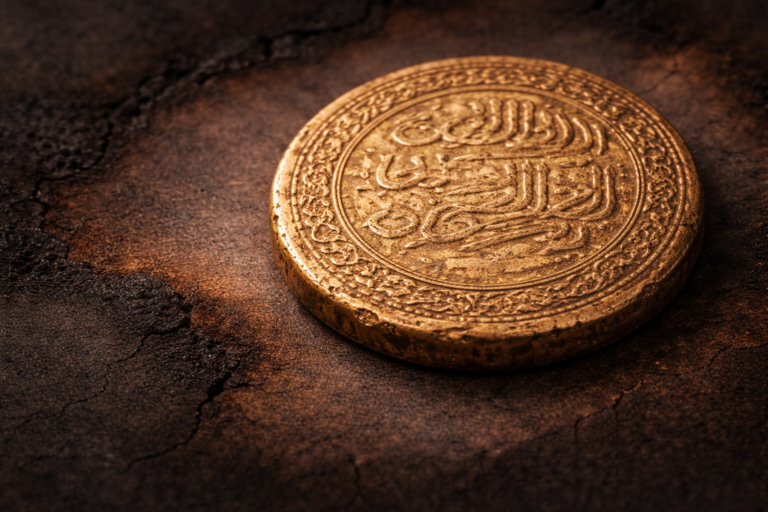
In that moment, the coins that had been lost in daily life begin to feel like artifacts. They have not changed in weight or composition, but their context has shifted completely. No longer tools of the present, they become windows into the rhythm of another era, inviting questions about what those days felt like for the people who carried them.
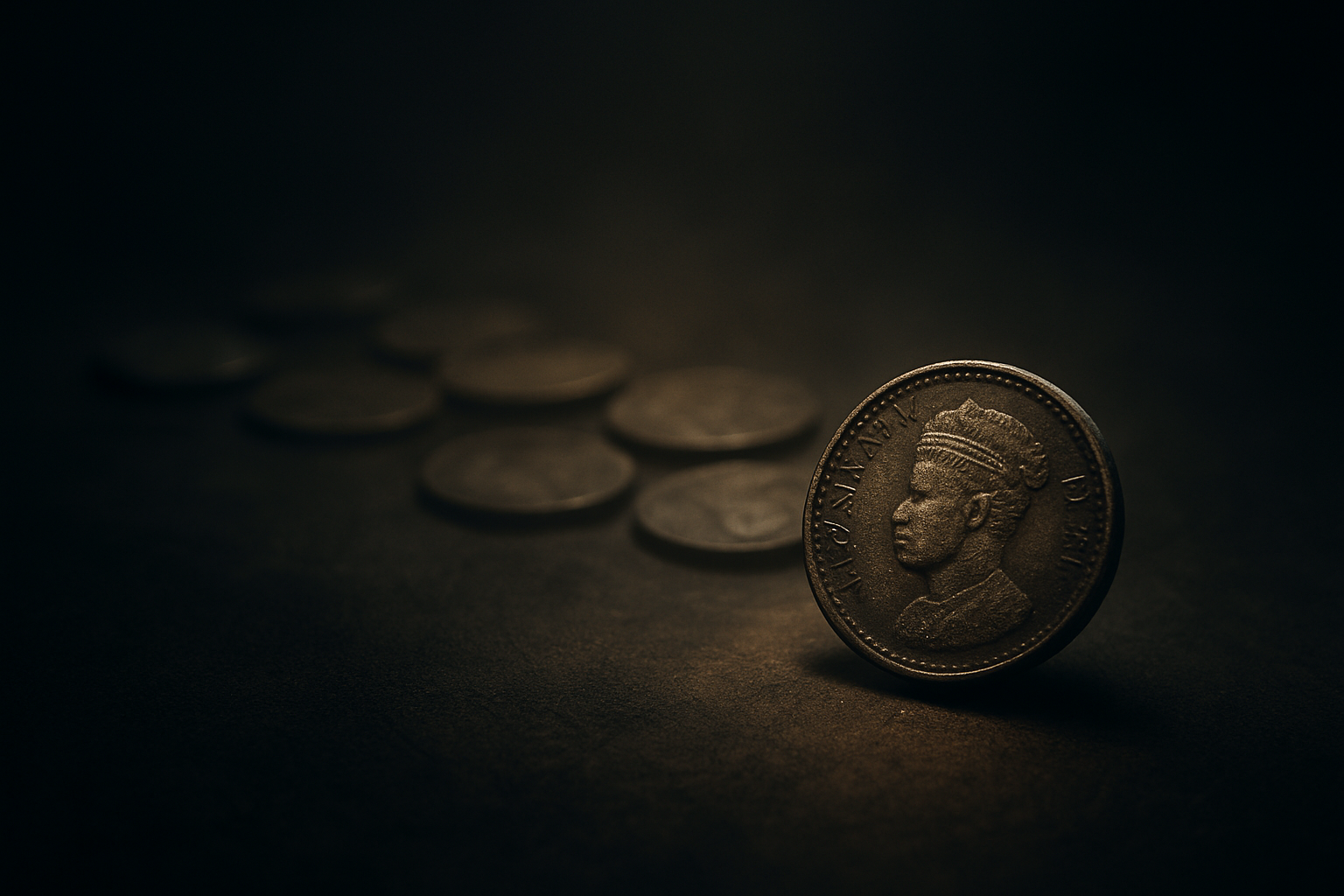
Image credit: HistoraCoin
Voices of Collectors and Keepers of Memory
The legends surrounding Africa’s lost coins often survive thanks to patient collectors and curious observers. These are the people who sit at tables under good light, spreading out coins from different countries and years, looking closely at details that most eyes would miss. They notice tiny variations in shields, subtle shifts in lettering, and small changes in the shapes of animals and emblems.
Collectors do not simply sort coins by country and date. They ask questions about the circumstances that produced each design. Why did this emblem change at this particular time? What event might have led to this new motto or this new portrait? Why are some years easy to find, while others turn up only rarely in the trays at markets or boxes in attics?
In conversations, whether in person or online, these keepers of memory share their findings. They tell stories of coins discovered in unexpected places – a rare piece found in the change tray of a small shop, or a coin long thought to be gone resurfacing in a family collection. They swap information about mintmarks, series, and the historical context behind each issue, gradually building a shared understanding of Africa’s numismatic heritage.
Through their work, coins that might otherwise remain silent find a voice. The collectors do not invent the legends, but they gather and preserve them, making sure that the stories attached to these pieces do not fade away entirely with the passing of generations.
Final Reflection – Africa’s Forgotten Legends in the Palm of a Hand
Africa’s lost coins and forgotten legends did not begin as extraordinary objects. They began as ordinary tools of exchange, created to move quickly and quietly through daily life. Their transformation into symbols of memory and history came later, when they left circulation and entered the slower, more reflective world of keepsakes, collections, and study.
When you hold an old African coin today, you hold more than its metal. You hold echoes of markets filled with voices, bus rides along crowded avenues, long journeys across savannahs and mountain roads, and quiet evenings when someone emptied their pockets onto a table at home. You touch a fragment of a story that stretches far beyond your own lifetime.
These coins remind us that history is not only recorded in books and monuments. It also lives in the smallest objects, in the worn surfaces of pieces that passed through countless unknown hands. They show how a continent’s complexity, struggle, creativity, and resilience can be traced in something as humble as the change once left in a pocket.
For anyone who cares about the past, Africa’s lost coins offer a simple invitation – to slow down, to look closely, and to listen. In the quiet ring of metal on wood, in the glint of light on an old design, and in the dates and symbols stamped onto each surface, there are worlds waiting to be rediscovered. The legends are not loud. They are patient, enduring, and always there, resting in the palm of a hand.
For more journeys into the stories behind historical coins from around the world, visit HistoraCoin.