Ancient and Medieval Coins Used in Canada
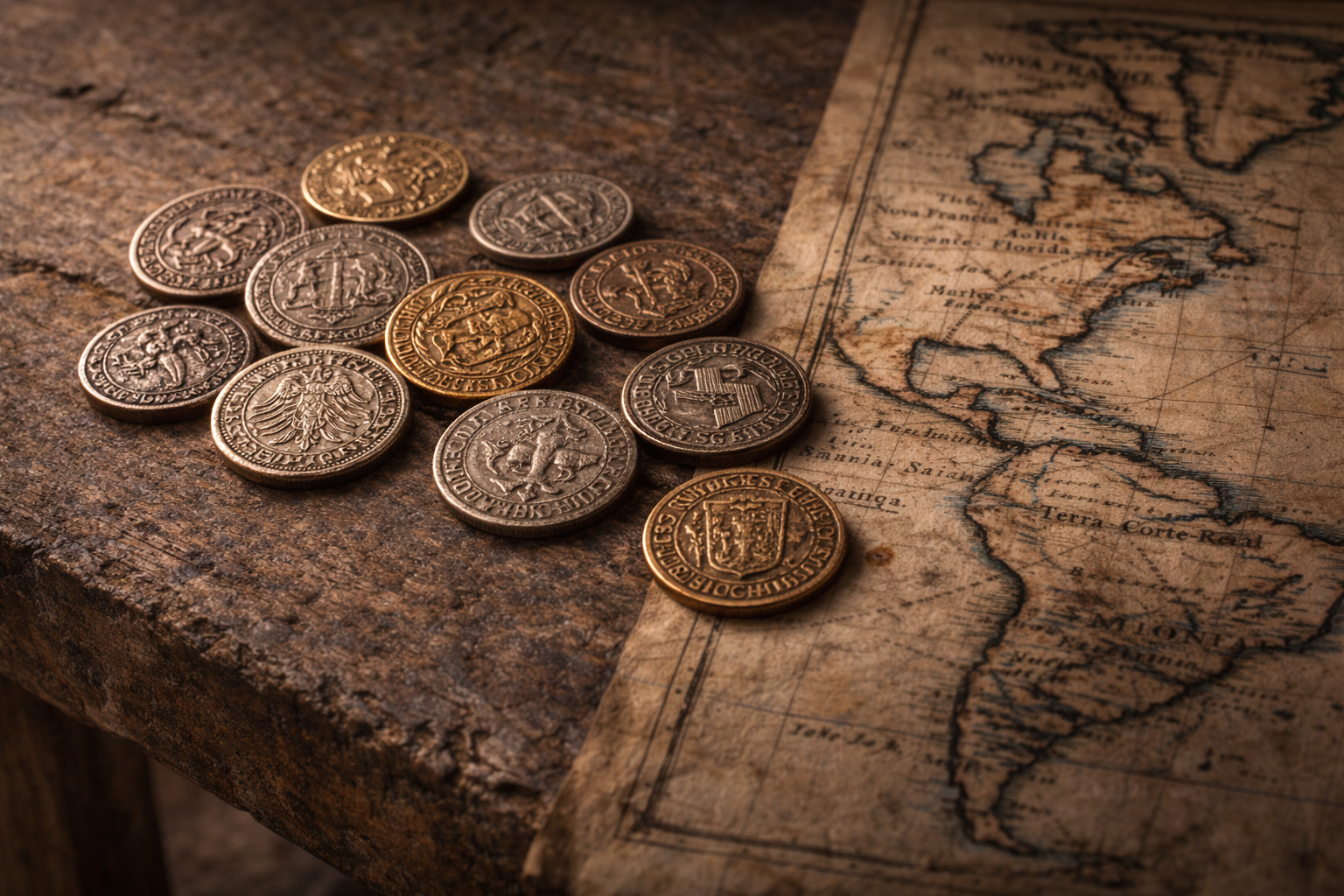
If you search for ancient or medieval coins in Canada, you will quickly run into two extremes. One side says it is impossible, because Canada did not mint coins in ancient times. The other side turns every old coin into a mysterious headline. The real story is quieter, and honestly more interesting.
Canada did not have ancient or medieval coinage of its own. But coins from ancient and medieval Europe still reached Canadian regions later, carried by travelers, fishermen, soldiers, settlers, and traders. Some were used among Europeans as everyday money. Others were exchanged as objects, gifts, keepsakes, or curiosities. And a small number have been documented in Canadian archaeological or discovery contexts.
Table of contents.
- What the title really means.
- Canada before coins.
- How coins arrived in early Canadian regions.
- Medieval coins used in Canada.
- Ancient coins found in Canada.
- Money in New France and early settlements.
- Mid-article table. What people actually used to trade.
- Coins as objects, not just currency.
- How to read coin finds without myths.
- Related HistoraCoin stories.
- Share this story.
- FAQ.
What the title really means.
The phrase ancient and medieval coins used in Canada can sound like a claim about Canadian history. But the honest meaning is about geography, not national identity. The land existed. The rivers existed. The coastal routes existed. People lived and traded here long before the word Canada became common. Later, Europeans arrived with their own money habits, and their coins entered these landscapes.
So when we say ancient coins, we mean coins from ancient civilizations, usually from the Mediterranean world, that show up in Canadian contexts today because of later human movement. When we say medieval coins, we mean coins minted in medieval Europe that reached Canadian regions through exploration, settlement, and trade networks in the early modern period and onward.
Canada before coins.
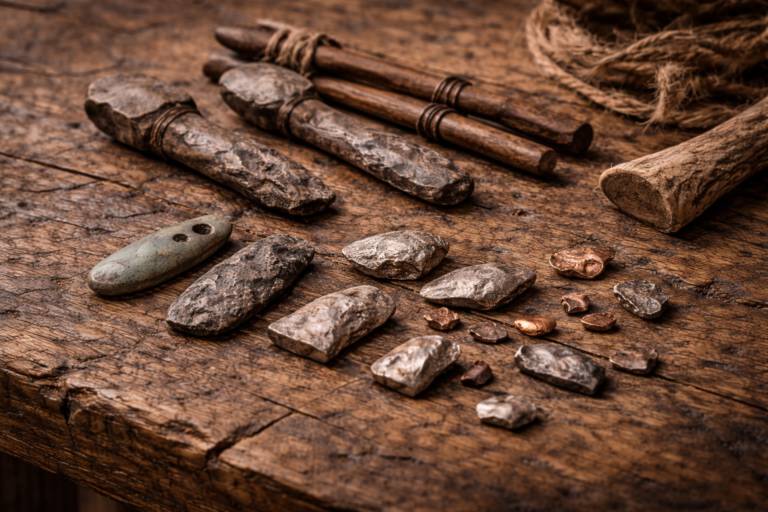
Before European contact, Indigenous societies across the regions that became Canada used exchange systems that were not based on coinage. Trade was real, large, and sophisticated, but it did not need stamped metal to function. Value was communicated through relationships, obligations, reputations, and objects that held meaning inside those cultures.
In different regions, people exchanged furs, fish, copper items, stone tools, shells, crafted goods, and ceremonial objects. Some items were valued for scarcity. Some were valued for the labor required to make them. Some carried diplomatic and cultural meaning beyond pure economics. That matters, because it explains why European coins did not instantly become universal money.
When Europeans arrived, coins entered a world where money meant something different. For many communities, a coin might be interesting because it was shiny and durable, not because it carried a king’s face and a fixed denomination. That difference shaped how coins were treated in early Canadian contexts.
How coins arrived in early Canadian regions.
Coins arrived the same way many small personal objects arrive anywhere. People carried them. Sailors brought them in pockets. Fishermen used them among themselves. Soldiers used them for pay and purchase. Traders used them to settle accounts inside European communities. Settlers brought them as practical money, but also as savings.
There is also a quiet detail that explains a lot. Early European colonies often suffered coin shortages. Even when Europeans wanted to use coins, they did not always have enough. That created improvisation. Barter continued. Local substitutes appeared. Account systems formed. Paper substitutes existed. And in some cases, Indigenous trade goods became part of the colonial economy.
Medieval coins used in Canada.
Medieval coins are the easiest part of this topic to explain, because the timeline fits human movement. Medieval Europe minted huge quantities of silver and some gold coinage. Centuries later, Europeans crossed the Atlantic and created long-term settlements. It is expected that medieval coins would show up in early colonial contexts, because people carry old money the same way people today carry older banknotes or coins in a jar.
Sometimes a medieval coin arrived because it was still in use or kept in circulation longer than you would guess. Sometimes it arrived as a keepsake. Sometimes it arrived as a piece someone saved, then carried across the ocean to start a new life. The coin might not represent official policy. It might represent a person’s pocket, their habits, and their private history.
In Canadian archaeology and recorded finds, medieval coins have been reported in contexts tied to early European settlements, especially in Atlantic Canada where long-distance fishing and early colonies took root. These discoveries do not rewrite Canadian prehistory. They simply show that European material culture arrived early and sometimes included older coins.
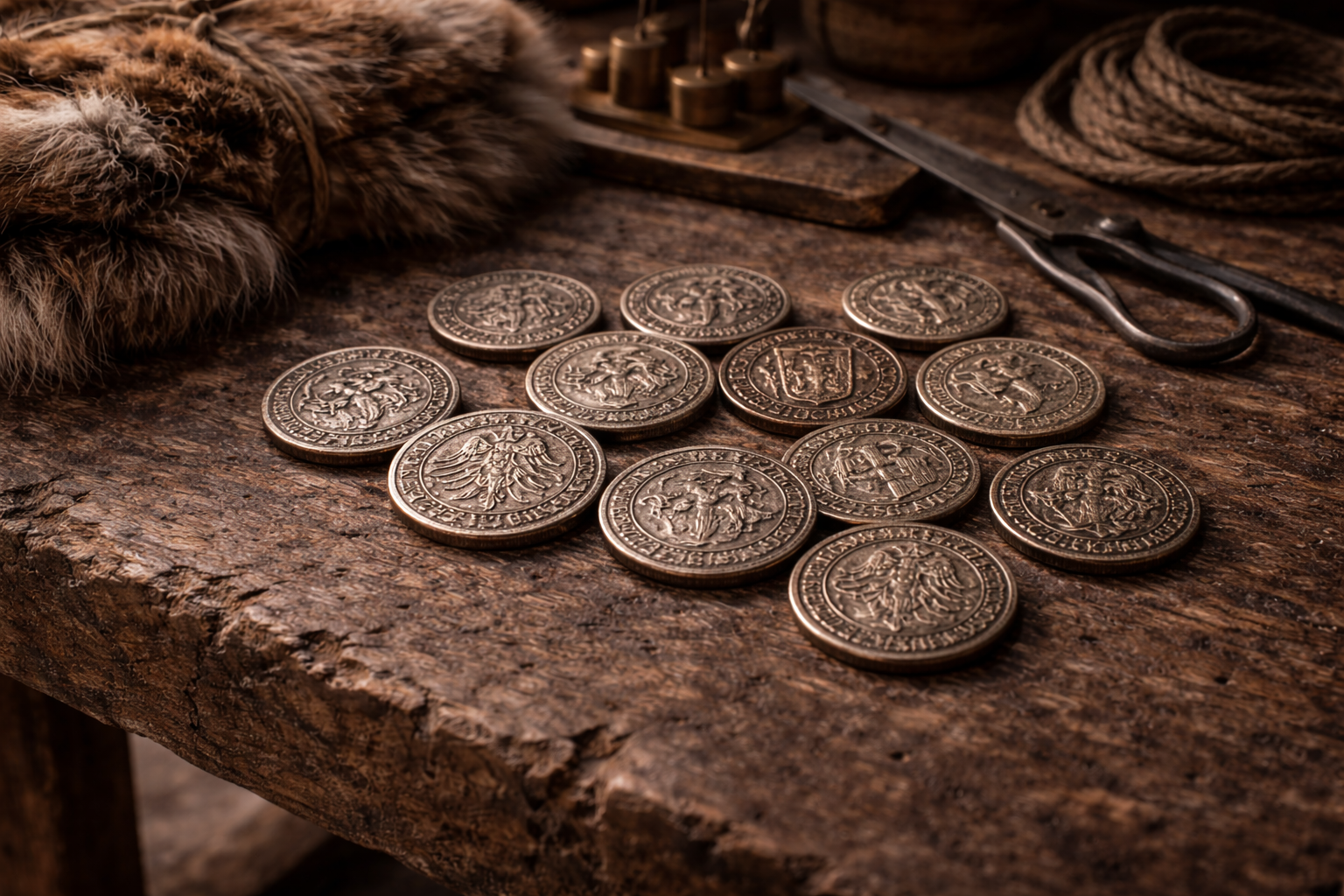
The most useful way to think about a medieval coin in Canada is not as evidence of medieval Canada, but as evidence of a colonial human story. It tells you who traveled. It hints at how early settlements were supplied. It reminds you that people did not travel empty-handed. They carried what they trusted.
Ancient coins found in Canada.
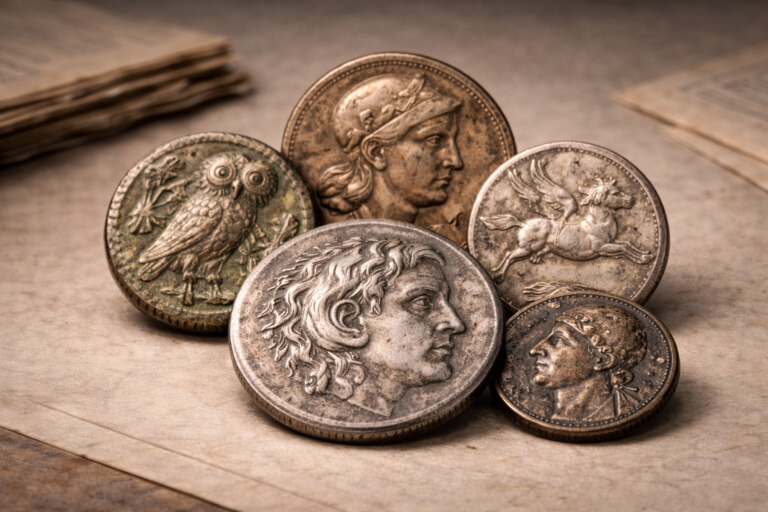
Ancient coins are the part of this topic that attracts myths. A Roman coin is old enough to feel like a secret. And when a Roman coin appears in Canada, the imagination wants to run. But an ancient coin found in a modern place is not unusual in itself. Coins travel through collectors, inheritance, museums, antique markets, and private pockets. In the modern world, an ancient coin can cross borders as easily as any small collectible.
That means the key question is context. If an ancient coin is found in a controlled archaeological excavation within a well-dated historical layer, it tells one kind of story. If it is found by a modern detectorist in a park, it tells a different story. Both can be interesting, but they should not be confused.
In most cases, ancient coins discovered in Canada are best explained as later losses, modern drops, or collector movement. That is not disappointing. It is simply reality. The coin is still ancient. The journey that brought it to Canada is the later story.
Money in New France and early settlements.
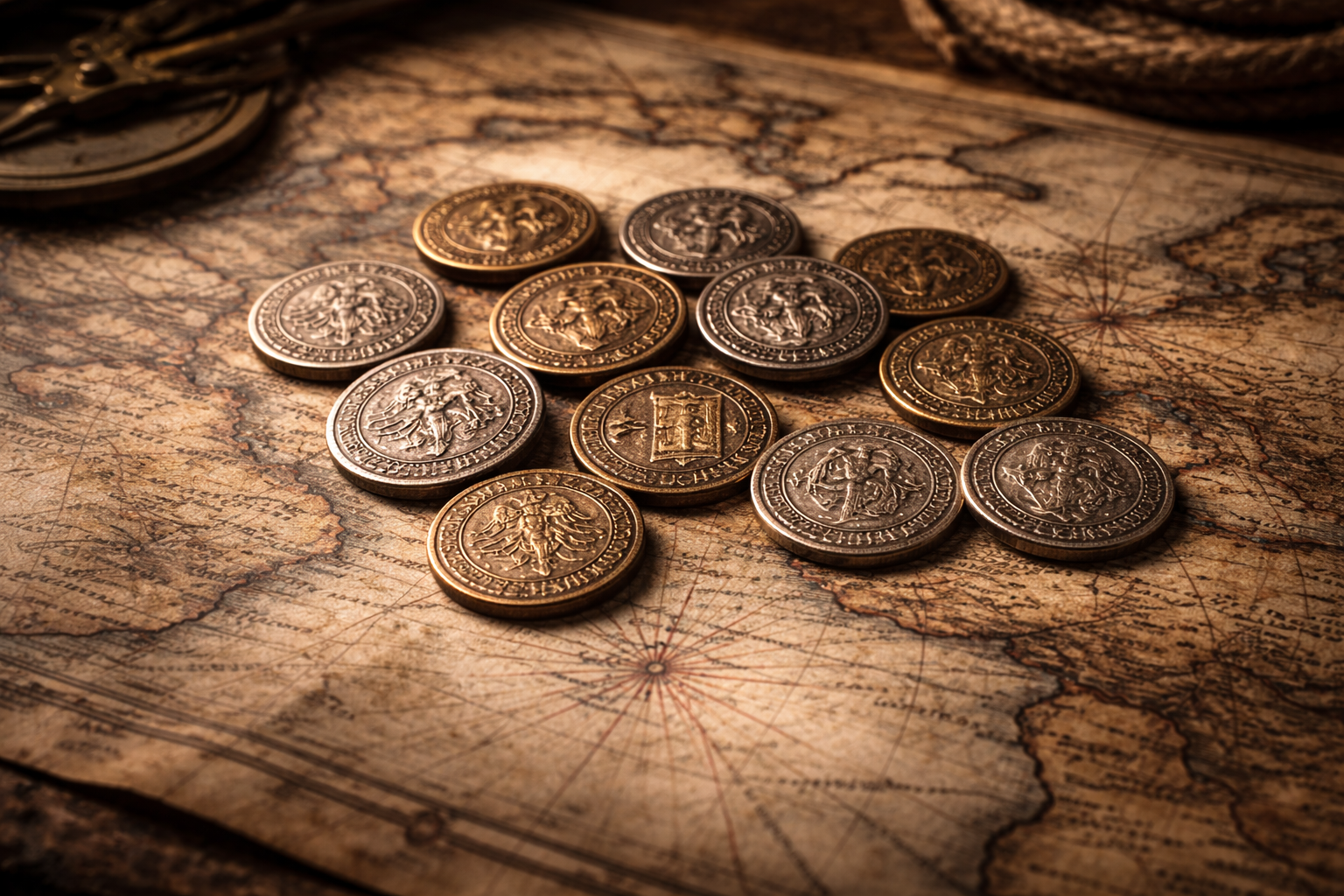
If you want the practical side of coin use in early Canadian regions, you quickly end up in New France. Colonial economies needed an accounting system, even when coins were scarce. Units of account such as livres, sols, and deniers organized value the way pounds, shillings, and pence did in the English world. People could price goods, pay wages, and record debts using these units even when the exact coins in hand varied.
Coin shortages were common in colonies. That pushed people toward substitutes. In New France, paper substitutes such as card money are famous because they show how creative colonial economies became under pressure. At the same time, various coins circulated, including foreign coinage. Spanish silver coins are often mentioned in broader colonial North American contexts because they traveled easily through trade routes and were widely recognized.
None of this means medieval coins were the backbone of New France. What it means is that early Canadian regions were economically flexible. Coins, trade goods, paper substitutes, and local standards of trust were mixed together depending on location and period. That is how real economies behave under scarcity.
Mid-article table. What people actually used to trade.
| What was used. | Where it worked best. | Why people trusted it. |
|---|---|---|
| Trade goods (furs, fish, tools). | Local and regional exchange networks. | Direct usefulness and shared demand. |
| Wampum and symbolic exchange items. | Diplomatic and trade contexts in parts of northeastern North America. | Labor-intensive production and cultural meaning. |
| European coins (mixed types). | European settlements and transactions among Europeans. | Recognized metal value and familiar authority. |
| Foreign silver (widely recognized coins). | Cross-border trade networks where many groups interacted. | Consistency of precious metal and broad acceptance. |
| Paper substitutes and account systems. | Colonial administrations under coin scarcity. | Backed by authority and necessity. |
Mobile note. This table scrolls horizontally on phones to keep the design clean.
Coins as objects, not just currency.
One mistake people make is imagining coins only as money. In early Canadian contexts, a coin could be money, but it could also be something else. A coin could be a gift used to build trust. It could be a token. It could be a souvenir from a voyage. It could be a personal charm, carried because it was old and meaningful. It could be stored as savings in a world where banks were not part of daily life.
This helps explain why ancient coins sometimes appear far from their original world. A Roman coin might have been owned by a collector, or kept as a curiosity by a sailor, or carried by a traveler who liked the idea of holding history in their hand. If it is lost, it becomes a modern Canadian find. The coin does not lie. It is ancient. The location is simply where it ended up.
How to read coin finds without myths.
If you ever see a headline like oldest coin found in Canada or Roman coin discovered in Canada, pause and ask three questions. What is the find context. Was it excavated scientifically or found casually. Is there documentation that ties it to a dated layer, a settlement, or a structure.
Archaeology is not only about the object. It is about the object inside its story. A coin without context is a beautiful artifact. But a coin with context is evidence. That difference is everything.
The good news is that even cautious interpretations can be exciting. A medieval coin in an early colonial settlement tells you something human. Someone carried it. Someone valued it. Someone lost it. Those details bring the past closer than any myth does.
FAQ.
Did Canada have ancient or medieval coins of its own.
No. Ancient and medieval coins connected to Canada are coins made elsewhere that arrived later through travel, settlement, trade, or collecting.
Does an ancient Roman coin found in Canada prove Roman contact.
Not by itself. Without strong archaeological context, the most responsible explanation is later movement and loss, not ancient exploration.
Why do medieval coins show up in early colonial sites.
People carried older coins as pocket money, savings, or keepsakes, and coin shortages in colonies could keep older coinage in use longer.
What should I focus on if I want a Canada coin history series.
Focus on exchange before coins, early colonial scarcity, mixed coin circulation, and how coins gained meaning over time. That approach stays accurate and avoids myths.