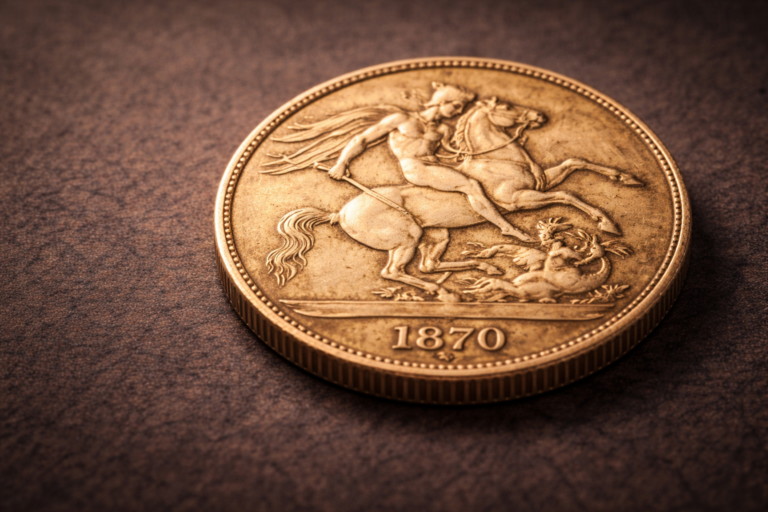
Australia’s Mythic Coins The Treasures of the Southlands
Estimated reading time: 15 minutes
Australia has always felt distant to the rest of the world. Not just geographically, but emotionally too. A land surrounded by oceans, shaped by extremes, carrying stories that feel older than memory and younger than history at the same time. When coins first began circulating across this vast southern continent, they did not arrive as treasures. They arrived as tools. And yet, over time, those tools absorbed something deeper. They became witnesses.
Australian coins do not scream for attention. They sit quietly, often overlooked, sometimes dismissed as modern or familiar. But if you slow down and really look at them, you begin to notice something unusual. These coins carry echoes of survival, displacement, adaptation, and identity. They carry the fingerprints of the Southlands.
This is not a list. It is not a catalog. It is a walk through the mythic layers hidden inside Australia’s coinage, from colonial uncertainty to national voice, from borrowed symbols to stories shaped under southern skies.
Table of Contents
- Before Australia Had Coins of Its Own
- Colonial Metal and Borrowed Authority
- The First Steps Toward an Australian Identity
- Coins in Everyday Australian Life
- Land Symbols and Quiet Meanings
- A Visual Timeline of Change
- Coins Through War and Uncertainty
- The Decimal Turning Point
- Why Australian Coins Feel Mythic
- How Collectors Read Australian Coin Stories
- A Quiet Ending That Never Ends
- FAQ
Before Australia Had Coins of Its Own
Long before Australia imagined itself as a nation, money flowed through the land in fragments. Coins arrived from elsewhere. British pieces. Foreign silver. Whatever could circulate, whatever could be trusted. There was no unified voice, no shared design language, no sense that the metal belonged to the land beneath it.
Early settlers traded with whatever they had. Coins changed hands not because they symbolized authority, but because people agreed, quietly and practically, that they would work. In a harsh environment where survival mattered more than symbolism, money was stripped down to function.
And yet, even in those early moments, something began to form. Every coin that passed through Australian hands absorbed dust, sweat, salt air, and sun. Over time, that wear turned into memory. These were not just borrowed coins anymore. They were being lived with.
Colonial Metal and Borrowed Authority
When formal colonial coinage began to appear, it carried familiar faces and symbols. Authority was imported. Portraits looked outward, toward distant power. The metal said little about Australia itself.
But look closely at those early colonial coins today and you’ll notice something interesting. The wear patterns tell a different story. The edges are softened. The surfaces feel tired. These coins worked hard. They passed through remote towns, coastal settlements, and inland paths that never appeared on official maps.
The authority printed on them may have come from elsewhere, but their experience was unmistakably Australian. Coins meant for imperial order found themselves in a land that did not always follow tidy rules.

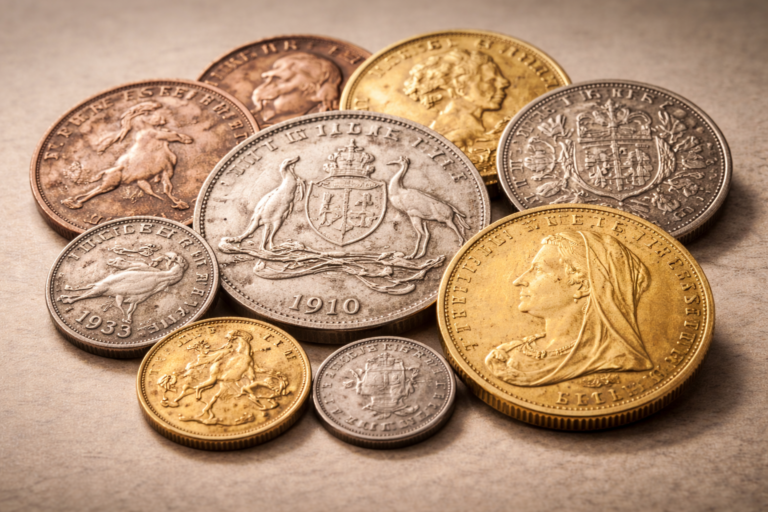
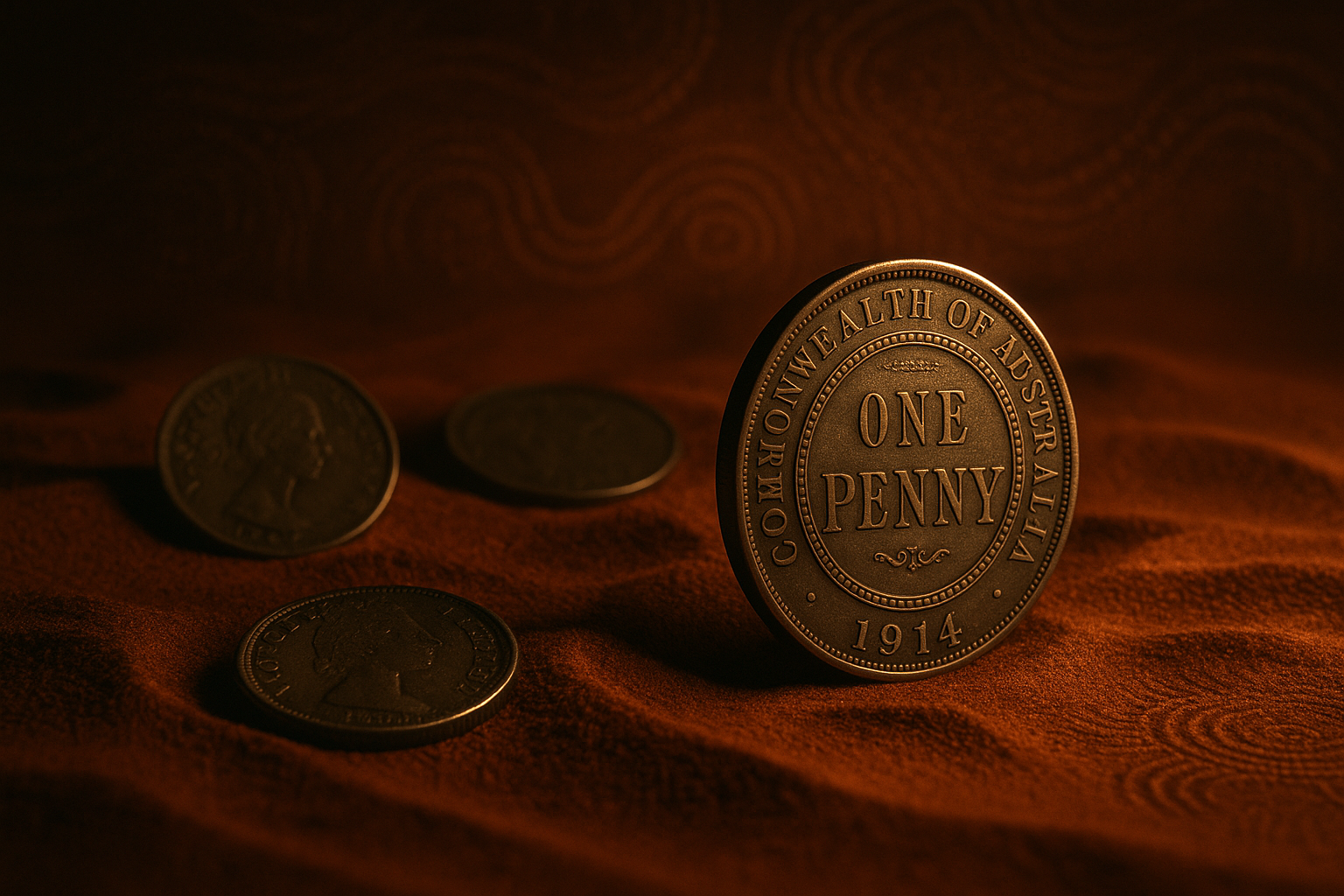
Early Australian coinage revealing the colonial fingerprints left on the Southlands
Image credit: HistoraCoin.com
The First Steps Toward an Australian Identity
As Australia slowly moved toward defining itself, its coins began to change in subtle ways. The shift did not happen overnight. There was no dramatic announcement. Instead, identity crept in quietly.
Design choices started to feel more deliberate. Text placement, spacing, and motifs reflected growing confidence. Coins no longer felt like temporary solutions. They felt like they belonged.
These early expressions of identity were cautious. Australia was still finding its voice, still negotiating its relationship with history and geography. But the metal knew. The coins began to feel grounded. Heavier. More assured.
Coins in Everyday Australian Life
Australian coins did not live in vaults. They lived in pockets, tills, and hands roughened by work. They were carried across deserts, coastlines, farms, and cities still learning their own names.
Think of how often a coin changed hands. A shopkeeper counting change. A child clutching something small and shiny. A worker saving a few pieces at the end of the day. Each interaction left an invisible mark.
This is where Australian coins become deeply human. They were part of routine. They witnessed ordinary moments. And ordinary moments, repeated millions of times, shape history more quietly than battles ever could.
Land Symbols and Quiet Meanings
As designs evolved, symbols began to reflect the land itself. Not loudly. Not aggressively. Just enough to be felt.
Native animals. Natural balance. A sense of space. These elements gave Australian coinage a different emotional texture. There is room in these designs. Room to breathe. Room to reflect distance and openness.
The land did not dominate the coins. It influenced them. The result feels uniquely Australian. Calm. Grounded. Unrushed.
A Visual Timeline of Change
When you place Australian coins side by side across decades, you can see the country learning itself. Early uncertainty gives way to clarity. Borrowed forms settle into local rhythm. Designs become more confident without becoming loud.
This timeline is not just chronological. It is emotional. Each shift reflects a collective mood. Hope. Stability. Experimentation. Maturity.
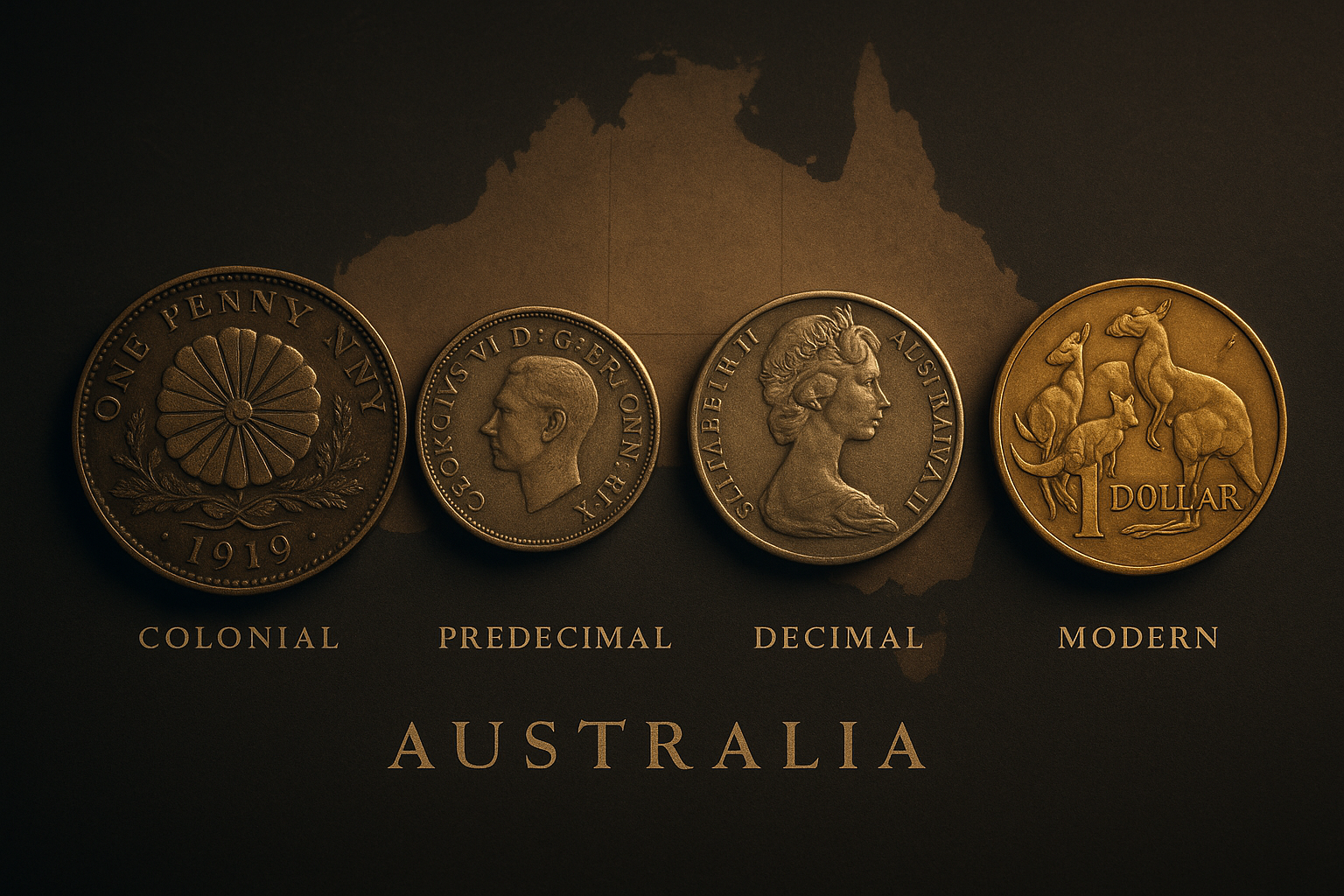
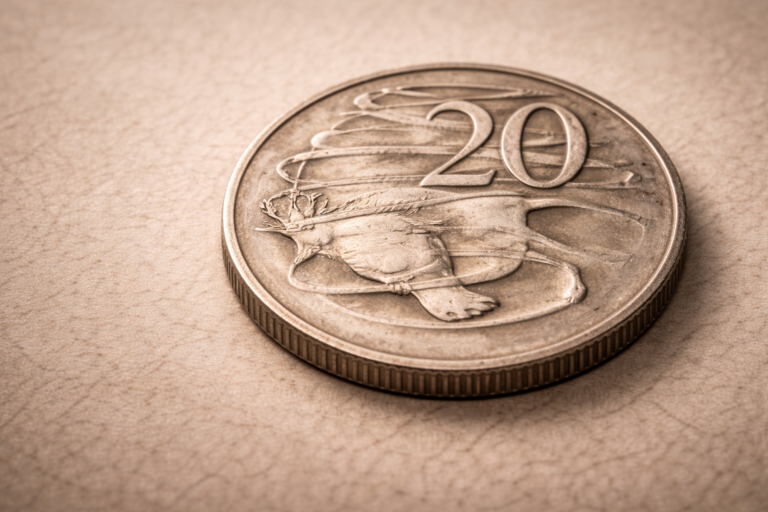
From colonial beginnings to national identity traced through Australian coins
Image credit: HistoraCoin.com
Coins Through War and Uncertainty
Like all nations, Australia passed through moments of tension and uncertainty. During such times, coins often change quietly. Materials shift. Designs simplify. Practicality takes precedence.
These coins feel different in the hand. Not weaker. Just focused. They reflect a society conserving energy, concentrating on continuity.
What remains striking is that even during difficult periods, Australian coinage maintains balance. There is no chaos in the metal. Only adaptation.
The Decimal Turning Point
The move to decimal currency marked more than a technical change. It represented confidence. Australia was ready to simplify, to modernize, to speak clearly to itself and the world.
Decimal coins feel clean. Approachable. Designed for everyday understanding. And yet, they still carry the echoes of what came before.
This is where myth becomes subtle. The past is not erased. It is folded neatly into a new structure.
Why Australian Coins Feel Mythic
Australian coins feel mythic not because of dragons or gods, but because of landscape and distance. Because of survival. Because of quiet resilience.
They feel like objects shaped by space. They do not crowd the eye. They invite patience. They reward slow attention.
Myth does not always shout. Sometimes it settles in quietly and waits to be noticed.
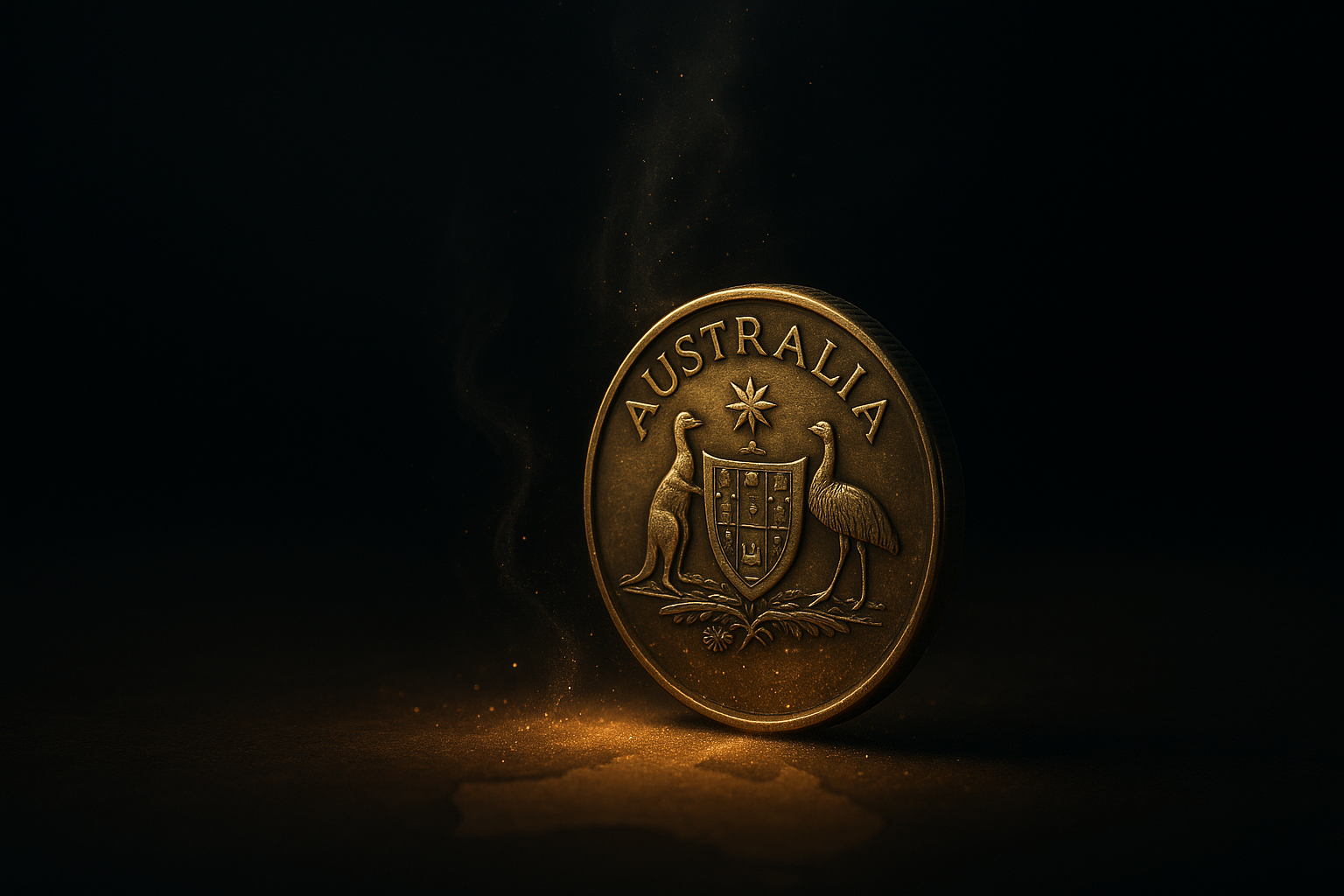
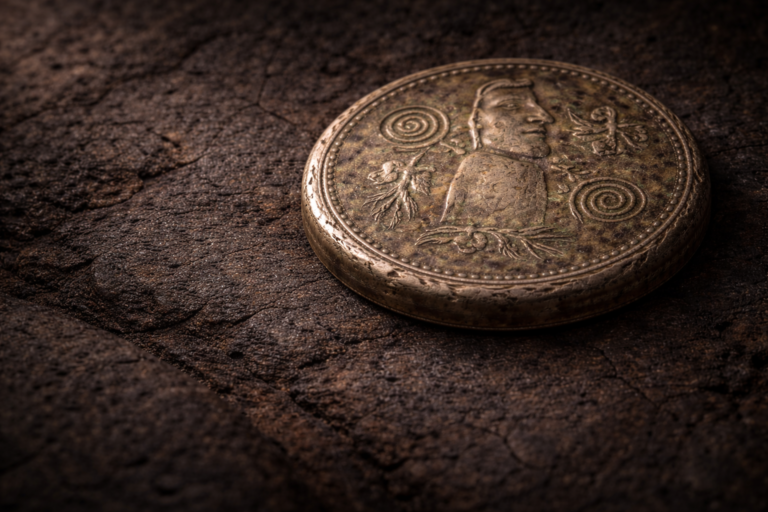
A single coin standing as a silent witness to Australia’s mythic past
Image credit: HistoraCoin.com
How Collectors Read Australian Coin Stories
Collectors who are drawn to Australian coins often speak less about rarity and more about feeling. They talk about balance. Texture. Presence.
Australian coinage offers a narrative that unfolds gently. It rewards curiosity without overwhelming it. Each piece feels like a fragment of a much larger landscape.
For many, collecting becomes less about completion and more about connection.
A Quiet Ending That Never Ends
Australia’s mythic coins do not conclude their story. They continue it. Each generation adds new marks, new meanings, new memories.
The treasure of the Southlands was never buried. It has always been here. Passing quietly from hand to hand. Waiting for someone to slow down and listen.
FAQ
Why do Australian coins feel different from many others?
Their designs reflect space, balance, and land rather than power or spectacle. This gives them a calmer presence.
When did Australian coins begin expressing national identity?
Gradually. Identity emerged through design choices rather than sudden changes.
Are Australian coins mainly modern?
While much of the coinage is modern, its roots carry layered colonial and cultural stories.
For more historical coin stories, visit HistoraCoin.
Reality Check
Australian coins are often misunderstood because they feel familiar. Many of them circulated recently enough to seem ordinary at first glance. Yet their true depth lies not in age alone, but in context. These coins carry the weight of settlement, distance, resilience, and adaptation. Their story is quieter than most, but no less profound.
Final Verdict
Australia’s mythic coins are not treasures because they glitter. They are treasures because they endured. Shaped by land, distance, and time, they whisper stories of a nation finding its footing under southern skies. If you listen closely, these coins do not speak of wealth. They speak of belonging.
Share This Story
Share this article across your favorite platforms and help others discover the quiet history hidden in Australian coins.
Explore More on HistoraCoin
About the Author

HistoraCoin Team
The HistoraCoin Team explores the hidden stories behind coins from every corner of the world. Our focus is history, symbolism, and the human journey engraved in metal, told through calm storytelling and careful research.