Before Modern Money in South America
Before coins became normal in South America, people still bought, gifted, negotiated, and measured value every day. The surprising part is that it was not chaotic at all. It was organized, repeatable, and often stricter than we imagine.
If you could walk into an Andean market centuries ago, you would notice something familiar. People trusted certain objects. They remembered routes. They cared about quality. And they used social rules to keep exchange fair. Money existed long before modern money did.
Table of contents.
What counted as money before coins.
When people hear the phrase “before money,” they often picture pure barter. One person offers fish. Another offers cloth. They argue until both sides feel satisfied. That did happen sometimes, but it is not the whole story. South America had many ways to store value and to move value from one person to another without needing coins.
The easiest way to understand it is to separate two ideas. The first idea is “something people want.” The second idea is “something people accept.” Many things are wanted. Fewer things are widely accepted. In pre colonial exchange, the most powerful items were the ones that kept being accepted in different places, by different groups, across different seasons.
Why trust mattered more than metal.
In a coin based system, trust often hides inside the object. The mint mark and the weight do part of the talking. But in a non coin system, trust is more visible. People ask where an item came from. They notice craftsmanship. They judge freshness, purity, and rarity. And they rely on reputation, because reputation is a kind of currency that travels ahead of you.
In South America, trust was built through repeated exchange. If a shell or a metal piece kept appearing in meaningful transactions, people learned its role. If a route kept delivering the same quality, people learned to expect it. If a trader cheated, the network remembered. That memory was one of the strongest “laws” in the system.
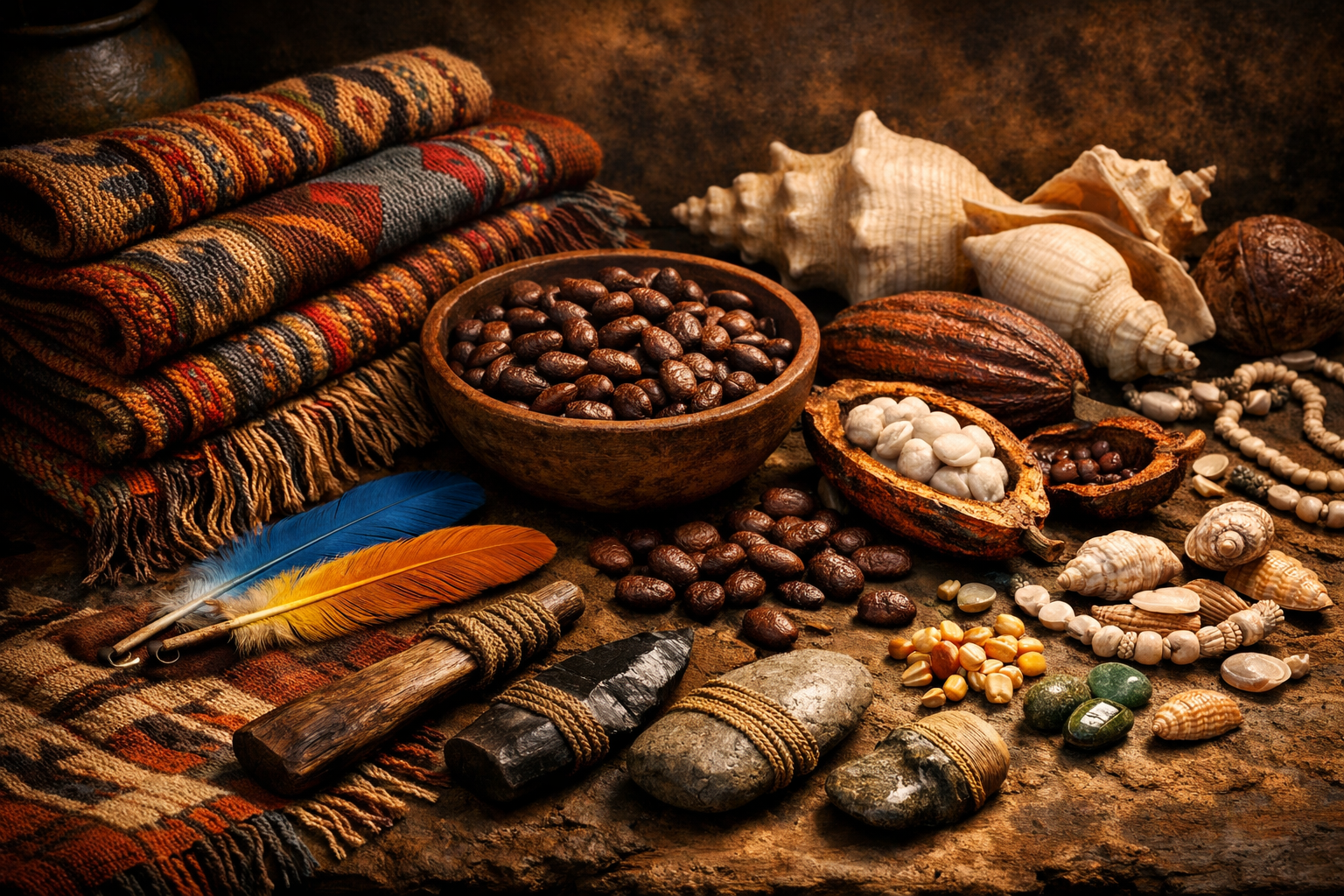
Objects that carried value across regions.
South America is huge, and it contains very different landscapes. Mountains, coasts, deserts, rainforests, and river systems. That diversity created a natural reason for trade. One region had what another region lacked. Over time, certain exchange items became famous because they moved well across those boundaries.
Some objects had value because they were rare where you lived. Others had value because they were linked to ceremonies and status. Sometimes an item had both kinds of value at the same time. That is when it starts to behave like money, because it can move from practical use into social meaning and back again.
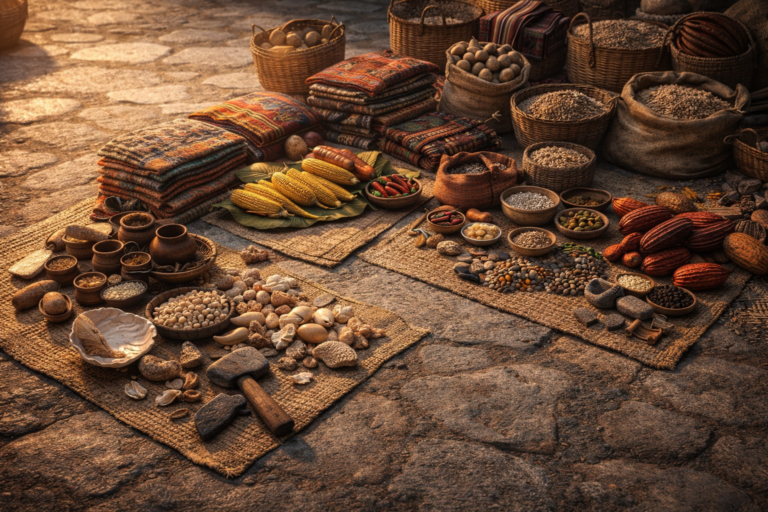
| Medium of exchange. | Where it mattered. | Why it worked. |
|---|---|---|
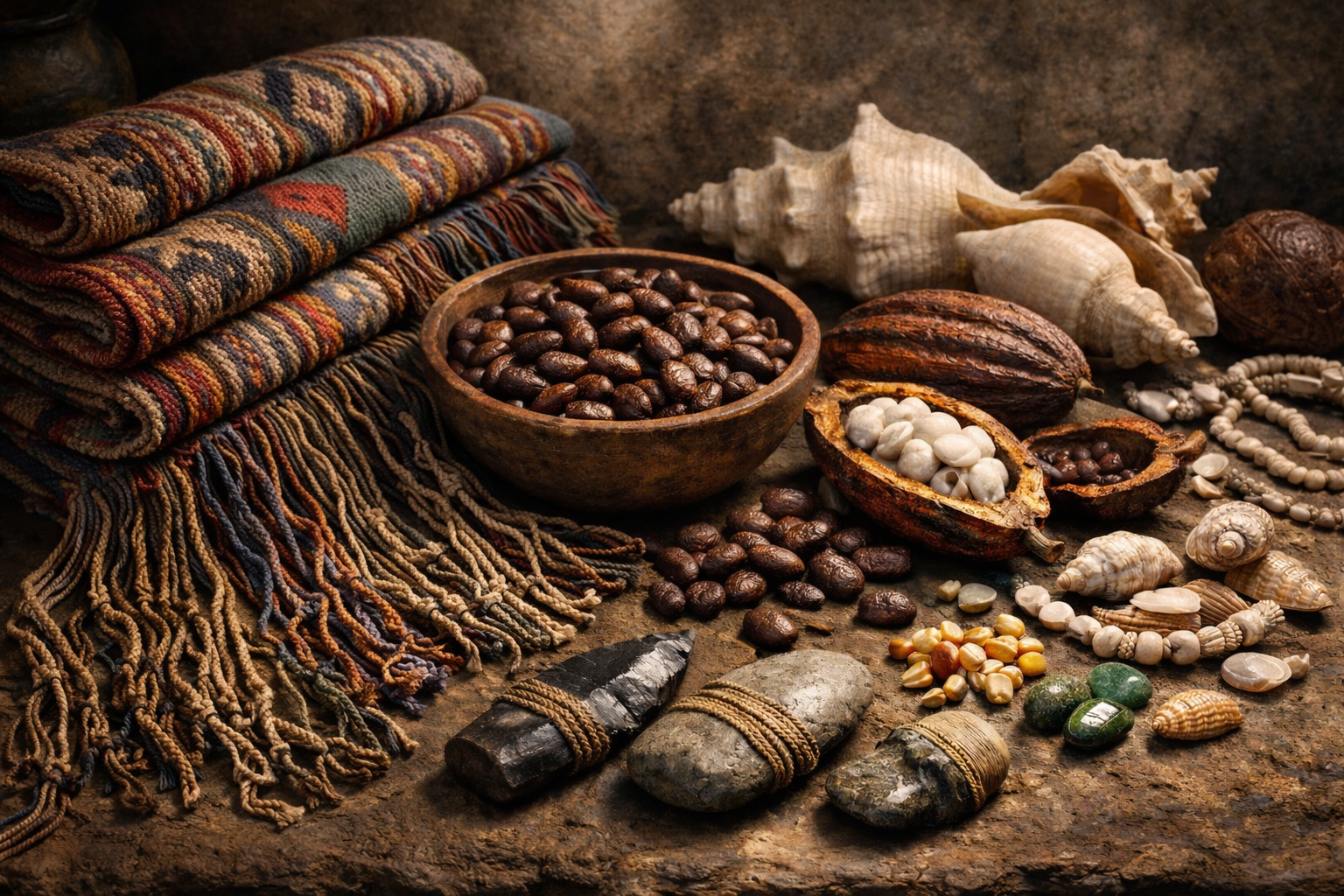
| Spondylus shell and marine shells. | Andean regions, long distance routes. | Rare inland, visually distinctive, tied to prestige and ritual. |
| Cacao beans and botanical goods. | Warm lowlands and connected trade corridors. | Portable, countable, and valued in daily and ceremonial life. |
| Textiles and woven goods. | Highlands and state level distribution systems. | Labor intensive, standardized patterns, easy to store and gift. |
| Metal objects and copper pieces. | Areas with metallurgy traditions. | Durable, divisible by shape and size, signals skill and control. |
| Feathers, pigments, and symbolic items. | Amazon and interregional elite exchange. | Status value, hard to obtain, strong cultural meaning. |
Trade routes and exchange networks.
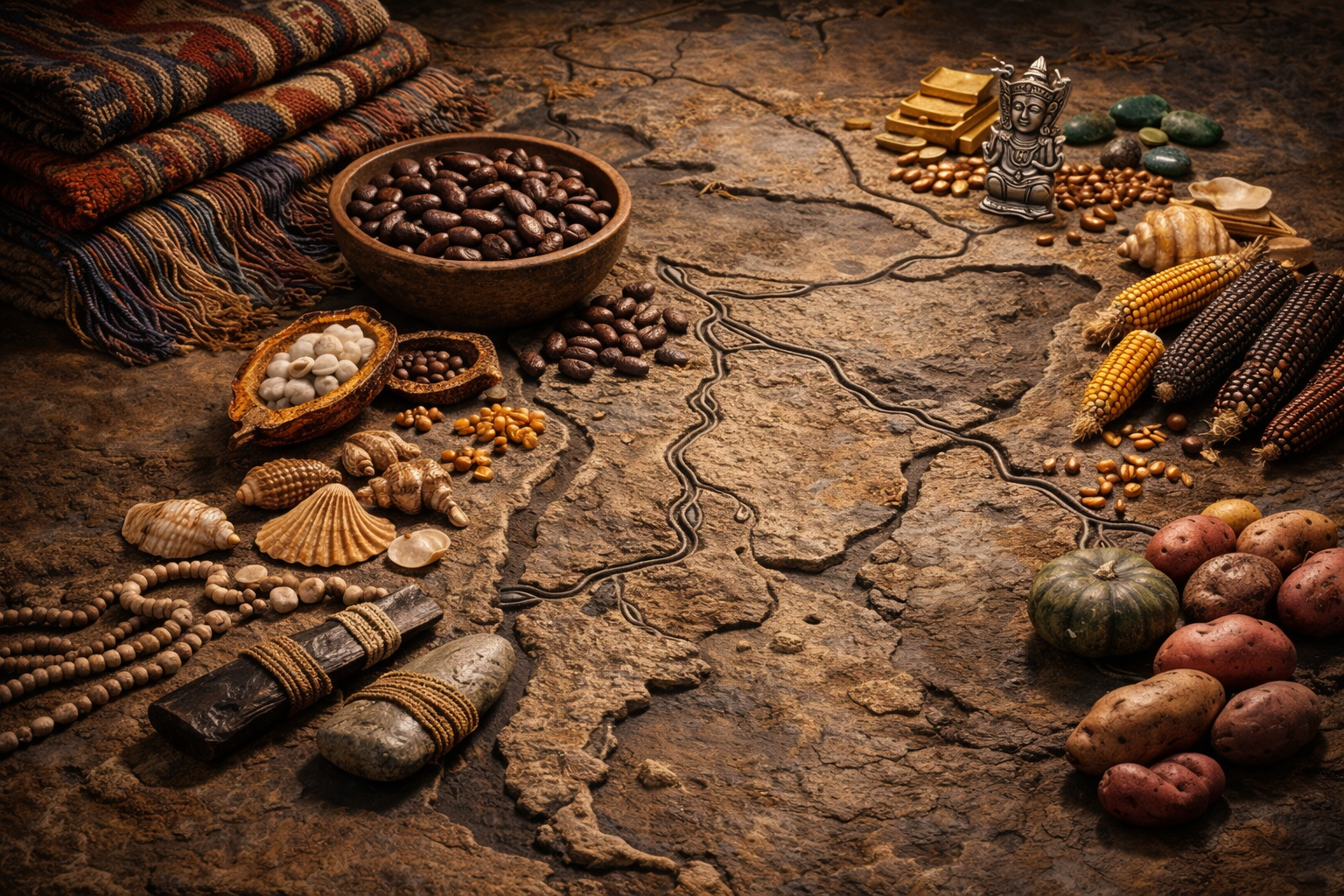
The quiet secret behind early money is movement. A valuable object that never leaves your village is only a treasure. A valuable object that keeps moving between communities becomes a language. And once enough people speak the same language of value, trade gets faster. Arguments get shorter. Trust becomes a habit.
In the Andes, vertical geography shaped exchange. Highland communities could access cold climate crops and animal products. Lower valleys offered different foods and materials. Coastal regions offered marine goods that felt exotic inland. The result was a constant flow of items up and down, and along, the mountain corridors.
The Amazon basin added another style of network. Rivers functioned like roads. People moved along water routes that connected distant groups. Some exchanges were everyday. Others were seasonal and tied to gatherings. In both cases, repeat travel made repeat value.
Markets and everyday life.
It is tempting to treat early exchange as something only elites did. But everyday life required exchange at every level. Families needed tools. Communities needed food security. Specialists needed materials. And social life required gifting, hospitality, and reciprocity.
In many communities, the “price” of something was not a single number. It was a relationship. You might exchange today with the expectation that you will receive later. Or you might give generously now to build support for a future event. This is not less sophisticated than coin pricing. It is a different kind of accounting, one that tracks social balance as carefully as material balance.
The Inca approach to value and distribution.
The Inca world is often described with one dramatic phrase. An empire without money. That phrase is useful, but it can also mislead. It is better to say the Inca state leaned heavily on labor obligations and redistribution, rather than on coin based taxation and wages.
Labor could be organized. Goods could be stored. The state could direct resources to where they were needed. In that system, standardized textiles and stored staples mattered a lot, because they were measurable and distributable. You can think of them as “state friendly value.” Not coins, but still a way to convert work into goods and stability.
The key point is that even in a redistribution system, value still needs forms. You cannot move pure “value” through mountains. You move cloth, food, tools, and symbolic goods. Those items become the handles that society uses to carry meaning and obligation.
What changed when colonial coinage arrived.
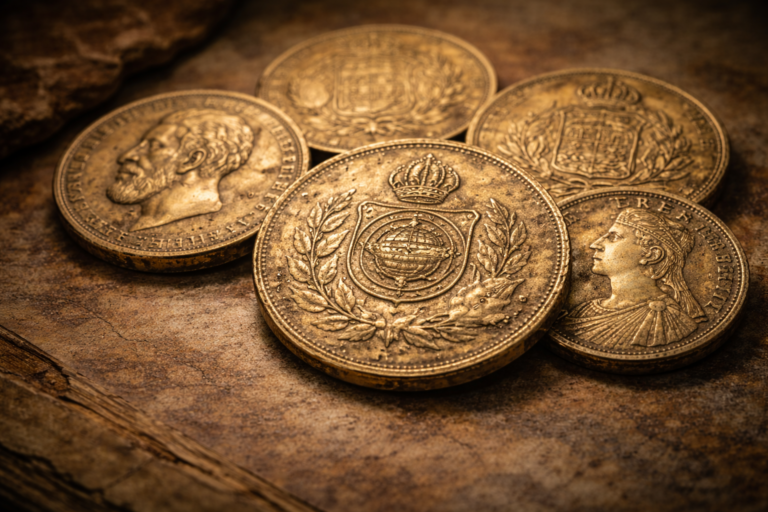
When colonial systems introduced large scale coinage, they introduced a new kind of standard. Coins made some transactions faster, especially with outsiders who did not share local networks. They also made extraction easier, because taxes and debts could be counted in a single unit. That shift matters.
But coins did not erase the older systems overnight. People kept using trusted objects alongside coins for a long time. In many places, local exchange continued in parallel with official money. That is normal in history. New standards arrive, but older trust does not disappear instantly.
Related HistoraCoin stories.
FAQ.
Was it only barter.
Not only. Barter happened, but many exchanges relied on accepted valuables, reputation, and repeated obligations. That is why some objects acted like money without being coins.
What objects mattered the most.
It depended on region, but shells, textiles, botanical goods like cacao, and crafted metal objects often carried value across communities because they were portable and widely respected.
Did the Inca use coins.
The Inca state did not rely on coinage the way later colonial systems did. It relied more on labor obligations, storage, and redistribution, with standardized goods playing a major role.
Did coins replace older exchange systems immediately.
No. Older systems of trust and local exchange tend to continue alongside new money for a long time. People keep what works in daily life.