Coin Design Turning Points in History
Estimated reading time: 10–12 minutes
Most people handle coins every day without really seeing them. They feel familiar, predictable, almost invisible. And that’s exactly why they matter.
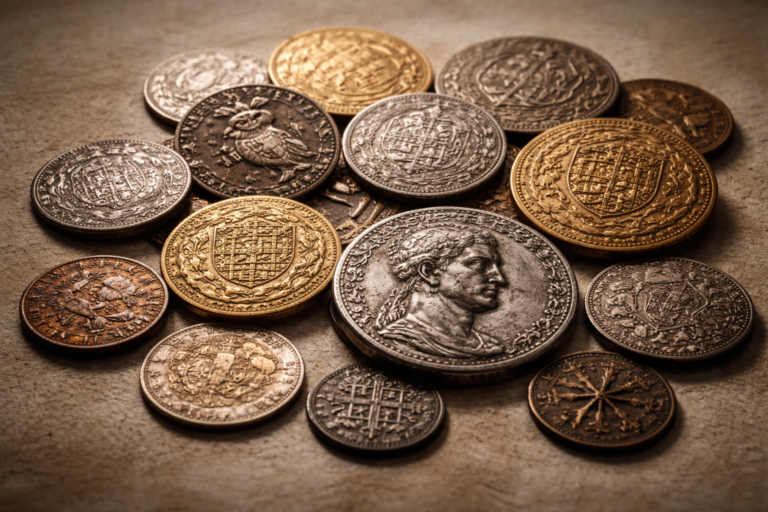
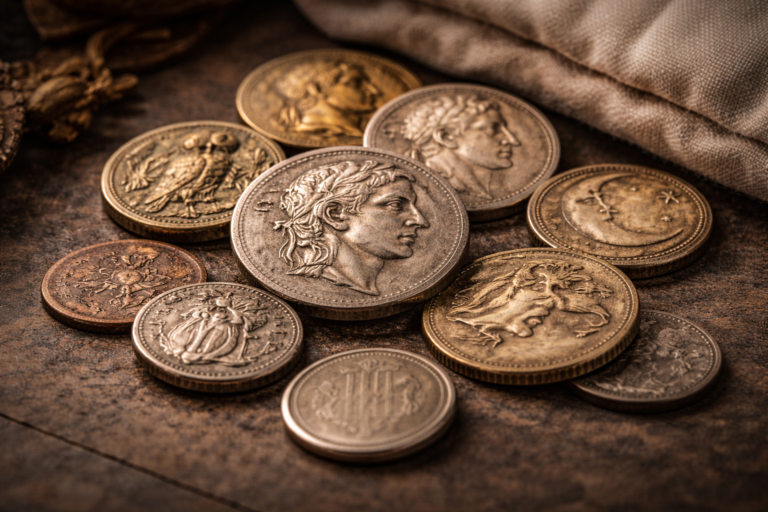
Coins are not just small pieces of metal. They’re tiny public posters that travel through every pocket, every shop, every market, and every generation. So when a nation changes a coin’s design, it usually isn’t doing “a design refresh.” It’s reacting to something deeper something that changed in politics, identity, or survival itself.
Table of Contents
- Why Coin Designs Rarely Change
- Coin Design as a Signal of Power Shifts
- War, Crisis, and Emergency Coin Designs
- When Silence Speaks Louder Than Words
- Redefining Cultural Identity Through Coins
- Coins as Everyday Memory Devices
- The Gap Between Events and Recognition
- What Coin Design Reveals Beyond History Books
- Small Changes That Carried Big Meaning
- Final Reflection
Why Coin Designs Rarely Change
Coins are built on trust. Not “trust” in the emotional sense real trust that affects daily life. People trust a coin because it has a known weight, a known shape, and a known meaning.
That trust is fragile. If a coin suddenly looks unfamiliar, some people hesitate. Others question whether it’s real. Markets slow down. Confusion grows. That’s why, historically, governments avoid changing coin designs unless there’s a reason strong enough to justify the risk.
Think of coin design like a national handshake. It’s a repeated ritual. You don’t change it often, because consistency itself is part of the message. A stable design says: “This system is still here. Life continues. The rules still hold.”
So when designs do change, it usually signals one of these:
- Power has shifted (a new regime, a revolution, a new ruler, a new political identity)
- Society has redefined itself (new cultural symbols, new priorities, a national reset)
- Survival is at stake (war, resource shortages, emergency minting, economic stress)
Coins last a long time. They don’t disappear after a season. That’s why design decisions feel permanent—and why they can reveal what a nation truly wants to “lock in” as normal.
Coin Design as a Signal of Power Shifts
When authority changes hands, coin design is often one of the first places you can see it. Not always with fireworks—sometimes with quiet, deliberate edits.
If you want a simple rule that holds across many eras, it’s this: new power wants new symbols.
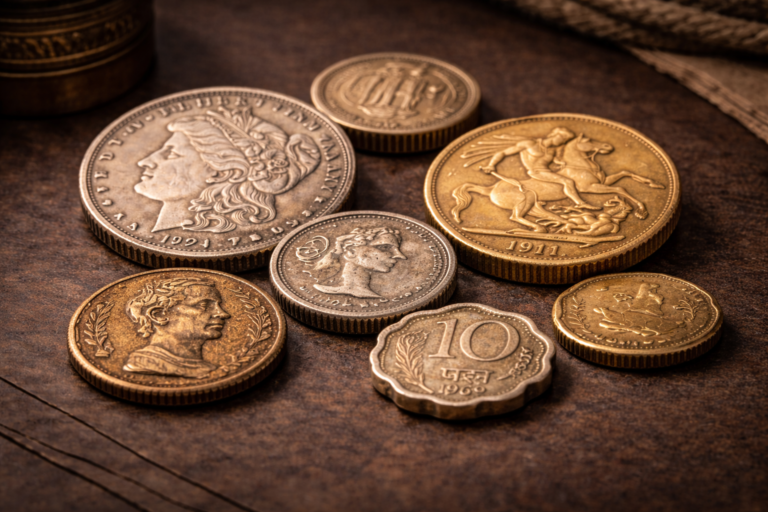
A new ruler may replace a portrait. A new system might remove a crown. A new state may choose a new emblem that feels “neutral” enough to unite different groups. These choices are rarely about art. They’re about legitimacy.
Quiet truth: Coins are one of the fastest ways for a new government to make itself feel unavoidable. If everyone uses it daily, it starts to feel permanent—even if the change is still fresh and uncomfortable.
Sometimes the goal is to celebrate the new order. Sometimes it’s to erase the old one. But often it’s something more subtle: to reduce tension. To soften the transition. To avoid shouting “everything changed” while still making sure everyone understands it.
That’s why coin design is such a fascinating historical witness. It doesn’t just show what happened—it shows what leaders wanted people to accept.
War, Crisis, and Emergency Coin Designs
During crises, coin design becomes brutally practical. Beauty turns into a luxury. The priority becomes: keep money moving.
In wartime, metals can become scarce. Minting can become harder. The state may need to produce coins quickly, cheaply, and in massive quantities. That pressure often shows up in design choices:
- simpler designs
- reduced detail
- cheaper metals
- more standardized shapes and layouts
And the result is almost always the same: coins that feel “plain,” “functional,” and sometimes even “cold.” But that plainness is the story.

When you see a coin that looks more “utilitarian” than artistic, it’s often a clue. It may have been created under pressure. Under fear. Under urgency. Under the need to prove stability even when stability was shaky.
This is one reason coin design changes can reveal turning points that official narratives sometimes try to soften: crises leave evidence that doesn’t care about propaganda.
When Silence Speaks Louder Than Words
Some turning points are announced loudly—new flags, new slogans, new celebrations. But others are handled in a different way: quietly.
A removed symbol can be louder than a new one. A missing crown can speak louder than a new portrait. A simplified emblem can be a national sigh: “We’re moving on.”
Coins make that kind of “silent acknowledgement” easier. They let a nation admit change without giving a full explanation. And because people adapt quickly to what they touch every day, the new design becomes normal almost overnight.
Design psychology: A coin doesn’t argue with you. It doesn’t debate you. It simply shows up in your life. That’s why it’s such a powerful tool for turning “new reality” into “daily habit.”
History books may describe the political story later. But the coin design often reveals the emotional reality in the moment: the desire to calm, normalize, and stabilize.
Redefining Cultural Identity Through Coins
Not every redesign is about power fights or emergency pressure. Sometimes it’s something more personal: a society trying to recognize itself.
Over time, older symbols can start to feel distant. Or imposed. Or simply outdated. People want their everyday objects to reflect what feels real now—not what once dominated the past.
That’s why many coin redesigns focus on cultural identity:
- native plants and animals
- famous landmarks
- heritage patterns and motifs
- symbols of unity and shared memory

What’s beautiful here is that coins do this work quietly. They don’t need a big campaign. They don’t require a classroom. They simply circulate.
A person might never read a history book, but they will carry these symbols in their pocket for years. That’s how identity becomes familiar. That’s how the “idea of a nation” becomes something you can literally hold.
Coins as Everyday Memory Devices
Coins are some of the most democratic historical objects ever made. They’re used by everyone. They travel everywhere. They survive decades.
That gives them a special role: they become memory devices. Not memory in the sentimental sense—memory in the cultural sense.
A coin design can teach you what a society wants to honor: a leader, a symbol, a landmark, a value, a turning point. And because coins are repeated daily, the message becomes normal in a way that posters and speeches rarely achieve.
Simple idea: Coins don’t just record history. They train people to recognize the version of history a nation wants to live with.
Over time, this creates a quiet effect: people forget that designs ever changed. The new symbols feel eternal. And that’s when you know the turning point has truly settled.
The Gap Between Events and Recognition
One of the most revealing things about coin design changes is timing. Big events often happen years before a coin redesign reflects them.
Why? Because redesign isn’t just a reaction. It’s a confirmation.
Coins tend to change when leaders feel confident enough that the new reality will last. It’s like saying: “We’re not going back.”
That’s why coin design is useful for understanding how a nation processed change: not just the date of an event, but the moment the event became “accepted life.”
What Coin Design Reveals Beyond History Books
History books often focus on major announcements: the speech, the treaty, the election, the collapse. Coins focus on what comes next: normalization.
Coins can reveal things history books sometimes gloss over:
- when a society stopped expecting the old order to return
- when leaders chose symbolism over debate
- when identity moved from “idea” to “everyday reality”
And here’s the part that feels almost poetic: coins do all of this without asking for permission. They just circulate. And circulation is a form of acceptance.
Small Changes That Carried Big Meaning
Not every turning point comes with dramatic redesign. Some of the biggest shifts show up as tiny changes:
- a new emblem that looks “more neutral”
- a portrait that feels less authoritative
- a simplified symbol that avoids controversy
- a layout change that makes older imagery less dominant
These small choices often reveal compromise. And compromise is where real history lives. Because real nations aren’t neat stories. They’re messy agreements made under pressure, fear, hope, and fatigue.
So if you ever notice a coin design change that feels subtle, don’t dismiss it. Subtle shifts are often the most honest ones. They show what people could accept not what leaders wished they could force.
Final Reflection
Every redesigned coin is a quiet confession.
A nation admitting without ceremony that something changed forever. And instead of shouting it, it pressed the message into metal and let daily life do the rest.
Next time a coin feels different in your hand, pause for a second. You might be holding a turning point history didn’t announce out loud.