Coins That Meant More Than Money

Estimated reading time: 24–28 minutes
For most of human history, coins were never just tools for buying and selling. Long before modern economies, banks, or price systems existed, coins carried something far deeper. They carried belief, identity, and power.
To the ordinary person holding a coin centuries ago, that small piece of metal could represent safety, loyalty, faith, or even fear. In many societies, coins were trusted not because of what they could buy, but because of what they symbolized. Understanding this changes how we see money itself.
Quick Takeaways
- Coins often symbolized identity, belief, and authority
- Many coins carried meaning beyond economic exchange
- Power was embedded in everyday money
- Trust in coins came from culture and belief
- Modern digital tokens repeat ancient patterns
When Coins Were Symbols Before Currency
In early societies, coins were not introduced to simplify shopping or trade. They emerged as symbols of trust within a community. A coin worked because people believed in the authority behind it, whether that authority was a ruler, a temple, or a shared cultural system.
In many ancient civilizations, coins appeared alongside rituals, religious practices, and public ceremonies. They did not circulate in isolation. They circulated with meaning attached.
Coins and Identity
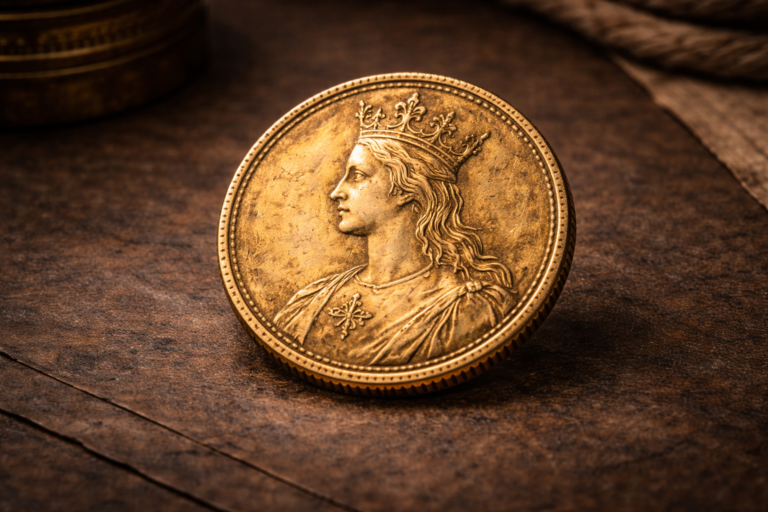
Coins often told people who they were. Symbols engraved on them reflected local gods, myths, ancestry, or shared values. Even people who could not read understood these symbols instinctively.
For ordinary individuals, this created emotional trust. The coin felt familiar. It felt like part of their world rather than an abstract object.
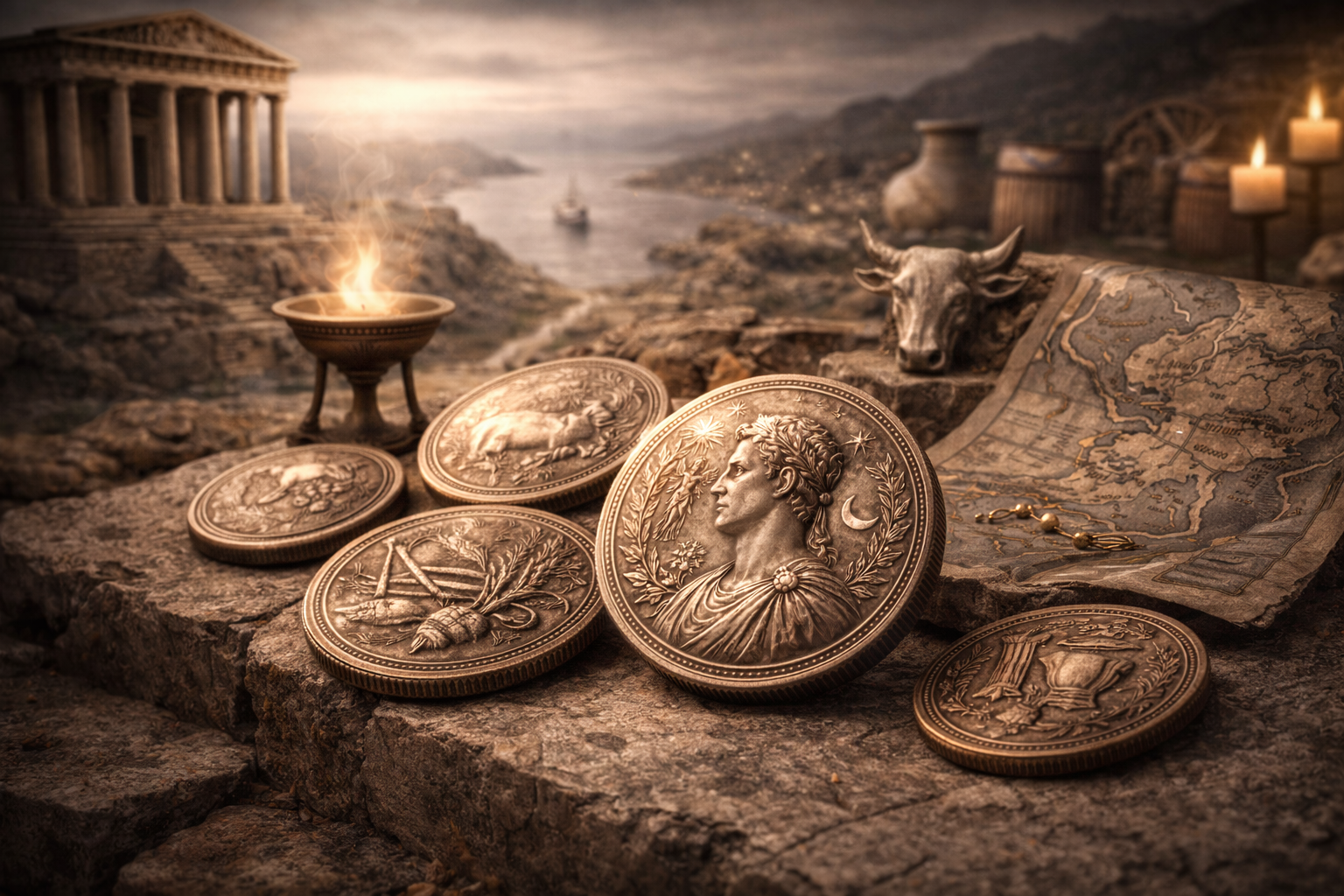
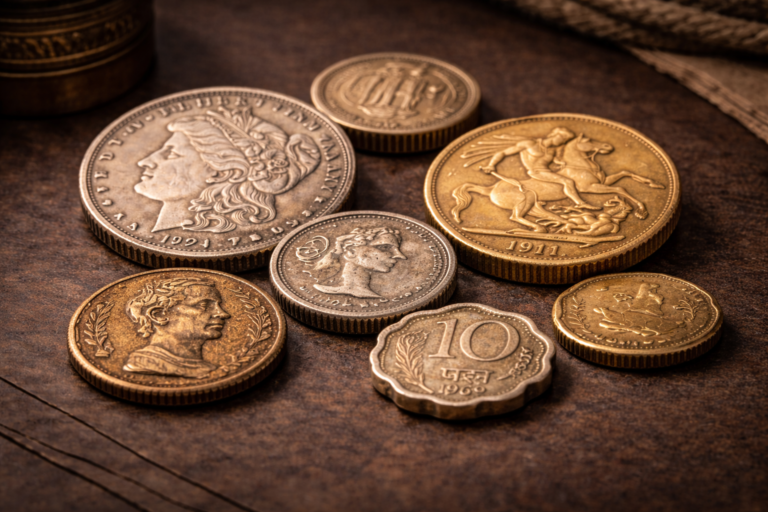
Caption: Many historical coins reflected belief systems and cultural identity.
Image credit: HistoraCoin
Belief Systems and Trust
Trust in money has always been psychological. Ancient coins were often associated with divine protection or sacred authority. In some cultures, coins were placed in temples or used in rituals, reinforcing the idea that they were protected by forces beyond human control.
This spiritual connection made coins powerful. People trusted them not because of metal content, but because rejecting the coin felt like rejecting the belief system itself.
Fact Card | Coins and Belief
In many historical societies, coins gained legitimacy through religion, ritual, and cultural tradition rather than economic logic.
Coins as Tools of Power
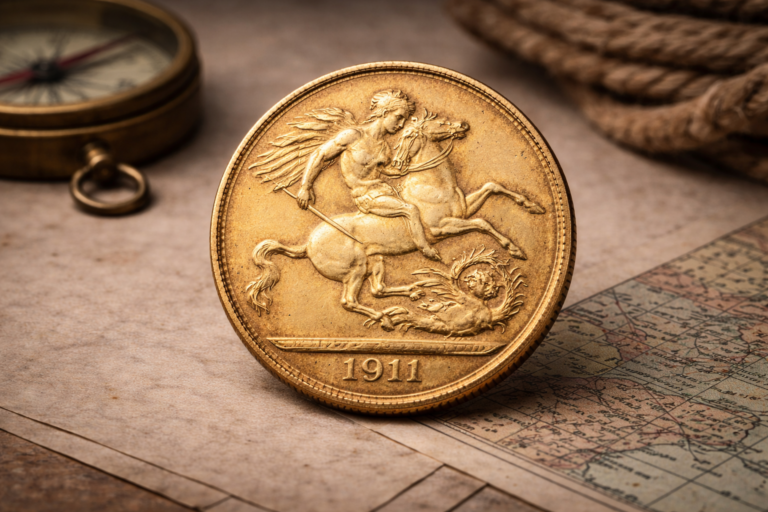
Rulers understood the psychological power of coins very well. That is why money often carried images of authority. Faces, symbols, and titles were placed on coins because coins traveled farther than armies or messengers.
Every transaction became a quiet reminder of who ruled. Power was reinforced repeatedly, without force, and without direct confrontation.
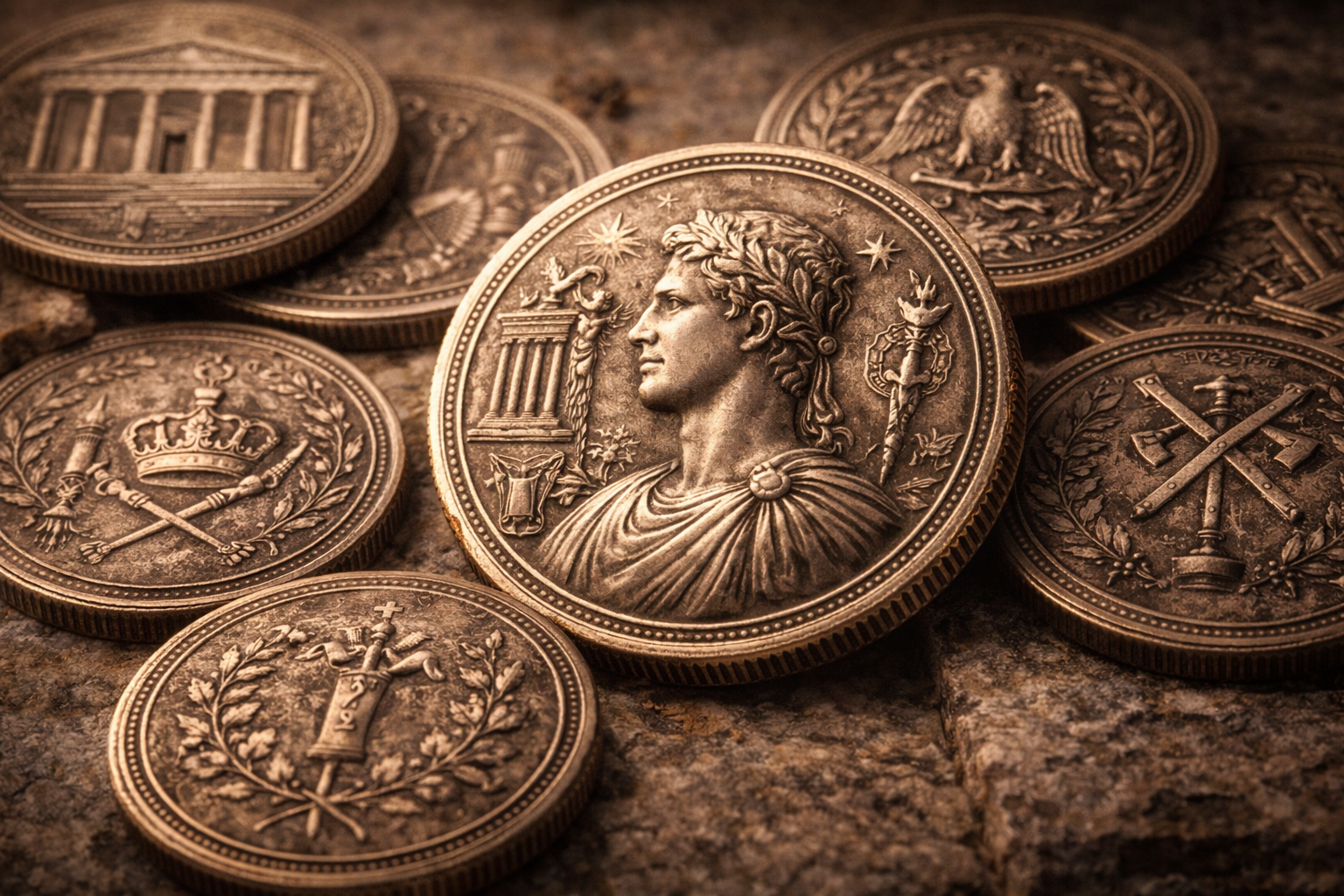
Caption: Coins have long served as silent tools of authority.
Image credit: HistoraCoin
Related Ancient Coin Stories
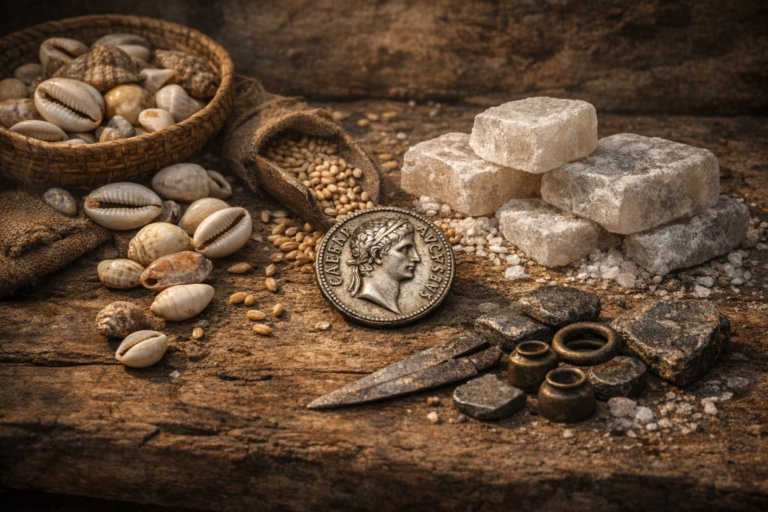
The deeper meaning of coins becomes especially clear when studying ancient civilizations. Roman coinage offers some of the strongest historical evidence of how money carried identity, belief, and political authority far beyond trade.
To explore these patterns further, visit our in-depth collection of ancient Roman coin history and analysis , where everyday coins reveal how power and culture shaped human behavior.
Comparison | Coins as Money vs Coins as Meaning
- Economic coins focus on exchange and efficiency
- Symbolic coins focus on trust and belonging
- Modern money hides symbolism behind systems
- Ancient coins displayed meaning openly
The Human Experience of Coins
For ordinary people, coins were not abstract economic units. They were emotional objects tied to daily survival. Saving coins meant safety. Losing them meant anxiety. Giving them away meant generosity or obligation.
Coins were kept close to the body, hidden in small containers, or saved carefully inside homes. Their presence influenced decisions about food, work, travel, and family responsibility.
This emotional connection explains why changes in coinage often caused unrest. When rulers altered designs or metals, people felt something deeper had shifted. Identity itself felt unstable.
Money survives not because of metal or systems, but because humans believe in what it represents.
Why People Resisted Changes in Coins
Throughout history, people resisted changes to familiar coins. New designs, new symbols, or altered materials created distrust. Not because people understood economics, but because they sensed a break in continuity.
Coins were anchors. They represented stability in uncertain times. When that anchor moved, fear followed.
How These Patterns Still Exist Today
Modern money appears very different from ancient coins, yet the psychology remains the same. Trust, identity, and belief still define how people interact with money.
Digital currencies, community tokens, and symbolic coins repeat ancient patterns. Technology changed. Human behavior did not.
This continuity explains why symbolic coins continue to emerge. Humans naturally attach meaning to objects that organize their lives. Money is one of the strongest examples.
Methodology and Research Approach
This article was developed using a historical and cultural research approach rather than financial or market-based analysis. The focus is on understanding how coins functioned as symbols of belief, identity, and authority within their original social contexts.
Our methodology combines comparative historical study, interpretation of symbolic imagery, and documented academic perspectives on ancient and pre-modern coinage. No assumptions are made based on modern monetary value or speculative frameworks.
By examining coins as cultural artifacts rather than economic instruments alone, this article aims to present a reliable and accessible interpretation of how money shaped human behavior across civilizations.
People Also Ask
Were coins always meant only for trade?
No. Many coins existed primarily as symbols of trust,
belief,
and authority rather than simple economic exchange.
Why did people trust coins in ancient societies?
Trust came from shared belief systems,
cultural identity,
and the authority behind the coin.
Do modern coins still carry symbolic meaning?
Yes.
Even digital tokens often reflect identity,
belief,
and community values.
Final Reflection
Coins that meant more than money remind us that currency has always been human before it was economic. From ancient civilizations to modern digital communities, money carries stories, beliefs, and power.
When we study coins through this lens, we stop seeing them as objects and start seeing them as reflections of who we are.
Explore More Coin History