Forgotten American Coins and Their Untold Legends

Estimated reading time: 12 minutes.
Forgotten American Coins and Their Untold Legends
Some coins were never meant to be famous. They were created to move quietly from hand to hand, paying for train tickets, newspapers, or a late-night cup of coffee. Yet, over time, a few of these everyday pieces escaped their ordinary role and slipped into the realm of legend. Their stories were carried not by headlines, but by whispers among collectors, late-night conversations at coin shows, and the soft rustle of album pages turning.
In the world of American coinage, a small group of real, circulating coins has earned a special place in the imagination. They are not mythical inventions or fantasy pieces. They existed, they were used, and they still survive today. But something about the way they were designed, struck, or released into the world gave them an aura that feels larger than metal and date.
This article explores a handful of those pieces: true American coins wrapped in untold legends. We will walk through dim mint corridors, stand beside sculptors at their workbenches, and listen to the quiet stories hidden under years of patina and wear. Each coin is real. Each coin has a date, a design, and a place in official history. Yet each one also carries a story that feels like a chapter from a forgotten book.
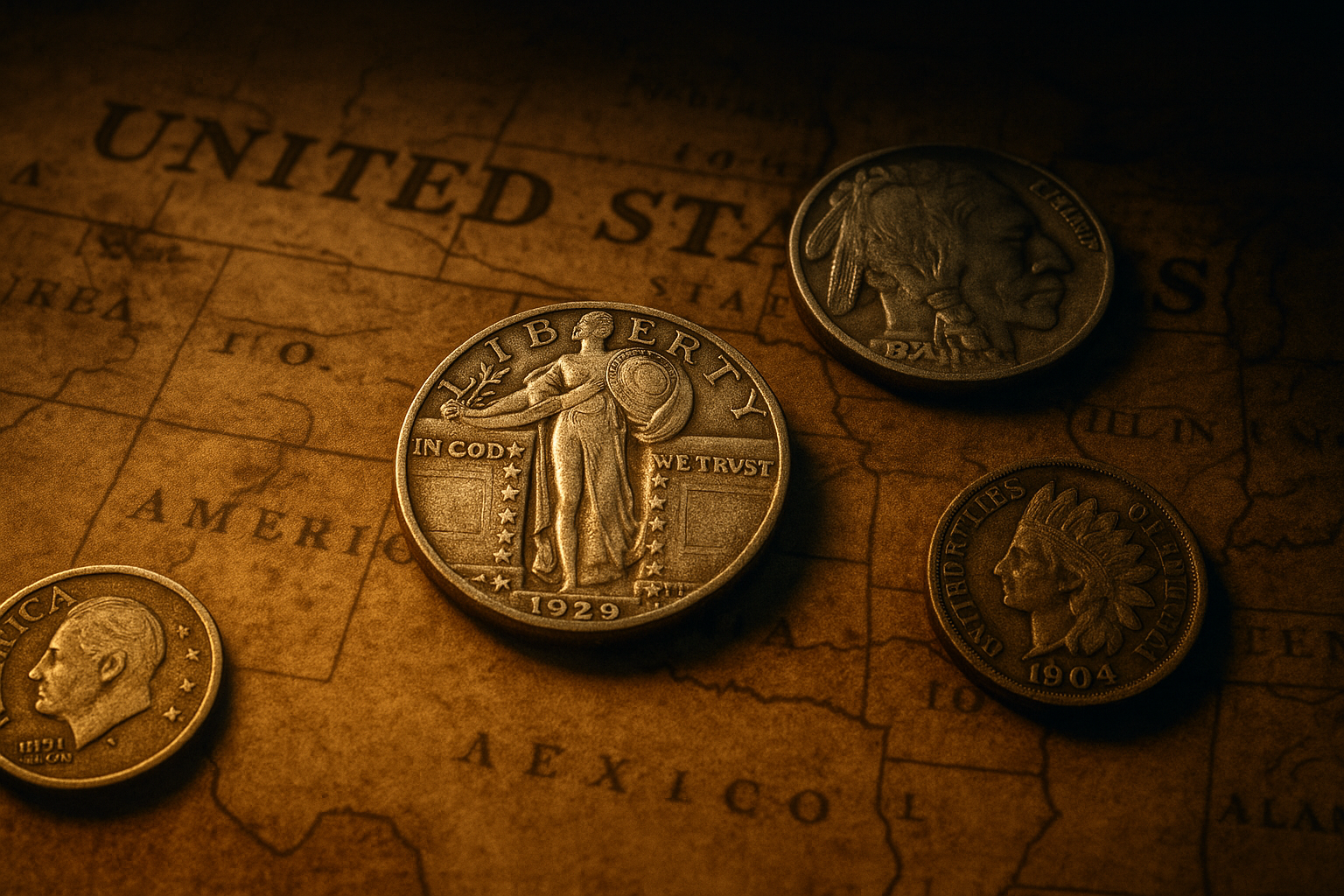
The coins we will meet here are not defined by charts or auction figures. Instead, they are presented as characters in a long-running story about a country, its art, and its changing identity. They are the Standing Liberty Quarter of 1916, the 1877 Indian Head Cent, the last breath of the Buffalo Nickel in 1938, the high-relief Peace Dollar of 1921, the 1942/1 Mercury Dime, and the 1955 Doubled Die Lincoln Cent. Each one is a real artifact, but also a legend in its own way.
1. Forgotten Coins and the Power of Legend
Not every important coin is locked away in a vault. Sometimes, the most fascinating pieces are the ones that slipped quietly through everyday life and were almost forgotten. Years later, someone stops, looks more closely, and realizes that what once seemed ordinary was carrying a deeper story all along.
A forgotten coin can be one that few people noticed at the time, or one that drifted out of circulation without fanfare. It can be linked to a short-lived design, a difficult year, or a small change in the die that went unnoticed by the public but never escaped the eye of dedicated observers. Over time, collectors, archivists, and historians begin to connect the clues. They reconstruct timelines, compare pieces, and share their findings, turning dry details into something alive.
The result is legend. Not legend in the sense of fairy tales, but legend as in “the story people tell” about an object. Real dates, real metal, real strikes – wrapped in narrative. When you place one of these coins in your hand, you are not just looking at a design. You are touching the moment when an artist fought for a vision, when a mint worker adjusted a press under pressure, or when a new design met a world that was not quite ready for it.
2. The 1916 Standing Liberty Quarter – A Controversial Beginning
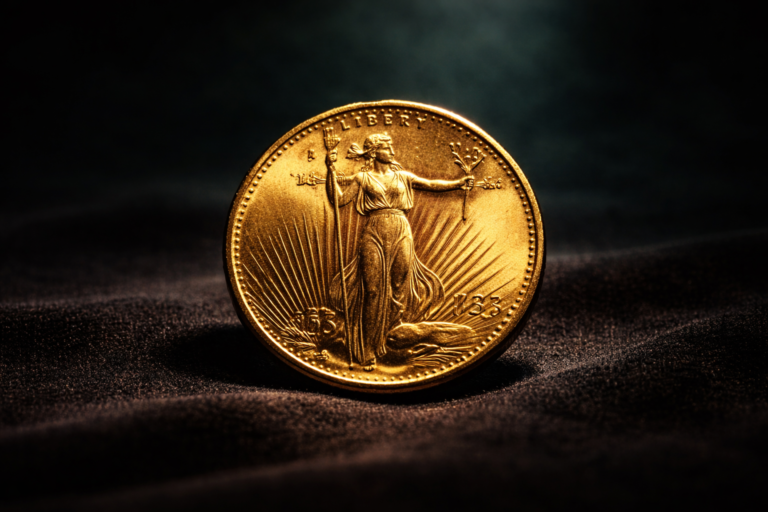
The story of the 1916 Standing Liberty Quarter begins with an empty stage. For years, American coinage had been criticized for its lack of artistic ambition. When the decision was made to redesign the quarter, the commission went to sculptor Hermon A. MacNeil, who imagined Liberty not as a distant, stiff figure, but as a living woman standing between war and peace.
On the obverse, Liberty stands within a gateway, a shield at her side, and an olive branch in her hand. She faces forward, stepping out as if ready to protect and to reconcile. The reverse shows an eagle in flight, framed by stars, a dynamic symbol of motion rather than a static emblem.
But the earliest version of the design carried a detail that would quickly become controversial: Liberty’s figure was depicted with a more classical level of exposure than many in the public were prepared to accept on their pocket change. In a country balancing Victorian morals with modern art, this was enough to spark debate, rumor, and quiet pressure.
Very quickly, the design was modified. Drapery was added, the lines of the figure were softened, and the first version of the coin became a short-lived apparition. The 1916 Standing Liberty Quarter was real, legal tender, and part of the official record. Yet it also became something else: a symbol of a brief moment when art pushed past the boundaries of its time and was gently pulled back.
Today, the coin still seems to stand in that gateway, one foot in classicism and one foot in modern design. It is a piece of metal, but also a frozen scene from a cultural discussion that never fully ends.
3. The 1877 Indian Head Cent – A Whisper from a Hard Year
The Indian Head Cent series is familiar to many collectors, but the year 1877 holds a special place in its story. That year, the United States was dealing with financial tension, political uncertainty, and the long shadow of previous crises. Fewer cents were struck, and the result was a coin that seemed, even at the time, to slip quietly through the cracks.
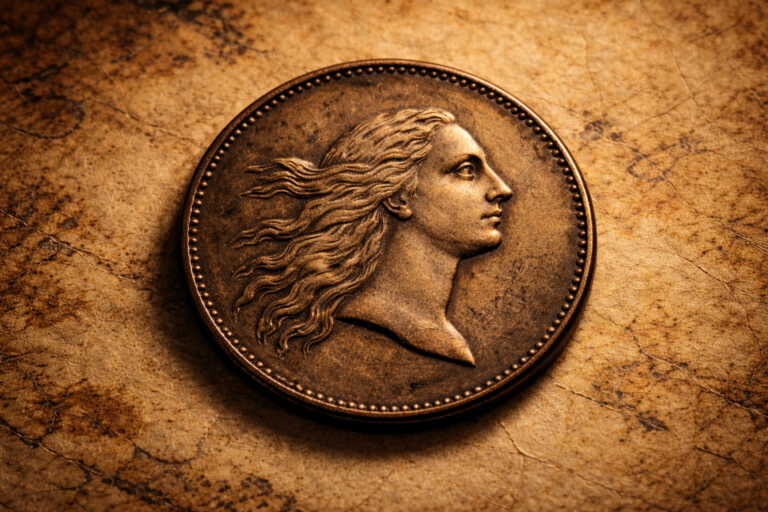
On the obverse, the familiar Liberty wearing a feathered headdress gazes into the distance, surrounded by the inscription that names the country. On the reverse, a wreath and shield frame the simple denomination. Nothing in the design loudly announces drama or difficulty. The coin appears calm, balanced, and almost serene.
Yet behind that calm lies a year of strain. Government records show reduced production. Economic pressures meant that not every plan was fully executed, not every idea could be pursued. The 1877 cent became, almost accidentally, a quiet symbol of that scarcity. It was never meant to be a legend, but its low presence in circulation made it feel like a voice speaking softly from the background of history.
For many collectors, the 1877 Indian Head Cent represents more than a challenging date. It is a reminder that history is not only written in speeches and monuments, but also in small metal pieces that almost no one noticed at first. Holding one is like hearing a whisper from a difficult year.
4. The 1938-D Buffalo Nickel – The Last Echo of the Frontier
The Buffalo Nickel is one of the most beloved designs in American coinage. Sculptor James Earle Fraser combined two powerful images: the profile of a Native American on the obverse and a massive bison on the reverse. Together, they evoke a vision of the American West that was already fading when the coin was first struck in the early twentieth century.
By the time the 1930s arrived, the series was nearing its end. New designs were being considered, and the Buffalo Nickel’s days in production were numbered. In 1938, the Denver mint struck one last run of these nickels. They were not framed as a farewell, not marketed as “the last of their kind.” They were simply the final part of a long series, sent into circulation as usual.
And yet, the 1938-D Buffalo Nickel feels like a last echo. The design that had carried the image of the frontier for decades was taking its final bow. Soon, it would be replaced by the Jefferson Nickel, with its new architecture and portrait, facing a different direction and a different future.
For those who grew up seeing buffaloes on their coins, the disappearance of the design was more than a minor change. It felt as if a piece of the old story had closed. The 1938-D piece, now viewed from a distance, stands as the last line in a chapter about open plains, shifting borders, and a vision of the West that had already turned into memory.
When seen alongside other legendary pieces, the 1938-D Buffalo Nickel becomes more than just a date and a mint mark. It becomes the soft closing of a door on a vision of the past that still fascinates people far beyond the borders of the United States.
5. The 1921 Peace Dollar – A Coin Forged as a Prayer
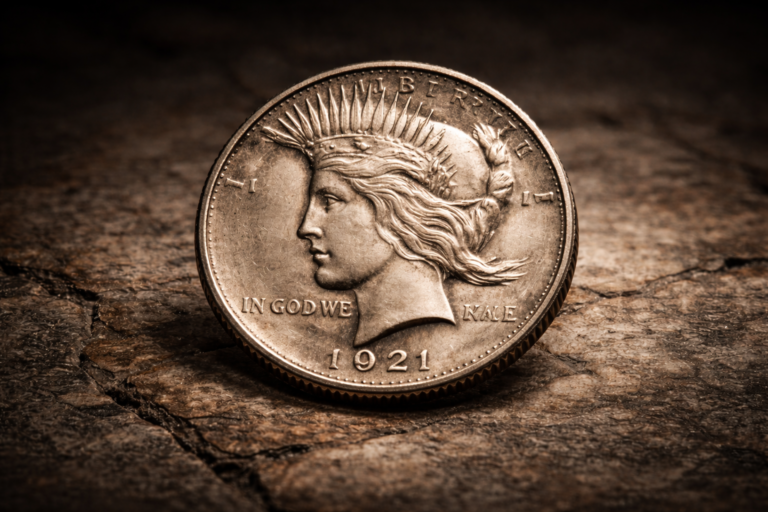
Among all the coins that carry emotional weight, the 1921 Peace Dollar stands near the front of the line. It was conceived in the aftermath of a devastating global conflict, when the desire for peace was not a slogan but a deep ache in the hearts of millions. Designers and officials wanted a new silver dollar that would embody that desire, not with empty words, but with a powerful image.
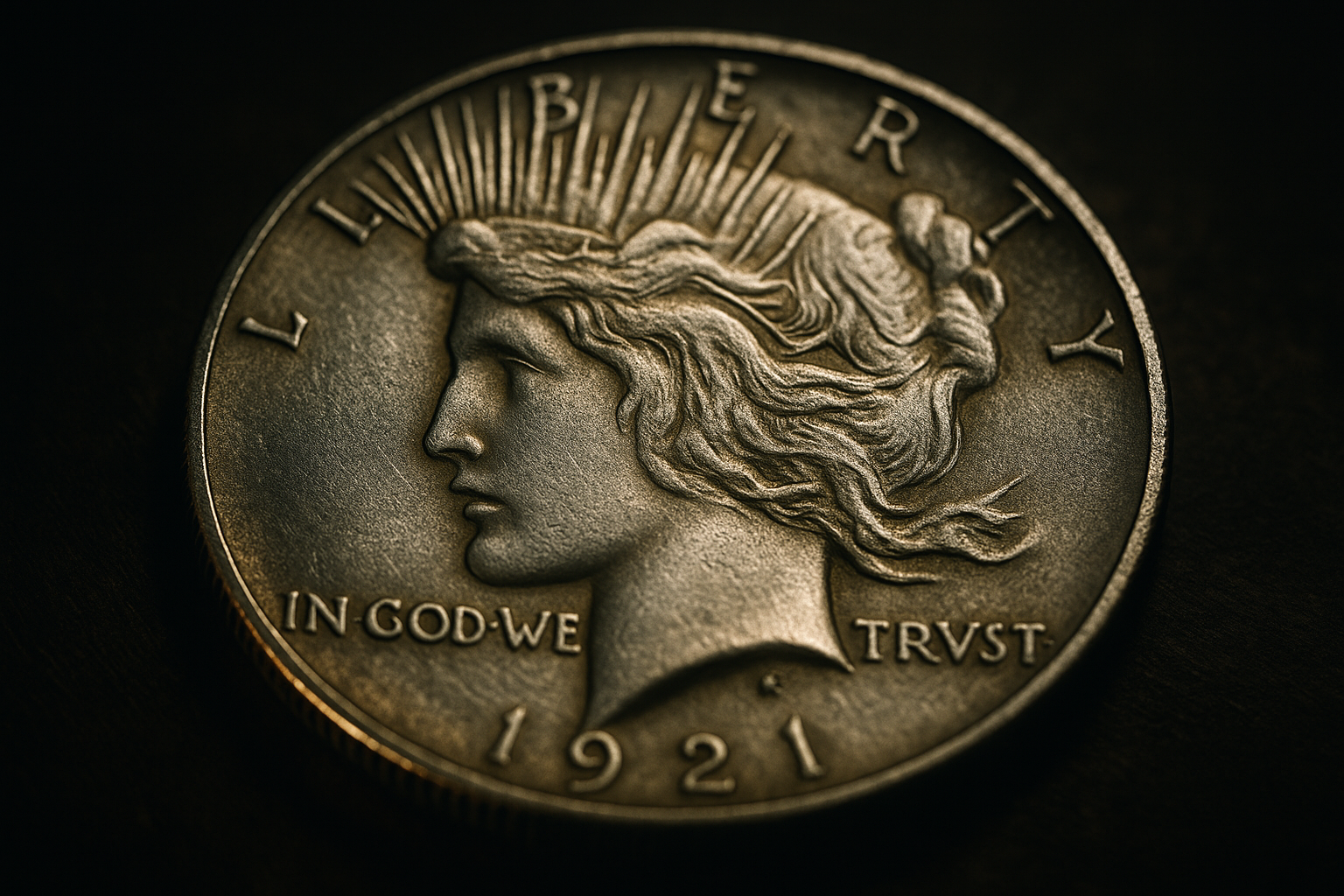
The obverse shows the head of Liberty with a radiant crown, facing right, her hair swept back as if in a wind that comes from a new era. The word “PEACE” appears on the reverse, under an eagle perched on a rock, its wings partially folded, looking toward a calm horizon. The message is unmistakable: a strong but peaceful nation looking ahead, not backward.
The 1921 issue was struck in high relief, meaning the design rose more strongly from the surface of the coin. This gave the piece a dramatic, sculptural quality, but it also challenged the mint’s machinery. The presses had to work harder, and small differences in pressure and alignment left their marks on the finished coins. What began as a technical decision became part of the piece’s personality.
Holding a 1921 Peace Dollar feels different from handling many other coins. The details invite fingers to trace the lines of Liberty’s profile, the rays behind her, and the eagle on the reverse. Light slides across the fields, catching the high points and leaving the valleys in shadow. The coin seems almost theatrical, as if the metal itself were performing the story of a nation trying to move from conflict to calm.
Over time, the relief of later Peace Dollars was lowered for practical reasons. But that first high-relief year remains a vivid symbol of ambition colliding with reality, and of a country trying to turn pain into hope.
6. The 1942/1 Mercury Dime – The Accident in the Dies
Some coin legends begin not with grand design meetings, but with small accidents. The 1942/1 Mercury Dime is a perfect example. Somewhere in the mint, a die originally prepared for 1941 was reworked for the following year. The old date was not completely removed before the new one was impressed, leaving faint but perceptible traces of both.
To the everyday user, a dime was a dime. The subtle overlapping numerals went unnoticed across counters and through pockets. But to people who study coins closely, the overdate told a story of human fallibility, time pressure, and the kind of small correction that usually passes without comment.
The obverse of the Mercury Dime, with its winged cap and serene profile, had already become one of the most artistic designs in American coinage. The reverse, with its fasces and olive branch, balanced strength and peace. The accidental layering of dates did not change that symbolism, but it did add a new layer of narrative. Now, the coin also spoke of the invisible workers behind the scenes, making decisions, correcting mistakes, and keeping production moving through complex times.
When collectors eventually identified and documented the 1942/1 dimes, the pieces shifted from everyday change to historical witnesses. They remind us that even in the most carefully controlled environments, human hands can leave unexpected signatures.
7. The 1955 Lincoln Cent – The Coin That Looked Back Twice
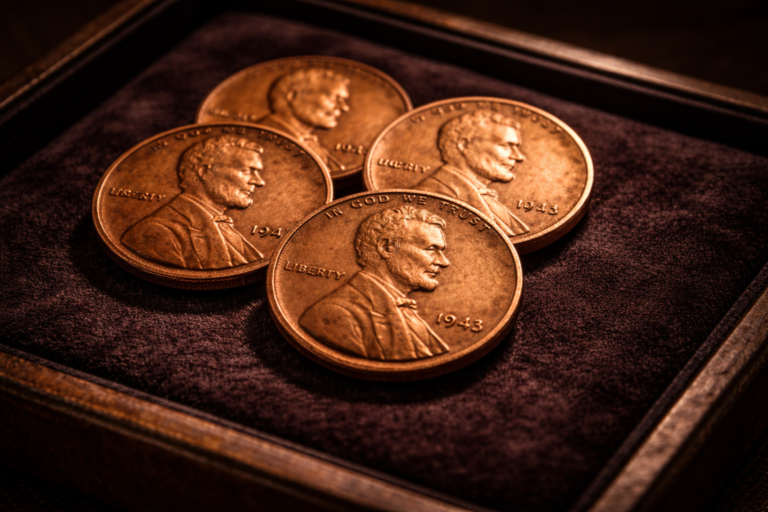
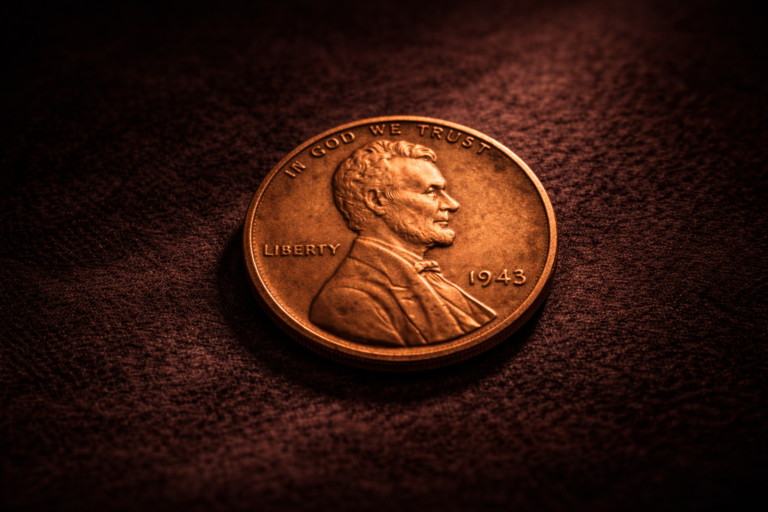
The 1955 Doubled Die Lincoln Cent is often described as a coin that appears to echo itself. On certain pieces, the inscriptions and parts of the design on the obverse show strong doubling, as if the image tried to print itself twice in slightly different positions.
Imagine someone late in a long shift at the mint, adjusting equipment, inspecting dies, and monitoring the rhythm of the presses. Somewhere in that routine, a die carrying a doubled impression entered service. For a brief time, cents rolled out with a look that, while not immediately visible to everyone, gave the design an almost ghostly second outline.
The portrait of Lincoln, the date, and the mottoes seem to vibrate when viewed under strong magnification. The effect is not symmetrical or decorative. It feels accidental, an unplanned echo. And yet, that is part of its pull. The doubling turned an ordinary cent into a piece that seems to question its own identity, as if asking, “Am I one coin, or two images sharing the same metal?”
Stories began to spread among people who paid closer attention than most. There were reports of strange cents turning up in change, of sharp-eyed individuals noticing something odd about the letters and numbers. Step by step, the 1955 Doubled Die Lincoln Cent stepped out from the crowd of its year-mates and joined the circle of American coin legends.
8. Summary Table – Legends at a Glance
While each of these coins carries its own deep story, it can be helpful to see them side by side. The table below offers a quick overview of the main pieces discussed in this article and the essence of what makes each one legendary.
| Coin | Year | Why It Became a Legend |
|---|---|---|
| Standing Liberty Quarter | 1916 | A bold design, a brief controversy, and a rapid redesign. |
| Indian Head Cent | 1877 | A quiet issue from a difficult year, later seen as a symbolic whisper of scarcity. |
| Buffalo Nickel | 1938-D | The final farewell of an iconic frontier design. |
| Peace Dollar (High Relief) | 1921 | A dramatic, high-relief silver dollar forged as a national wish for peace. |
| Mercury Dime Overdate | 1942/1 | An unintentional overdate that turned a routine dime into a historic accident. |
| Lincoln Cent Doubled Die | 1955 | Striking doubled details that made the design look like an echo of itself. |
9. Why Do Legends Form Around Real Coins?
What transforms a coin from a simple medium of exchange into a legend? It is rarely one factor alone. Sometimes, it is a bold artistic decision that clashes with contemporary taste. Sometimes, it is a year of reduced production that later turns into a symbol of struggle. Sometimes, it is a mistake in the dies, or the final appearance of a design that is about to vanish forever.
But beyond all of that, legends form because people talk. They share stories, compare notes, and retell their discoveries. A coin tucked away in a drawer is just an object. A coin discussed, studied, and dreamed about becomes a character in a larger story. The human desire to find meaning in details, to trace lines between events, and to connect past and present is what breathes life into these pieces.
Each of the coins in this article stands at a crossroads of events: cultural, economic, artistic, or purely mechanical. Their legends invite us to look closer, not only at metal and design, but also at the world in which they were created.
10. How Collectors Keep These Stories Alive
Collectors play a crucial role in preserving and expanding the stories behind forgotten coins. They catalogue varieties, research mint reports, and share photographs and observations across generations. Many of the details we now take for granted – overdates, doubled dies, subtle design changes – were first brought to light by patient, curious individuals looking more carefully than most.
In this way, every collection becomes more than a set of objects. It becomes a private archive of stories. A single tray of coins can represent years of reading, travelling to shows, meeting other enthusiasts, and searching through change or old family belongings. The legends of these coins live not only in books, but in the conversations that collectors share with each other and with anyone willing to listen.
Even someone who owns just one of these legendary coins becomes part of that tradition. They are a new chapter in the object’s journey, a fresh guardian of its story. As long as someone is willing to hold one of these coins in their hand and ask, “Where have you been?” the legend continues.
11. Closing Thoughts – Holding a Chapter of History
Forgotten American coins are not truly forgotten. They may not appear in everyday cash registers, but they remain very much alive in the minds and hands of those who care about them. From the controversial grace of the 1916 Standing Liberty Quarter to the echo-like impression of the 1955 Doubled Die Lincoln Cent, each piece offers a glimpse into a moment when art, industry, and history met.
When you hold one of these coins, you are not just touching metal stamped with a date. You are holding a small, durable fragment of a larger story – of design decisions, technical challenges, political climates, and human reactions. Real coins, real dates, real mint marks, surrounded by the legends people have woven around them.
In a world that moves increasingly toward digital transactions and invisible balances, physical coins like these remind us that money once had weight, sound, and texture. The legends of forgotten American coins invite us to slow down for a moment, to look more closely, and to remember that even the smallest objects can carry an entire era in the space of a palm.