How People Traded Before Coins Existed
Estimated reading time: 18 minutes.
Imagine walking into a busy market with no coins, no bills, and no prices written on anything. You still need bread. You still need tools. You still need to pay a debt. So how did people do it. The surprising answer is that trade worked anyway. It just looked more like a conversation than a checkout line.
Quick idea to hold onto
Money did not appear because humans lacked creativity. It appeared because humans traded so much that they needed shortcuts. Before coins, those shortcuts were trust, memory, and everyday objects that everyone recognized.
- Before money, there was agreement
- Why barter is real but not the whole story
- Gift exchange and the hidden power of credit
- When objects became a way to store value
- What people used as money before coins
- Weights, measures, and the birth of fairness
- Markets made money feel necessary
- Why metal won long before stamped coins
- The moment trade started asking for coins
- What this story changes about coin history
- FAQ
Before money, there was agreement
The first thing to understand is simple. Humans were trading long before they were minting. They traded because they had different skills, different land, and different needs. One person raised animals. Another made pottery. Another had access to salt. Another could shape stone into tools.
Trade started as a human habit. You give something. You receive something. The real engine was not a coin. It was agreement. A shared feeling that this exchange makes sense for both sides.
In a small community, agreement is easier than you think. People know each other. They remember favors. They notice who contributes and who takes. That social memory acts like an invisible ledger. It is not written, but everyone feels it.
Before money became a thing you carried, it was a thing you remembered. A promise. A reputation. A balance that the community kept in its head.
Why barter is real but not the whole story
People love the classic barter picture. One person holds a fish. Another person holds a basket. They trade and walk away smiling. That did happen. But if you rely only on that kind of swap, you hit problems fast.
The biggest problem is timing. What if I have grain today but I need a tool next week. What if you have the tool but you do not want grain. That is the famous mismatch problem. Barter works best when needs line up perfectly, or when trade is occasional.
As societies grew, trade stopped being occasional. It became daily life. And daily life needs systems that keep working even when the perfect trade partner is not standing in front of you.
So the real story is not that barter failed. It is that barter was only one tool. Humans added other tools that made exchange smoother. And those tools are the ancestors of money.
Gift exchange and the hidden power of credit
If you want the most realistic picture of early exchange, think less like a store and more like a neighborhood. In many early communities, people did not count every item like a cashier. They shared, helped, and expected the relationship to continue.
This is gift exchange. It sounds soft, but it is not weak. It is structured. A gift creates a bond. It creates an expectation that life stays balanced over time.
Now stretch that idea a bit and you get something even closer to money. Credit. Credit is simply a delayed exchange. I give you something now. You owe me something later. No coin needed. What you need is trust, memory, and social pressure.
Credit works incredibly well in small and medium communities. It also works in early cities when there are institutions that record obligations. Temples, palaces, merchant houses, and local authorities often played that role. They tracked who owed what, especially for larger trades.
Reality Check
When people say, “Trade before coins was just barter,” it hides a bigger truth. A lot of early exchange was credit. Some of it was written. Much of it was spoken. Either way, the debt itself acted like money, because it could move through relationships.
When objects became a way to store value
Once exchange gets frequent, people start asking a practical question. How do I carry value from one moment to the next. Grain spoils. Animals die. Tools break. Cloth tears. The best trade system needs something that holds value long enough to be useful.
This is where certain objects start changing roles. They stop being only useful items. They become value containers. People keep them not just to use, but to trade later.
That shift is huge. It is the moment an object starts acting like money, even if no one calls it money yet.
What people used as money before coins
The list is wider than most people expect. Different places used different things, because environments and cultures were different. But patterns repeat. The objects that “work” share a few traits. They are recognizable. They are hard to fake. They are widely wanted. They are easy enough to store. And they can be divided or counted in some way.
Common money like objects before coins
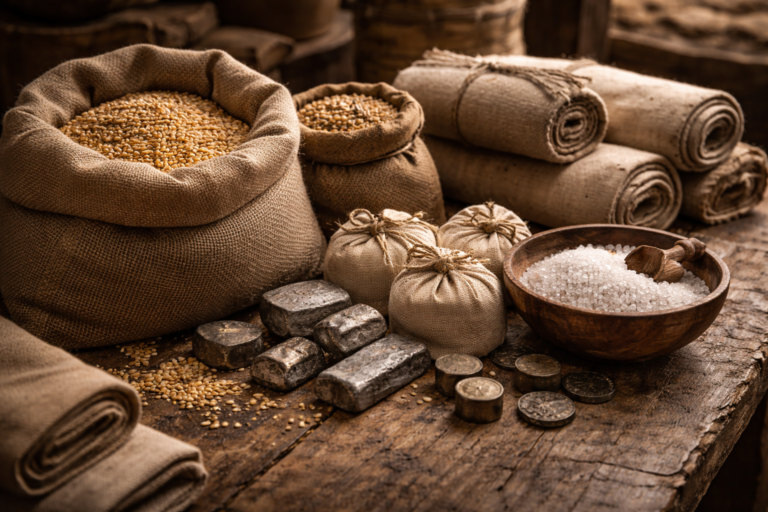
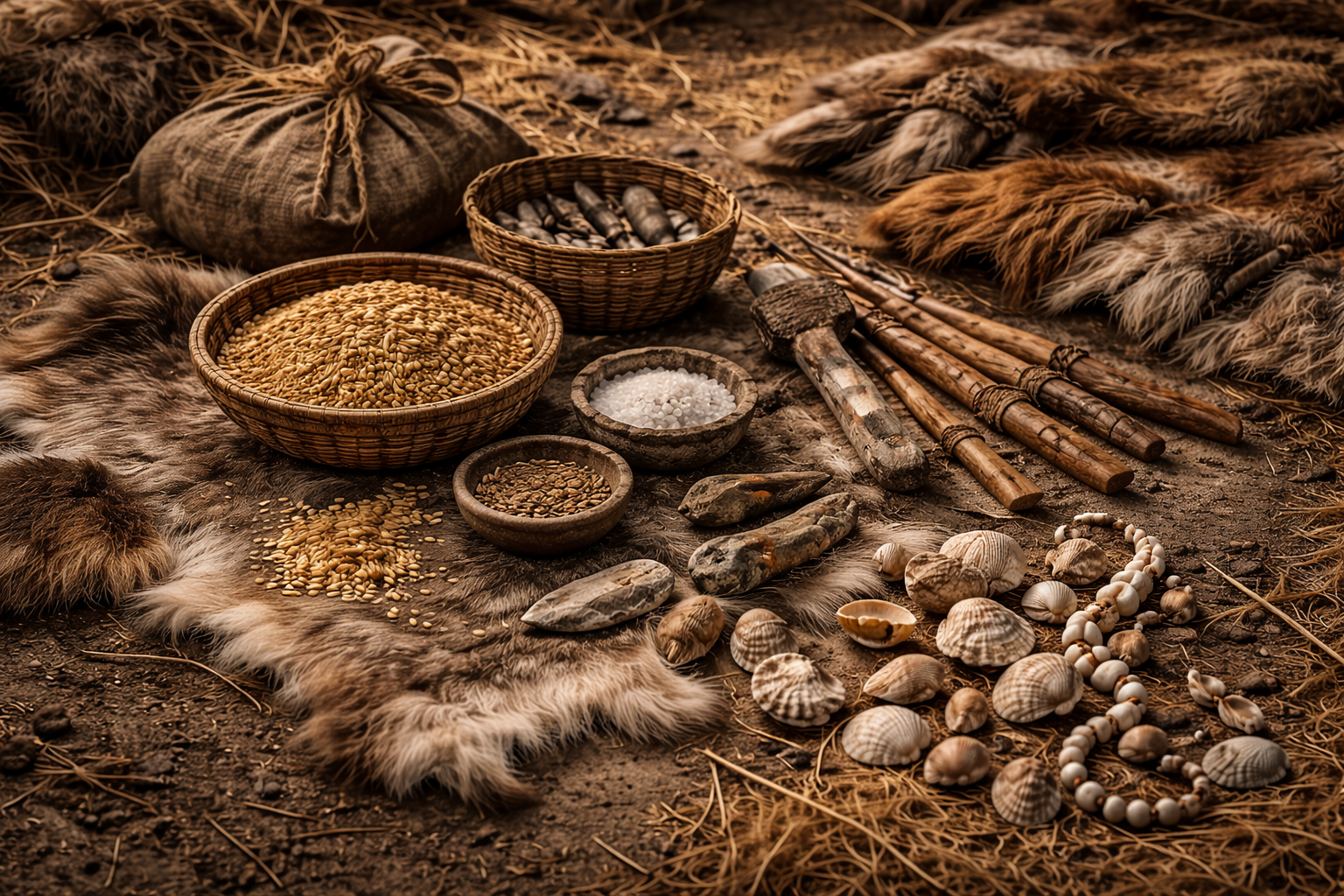
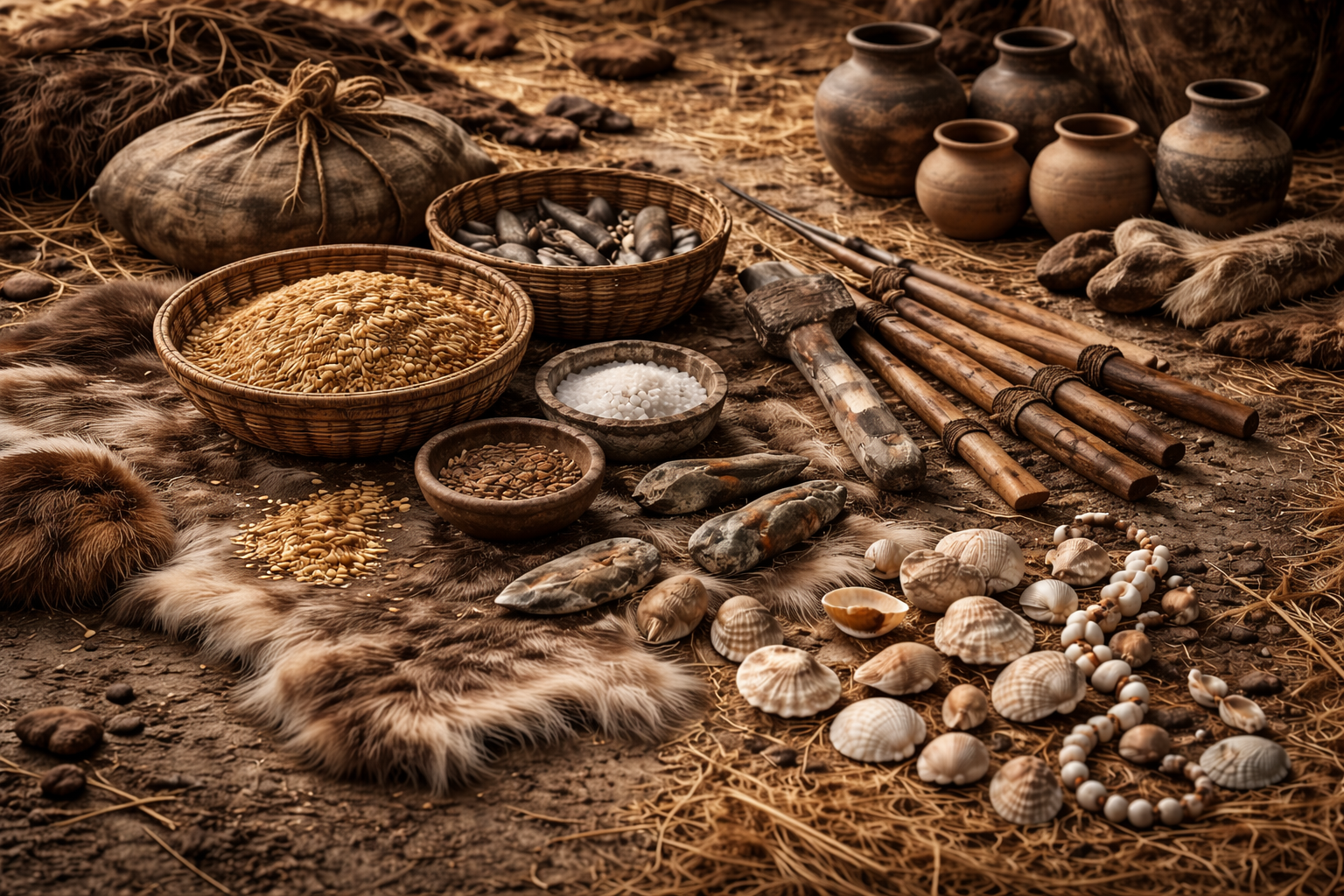
Salt in some regions. Grain in systems tied to farming and state storage. Cattle in places where livestock meant survival. Shells and beads where they were valued and easy to count. Metal pieces and rings where metallurgy existed. Cloth and textiles in trading cultures. Even tools in places where a useful object was as good as a promise.
Notice the theme. These are not random. They are things that matter to daily life. When an object already has meaning, it can also become a shortcut for exchange.

Here is a small detail that explains why these objects worked. They were not just valuable. They were socially legible. Everyone could look at them and understand what they represent. That shared understanding is what made exchange fast.
Weights, measures, and the birth of fairness
As soon as people trade beyond family circles, fairness becomes a daily problem. Not fairness as an ideal. Fairness as a practical need. If deals feel unfair, trade slows down. If trade slows down, cities suffer.
So communities invented measurement habits. Not always perfect. But good enough to reduce arguments. You see standardized containers. You see common units of weight. You see trusted places where goods are measured.
Metal enters the story here in a quiet way. Long before coins, metal could be weighed. A piece of metal does not need a picture on it to be traded. It needs trust in the measure. That is why weight based systems are such an important bridge between barter and coinage.
Markets made money feel necessary
The bigger the market, the more you trade with strangers. The more you trade with strangers, the less your deal can depend on personal history. A stranger does not know your reputation. They do not know your family. They do not know if your promise will be honored.
That is when people start craving objects that can speak for them. An object that says, “This is accepted.” An object that requires less conversation. Less trust. Less time.
In other words, markets create pressure for money. Not because humans suddenly became smarter. Because trade became faster. And speed always demands simplification.
Money is often described as invention. It is also a social shortcut. It saves time in a world where trust is expensive.
Why metal won long before stamped coins
Metals have a strange advantage. They can be stored without rotting. They can be divided. They can be melted and reshaped. They feel durable. And once a society respects metalwork, metal starts carrying status too.
But the key point is not beauty. It is reliability. A weighed piece of metal can travel across regions and still be recognized as useful. A bag of grain cannot do that easily. A cow cannot do that easily.
This is why, in many places, metal as weight becomes the most practical pre coin money. It is not yet coinage. It is closer to a measurable commodity. But it builds the habits that coinage later uses. Weight. Standard. Acceptability.
The moment trade started asking for coins
Coins do not appear just because a ruler wants a new symbol. They appear when several needs line up at once. A busy market. Long distance trade. A state that needs reliable payments. Taxes. Soldiers. Public projects. Administration.
Once a government needs to pay large groups consistently, weighed metal becomes annoying. It slows everything down. It invites cheating. It requires constant checking.
Stamping metal is a brilliant solution to that. It does not eliminate cheating forever, but it reduces friction. It turns a piece of metal into a message. It says, “This is meant to be accepted.”
That is the turning point. The first coins did not replace all older systems overnight. People still used credit. People still used barter. People still used goods. But coins added a new layer that was portable, fast, and easy to recognize.
What this story changes about coin history
If you only look at coins, it can feel like history starts at minting. But coin design has roots in older habits. People already cared about trust. People already cared about recognizability. People already cared about fairness.
That means early coin designs were not created in a vacuum. They had to fit a human world that already had rules. People wanted something familiar. Something simple. Something that reduced arguments. That demand shaped coinage from the beginning.
It also explains something emotional that collectors often sense. Some coins feel like a community. Some feel like a system. That difference starts before coins exist, because money is first a relationship. Then it becomes an object.
Final Verdict
Before coins, people traded through a mix of barter, credit, social memory, and practical objects that everyone valued. Money did not arrive as a magic invention. It arrived as a shortcut for trust. Coins became popular when markets grew, strangers traded daily, and states needed fast reliable payments. If you want to understand coin design later, start here, with the older world it had to serve.
FAQ
Was barter the main system before coins.
Barter existed, but it was not the only system. In many places, credit and ongoing relationships did more work than direct swaps, especially inside communities.
What was the most common thing used as money before coins.
There was no single answer worldwide. Different regions leaned on what they valued and could store, like grain, salt, cattle, shells, beads, cloth, or weighed metal.
How did people price things without coins.
Prices were often flexible. People used customary expectations, measured quantities, and negotiated value. In more organized systems, weights and standardized containers helped make deals feel fair.
Did early states record debts before coins.
Yes in many historical settings. Institutions like temples, palaces, and merchant networks could track obligations, especially for large exchanges and taxation style systems.
Why did metal become so important before coins existed.
Metal stores well, travels well, and can be measured by weight. Those traits made it a strong bridge between older commodity exchange and later minted coinage.