How Roman Coins Shaped Daily Life
Estimated reading time: 20–23 minutes
Roman coins were not luxury objects or historical curiosities in their own time. They were ordinary tools that quietly shaped how people lived, worked, and interacted with the world around them. For millions of people across the Roman Empire, coins were part of daily survival. They decided what could be bought, when work was paid, and how households managed their basic needs.
When we study Roman history today, it is easy to focus on emperors, battles, and monuments. But daily life was shaped far more by small, repetitive actions. Paying for bread. Receiving wages. Saving a few coins for the next day. Roman coins influenced all of this. They shaped routines, expectations, and social relationships in ways that were deeply human and surprisingly familiar.
This article explores how Roman coins shaped daily life not from the perspective of elites or collectors, but from the viewpoint of ordinary people. Farmers, laborers, soldiers, merchants, and families all experienced Roman money in practical ways that defined their everyday reality.
Quick Takeaways
- Roman coins structured daily routines and work schedules
- Markets relied on coins for predictable trade
- Wages tied labor directly to money
- Coins shaped trust and social interaction
- Everyday life across the empire was connected by shared currency
Table of Contents
- Coins and Daily Routines
- Fact Card | Money and Everyday Life
- Work, Wages, and Payment
- Markets and Small Transactions
- Households, Saving, and Planning
- Comparison Card | Life With Coins vs Without Coins
- Social Meaning of Money
- Coins on the Move
- Timeline Insight | Daily Life Over Time
- Quote Highlight
- People Also Ask
- Final Reflection
Coins and Daily Routines
For ordinary Romans, money shaped the rhythm of the day. Coins influenced when people worked, when they rested, and when they traded. A laborer might begin work knowing that payment would come at the end of the day or week in coins that could be immediately used. A farmer planned market visits based on what could be sold and what coins would be earned in return.
Unlike barter systems, which required negotiation and personal relationships for each exchange, coins created consistency. A loaf of bread, a jug of wine, or a piece of cloth had a generally understood cost. This predictability allowed people to plan their routines. It reduced uncertainty and helped daily life run more smoothly.
Coins also helped structure time. Markets operated on regular schedules because money made trade efficient. Workers could measure their effort against pay. Even small decisions such as when to visit a market or when to save coins for later were shaped by the presence of currency.
Fact Card | Money and Everyday Life
Fact Card | Money and Everyday Life
Roman coins were used constantly by ordinary people. Their presence allowed daily routines to become predictable, repeatable, and shared across communities.
Work, Wages, and Payment
Work in the Roman world was closely tied to coinage. Soldiers were paid in coins. Laborers received wages in small denominations. Craftsmen relied on money earned from services to support their households. Payment in coins created a direct link between labor and survival.
Receiving wages in coin form allowed workers to immediately participate in the economy. Coins could be spent, saved, or exchanged without delay. This reinforced trust in the system. People worked with the expectation that their labor would translate into usable money.
Over time, this connection shaped attitudes toward work itself. Regular pay created a sense of stability. Even modest wages provided a framework for planning daily needs. In this way, Roman coins did more than enable trade. They helped define what work meant in practical terms.
Markets and Small Transactions
Markets were the heart of Roman daily life. They were places where food, tools, pottery, and household goods changed hands. Coins made these exchanges possible on a large scale. Small denominations were especially important because they allowed ordinary people to participate fully in market activity.
Without coins, markets would have relied on barter or credit, limiting who could trade and how often. With coins, transactions became faster and more reliable. Sellers trusted that coins would be accepted by others. Buyers trusted that prices were fair and consistent.
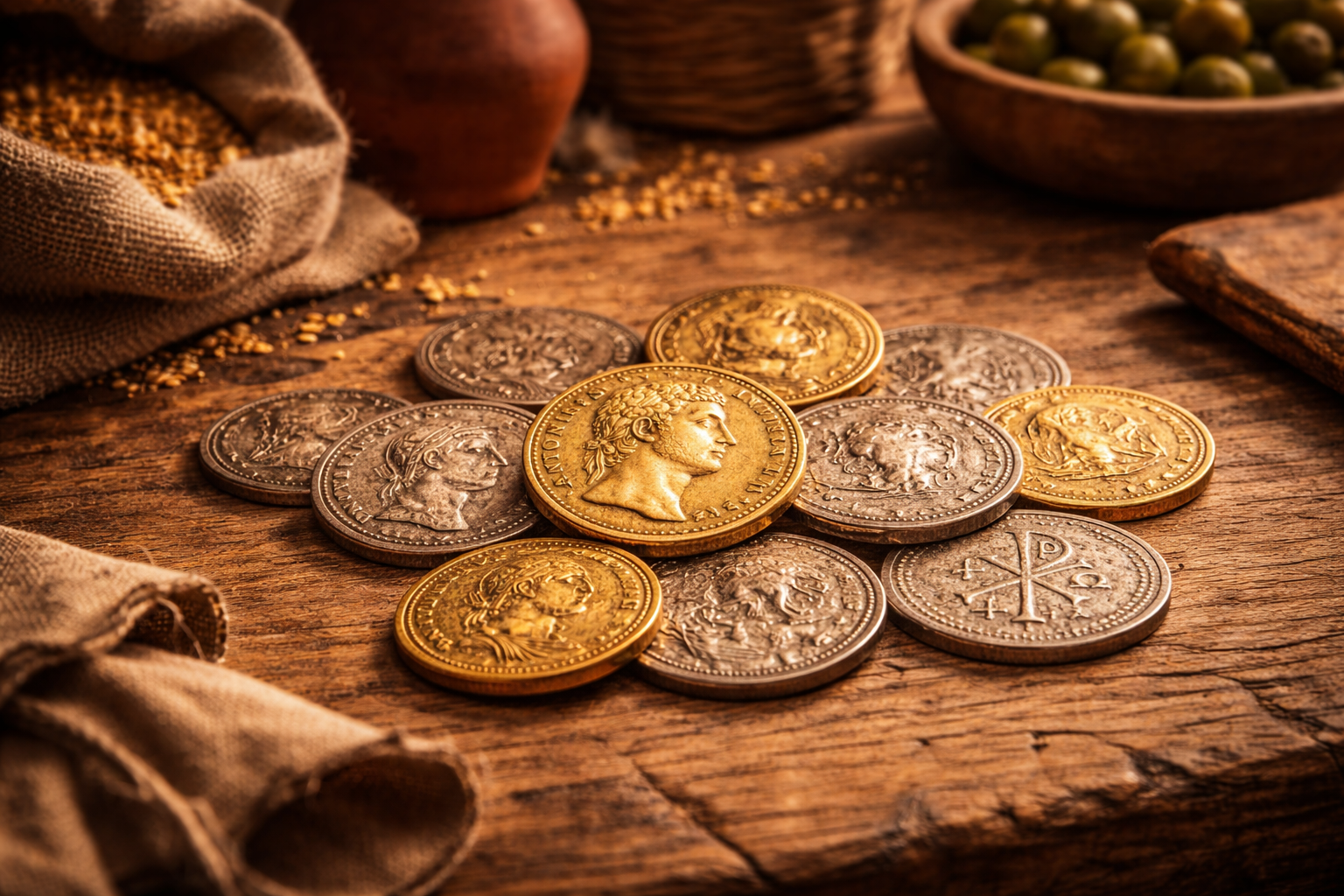
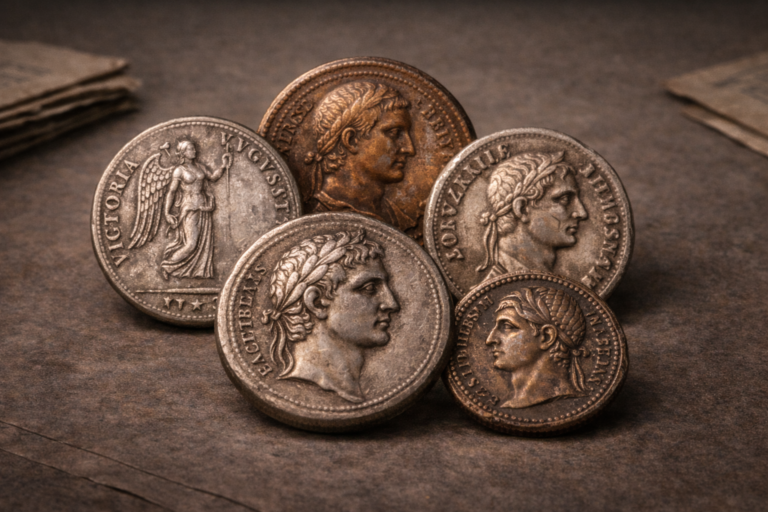
Caption: Roman coins enabled smooth exchange in everyday markets across the empire.
Image credit: HistoraCoin
Markets also became social spaces. People met, talked, and exchanged information while trading goods. Coins facilitated these interactions by removing barriers to exchange. Money allowed strangers to trade without prior relationships, expanding social networks.
Households, Saving, and Planning
Inside Roman households, coins played a crucial role in planning and security. Families used coins to budget for food, rent, and tools. Saving even a small number of coins could provide reassurance against uncertainty.
Coins were often stored carefully, hidden in containers or kept close at hand. This practice shows how deeply money was tied to personal security. For ordinary people, having coins meant having options. It meant the ability to respond to unexpected needs.
Household decisions were shaped by money availability. When to repair tools, when to buy food, and when to postpone purchases all depended on coins. In this sense, Roman money shaped not just public life but private decisions as well.
Comparison Card | Life With Coins vs Without Coins
Life With Coins
- Predictable prices
- Standard wages
- Efficient markets
- Greater social interaction
Life Without Coins
- Barter and negotiation
- Uncertain value
- Limited trade
- Restricted social reach
Social Meaning of Money
Coins carried social meaning far beyond their practical use. Having enough money meant stability and participation in society. Lacking money often meant vulnerability. Coins could represent independence, responsibility, or hardship.
Money also shaped relationships. Paying debts strengthened trust. Sharing coins during festivals or charitable acts reinforced community bonds. Coins were woven into social customs and expectations.
Coins on the Move
Roman coins traveled with people. Soldiers carried them to distant provinces. Merchants transported them along trade routes. Travelers used them in unfamiliar towns. This movement connected daily life across vast distances.
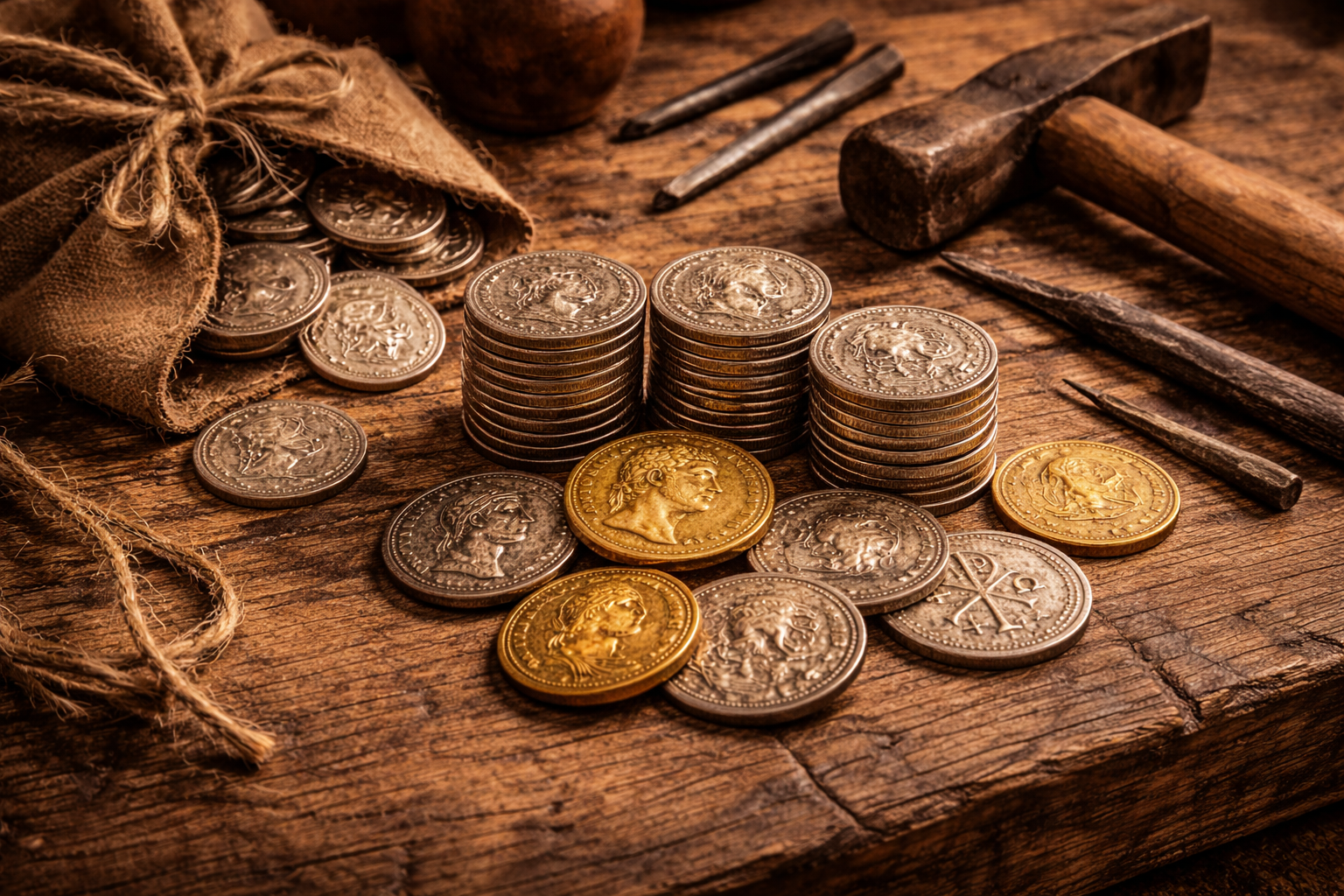
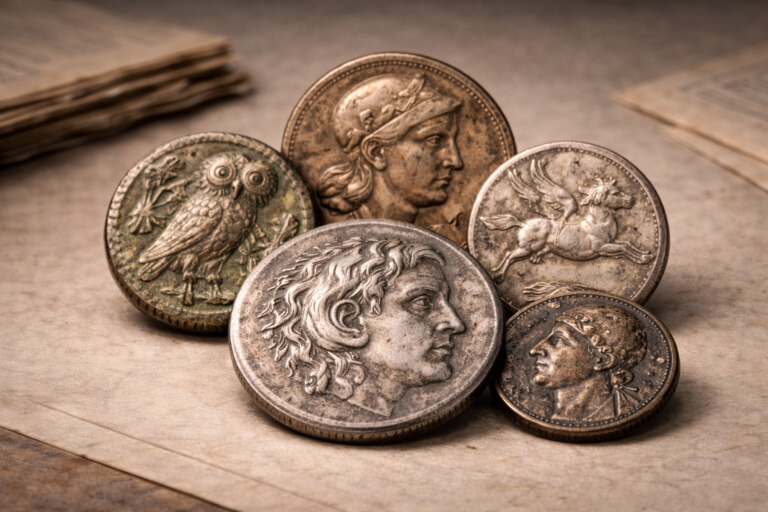
Caption: Roman coins connected daily life across regions and communities.
Image credit: HistoraCoin
Even ordinary people in remote areas used the same currency as those in major cities. This shared monetary experience helped create a sense of belonging to a larger world.
Timeline Insight | Daily Life Over Time
- Early Empire: Coins standardize daily trade
- Middle Empire: Markets expand and diversify
- Late Empire: Coins remain essential despite change
Quote Highlight
Roman coins shaped daily life not through power, but through repetition and necessity.
People Also Ask
Did Roman coins affect everyday life?
Yes. Coins shaped work, markets, household planning, and social interaction.
Were Roman coins used by everyone?
Yes. Coins circulated widely among ordinary people across the empire.
Did coins replace barter completely?
Coins reduced reliance on barter by providing consistent value.
Final Reflection
Roman coins were ordinary objects that quietly shaped extraordinary systems of daily life. They influenced how people worked, traded, saved, and interacted with one another.
By understanding how coins shaped daily life, we gain insight into the lived experience of the Roman world. These small pieces of metal were not symbols of wealth for most people. They were tools of routine, stability, and survival.