Roman Coins as Tools of Power and Propaganda
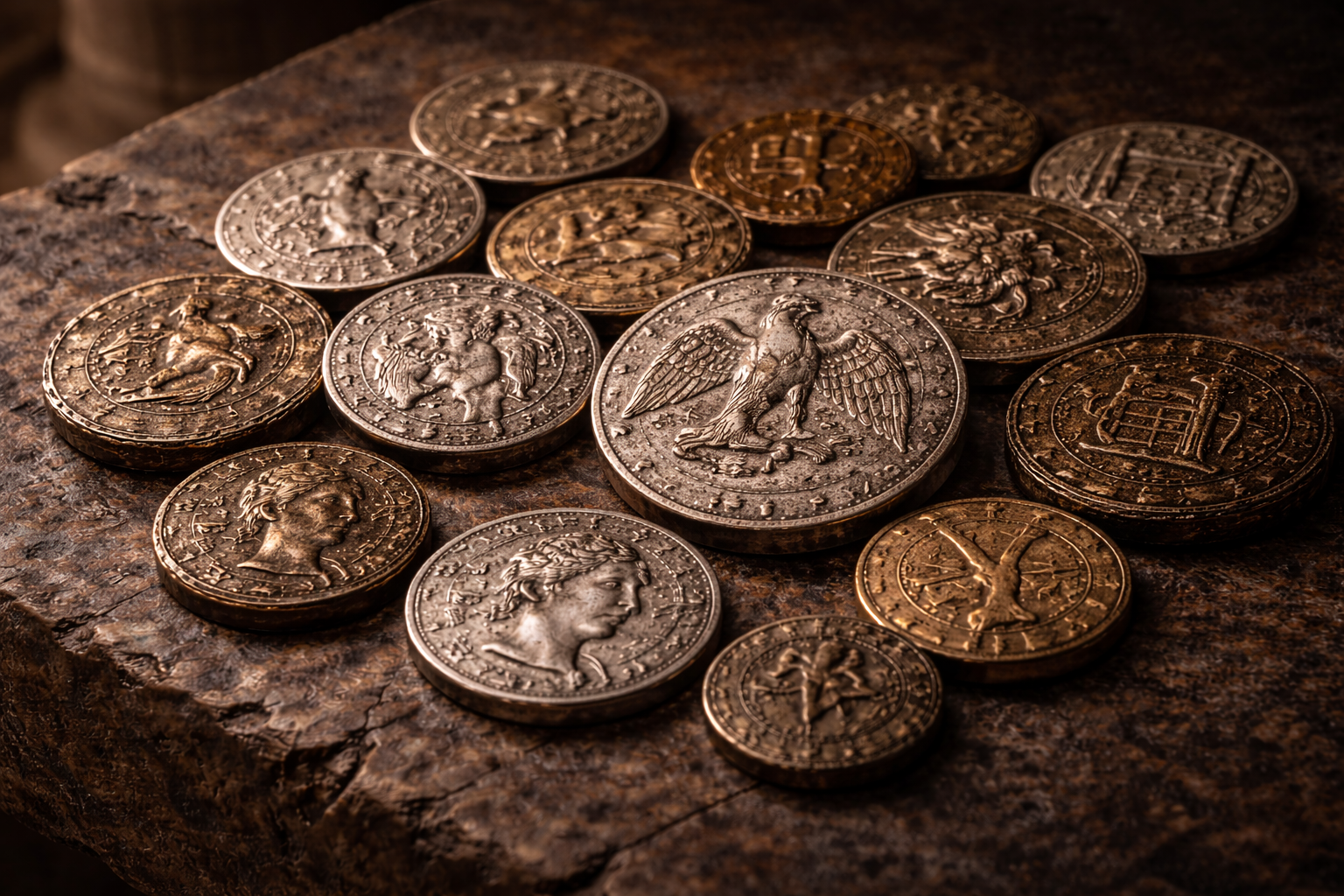
A Roman coin was never just a payment. It was a tiny public announcement that traveled faster than rumors and lasted longer than speeches. You could lose a battle and still win the story if your face, your symbols, and your promises kept landing in the hands of ordinary people.
That is why Roman money feels so alive today. When you hold a piece, you are holding a message that once moved through taverns, markets, army camps, temples, and tax offices. It was propaganda in the most practical form possible, because nobody could ignore money.
Table of contents.
Why coins were perfect propaganda.
Imagine you are a citizen in a huge empire where most news arrives late. You might never see the emperor in person. You might never visit the capital. You might not read long texts. But you will touch coins every day. And if the same face and the same message keeps appearing in your palm, your brain starts accepting it as normal.
Roman leaders understood a simple truth. A message repeated in daily life becomes background reality. Coins repeat themselves by design. A single coin type could be struck in massive quantities. It could move across provinces with trade. It could reach soldiers through pay. It could reach families through markets. It could reach temple donations. It could reach tax collectors and state contractors. Every transaction became a small delivery system.
There is also another advantage. Coins look official. They carry a sense of authority because they are tied to weight and value. If a coin is accepted by the market, then the symbols on it borrow that credibility. In other words, trust in money becomes trust in the message printed on money.
Who controlled the message.
Roman coin designs did not appear by accident. They were choices made inside power structures. In the Republic, moneyers and political families could use imagery to highlight ancestry, achievements, or values. In the Imperial era, the center of gravity shifted toward the ruler and his circle. The mint became a tool of state communication, even when local needs influenced the details.
That does not mean every coin was a direct order from the top every day. Reality is more interesting. Mints had traditions. Officials had expectations. Artists reused familiar visual language. But the overall direction was clear. The coin should support stability. It should tell people who is in charge. It should define what the regime wanted to be remembered for. It should also reduce doubt during uncertain transitions.
| Era. | What the designs often emphasized. | What the message tried to achieve. |
|---|---|---|
| Early Republic. | Shared symbols, gods, civic identity. | Unity and the idea of Rome as a community. |
| Late Republic. | Family achievements, claims of legitimacy, rising personal branding. | Competition, reputation, and political positioning. |
| Early Empire. | Portraits, peace claims, military strength, divine favor. | Stability after conflict and clear authority. |
| High Empire. | Victories, prosperity, public works, security. | Confidence, loyalty, and pride in imperial success. |
| Crisis periods. | Urgent claims, strong titles, defensive messaging. | Reduce fear, confirm leadership, promise order. |
Symbols that everyone understood.
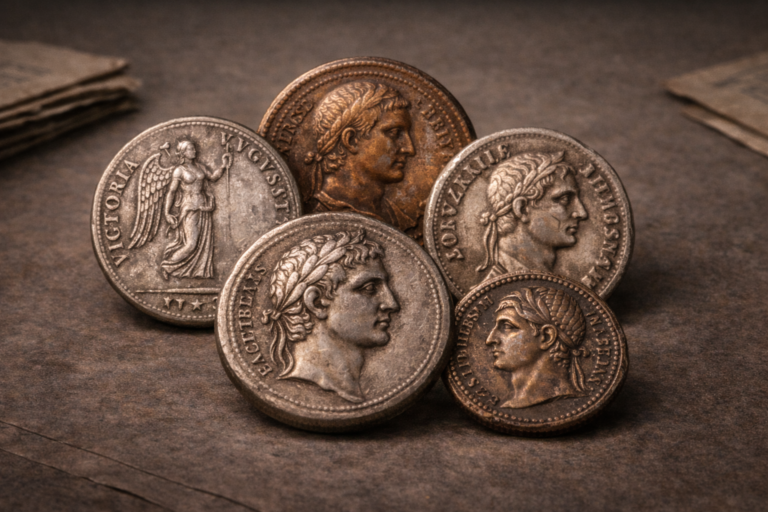
Roman coin imagery worked because it spoke in symbols people already recognized. A symbol is faster than a paragraph. It is also easier to spread across languages, especially in a multi cultural empire. A figure of Victory does not need translation. A laurel wreath communicates success instantly. A cornucopia suggests abundance. A ship can hint at trade or supply. A temple façade can imply piety and stability.
These symbols were not random decorations. They were a visual vocabulary. A ruler could combine them to build a message like a sentence. If you see a portrait paired with Victory, the coin is saying. This leader wins. If you see the portrait paired with Peace, it is saying. This leader brings calm. If you see a ruler associated with a god or divine attribute, it hints. This rule is favored, destined, protected.
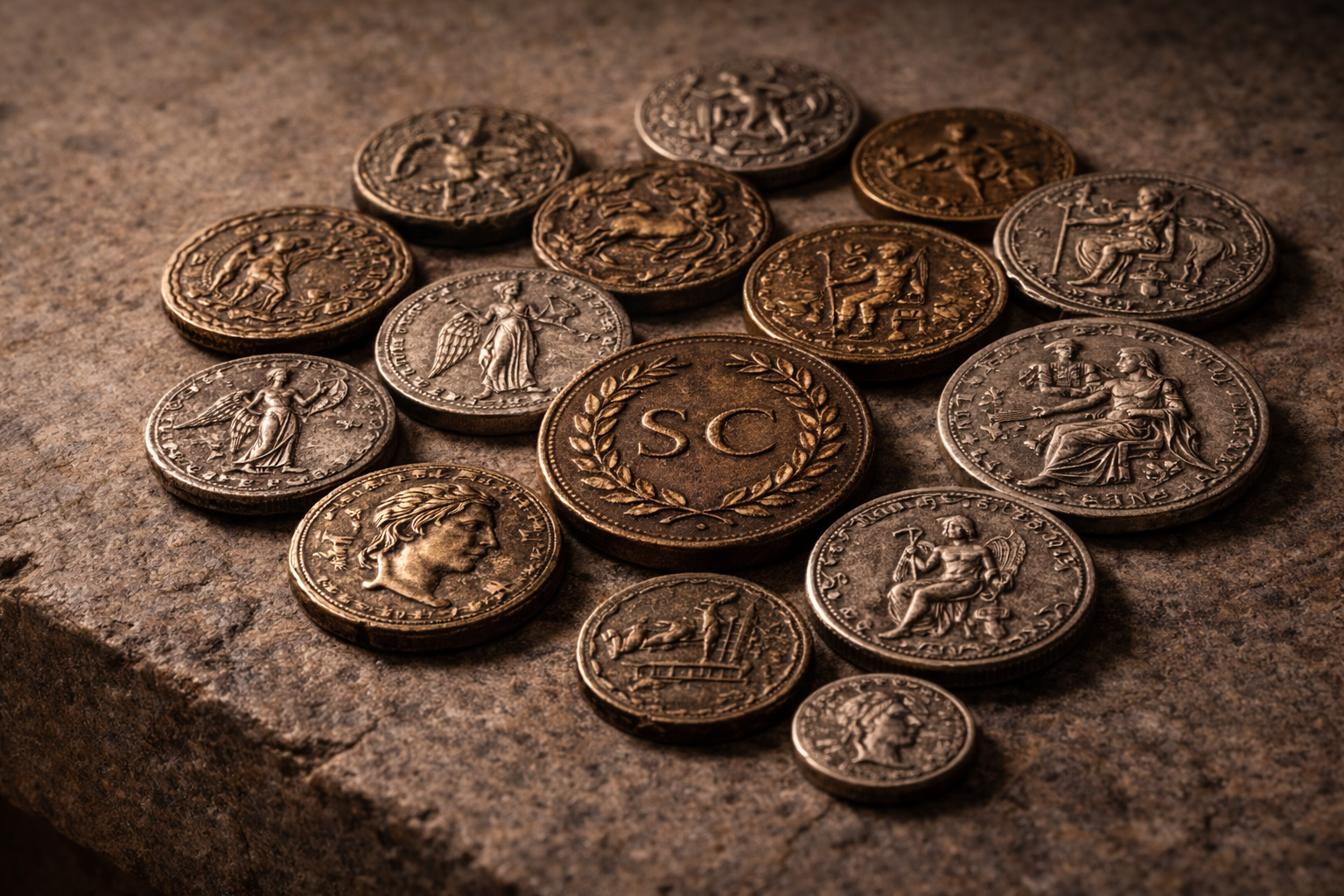
The genius is that the message could be both simple and flexible. Different provinces might interpret symbols through their own cultural lens, yet still land on the same emotional conclusion. Strength. Safety. Prosperity. Legitimacy. That is propaganda at its most effective level. It does not demand complex agreement. It only nudges people toward the feeling the state wants them to feel.
Portraits and personal branding.
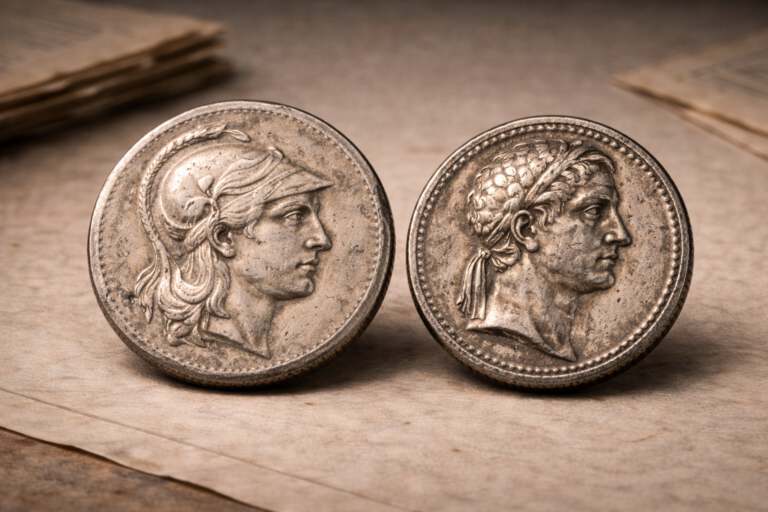
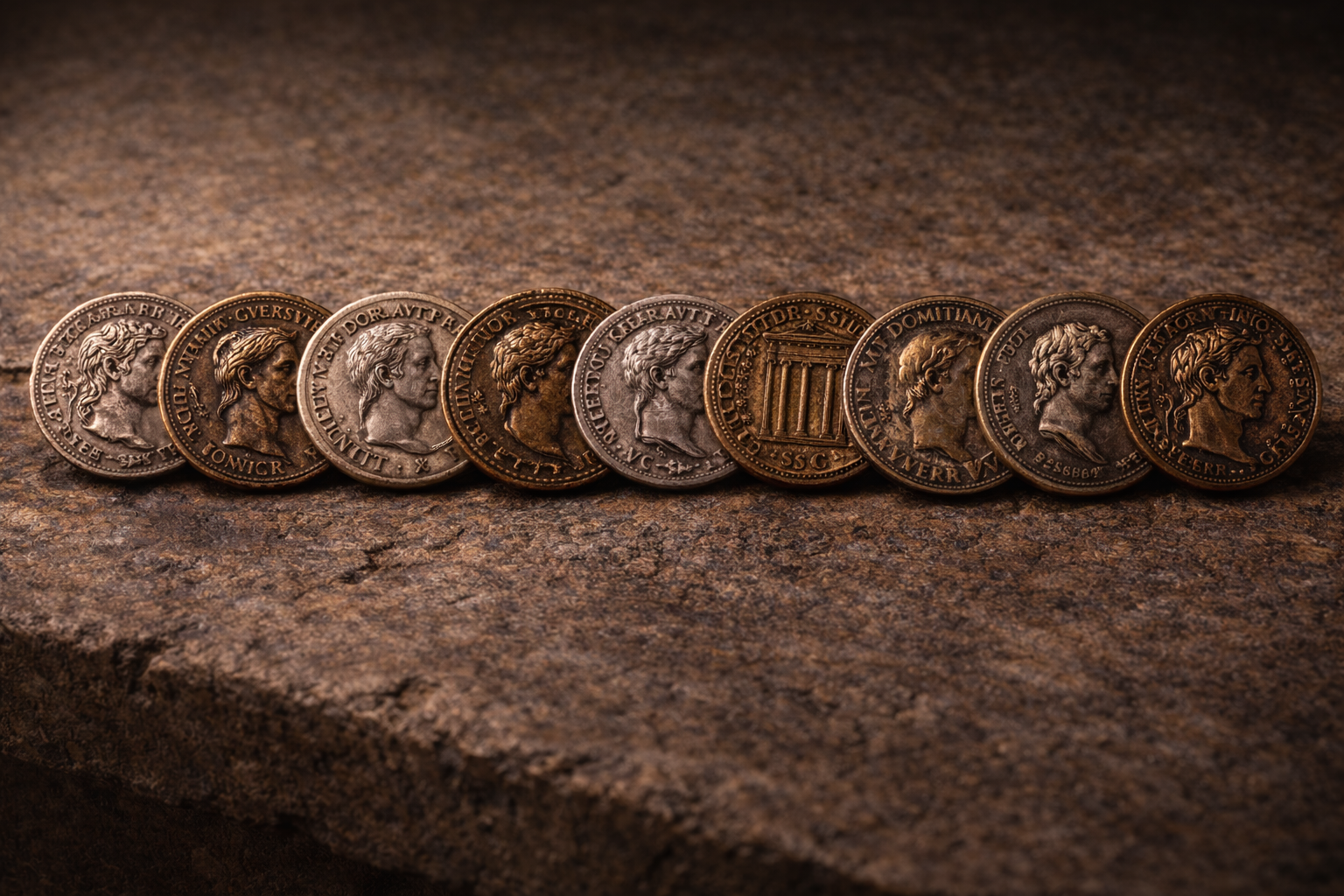
When rulers appear on coins, the message becomes personal. The state is no longer an abstract institution. It has a face. A coin portrait does something subtle. It turns a political system into a human story, because humans relate to humans more easily than they relate to bureaucracy.
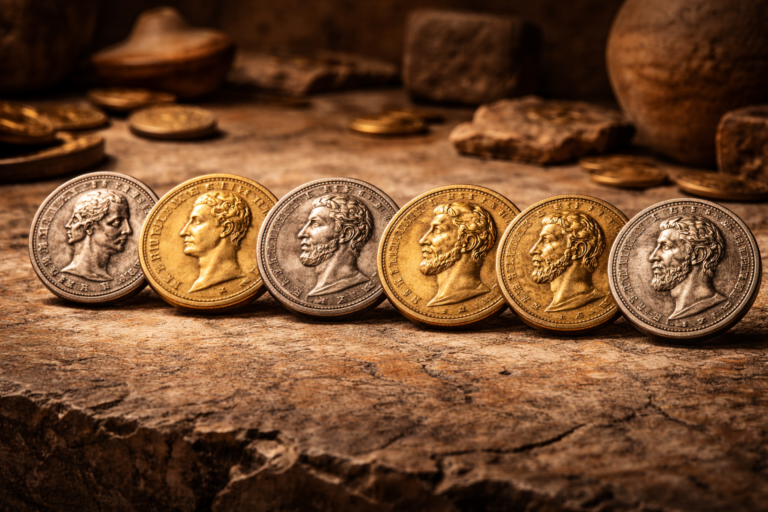
Portraits also create familiarity. Even if you never meet the emperor, you start recognizing him. That recognition can become loyalty, or at least acceptance. A stable portrait style across many coins suggests continuity. A new portrait style after a succession sends a clear signal. There is a new center of power now.
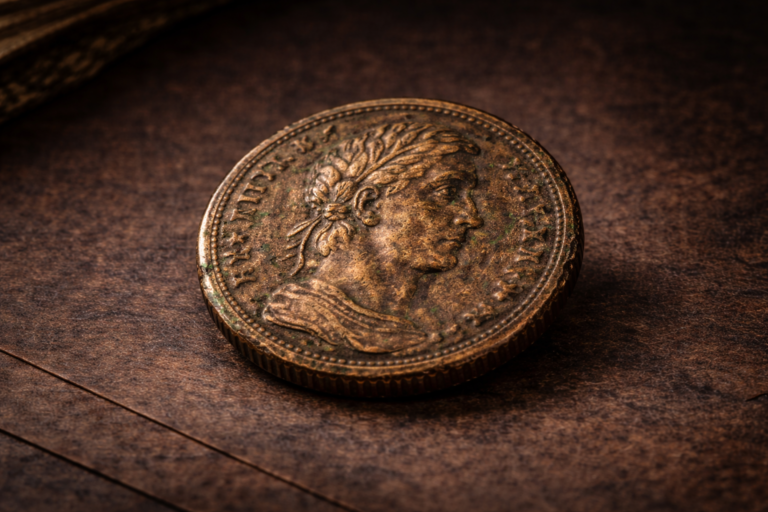
In practice, portraits could be idealized. They could show youth, seriousness, or divine calm. They could emphasize maturity and responsibility. They could present a leader as a soldier, a priest, a father, or a restorer of order. The portrait was a brand. The reverse image was the slogan. The legends were the titles. Put together, the coin becomes a political poster that fits in your pocket.
Victory claims and military trust.
Armies were expensive, and loyalty was fragile. If soldiers doubt the leadership, everything becomes dangerous. Coinage helped solve that problem because it sat at the center of military pay. If a ruler wanted to speak to the army, the coin was one of the most direct ways to do it.
Victory imagery is not only about celebration. It is about reassurance. In uncertain times, a coin that announces victory tells people that the world is under control. Even if real life feels unstable, the official message is calm and confident. That confidence can prevent panic. It can also encourage merchants to keep trading instead of hiding goods. It can encourage tax collection. It can encourage local elites to align with the winner.
Sometimes the victory message was tied to a specific campaign. Sometimes it was broader. The exact details could shift, but the emotional point stayed the same. Rome wins. The leader protects. The future is secure.
| Message theme. | Typical imagery. | What it tried to do in real life. |
|---|---|---|
| Military success. | Victory figure, trophies, captured arms. | Prove competence and strengthen loyalty. |
| Security. | Shield motifs, strong stances, protective symbols. | Reduce fear and keep commerce active. |
| Restoration. | Rebuilding themes, stability language, calm deities. | Suggest an end to chaos after conflict. |
| Unity. | Joined hands, civic symbols, harmonious figures. | Encourage provinces and elites to cooperate. |
One more layer makes it even more powerful. Soldiers carried coins home. They spent them. They gave them as gifts. They paid debts. So military propaganda did not stay inside the army. It leaked into civilian life automatically. The story of victory became a story shared by the marketplace.
Religion, legitimacy, and divine favor.
In the ancient world, legitimacy was not only legal. It was spiritual, traditional, and symbolic. A ruler who could tie himself to divine favor gained an advantage that went beyond politics. Coins made that connection visible.
Sometimes the message was direct. A god appears near the ruler. A sacred symbol is displayed. A temple is celebrated. Sometimes it is indirect. The ruler adopts an attribute associated with a deity. The ruler is shown in a posture linked to sacred authority. The point is not subtle. The rule is meant to feel rightful, protected, and destined.
This also served a practical function. If you are asking a diverse empire to accept your authority, you need more than force. You need a story. Religion provided stories people already believed. When the coin connects the leader to those stories, it creates a sense of inevitability. People may not love the ruler, but they start to feel that resistance is pointless.
Everyday life as the real audience.
It is easy to assume propaganda is aimed at scholars, senators, and generals. But coins were aimed at everyone. The daily buyer. The baker. The porter. The sailor. The farmer at a market stall. The innkeeper who needed change. The official who collected taxes.
That broad audience shaped the design. Coins needed to be readable. Not in the modern sense of reading paragraphs, but in the sense of visual clarity. The image had to be recognizable. The symbols had to feel familiar. The overall design had to look authoritative.
This is why Roman coin propaganda is so valuable to study today. It shows you what leaders believed ordinary people would respond to. It shows what emotions they tried to pull from the crowd. Safety. Pride. Gratitude. Awe. Trust. Sometimes fear. If you can spot the emotional target, you can often understand the political situation behind it.
And here is a detail I love. Coins did not only move outward from the capital. They came back. They returned as taxes. They returned as trade flows. They returned as saved wealth. That means the regime could measure itself through its own money. If the coinage kept circulating smoothly, it was a sign the economy still trusted the state. If people hoarded certain types, it could signal fear. If markets rejected coins, it signaled deeper issues. So propaganda and economics were never separate. They were braided together.
How to read a Roman coin like a story.
If you want to enjoy Roman coins beyond the surface, read them like short stories. Start with the face. Ask who is shown and how they are presented. Calm. Severe. Youthful. Mature. Military. Sacred. Then flip to the reverse and ask what the coin is promising. Victory. Peace. Abundance. Protection. Tradition.
Next, notice what is missing. Sometimes absence is a clue. A leader might avoid certain symbols if they do not fit the political mood. Or they might emphasize a particular value because they are being accused of lacking it. Propaganda often reveals insecurity. The louder a regime praises stability, the more you should ask what threatened that stability.
Finally, connect it to real movement. Where would this coin circulate. In a soldier’s pay. In a city market. In a provincial tax system. In long distance trade. Once you imagine the coin traveling hand to hand, the messaging becomes more vivid. You can picture a merchant seeing the same symbol repeatedly. You can picture a soldier receiving a coin that promises victory. You can picture a family saving coins stamped with a ruler’s portrait and slowly forming a sense of who is in charge.
A quick reading checklist.
Look at the portrait style and expression. Read the titles if you can. Identify the reverse symbol and the emotion it targets. Ask which audience the message speaks to. Then ask what problem the regime is trying to solve with that message.
Share this story.
| Share option. | Link. | URL https://historacoin.com/roman-coins-as-tools-of-power-and-propaganda/ |
|---|---|---|
| Facebook. | Share | Best for history groups and long discussions. |
| X. | Post | Perfect for a short hook and a strong quote. |
| WhatsApp. | Send | Great for quick sharing with friends. |
| Copy link. | Open | Use this URL anywhere you post. |
FAQ.
Were Roman coins really propaganda or just decoration.
Many designs were absolutely intentional. Some symbols were traditional, but the overall combinations and repeated themes were used to shape public perception. Even when a design followed convention, it still carried messaging, because convention itself teaches people what to accept.
Did ordinary people understand the imagery.
They did not need academic understanding. Symbols were built to be emotionally readable. A wreath, a victory figure, or a cornucopia communicates success and abundance without a lecture.
Why did rulers put their portraits on coins so often.
Portraits create familiarity and authority. They also make leadership visible across distance. In an empire, the portrait is a portable form of presence.
How should I start learning Roman coin types.
Start with the story approach. Identify the portrait and the main reverse symbol. Then connect it to a theme like peace, victory, legitimacy, or prosperity. If you want the foundation first, use the earlier guide here. Early Roman Coins and the Birth of Roman Money.