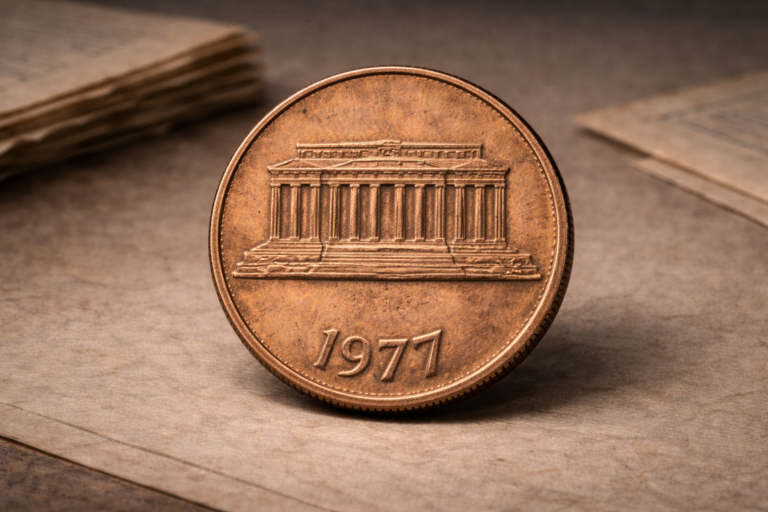
The 1973 Canadian Penny – A Hidden Story from an Era of Change
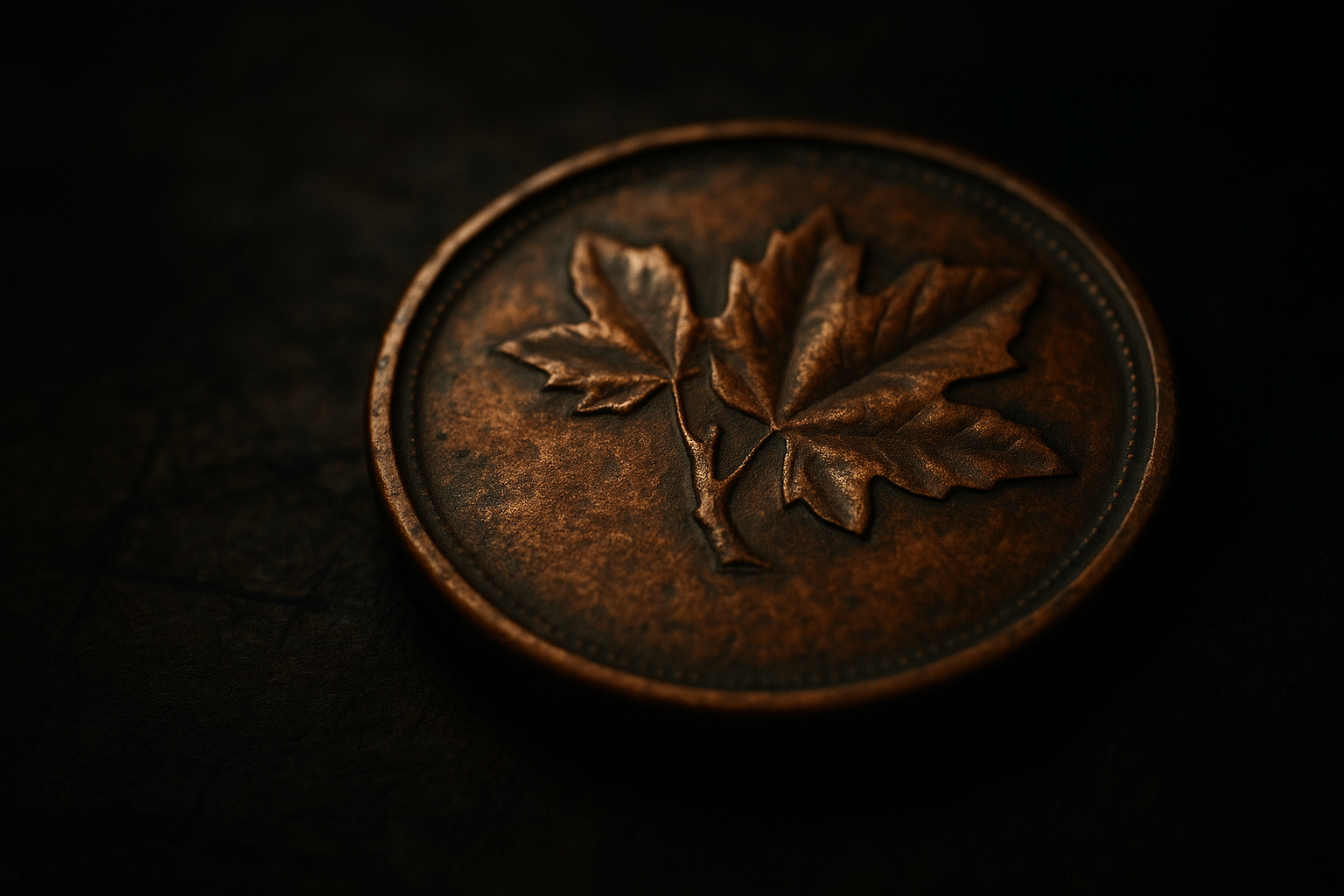
In 1973, life in Canada moved at a quieter pace than today. Corner shops still knew the names of their regulars, children dropped coins into metal payphones, and cash registers rang with a familiar mechanical clatter. In the middle of all this, a small copper-coloured coin slipped through countless hands – the 1973 Canadian penny, a humble cent that never expected to be remembered.
Most people who used it never paused to really look at it. They received it as change at a grocery store, pushed it across a café counter, or forgot it at the bottom of a coat pocket. Yet, decades later, this tiny coin has become a quiet symbol of an era that has almost disappeared. The 1973 Canadian penny carries no dramatic message on its surface, but it holds something just as powerful – traces of everyday life, of unnoticed footsteps through the streets and seasons of a country in transition.
This article is not a guide to prices or rankings. It is an invitation to follow the forgotten footsteps of a single year’s penny, to imagine where it travelled, who relied on it, and how it fits into the wider story of Canadian history and memory.
Estimated reading time: 12 minutes
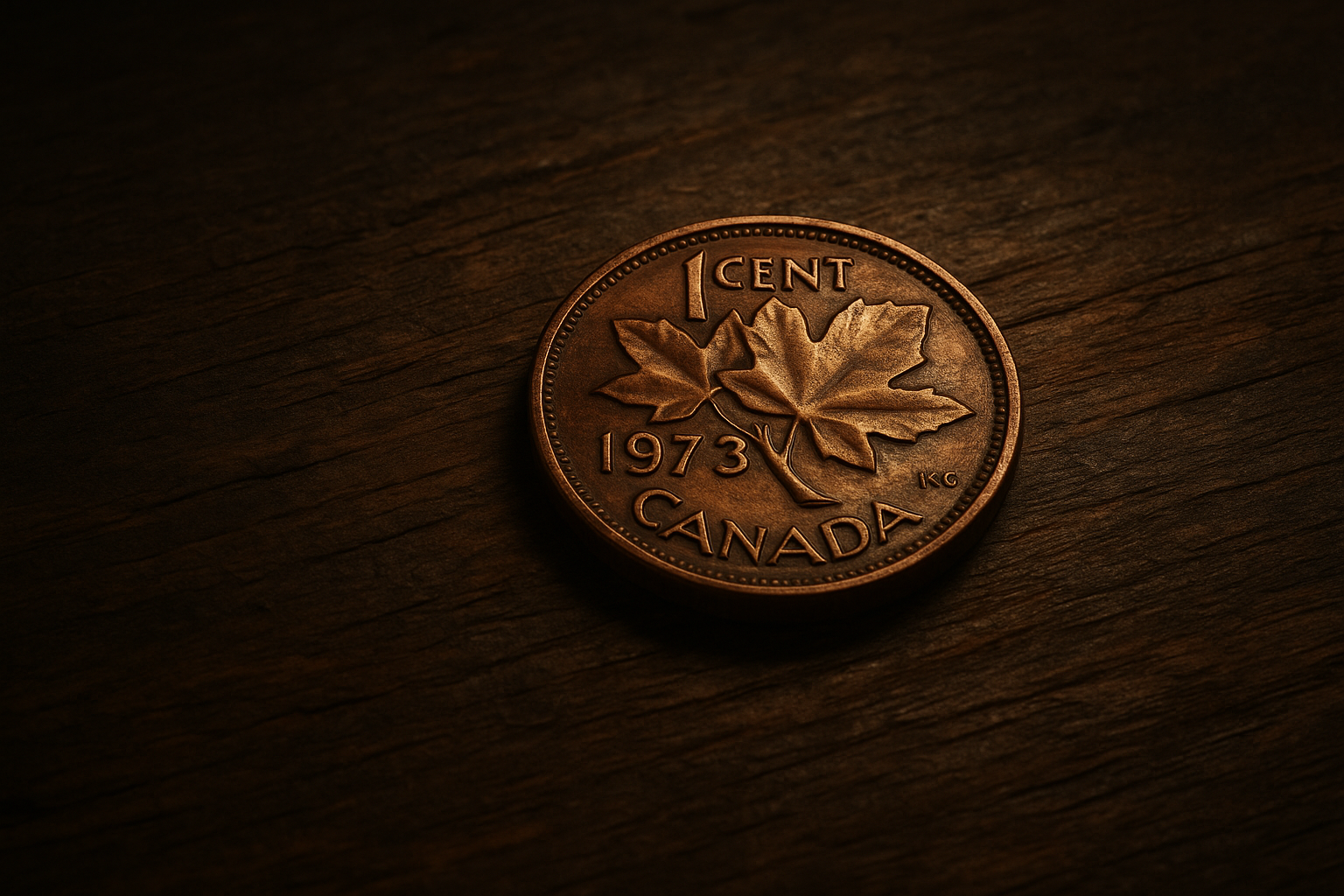
Image credit: HistoraCoin
Canada in 1973 – Everyday Life and Small Change
The Canada of 1973 was a country balancing tradition and change. Television sets glowed in living rooms with evening news, rock music spilled from car radios, and long stretches of highway connected growing cities with quiet towns. Yet while technology and culture were shifting, everyday transactions still depended on the weight and sound of coins.
In grocery stores, clerks counted out cents by hand. Bus drivers kept metal boxes beside them, listening to the clink of fares dropping in. Café owners slid small plates of coins across the counter when customers paid in cash. Teenagers saved pennies in jars for small treats, and many parents taught their children the basics of counting using stacks of these copper pieces.
The 1973 penny was part of this living system. It did not stand out as remarkable at the time. It simply did its job, turning up in pockets at the end of long workdays, slipping into piggy banks, and disappearing into cracks in sofas and the bottoms of handbags. Today, however, looking back at that year, the coin becomes a time capsule – a small round window into the textures, habits and rhythms of Canadian life in the early 1970s.
How the 1973 Canadian Penny Was Minted
The Royal Canadian Mint had already been striking cents for decades when the 1973 issue entered production. Large quantities were needed to keep commerce flowing smoothly, especially in a country where small denominations played a crucial role in everyday transactions. Modern machinery allowed the mint to produce thousands of pieces per hour, each one leaving the press with crisp details and a bright, reflective surface.
Fresh from the mint, the 1973 pennies would have looked almost identical, their sharp edges and unmarked fields shining under factory lights. But their journeys diverged the moment they left the production line. Some were bundled, boxed and shipped to banks across the country. Others went into rolls that businesses opened over counters and cash drawers. A few might have stayed in sealed rolls for years before being touched by human hands.
The result is that no two surviving coins tell exactly the same story. Some spent decades in heavy circulation, their surfaces worn smooth. Others saw only light use before being tucked away in drawers or collections. Each one represents a different path through Canadian society – from mint to marketplace and beyond.
Metal, Size and Feel – The Personality of a Small Cent
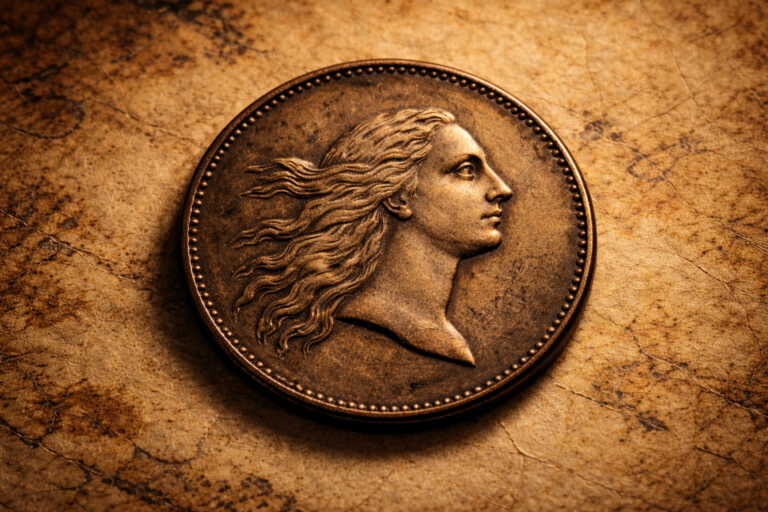
To truly appreciate the 1973 Canadian penny, it helps to imagine holding one. It is small in diameter, light in the palm, with a familiar copper tone that softens and darkens over time. Freshly struck pieces would have displayed a strong reddish hue, while older examples developed richer shades with patches of brown, orange, or subtle hints of deep red as the surface reacted with the air.
The edges, originally sharp, gradually rounded with use. Tiny nicks and contact marks appeared from collisions with other coins in pockets, cash drawers and jars. Under good light, these marks form a miniature landscape – faint lines, dots and curves that testify to years of movement. The sound of the penny is equally distinctive: a gentle, higher-pitched clink when dropped on a hard surface, quieter than larger denominations but still recognisable.
In a world that is increasingly digital, this tactile experience has become rare. The metal, weight and sound of the 1973 penny remind us that money was once something people touched and carried, not just a number on a screen. It was present during conversations at shop counters, in pockets during long walks home, and in hands counting change at kitchen tables after a long day.
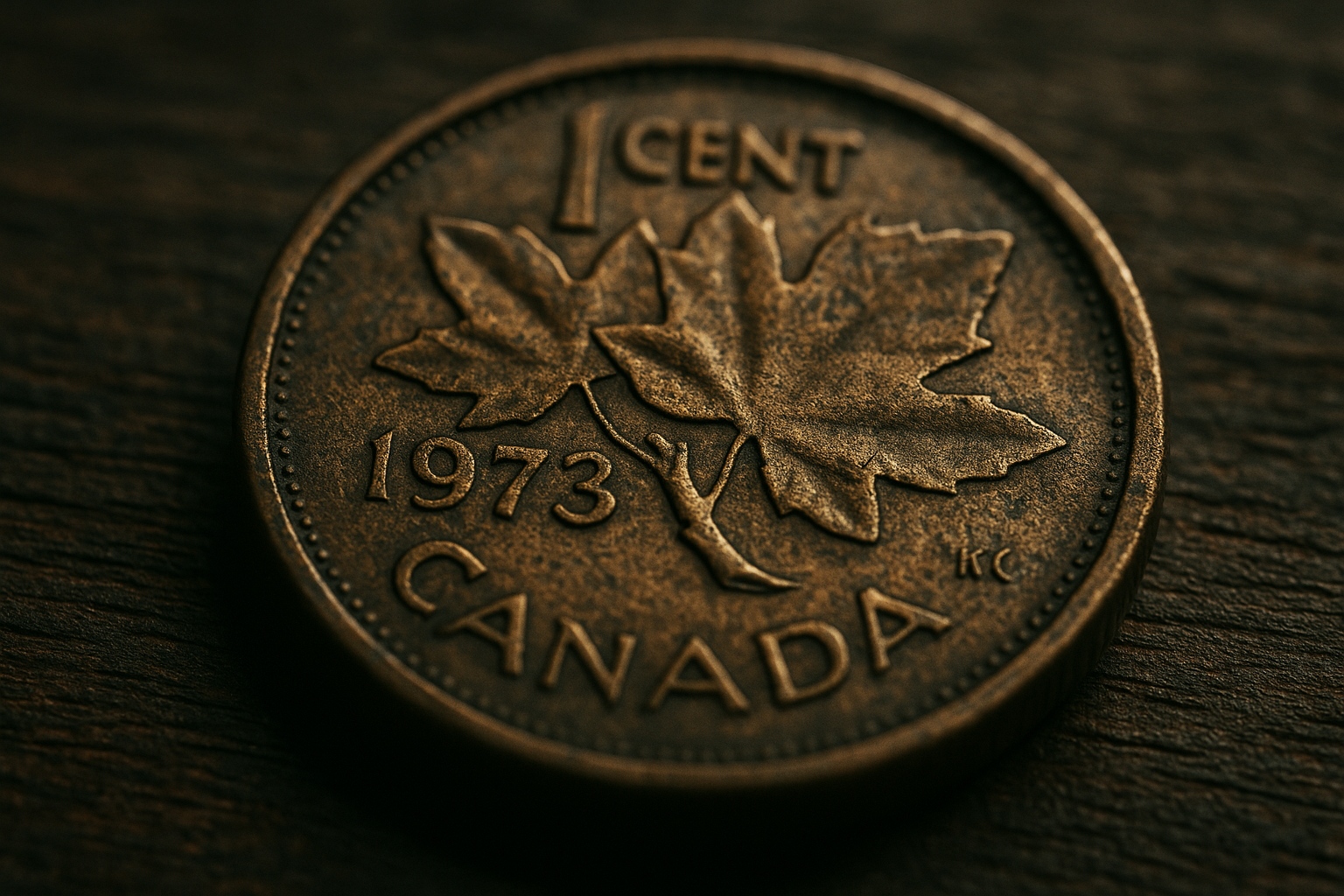
Image credit: HistoraCoin
The Maple Leaf Reverse – A Tiny Piece of National Identity
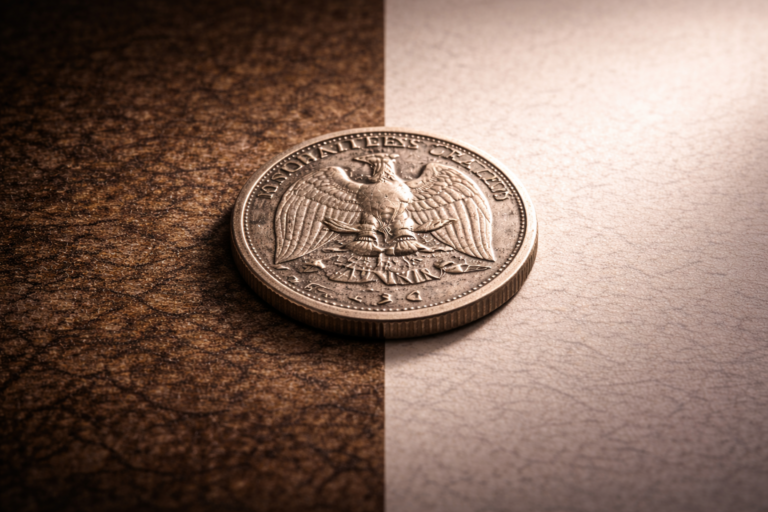
One of the most recognisable elements of the Canadian cent is the maple leaf design on the reverse. For the 1973 penny, the stylised maple twig carried more than artistic flair – it embodied a national symbol that Canadians had embraced for generations. The leaves represent the land itself, the forests and seasons, and the idea of a country that draws strength from nature.
The details of the design encourage a closer look. Fine veins run through the leaves, the stem curves gently, and the surrounding lettering balances clarity with elegance. Even on well-worn coins, where some of the sharper elements have faded, the general shape of the maple leaves remains easy to recognise. It is as if the design refuses to disappear completely, no matter how many years it spends in circulation.
On the obverse side, the portrait of the monarch reminds us that Canada, though independent, is still connected to wider historical traditions. The combination of maple leaves on one side and the royal image on the other creates a small, portable emblem of the nation’s identity in 1973 – a blend of local pride and inherited structure, all contained within a coin just a few centimetres wide.
In Pockets, Counters and Cash Registers – A Day in the Life of a Penny
To understand the role of the 1973 penny, imagine following one coin through a single day. In the morning, it might sit quietly in a store’s cash drawer, waiting while customers pay for bread, milk and newspapers. The drawer opens and closes hundreds of times, and eventually the penny is selected as part of someone’s change. It crosses the counter, passing from the clerk’s hand to the customer’s palm with a brief clatter against other coins.
Later, the same penny might be used at a vending machine, dropped into the slot with a soft metallic echo. Or it might move into a bus driver’s fare box, joining a chorus of other coins already inside. By late afternoon, the penny could have changed owners several times, each exchange marking a tiny transaction that helped keep everyday life moving smoothly.
At the end of the day, it might end up in a jar on a bedroom shelf, or be tossed onto a coffee table, where it rolls in a small circle before coming to rest beside keys and receipts. None of the people who handled it stopped to think about its date or design. Yet looking back, that anonymous day becomes a story – a thread in the larger fabric of Canadian life at the time.
Children, Games and First Lessons in Counting
For many children growing up in the 1970s, the penny was an introduction to the world of numbers. Parents would pour small piles of coins onto tables, asking their children to group them, count them, or separate them by denomination. The 1973 pennies mixed freely with pieces from other years, turning maths exercises into something tangible and real.
Children used pennies in games as well. They flipped them to make simple decisions, used them as markers on improvised game boards, and sometimes pressed them into modelling clay to copy the maple leaf design. Schoolyards and sidewalks became stages for these small experiments, where coins served as props in stories children told each other.
Some kids would keep one specific penny as a small treasure – not because it was unusual, but because it was tied to a particular memory. It might have been the first coin they earned by helping with chores, or a piece given to them by a grandparent with a smile and a story. Years later, that same penny tucked into a box or photo album could become a powerful reminder of childhood moments long past.
The Penny in Family Memories and Quiet Moments
Family stories do not always revolve around major milestones. Sometimes they centre on tiny details – the sound of rain on the roof, the smell of a favourite recipe, or the feel of coins spread out on a kitchen table. The 1973 penny belonged to these quiet scenes. In many homes, parents and grandparents counted change at the end of the week, planning groceries and small treats. The soft clink of pennies on a tablecloth was part of the soundtrack of domestic life.
A 1973 coin might have sat next to a cup of coffee during early morning conversations, or been placed carefully into an envelope for a child’s school event. It might have been dropped into a charity box at a shop counter, adding one more small contribution to a community effort. Each of these actions seems ordinary, yet together they form a record of how people cared for each other, managed their time and resources, and prepared for the future.
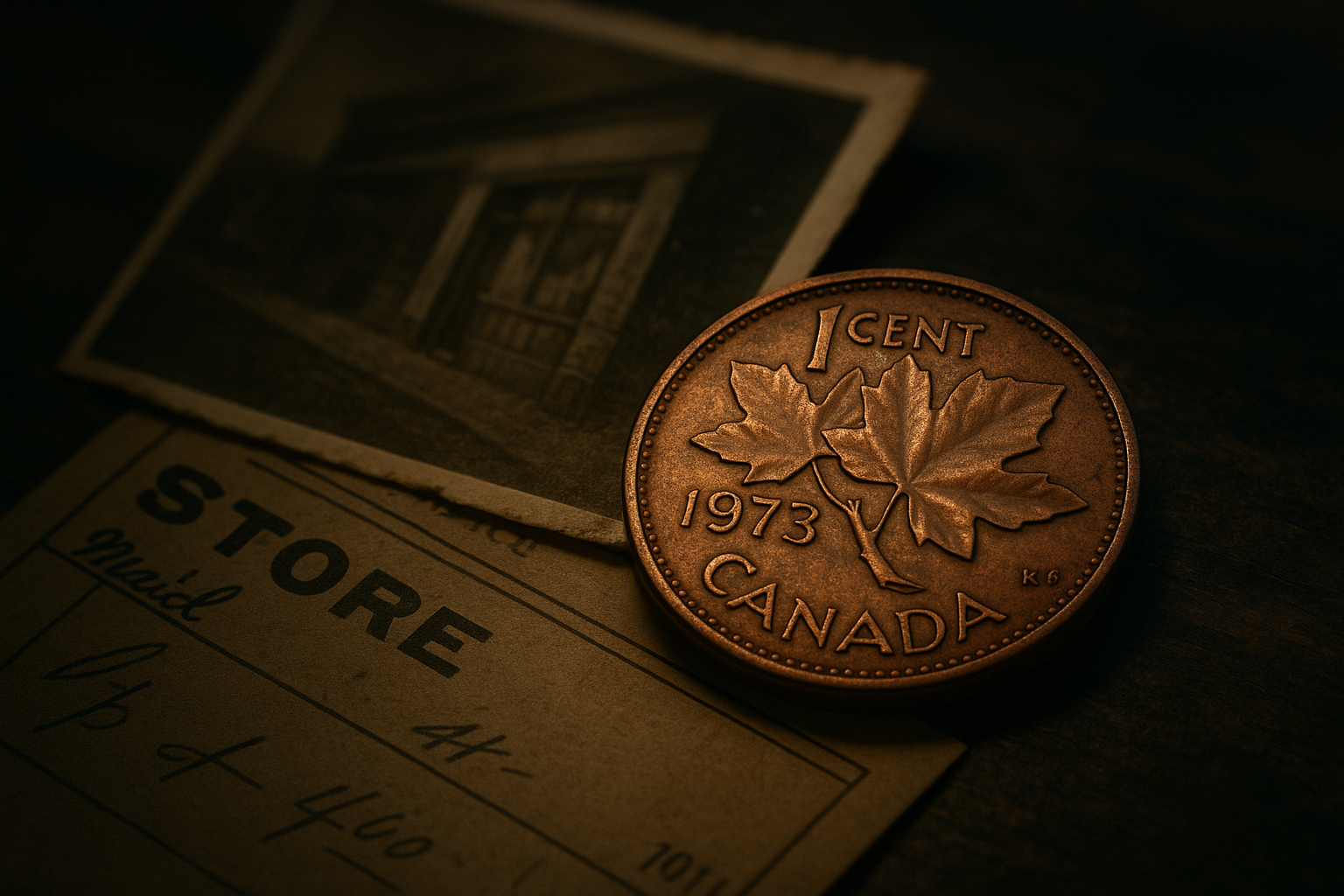
Image credit: HistoraCoin
Over time, some families began keeping specific coins as memory anchors. A parent might tape a penny next to a photograph inside a scrapbook, or place it in a small box with ticket stubs and handwritten notes. When these items are opened years later, the coin immediately connects the viewer to the date printed on its surface – 1973 – and to the emotions surrounding that particular period in their lives.
When Times Started to Change – From Cash to Digital
The decades following 1973 saw major changes in how people handled everyday transactions. Payment cards became more common, electronic systems replaced certain types of cash registers, and eventually online transfers and tap-to-pay systems appeared. The penny maintained its place in Canadian pockets for many years, but gradually its role began to shrink.
As prices rose and convenience became a priority, many people saw less need to track very small denominations. Pennies began to gather dust in jars, drawers and tins, no longer circulating as actively as before. When discussions about removing the cent from circulation finally emerged, they reflected not a rejection of its past importance, but a recognition that the world had moved in a different direction.
For those who grew up in the 1970s and 1980s, the disappearance of the penny from daily life felt like the closing of a chapter. It marked the end of an age when even the smallest coin had a clear place in the pattern of everyday spending. The 1973 penny, caught in the middle of this larger shift, quietly crossed from being a common tool to a nostalgic reminder of how life used to feel.
Why Some 1973 Pennies Survived While Others Did Not
Millions of 1973 Canadian pennies were produced, yet only a fraction remain easily accessible today. Many were eventually taken out of circulation, melted or lost over the years. Others simply disappeared into attics, old jars and forgotten containers. The ones that survived did so largely by accident – through small decisions made by ordinary people.
Someone might have dropped a handful of coins into a glass jar and never gotten around to sorting them. A relative might have cleared out a drawer and tossed its contents into a box without looking closely. A child might have taken a coin home from a shop and left it at the back of a wardrobe, where it remained undisturbed for decades.
When such coins are rediscovered, they often appear suddenly, covered in a thin layer of dust or surrounded by other forgotten objects. A 1973 penny found this way carries a quiet charm. It did not survive because of its status or prestige. It survived because life moved quickly and people set it aside without meaning to. In a world obsessed with speed and novelty, there is something touching about a small, ordinary coin that outlives its original purpose simply by being overlooked.
Exploring the 1973 Penny Today and Following Its Forgotten Footsteps
Today, the 1973 Canadian penny invites a different kind of attention. Rather than being seen as just another small coin, it can be approached as a tiny historical document. Enthusiasts who study it often look at details like strike quality, wear patterns and colour, not to decide how much it should be traded for, but to better understand where it has been and how it lived.
Under magnification, even a worn 1973 penny reveals secrets. Fine lines show how it collided with other coins, small dark patches hint at where skin oils and the environment interacted with the metal, and softened lettering suggests how often it passed through busy hands. Each mark is a reminder that this object was present during real moments in people’s lives – paydays, grocery runs, bus rides, café visits and quiet evenings counting change.
For those who enjoy visual storytelling, films and documentaries about Canadian history and coinage can add an extra layer of context. One such example can be found here:
Watch a Canadian history and coinage themed video on YouTube
.
It offers a broader look at the atmosphere and events that shaped the world in which coins like the 1973 penny once circulated.
Collectors, historians and curious readers often treat coins like this as starting points for research. From a single date and design, they explore questions about the economy, art, politics and daily life of the time. In that sense, the 1973 penny functions like a key – a very small one – that unlocks stories far larger than itself.
Final Reflection – Listening to a Quiet Coin
The 1973 Canadian penny and its forgotten footsteps remind us that history is not made only by great speeches, landmark buildings or famous documents. It is also carried quietly in small, everyday objects that people take for granted. Coins, especially those that once circulated freely among ordinary citizens, have a special ability to bridge the gap between past and present.
When you hold a 1973 penny today, you are touching a tiny survivor of countless days and nights. Perhaps it once rested in the pocket of a factory worker walking home after a late shift, or sat in the palm of a child waiting in line at a corner store. Perhaps it lay on a café table beside a notebook, or slipped beneath a car seat where it stayed for years. None of these stories can be proven with certainty, yet they live in the imagination, prompted by the simple presence of the coin.
As the world continues to move further into digital systems and invisible transactions, the old copper-coloured cent becomes more than a piece of metal. It becomes a reminder that there was a time when every purchase had a sound, a weight and a physical exchange. The 1973 Canadian penny may be small, but its journey through pockets, drawers and forgotten corners leaves us with a meaningful question – how many other unnoticed objects around us quietly carry the traces of our lives, waiting to be rediscovered?
For more journeys into the stories behind historical coins from around the world, visit HistoraCoin.