The Argentine Pesos That Vanished Into Legend
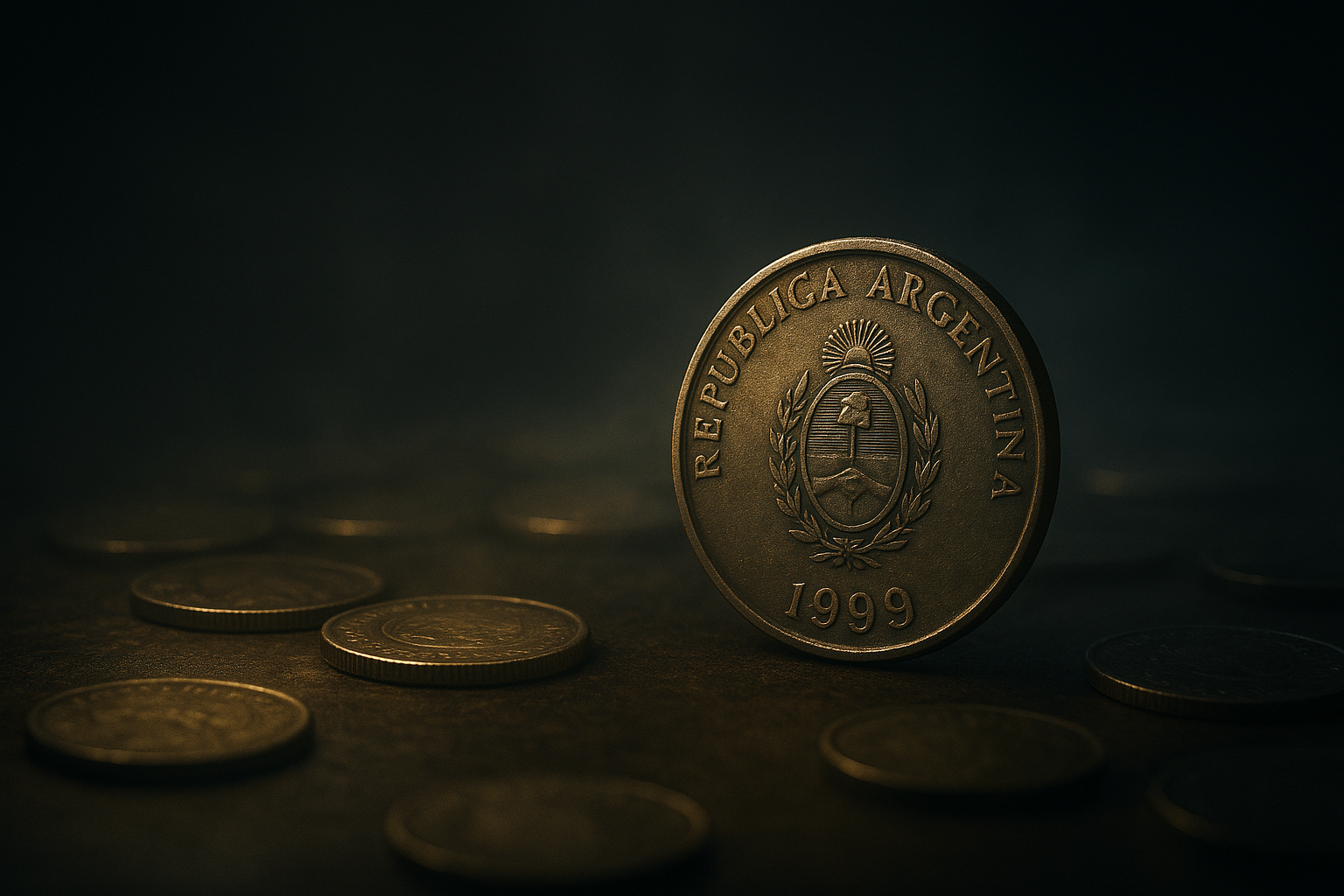
On a quiet shelf in an old house in Buenos Aires, a small pile of pesos once lay forgotten in a glass jar. They had travelled through taxis, kiosks, bus stations, and cafés, heard fragments of conversations in Spanish and whispers of tango melodies drifting from open windows. For years, they did exactly what they were created to do – move through hands, pockets, and drawers. Then, suddenly, they stopped.
Time passed. Notes changed, habits changed, and whole generations grew up using different forms of payment. Yet the old coins remained, resting in the same jar, waiting for someone to finally take a closer look. When that moment came, their surfaces were no longer just metal. They were maps of a country’s past, carrying traces of stories that had quietly vanished from everyday life.
Estimated reading time: 9–10 minutes
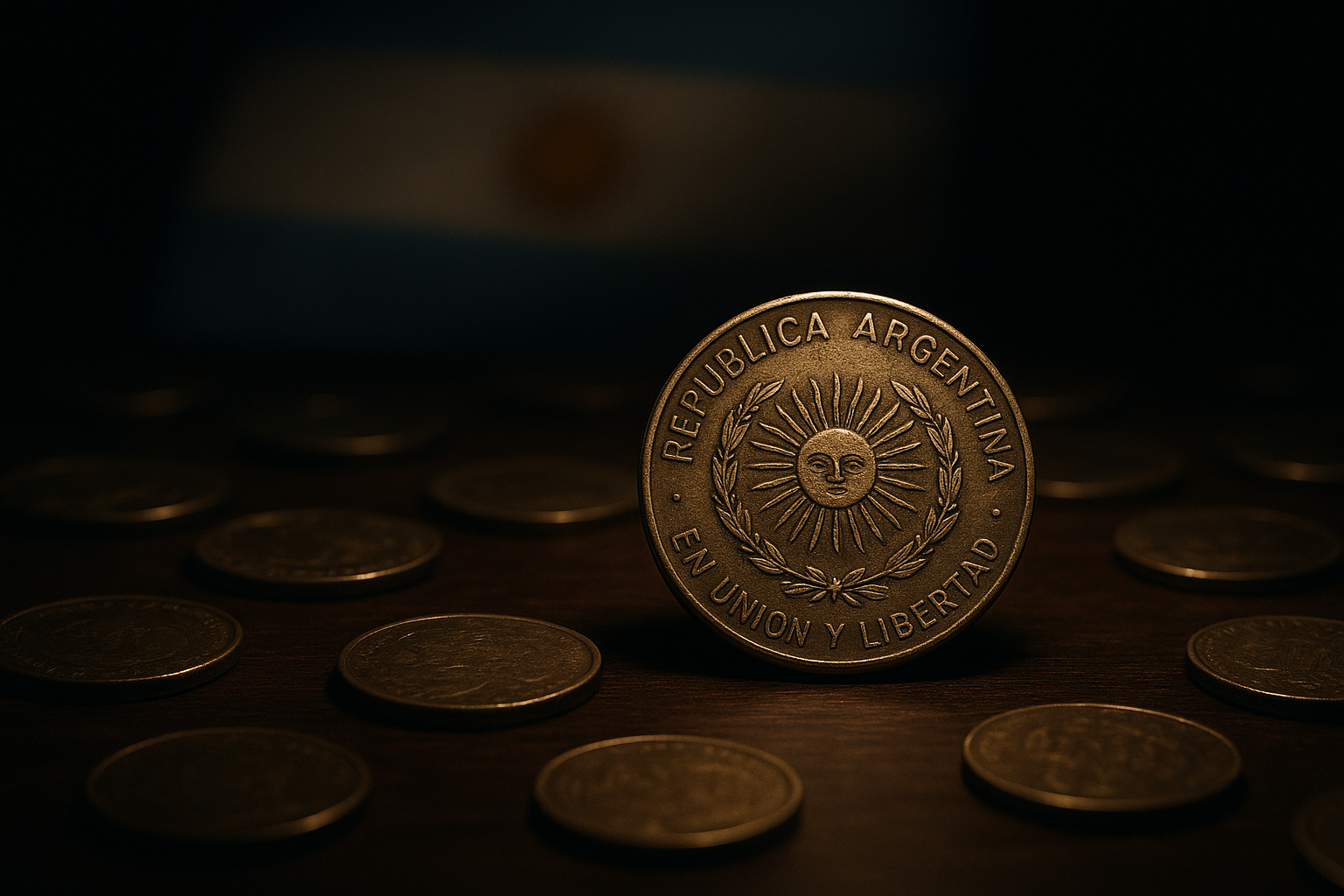
Image credit: HistoraCoin
Argentina – A Land of Stories Told in Metal
Argentina is a country that holds its stories in many forms – in music, in literature, in dance, and quietly, in the small pieces of metal that passed between its people. Every peso coin that crossed a counter in Rosario, Córdoba, Mendoza, or Salta carried more than a denomination. It carried the weight of days spent working, travelling, waiting, and hoping.
In busy avenues, coins rattled in the pockets of commuters standing on packed buses. In quieter towns, they moved across the counters of family–owned shops where owners recognised most of their customers by name. They slid across the polished bars of old cafés, tapping against porcelain cups filled with strong coffee and long conversations. In markets, they changed hands under striped awnings while vendors arranged fruit, bread, and vegetables in colourful rows.
These coins never asked to be noticed. Their job was simple – to move. Yet as they travelled, they witnessed uncountable scenes: a radio playing football commentary in the background, a child tugging at a parent’s sleeve, a traveller asking for directions, a student rushing to catch a bus under summer heat or winter rain. Without saying a word, each coin stored fragments of these moments deep in its scratches and worn edges.
The Birth of the Argentine Peso in a Changing Nation
The story of the Argentine peso is tied to a long chain of political and economic changes. Over the decades, new series replaced old ones as the country adjusted to different realities. Some coins were introduced to mark fresh beginnings, others to simplify complicated systems, and others to restore a sense of stability after turbulent periods.
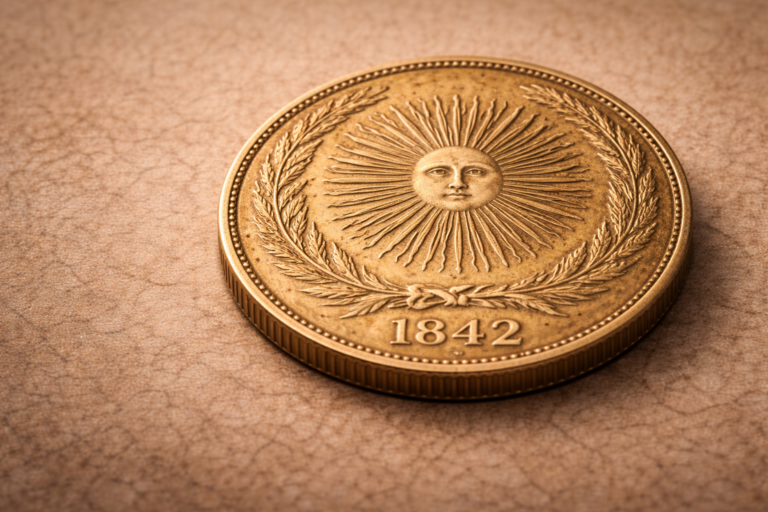
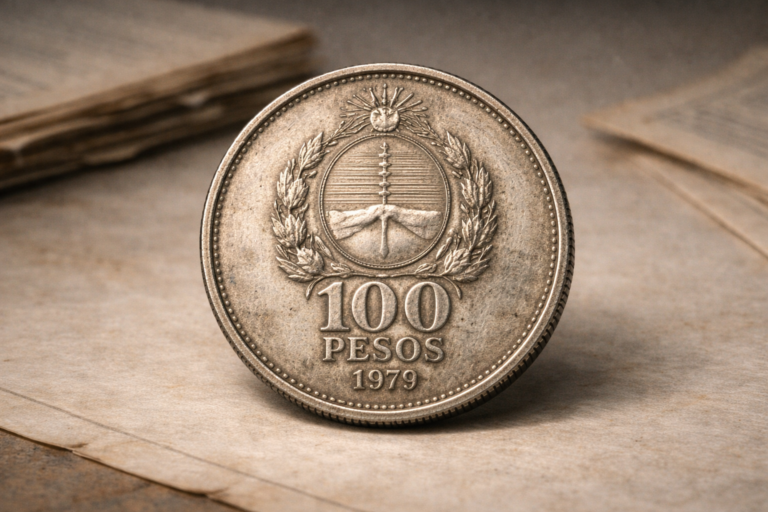
Mints redesigned national symbols time and again. They experimented with portraits, allegorical figures, and coats of arms. Rays of sun, laurel branches, Phrygian caps, and other motifs appeared, each one chosen to represent ideas such as liberty, union, or national pride. With every new issue, the peso changed its face but not its role – it remained the metal thread running through Argentine daily life.
Many of these early pesos did not survive in large numbers. Some series were short–lived, replaced quickly by new designs. Others were used so intensely that they simply wore away and disappeared. Yet a few pieces from each era managed to escape complete erasure. They slipped into small collections, jars of change, or the lining of an old coat that nobody had the heart to throw away.
To hold one of these pesos now is to hold a compressed fragment of Argentine history. It is a reminder that behind every reform and redesign were real people adjusting to new notes, new coins, and new rhythms of life.
Streets, Pockets, and Everyday Lives
Picture a single Argentine peso coin during its busiest years. One morning, it might be handed over at a bakery in exchange for fresh bread. A few hours later, it could end up at a kiosk near a bus stop, paying for a newspaper or a small snack. By evening, it might sit in the pocket of a taxi driver navigating the city under a sky heavy with summer heat or winter clouds.
In another part of the country, a similar coin might pass across a wooden counter in a small grocery store where neighbours stop to talk about local news. It might slide into the hand of a farmer buying supplies, or a school student buying a pen before class. These coins see both the centre and the edges – from the capital’s noise to the quieter pace of rural towns.
Buses, trains, streetcars, and ferries have all heard the sound of pesos dropping into metal boxes or being counted on simple trays. During football matches, they collected in pockets around stadiums as fans streamed in and out. On long–distance buses, they sat in bags placed carefully overhead while landscapes of plains, mountains, and rivers rolled past outside the windows.
All this movement forms a kind of invisible map – a web of routes drawn not on paper, but in the journeys of countless coins. Some of those coins would one day vanish from circulation without ceremony, leaving their paths unfinished in mid–sentence.
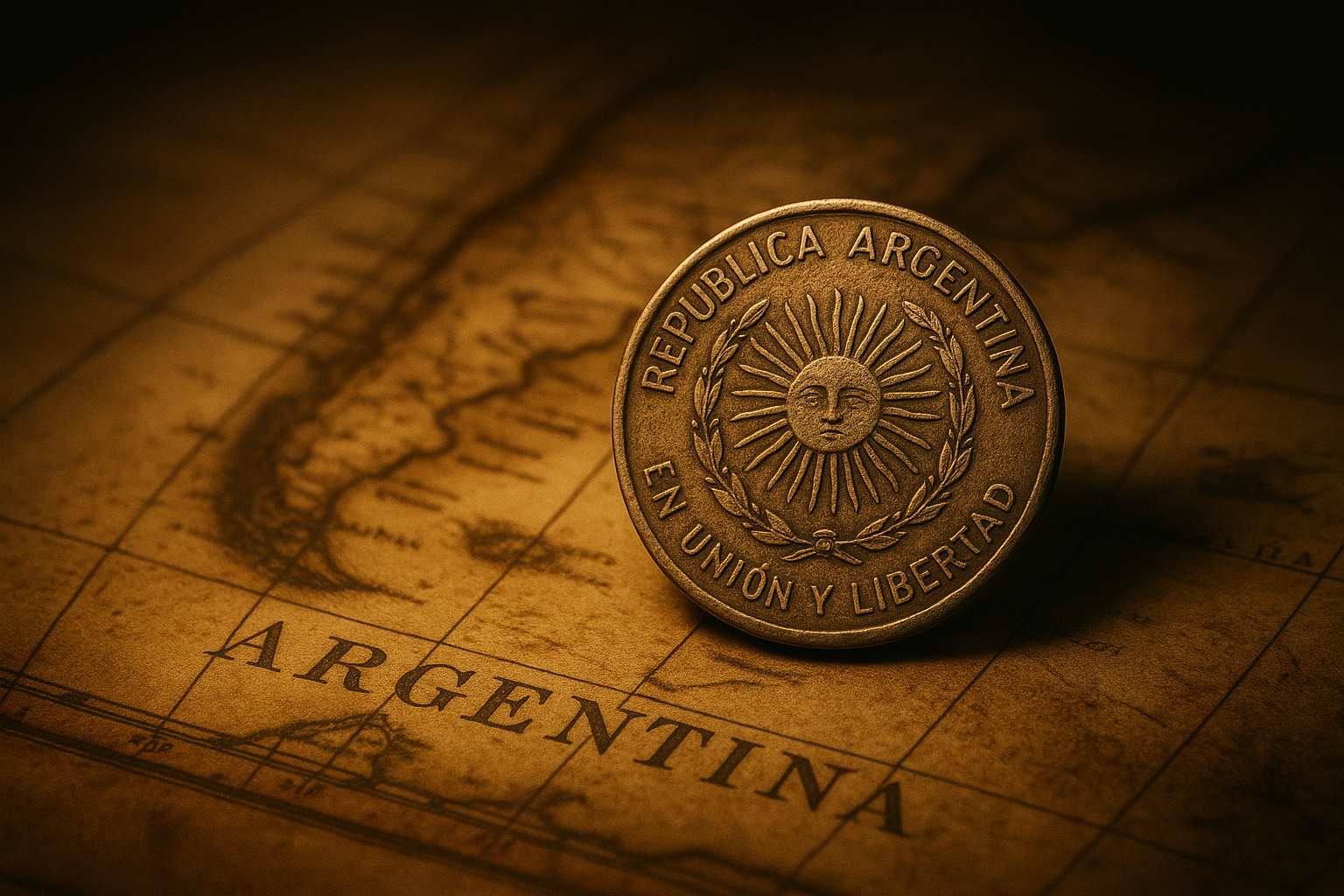
Image credit: HistoraCoin
Different Eras Written on Metal
Over time, Argentine peso coins recorded the passing of eras the way tree rings record years. Some designs reflected optimism and growth, using bright symbols and strong lines. Others felt more restrained, created during periods when the country was trying to regain its balance. Subtle changes in font, relief, and composition tell these stories even when no explanation is written on the coin itself.
Some pieces show clear, sharp details – radiating sun rays, crisp lettering, or finely drawn wreaths. Others have softer edges, either from years of use or from slight adjustments in production methods. Changes in metal composition also play their part. A coin with a warmer tone might come from one decade, while a colder, harder alloy hints at another. Even the sound a peso makes when it strikes a surface can differ, depending on the era that produced it.
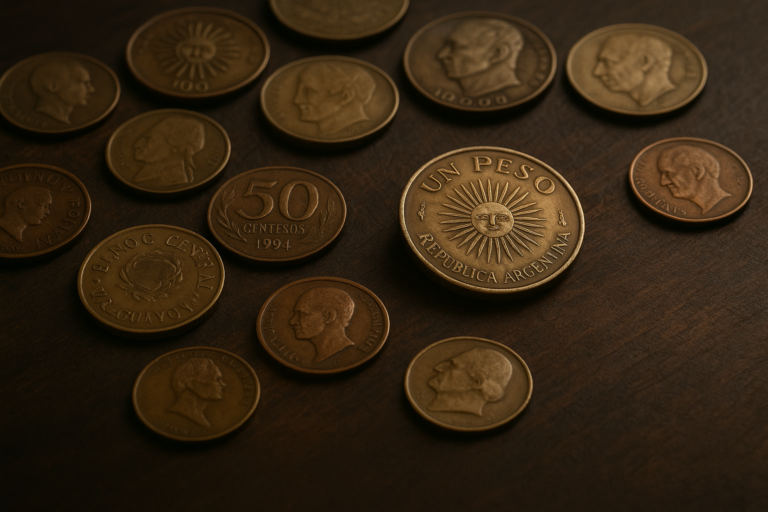
For a careful observer, a handful of Argentine pesos collected from different years is like a miniature timeline. Without reading a single history book, you can see shifts in artistic taste and national mood. Perhaps a bust on the obverse grows more detailed over time, or a national emblem is redrawn to appear more dynamic. Each redesign is a small announcement – a way of saying, “This is how we choose to present ourselves at this moment in history.”
Yet even the most carefully executed design eventually faces the same fate. Coins are handled, dropped, stacked, stored, and sometimes neglected. They may spend decades in motion and then suddenly fall out of use, leaving behind only those pieces that were saved, forgotten, or simply lucky.
The Pesos That Slowly Vanished from View
Not all pesos faded away for the same reasons. Some disappeared because newer series took their place. Others were removed from circulation as part of broader reforms. A number simply wore out after long years of service and were quietly withdrawn. To the public, these changes often felt gradual. One day people noticed that certain coins were no longer common. Another day, they realised they had not seen a particular design in a long time.
Sometimes, the disappearance of a coin is almost invisible. A shop might stop receiving it in its daily change. A bank might no longer hand it out. Children growing up in a later decade might only know it because an older relative shows it to them and says, “We used to have these.” What was once normal becomes rare not through sudden loss, but through a slow drifting out of everyday life.
A few coins, however, do not follow the usual path. Instead of being melted, destroyed, or worn away beyond recognition, they slip behind the curtain into private spaces. They end up in boxes of old belongings, in envelopes tucked among letters, or in the pockets of coats that are hung up and never worn again. It is in these quiet corners that pesos begin their transformation from simple tools to objects of legend.
When someone later finds a small group of these coins, dusted with time, they are no longer just pieces from a previous system. They have become survivors – fragments from a version of Argentina that no longer exists quite the same way.
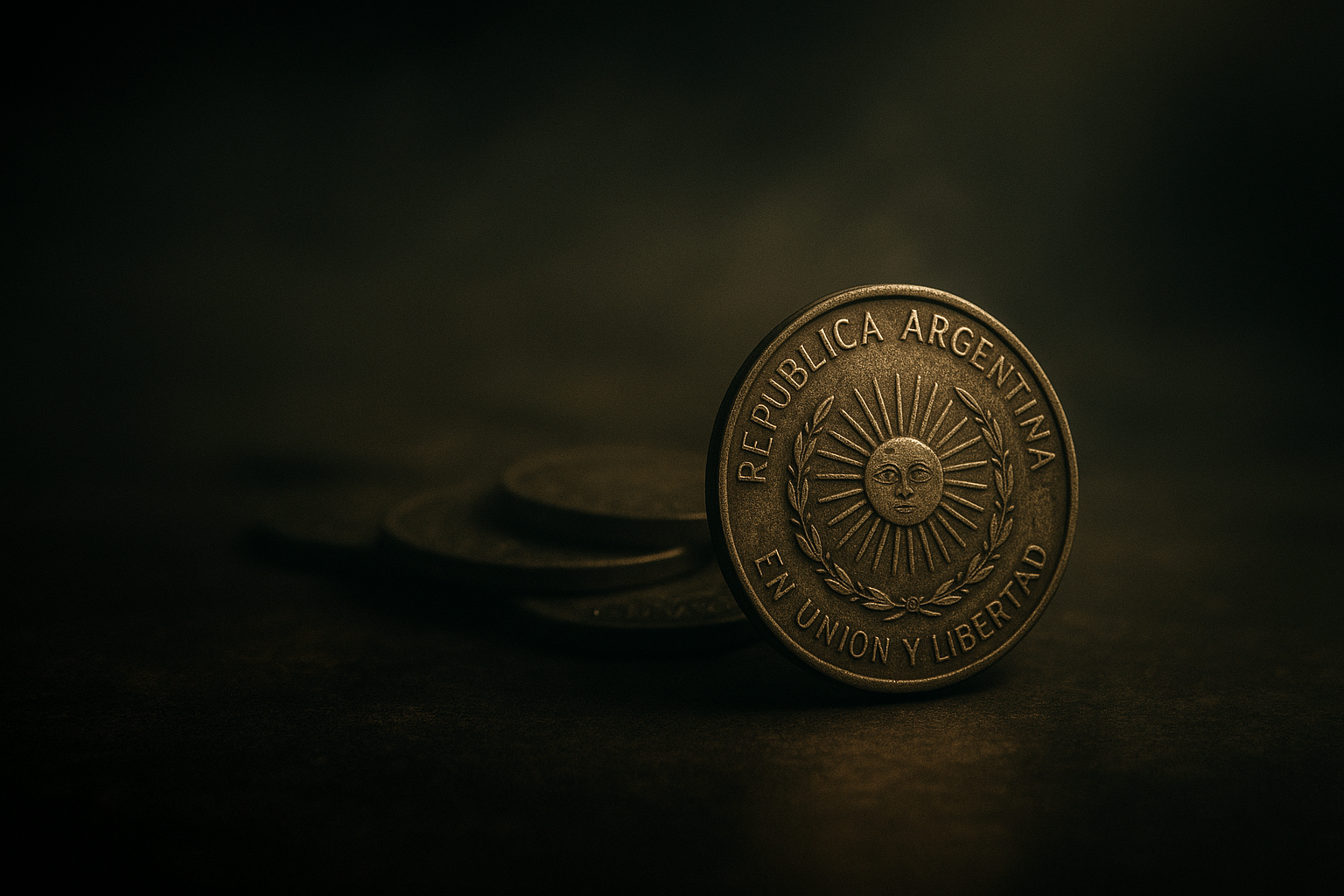
Image credit: HistoraCoin
Hidden Memories in Jars and Drawers
Many Argentine homes contain at least one silent witness to earlier times – a jar of mixed coins left on a bookshelf, a tin box filled with small metallic circles that no one has counted in years, or a dish by the door that gradually became a resting place for pesos no longer used on the street. In these places, coins gather dust, but they also gather meaning.
A child might have once played with these coins, stacking them into towers or arranging them into patterns on the floor. An adult might have promised to take them to the bank but never found the right day. Visitors might occasionally notice the jar and ask about it, prompting a quick story: “Those are old pesos – we kept them from before everything changed.”
Over time, the jar becomes more than a container. It turns into a tiny, unintentional museum. Each coin in it represents a journey that has ended. Some pieces show heavy wear, suggesting years of circulation. Others look nearly untouched, as if they were stored away shortly after being received. Side by side, they trace the outlines of personal histories – paychecks, bus rides, weekend trips, and quiet evenings at home.
When someone finally sits down to look at the contents carefully, they might sort the coins by design, date, or metal colour. In doing so, they are not just organising objects. They are assembling a story – a story of what it meant to live in Argentina during the years when those pesos were part of daily life.
Through the Eyes of a Patient Collector
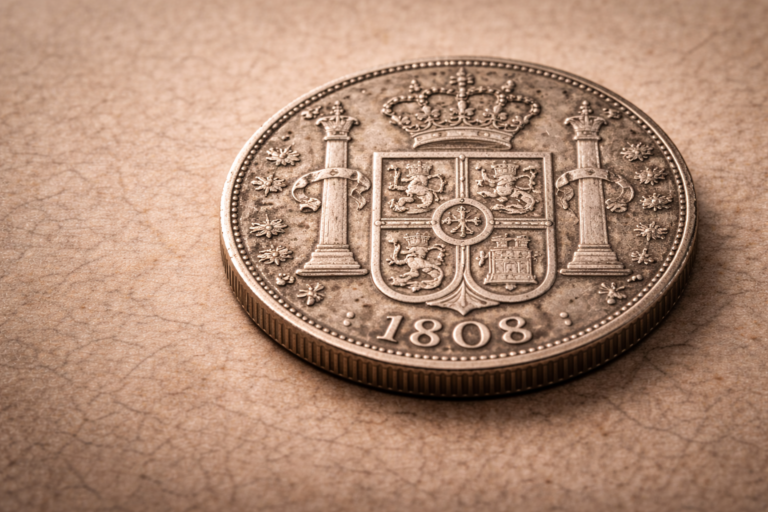
A patient collector approaching these coins does not see them only as units from a past system. Instead, they become clues. The collector examines details many people would miss – the spacing of letters, the shape of numbers in the date, small variations in the coat of arms, or tiny symbols near the edge that indicate the mint or a specific period.
With time, patterns begin to emerge. Coins from one year may share a certain style, while another year introduces subtle changes. An experienced eye can recognise these transitions and place each coin within a broader narrative. In this way, Argentine pesos become like pages from a book, and the collector’s job is to arrange them in the proper order so the story can be read.
Some collectors also enjoy learning about the circumstances behind each series. They read about how reforms affected coinage, how inflation and stability influenced decisions, and how public opinion reacted to new designs. While they do this, coins that once seemed unremarkable begin to glow with context. A modest copper–coloured piece or a small bimetallic coin suddenly carries associations with specific years, governments, and social moods.
For these collectors, the most rewarding moment is often not the discovery of something unusual, but the quiet understanding that even the most common pesos participated in a larger story. They see in them the echo of long queues, paydays, journeys, and conversations, all compressed into a few grams of metal.
Final Reflection – When Pesos Become Legends
The Argentine pesos that vanished into legend did not vanish in a dramatic gesture. They simply slipped away as new systems and habits took their place. What makes them legendary now is not rarity in a strict numerical sense, but the way they capture a chapter of life that is no longer present.
Each coin is a small lens. Through it, we see crowded avenues lined with trees, newsstands stacked with papers, and cafés filled with gentle conversation. We imagine kiosks lit late into the night, early buses leaving terminals under dim skies, and markets where coins moved from one hand to another all day long. The coins were there for all of it, never speaking, always observing.
When we pick up an old Argentine peso today, we hold a piece of that world. Its scratches and worn relief are not damage – they are evidence of life. They tell us that the coin has worked hard, travelled far, and survived change after change. In our modern era of screens and silent digital balances, that physical presence feels almost miraculous.
Legends are often built around heroes, battles, or grand events. Yet there is another kind of legend – a quiet one – that lives in objects like these. The pesos that vanished from circulation remain alive in jars, drawers, and collections, carrying their stories patiently until someone is ready to listen. When that happens, they rise once more into the light, not just as outdated coins, but as tiny, enduring witnesses to Argentina’s unfolding story.
For more journeys into the stories behind historical coins from around the world, visit HistoraCoin.