The Coin Oracle The Art of Reading Forgotten Details
Estimated reading time: 18 minutes
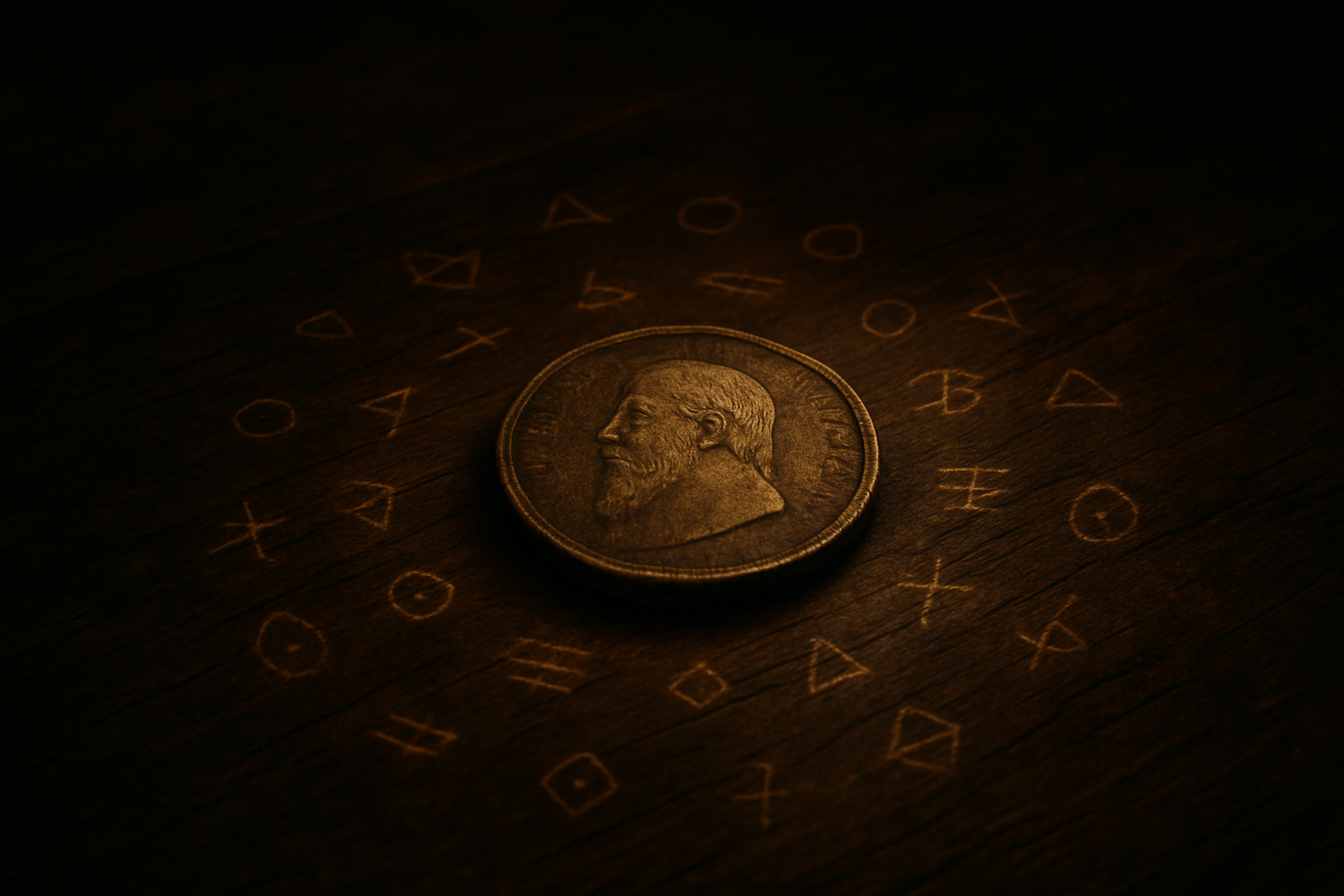
Some people look at a coin and see only a date and a face. Others see a tiny universe pressed into metal. A coin can be ordinary in the morning, then suddenly feel extraordinary at night, when you hold it under a lamp and notice a line you never noticed before. A letter that seems slightly off. A symbol hiding in plain sight. A rim that carries a story, even when the center looks worn smooth.
That moment is where this article begins. Not with a tool. Not with a shortcut. Not with a promise of instant answers. Just with a slower kind of attention. The kind that turns coin reading into an art. The kind that makes a person feel like an oracle, not because they predict the future, but because they can listen to the past.
I like to think of it as the coin oracle. Not a mystical character in a robe, but a quiet habit you build over time. You learn to read what most people overlook. You learn that every coin has a voice. Some speak clearly. Some whisper. Some hide behind wear and grime. But almost all of them leave clues if you know how to look.
This is a story about those clues. The forgotten details that transform a coin from an object into a witness.
Table of Contents
- The Coin Oracle and Why Details Matter
- The First Glance That Most People Miss
- Portraits Posture and Silent Messages
- Letters Fonts and the Personality of a Mint
- Symbols That Were Never Decorative
- Edges Rims and the Hidden Border Story
- Mint Marks and Tiny Signatures
- Wear Patterns as a Map of Real Life
- Reading Coins Like a Manuscript
- Mistakes Myths and Misreadings
- A Calm Method You Can Use Anytime
- FAQ
The Coin Oracle and Why Details Matter
When people say they want to identify a coin, they usually mean they want an answer fast. But coins rarely reward speed. Coins reward calm. The truth is that most coins reveal their identity the way a good story reveals its ending. Gradually. With hints. With details that feel meaningless until they suddenly click.
A coin oracle is simply someone who practices that calm attention. They do not rush to conclusions. They do not force the coin to be something it is not. They let the coin speak in its own order. They start with what is certain and build toward what is probable.
And the most important thing they understand is this. The smallest details are often the most honest. Big features can be copied, reused, or stylized across many issues. Small features tend to be specific. The spacing between letters. The angle of a leaf. The way a border bead touches the rim. Tiny decisions made by engravers, designers, and mints become fingerprints.
That is why coin reading is not just identification. It is interpretation. It is listening for what the metal remembers.
The First Glance That Most People Miss
If I hand you a coin and ask you to describe it, most people begin with the obvious. A portrait. A number. A large symbol. But the coin oracle begins somewhere else. They begin with the relationship between things.
Is the design centered or slightly drifting? Does the coin feel balanced or crowded? Are the elements sharp or soft? Does it look like the coin was meant to appear formal, or meant to appear approachable? Coins do not only communicate information. They communicate mood. And mood often reflects era.
There is also a practical layer to that first glance. The coin oracle notices the metal tone and surface behavior. Some surfaces look bright because they were protected. Some look dull because they lived hard. Some show a smoothness that suggests decades of handling. None of this is about perfection. It is about life.
Sometimes the coin reveals itself quickly. Sometimes it refuses. When it refuses, that is not failure. That is the coin asking for patience.
Portraits Posture and Silent Messages
Portraits are never neutral. A portrait on a coin is a carefully chosen performance. The angle of a face can signal confidence, tradition, youth, strength, mourning, or authority. The direction the portrait faces can carry cultural meaning in some systems, or simply reflect a design choice in others. But even when it is simply design, it still tells you something about taste and time.
Look at the posture of the portrait. Is it proud and elevated, as if above the viewer? Or is it calmer, closer, more human? Coins often move between these two moods across history. In certain eras, the portrait feels untouchable. In others, it feels almost familiar.
The oracle also watches what surrounds the portrait. A tight ring of text can suggest formal power. A wider open field can suggest restraint, simplicity, or modern minimalism. A crown or emblem can frame the face as a statement. A plain border can frame it as a record.
These choices matter because coins are public art. They were designed to be seen by everyone, including people who never read official documents. A coin portrait is a headline pressed into metal.
Letters Fonts and the Personality of a Mint
If you want to learn coin reading faster, pay attention to letters. Not only the words, but the personality of the lettering. Fonts carry style. Spacing carries habit. Engravers repeat certain shapes the way writers repeat certain phrases.
Some mints prefer elegant thin letters. Others prefer bold, confident strokes. Some systems use serif-like details. Others aim for clean modern lines. When you compare coins across time, lettering can act like a timeline itself.
Even the smallest features matter. The way an A is shaped. The openness of an O. The length of a tail on an R. These details can separate one issue from another when the major design looks similar.
And then there is alignment. Are the letters evenly spaced, or slightly uneven as if hand-cut? Do they feel machine-perfect, or subtly human? Coins exist in both worlds. Some feel industrial. Some feel artisanal. Both are meaningful.
When people rush, they miss this entirely. When people slow down, lettering becomes one of the loudest voices on the coin.
Symbols That Were Never Decorative
One of the most common misunderstandings about coins is the assumption that symbols are decorative. They rarely are. On coinage, symbols are language. They represent legitimacy, geography, faith, authority, unity, or memory.
A simple wreath can signal victory, honor, or civic pride. A branch can symbolize peace, but it can also symbolize abundance. An animal can represent a nation, but it can also represent a region, a dynasty, or a cultural myth. A star can be guidance, aspiration, or political identity depending on context.
Even the shape of a shield matters. Even the number of stripes or leaves matters. Many coin designs are built like coded messages. You can enjoy them visually without decoding them, but the moment you decode them, the coin feels alive.
The oracle does not memorize every symbol in the world. The oracle learns a better skill. They learn to ask the right questions about a symbol. Why was this chosen? Who would understand it? What story was the state trying to tell everyday people through this small object?
Coins, in this sense, are not only currency. They are public storytelling.
Edges Rims and the Hidden Border Story
Most people ignore the edge. That is understandable. The edge is not the part of the coin that faces you when you glance at it. But the edge is often where the coin hides its most practical secrets.
Edges exist to protect the coin and to protect trust. Reeding, lettering, and patterns were used to discourage shaving and tampering. A coin with a strong edge design tells you that people cared about integrity. It tells you that the coin had a role beyond daily convenience. It carried value of trust, and trust needed defense.
Even the rim can speak. Some rims are bold and protective. Some are delicate. Some have bead patterns that help you date a style. Some have border dots that reveal alignment choices. A tiny change in border style can separate issues that look nearly identical in the center.
The oracle does not treat the edge as an afterthought. The oracle treats the edge as a border between the coin and the world. It is the part that touches pockets, tables, and other coins. It is the part that absorbs the most friction. It holds evidence.
Mint Marks and Tiny Signatures
Sometimes a coin carries a tiny mark that looks like nothing. A letter. A symbol. A dot. A small shape placed near a date or under a portrait. People often assume it is random. It rarely is.
Mint marks and small signatures can indicate where a coin was produced, which facility, which region, or sometimes which system. These marks can also reflect administrative changes. A mint mark appearing or disappearing can signal restructuring, new authority, or the opening and closing of facilities.
But the most important part is psychological. These marks remind you that coins are made by humans. Even when production is industrial, there is still design intention. Someone decided that mark should exist. Someone placed it in a specific location. Someone approved it.
Learning to spot mint marks is one of the easiest ways to feel like a coin oracle quickly. It trains your eye to look for small things. It teaches you that the center is not the only truth. The margins matter too.
Wear Patterns as a Map of Real Life
Wear is not just damage. Wear is biography.
When a coin wears down, it does not wear down evenly. Raised areas fade first. High points soften. The fields may retain shine while the details blur. This is not random. It is physics plus human handling. It is a map of touch.
Coins that circulated heavily often show a certain kind of smooth honesty. They are not ashamed of their age. They look like they worked. A coin with heavy wear invites a different kind of reading. You cannot rely on crisp details. You rely on structure. Silhouette. Remaining clues.
This is where the coin oracle becomes patient. Instead of chasing what is missing, they focus on what remains. The curve of a neck. The position of a symbol. The spacing of the date. The thickness of the rim. The ghost of text that still hints at its original shape.
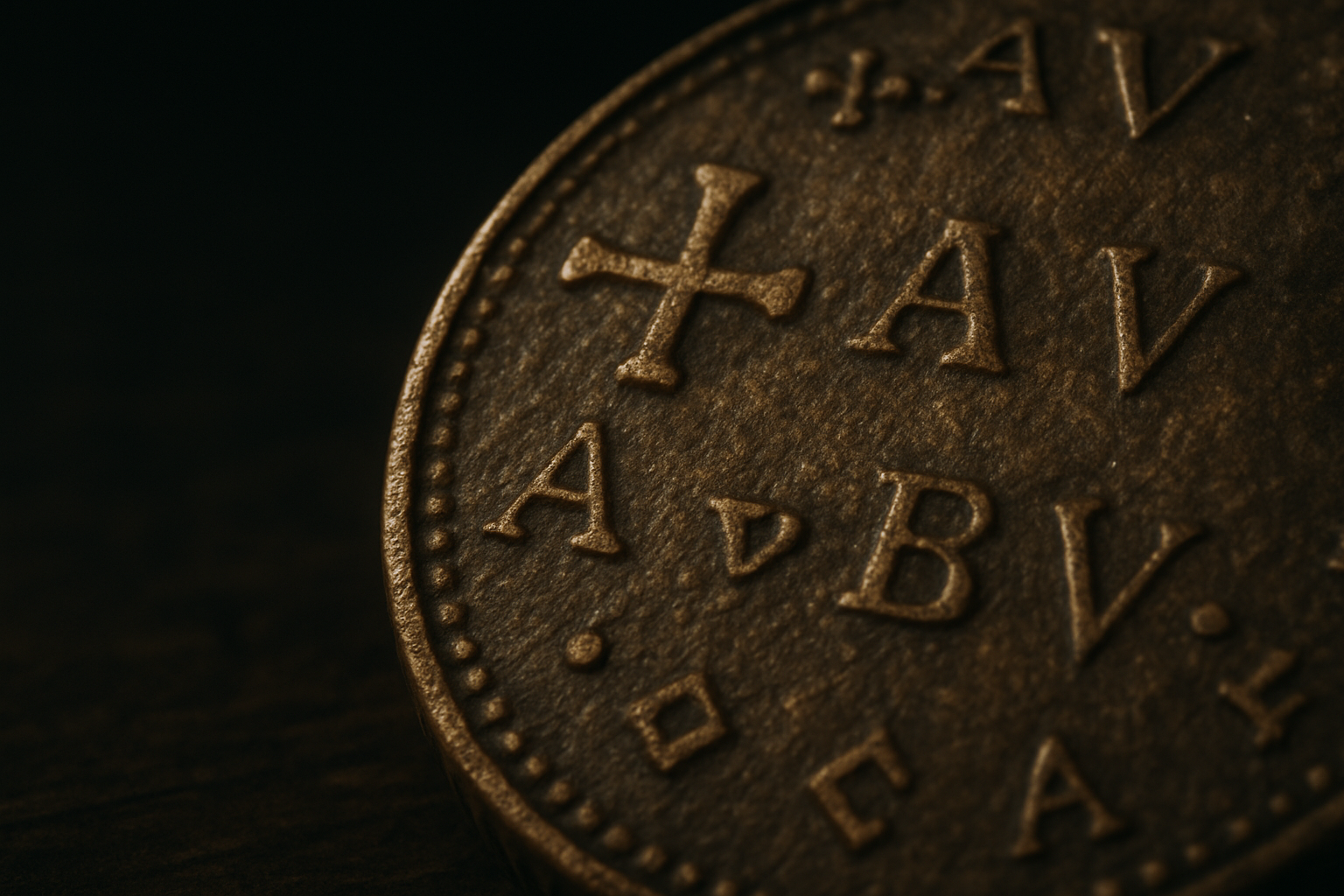
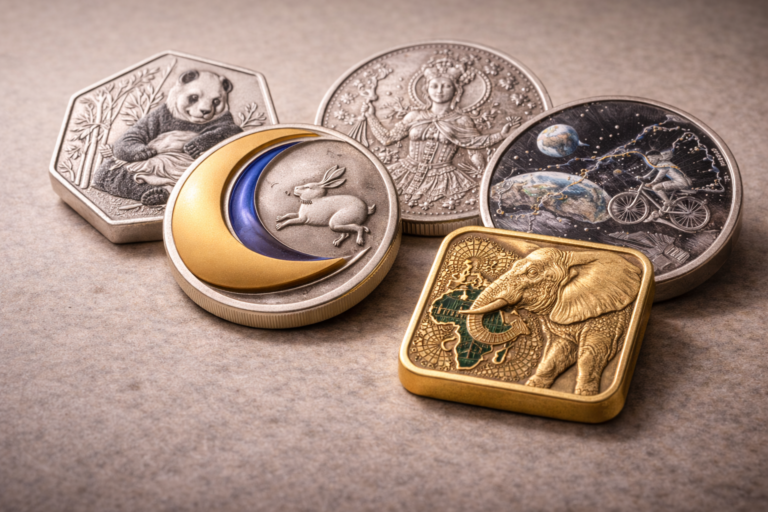
The smallest details often speak the loudest in coin history
Image credit: HistoraCoin.com
Sometimes, wear makes a coin more moving. A coin that is too perfect can feel like it never lived. A coin that carries touch marks feels like it belonged to real people. It passed through real days. It survived real routines.
That is why the oracle never looks down on wear. The oracle reads it.
Reading Coins Like a Manuscript
If you want to understand the art of reading coins, imagine you are reading a manuscript that has been handled for centuries. Some pages are faded. Some ink is missing. Some corners are bent. But the structure is still there. The story can still be reconstructed if you know how to follow it.
Coins work the same way. The design is the grammar. The symbols are the vocabulary. The wear is the smudging of time. Your job is not to guess wildly. Your job is to build meaning carefully.
Start by identifying what type of coin you are looking at in a broad sense. Is it clearly modern, or does it feel older in style? Does it carry a portrait style associated with monarchies, republics, or empires? Does the script look Latin-based, Arabic-based, Cyrillic-based, or something else? Does the coin carry numerals you recognize, or a numbering system you need to interpret?
This stage is not about being right immediately. It is about narrowing the world. You move from infinite to manageable. Then you move from manageable to specific.
One of the most satisfying moments in coin reading is when the coin stops feeling like a mystery and starts feeling like a known voice. You recognize a pattern. You recognize an emblem family. You recognize a lettering style. You recognize how an era liked to present itself.
It feels like the coin is meeting you halfway.

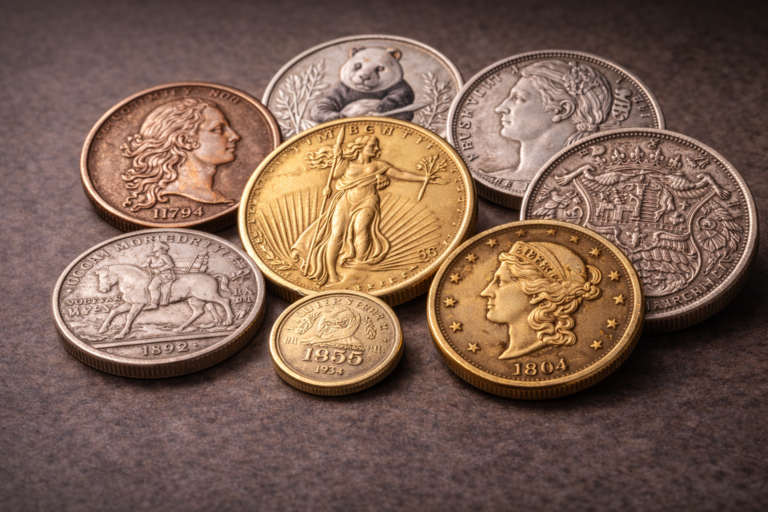
Coins can be read like pages once you learn where to look
Image credit: HistoraCoin.com
When you reach this point, you also begin to notice something emotional. Many coins were designed for speed and clarity, yet decades later they invite slow reading. What was once everyday becomes historical. What was once ignored becomes precious in a different way, precious as memory.
Mistakes Myths and Misreadings
When people first learn coin reading, they often become excited and start seeing patterns everywhere. That is normal. Coins encourage pattern recognition. But the coin oracle learns to separate observation from assumption.
A worn letter can look like a different letter. A scratch can look like a symbol. A stain can look like intentional shading. Lighting can distort relief. Camera angles can create illusions. Even the way you tilt the coin can change what your brain thinks it sees.
The oracle responds with calm. They change the angle. They change the light. They compare both sides. They look at the rim. They look at the spacing and the layout. They ask, does this make sense in the context of the coin’s overall design language?
This is where myth enters coin reading in a healthy way. Not myth as fantasy, but myth as human storytelling. People love dramatic conclusions. People love secret meanings. People love rare mysteries. But the truest coin stories are often simpler and deeper. A coin is interesting because it lived through time, not because it needs to be sensational.
So the coin oracle stays grounded. They enjoy wonder, but they respect evidence.
A Calm Method You Can Use Anytime
If you want a gentle method you can repeat, here is a way to do it without rushing. Think of it like a ritual that turns attention into clarity.
First, take two minutes and simply observe. No conclusions. Just notes. What do you see. What do you feel. What stands out. What looks worn. What looks protected.
Second, identify the most stable clues. The date if it is readable. The main emblem. The script family. The portrait style. The overall layout. These are your anchors.
Third, move to the small clues. Mint marks. tiny letters. edge details. border patterns. spacing quirks. small symbols hidden near the date. These are your fingerprints.
Fourth, consider context. A coin does not exist alone. It belongs to a time and place. The style of the coin often narrows that context naturally. If the coin feels modern and minimal, you interpret it differently than a coin that feels ornate and ceremonial.
Finally, allow uncertainty to remain if needed. That sounds strange, but it is part of the art. Some coins take time. Some coins require comparison. Some coins are meant to be researched slowly. A coin that resists fast answers is not your enemy. It is your teacher.
When you practice this method, you begin to feel something that is hard to explain to people who do not collect. The coin starts to feel like a message. Like a small object carrying a large life.
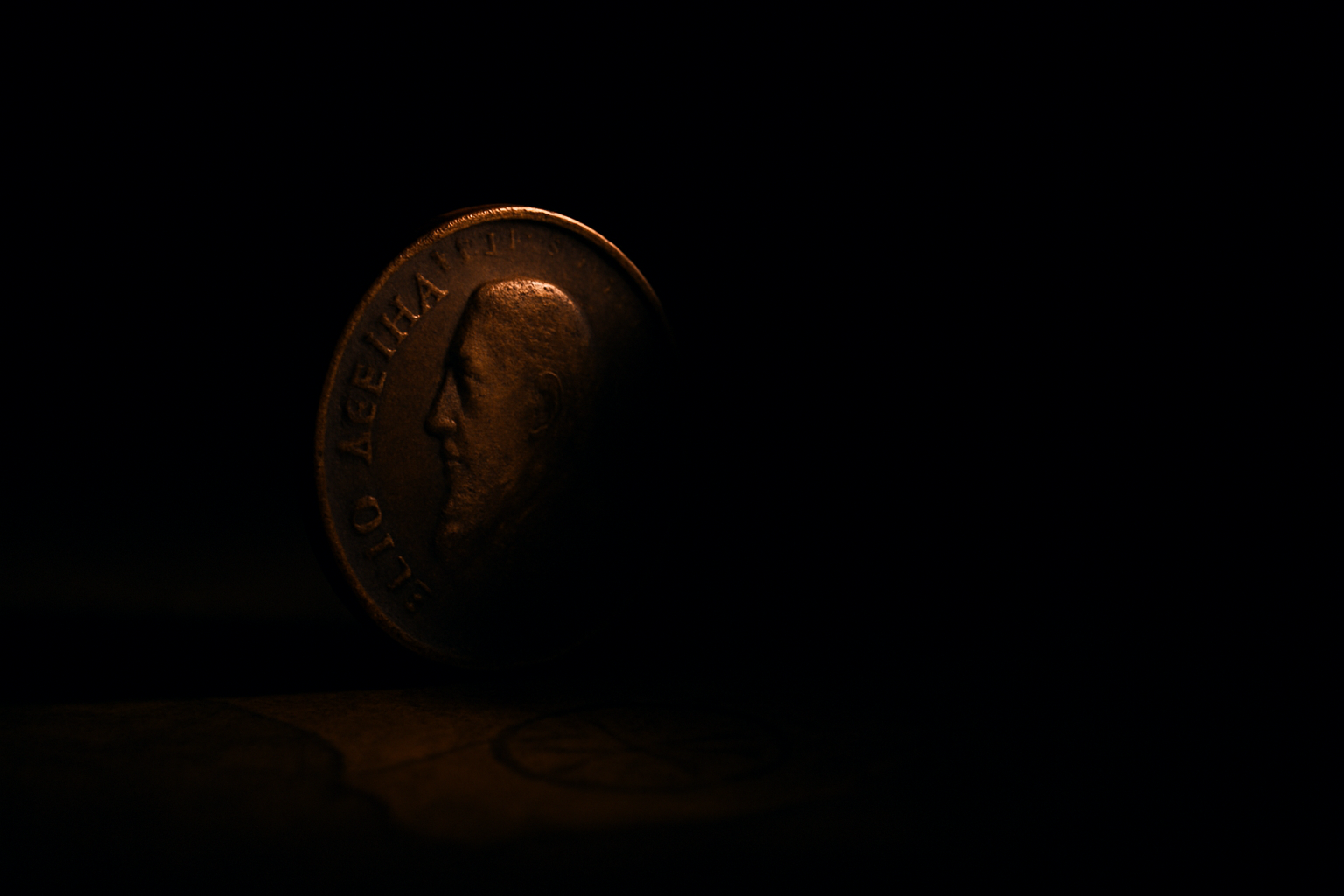
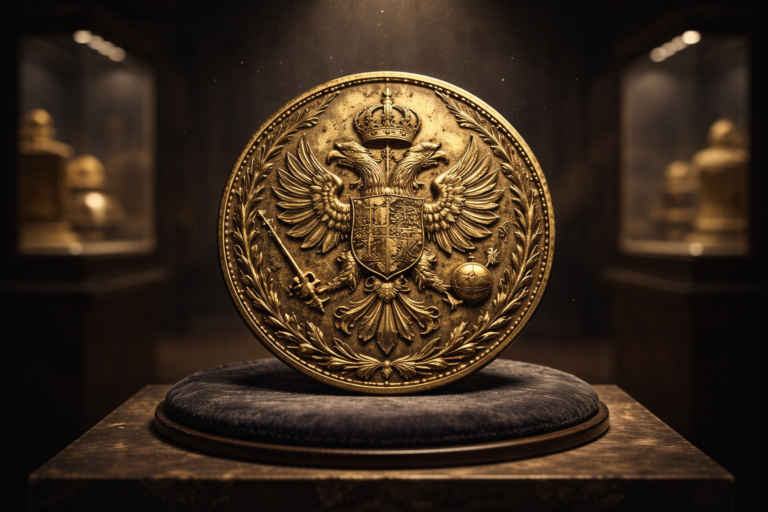
Not every truth on a coin reveals itself at first glance
Image credit: HistoraCoin.com
That is the coin oracle in its simplest form. Not a trick. Not a tool. A way of seeing.
FAQ
Is coin reading only for experienced collectors
No. Coin reading starts with observation. Experience simply teaches you what to notice faster. Anyone can begin by slowing down and looking closely.
What detail should I focus on first if a coin is worn
Focus on layout and structure. Where the date sits, how text is spaced, what emblem remains, and what border style is present. Worn coins still keep their design skeleton.
Why do tiny symbols matter so much
Small marks often function like signatures. They can point to specific production choices, locations, or design variants. They help narrow possibilities when major elements look similar.
Can two coins look the same but still be different
Yes. Many issues share major designs, while small differences in lettering, spacing, borders, or marks separate them. This is why careful reading matters.
Reality Check
Coin identification is often treated like a fast answer game. In reality, the most reliable insights come from slow observation and context. A coin’s meaning is rarely locked in a single feature. It emerges from the relationship between symbols, text, wear, and design choices that reflect the era.
Final Verdict
The coin oracle is not a shortcut. It is a skill. The art of reading forgotten details turns ordinary coins into witnesses and transforms curiosity into understanding. When you learn where to look, coins stop feeling like objects and start feeling like stories that survived.
Share This Story
If this story sparked your curiosity, feel free to share it with others who enjoy uncovering hidden details in history.


Explore More on HistoraCoin
Keep Exploring
If you enjoy learning how history hides in small details, take your time exploring more coin stories on HistoraCoin. Each article reveals another layer waiting to be noticed.
About the Author
HistoraCoin Team
The HistoraCoin Team explores the hidden stories behind coins from every era and culture. Our focus is history, symbolism, and the human moments quietly preserved in metal.
For more historical coin stories, visit HistoraCoin.