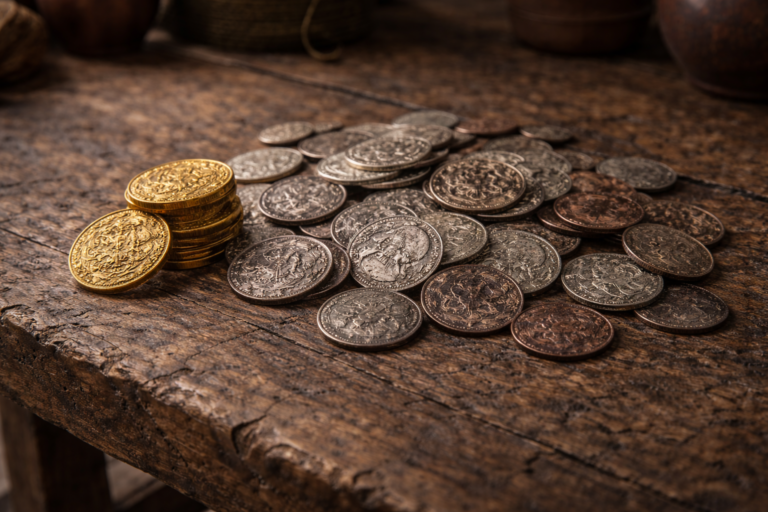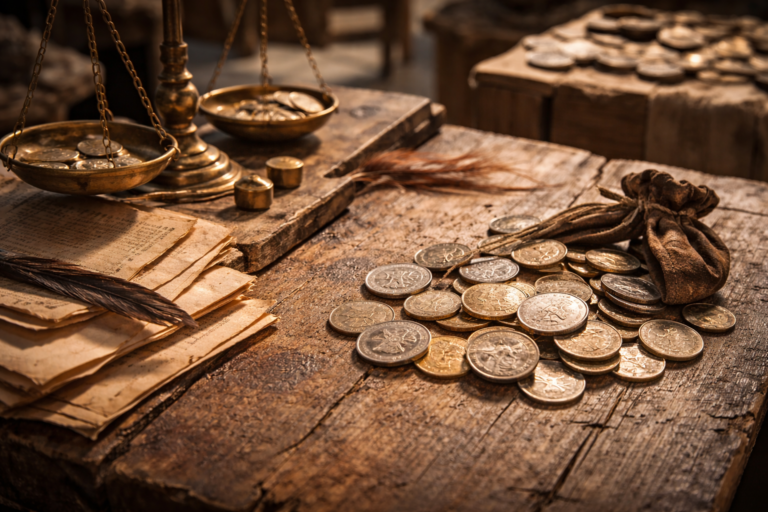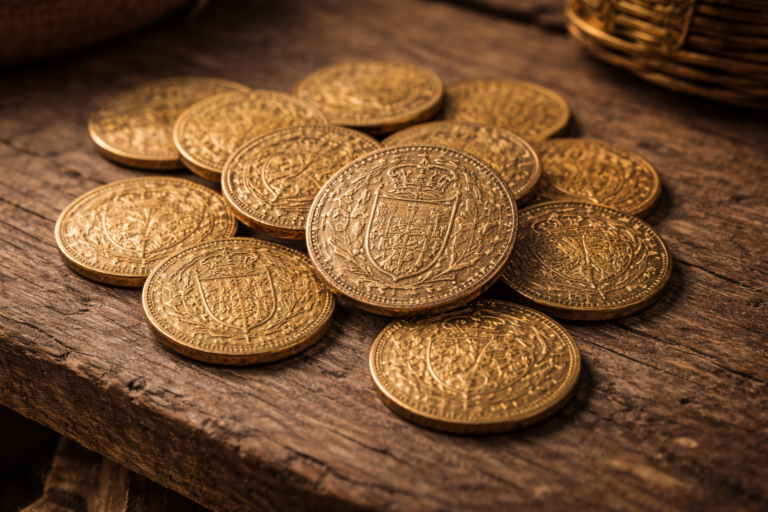
The Coin That Traveled Without Borders
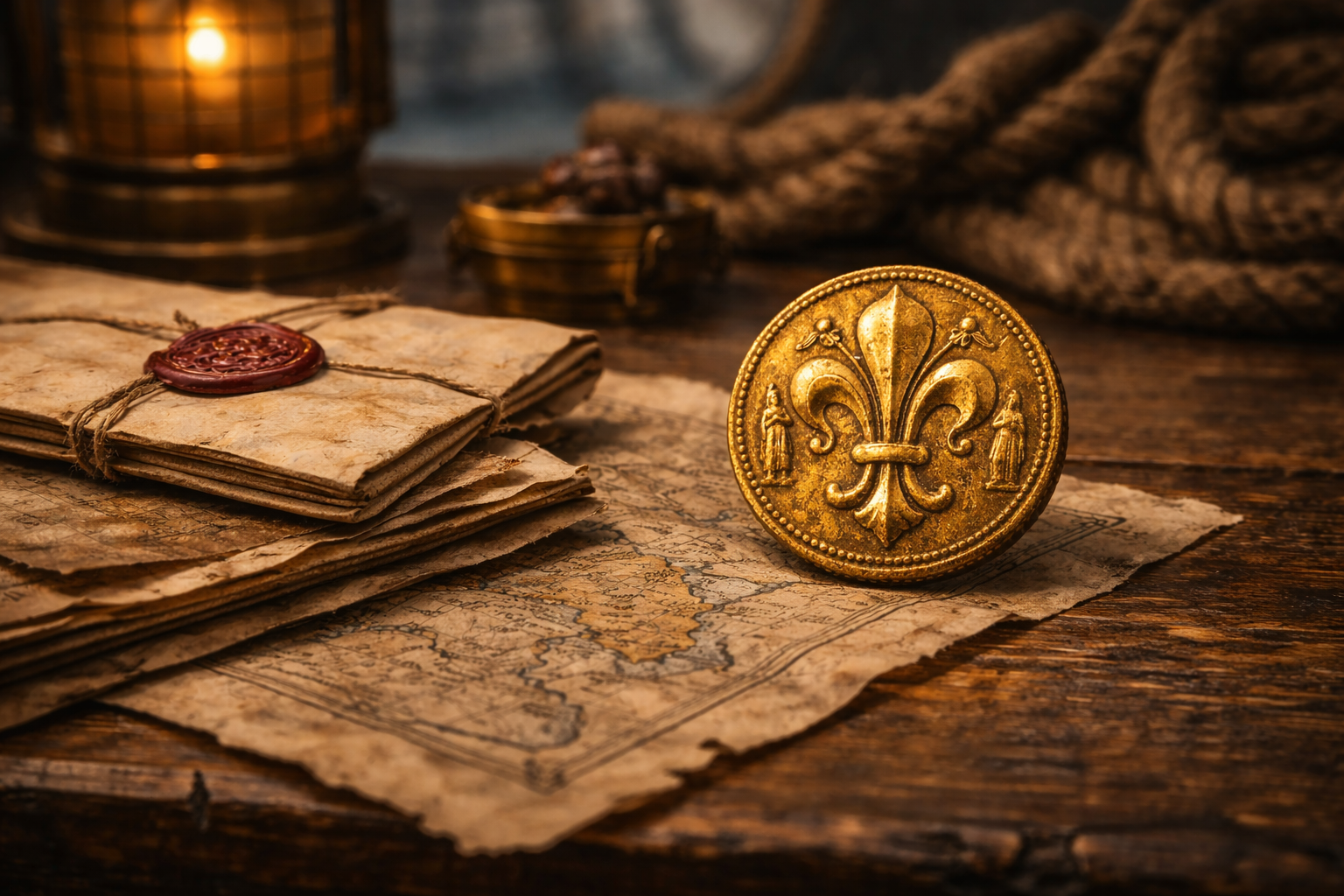
Estimated reading time. 10 to 13 minutes.
Imagine stepping into a crowded port market in the fifteenth century with a pouch of coins from your hometown. A buyer studies your face, then your hands, then your money. Not because they dislike you, but because every city has its own mint, its own rules, and its own temptations. In a world where news travels slowly, trust can vanish faster than a ship at sunset.
Then you place a single gold coin on the table and the conversation becomes easier. No long debate about purity. No awkward pause while someone searches for a local money changer. The coin is recognized, respected, and quietly welcomed. This is the story of a coin that traveled without borders, not because borders did not exist, but because commerce often cared more about trust than lines on a map.
Table of Contents.
- What borderless really meant in the fifteenth century.
- Why merchants needed one coin everyone understood.
- The Venetian ducat as a passport made of gold.
- How trust worked when money was metal.
- Design, reputation, and the power of consistency.
- The networks that carried a coin across Europe.
- What this coin meant to real people.
- Limits, risks, and why trust was never free.
- Legacy and what modern money can learn from it.
- FAQ.
What borderless really meant in the fifteenth century.
When we say a coin traveled without borders, we are not claiming Europe was peaceful or unified. The fifteenth century had wars, rival cities, shifting alliances, and constant negotiations over tolls and trade rights. Borders existed, but they did not always look like the modern kind. Some were walls and checkpoints. Others were rivers where a guard collected fees. Many were invisible agreements between towns, lords, and merchant groups.
In that environment, borderless is not a political statement. It is an economic description. It means a coin could cross from one market culture into another and still be understood. It means a merchant could arrive in a foreign port and find at least one form of payment that did not trigger suspicion. It means contracts could be written with fewer exchange headaches, because the unit of value was familiar.
Most importantly, it means speed. Trade lives on speed. If every transaction requires testing metal, comparing local rates, and arguing about standards, markets slow down. When markets slow down, risk rises. When risk rises, prices rise. So the idea of a borderless coin is really the idea of a friction reducing tool. A coin that reduces friction becomes powerful even if it is physically small.
No coin was accepted everywhere all the time. Acceptance depended on place, moment, and reputation. But some coins became trusted enough that they functioned like a shared language in major trade centers.
Why merchants needed one coin everyone understood.
A fifteenth century merchant faced a challenge that modern shoppers rarely think about. Currency was local. Even nearby towns could have different coin types, different weights, and different expectations. A traveler might carry multiple coins at once, not because they were rich, but because the wrong coin could slow a deal.
Money changers helped, but they were not a perfect solution. Exchange costs could eat profit. Some markets were unfair to outsiders. Some coinage was hard to verify quickly. And in times of political tension, a coin connected to a rival region could be discounted or refused.
Merchants wanted a coin that solved these problems in one move. A coin that was broadly recognized. A coin with a reputation for stable gold content. A coin that people accepted not because they loved the issuer, but because the coin had proven itself across many transactions. In other words, merchants wanted a portable agreement.
This is where certain gold coins became more than money. They became standards. When a coin becomes a standard, it starts shaping other prices, other coins, and even the way people write contracts. It becomes a reference point that reduces uncertainty. And in a world of uncertainty, a reference point is an advantage.
The Venetian ducat as a passport made of gold.
If you study fifteenth century trade, one name keeps returning. The Venetian ducat. Venice was not just a city. It was a maritime system. It connected the Mediterranean to broader European networks through shipping, diplomacy, and commercial discipline. When Venice grew strong as a trade hub, its money gained visibility. And visibility is the beginning of acceptance.
The ducat mattered because it was predictable. Predictability sounds boring, but in commerce it is a form of comfort. A coin that stays consistent becomes easy to recognize. Easy recognition becomes quick acceptance. Quick acceptance becomes a habit. And once a habit forms, the coin begins to travel on momentum.
Think of the ducat as a passport made of gold. It did not grant political rights, but it granted commercial access. A merchant could use it as a bridge between markets. The ducat helped traders avoid long exchanges in unfamiliar places. It reduced the number of hands a payment needed to pass through. Fewer hands meant fewer opportunities for loss, fraud, or delay.
A trusted coin does not just buy goods. It buys time, and time was the most expensive thing a merchant could waste.
How trust worked when money was metal.
Modern trust can feel abstract. We swipe a card, tap a phone, and the transaction is done. But medieval trust was physical. It could be weighed. It could be tested. It could be damaged by clipping, filing, or counterfeiting. It lived in the sound a coin made when struck, in the feel of its edge, and in the reputation of the mint that produced it.
Merchants developed routines for trust. They weighed coins. They compared them to known samples. They watched for signs of tampering. They learned which pieces were reliable and which were suspicious. Over time, a coin that consistently passed these tests created a different kind of trust. It created trust by repetition.
Repetition does something powerful. It turns caution into confidence. When confidence spreads, people stop treating the coin as a question and start treating it as an answer. That shift is how a coin becomes a standard.
It is also important to understand that trust had social layers. Traders trusted coins partly because they trusted other traders who trusted them. If respected merchants used a coin, others followed. If big contracts were settled in a coin, smaller deals copied the habit. Trust was built through networks, and those networks often mattered as much as the metal.

Design, reputation, and the power of consistency.
Coin design in the fifteenth century was not simply decoration. It was a signal. A signal of authority, of identity, and of quality. A recognizable design helped merchants identify a coin quickly, which mattered in crowded markets. It also helped discourage casual counterfeiting, because precise imagery required skill.
But design alone never guarantees trust. Trust is earned by consistency. When a mint maintains standards over time, merchants begin to expect stability. Expectation shapes behavior. Merchants begin to price goods with that coin in mind. They begin to store value in it. They begin to use it to settle obligations. Slowly, the coin becomes a reference point.
There is a deeper reason consistency mattered. In the medieval world, authority was often contested. A ruler could change. A city could fall into crisis. A treasury could be tempted to weaken coinage standards. A coin that remained reliable in spite of shifting politics became a rare thing. Rarity of reliability is what made certain coins famous.
This is also why merchants valued a coin’s reputation beyond its gold content. Two coins might contain similar metal, but one might be accepted quickly while the other would be treated with suspicion. Acceptance has value. A coin that buys acceptance is worth more in practice than metal alone suggests.
The networks that carried a coin across Europe.
Coins do not travel by themselves. People carry them, and systems move them. In the fifteenth century, those systems included shipping routes, trade fairs, banking correspondence, and merchant partnerships that crossed regions. Venice sat at a crossroads of maritime movement. Goods arrived from the eastern Mediterranean, moved into Europe, and found buyers in places that had never seen the sea.
Each time a merchant paid with a trusted coin in a new place, they were performing a small act of persuasion. They were saying, this coin is safe. This coin will be accepted after I leave. This coin will not embarrass you in the next transaction. When that persuasion worked, acceptance spread.
Trade fairs played an especially important role. Fairs brought merchants from many regions into the same space for a limited time. Deals needed to happen quickly. In such environments, coins with clear reputations had an advantage. A coin that reduced debate became the coin of choice. Over time, that preference strengthened its reputation.
Banking networks also helped. Even when payments were not physically moved as coin, contracts and settlements referenced stable units. A well known coin served as a unit of account. It became the measuring stick for obligations. That measuring stick made trade more legible across distance.

What this coin meant to real people.
It is easy to imagine the ducat only in the hands of wealthy merchants. But the influence of a trusted coin spread beyond elite circles. A strong standard affected prices and wages indirectly. It shaped the way markets behaved. It influenced how local coins were valued in exchange.
For a shopkeeper, a widely trusted gold coin could mean fewer disputes. It could mean clearer expectations about value when dealing with foreign customers. For artisans and suppliers, trade that moved smoothly often meant steadier demand. Steadier demand could mean more consistent work. In that way, high level currency trust can ripple down into everyday life.
There was also a psychological effect. When money feels uncertain, people act cautiously. They shorten their time horizons. They avoid long term commitments. When at least one trusted standard exists, planning becomes slightly easier. Contracts become more believable. Partnerships become more stable. A trusted coin helped create an environment where long distance cooperation felt less risky.
This does not mean life became simple. People still faced shortages, taxes, and political conflict. But in the middle of that complexity, a reliable coin offered one small island of predictability. For merchants, that predictability was priceless. For everyone else, it could mean fewer shocks in a world full of shocks.
Limits, risks, and why trust was never free.
Even the most trusted coin lived in a world of threats. Counterfeiting was a constant temptation because gold offered high rewards. Clipping and filing could reduce weight. Local authorities could impose fees or restrictions on foreign coin usage. Wars could disrupt routes and change what was accepted.
There is also the reality of information. Merchants in major hubs might know the details of a coin, but people in smaller towns might not. Acceptance could fade as distance increased from the main trade routes. A coin might be welcomed in one port and questioned in another. Borderless, again, is a practical description, not a guarantee.
Another limitation is that trust could become a target. If everyone trusts a coin, attackers focus on it. That is why trusted standards require vigilant enforcement. Mints needed to protect reputation. Merchants needed to remain alert. Trust was built through repetition, but it could be damaged quickly by scandal.
A widely accepted coin did not remove risk from trade. It reduced one category of risk, payment friction. Merchants still faced storms, piracy, changing tolls, and political conflict.
Legacy and what modern money can learn from it.
The modern world often treats money as a system of screens and numbers. But the deepest principles of money are older than any modern technology. People want a unit that feels stable. Markets punish uncertainty. Standards emerge when enough people agree that a tool is reliable.
A coin that traveled without borders shows how standards form. It forms through consistency. It forms through networks. It forms through repetition. Once formed, the standard becomes self reinforcing. People accept it because others accept it. They build contracts around it. They measure prices with it.
This is why the fifteenth century is so fascinating for coin history. It sits on the edge between medieval fragmentation and early modern coordination. You can watch economic habits becoming more organized. You can see reputation behaving like a currency. You can see how a city’s discipline can project influence without conquest.
The lesson is not that gold is always best. The lesson is that trust is the true engine. Gold worked because it was durable, scarce, and widely desired. But the ducat’s success was not just gold. It was the social agreement that the coin represented something consistent. That agreement was carried by merchants, reinforced by markets, and protected by reputation.
If you want to explore how meaning and attention shaped what people value in coins, these two stories connect naturally with the world of border crossing trade.
FAQ.
What does it mean when a coin traveled without borders.
It means the coin was widely recognized and trusted in major markets across regions, making it easier to use in trade without constant exchange and testing.
Why did merchants prefer a widely trusted gold coin.
Because it reduced friction. Faster acceptance meant faster deals, lower exchange costs, and fewer opportunities for disputes or fraud.
Was one coin accepted everywhere in Europe.
No. Acceptance varied by region and situation. Some coins simply had stronger reputations in major trade hubs, which made them feel almost universal in practice.
What is the main lesson for modern money history.
Standards form when consistency meets networks. A trusted unit becomes powerful because it reduces uncertainty, and uncertainty is what markets fear most.