The Coin That Vanished After One Year – 1933 Gold Eagle
⏱️ Estimated Reading Time: 8 minutes
The Coin That Vanished After One Year – 1933 Gold Eagle
It was minted, admired, and then condemned — all in the same year. The 1933 Gold Eagle stands as one of the most mysterious and forbidden coins in American history. Born at the height of the Great Depression, this coin never legally entered circulation — yet a few escaped, transforming into treasures worth millions.
💰 A Golden Dream Cut Short
The early 1930s were turbulent years. The Great Depression had shattered economies, and gold was fleeing banks in panic. To restore stability, President Franklin D. Roosevelt issued an executive order in 1933: Americans were required to surrender their gold to the government. Gold coins, once symbols of wealth, suddenly became illegal to own.
But even as the new policy took effect, the U.S. Mint had already struck thousands of $20 Saint-Gaudens Double Eagles — including the 1933 edition. By the time the order came, none had been officially released — and nearly all were melted down.
🦅 The Beauty of the Saint-Gaudens Design
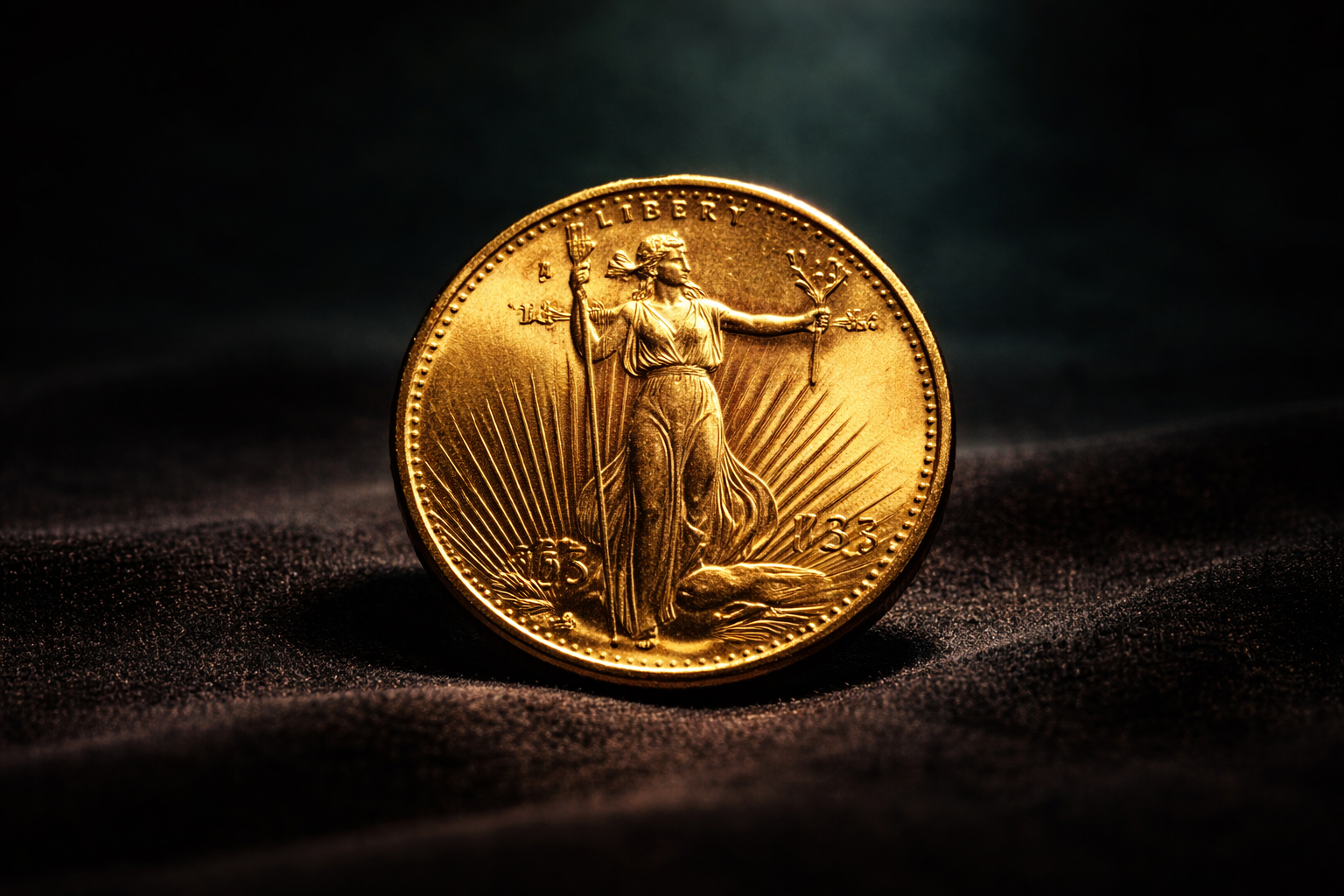
The coin’s design was the masterpiece of artist Augustus Saint-Gaudens, featuring Lady Liberty stepping forward with a torch in one hand and an olive branch in the other, against rays of the rising sun. On the reverse, a majestic eagle soars in full flight. It was widely regarded as the most beautiful American coin ever minted — and the 1933 version would become its most elusive.
🔒 The Order to Destroy
In compliance with Roosevelt’s new gold ban, the Treasury ordered all 1933 Double Eagles to be melted. A total of 445,500 coins were struck — yet none were legally issued for circulation. The Mint’s ledgers recorded their destruction, marking an official end to America’s golden age of coinage.
But history, as always, had other plans.
🕵️ The Great Escape
Somehow, a few 1933 Double Eagles slipped through the cracks — possibly exchanged by Mint employees for older coins before the melt. For decades, their existence was whispered about in numismatic circles. Then, in 1944, one surfaced in the hands of the Egyptian King Farouk, legally exported under a temporary license. When the U.S. tried to recover it, the coin mysteriously disappeared — only to resurface decades later.
💎 The Million-Dollar Legend
In 2002, that same King Farouk coin — the only 1933 Double Eagle legally permitted for private ownership — sold at auction for $7.59 million. In 2021, it shattered records again, selling for nearly $19 million at Sotheby’s, becoming the most expensive coin ever sold at the time.
Today, only about 13 examples are known to exist, all but one held by the U.S. government. They remain a symbol of mystery, legality, and beauty — a bridge between art and outlawed history.
🇺🇸 Quick Facts About the 1933 Gold Eagle
The 1933 Double Eagle was struck at the Philadelphia Mint, made of 90% gold and 10% copper. Each coin weighs 33.43 grams and contains nearly one full troy ounce of pure gold. Although over 400,000 were minted, almost all were melted by 1937. Only one is legal for private ownership, while others remain in museums or secured in the U.S. Treasury’s vaults.
⚖️ Reality Check
Collectors should be cautious: owning or trading a 1933 Double Eagle without government authorization is illegal. The U.S. Secret Service has seized several examples in the past. However, modern 1933 replicas and commemoratives are perfectly legal to own and display.
🔥 Final Verdict
The 1933 Gold Eagle is more than a coin — it’s a forbidden masterpiece. Struck in gold, silenced by law, and reborn as legend, it embodies the fine line between beauty and power. It’s not just history you can hold — it’s history you were never meant to.
Visit HistoraCoin.com for more legendary stories from the world of rare coins.