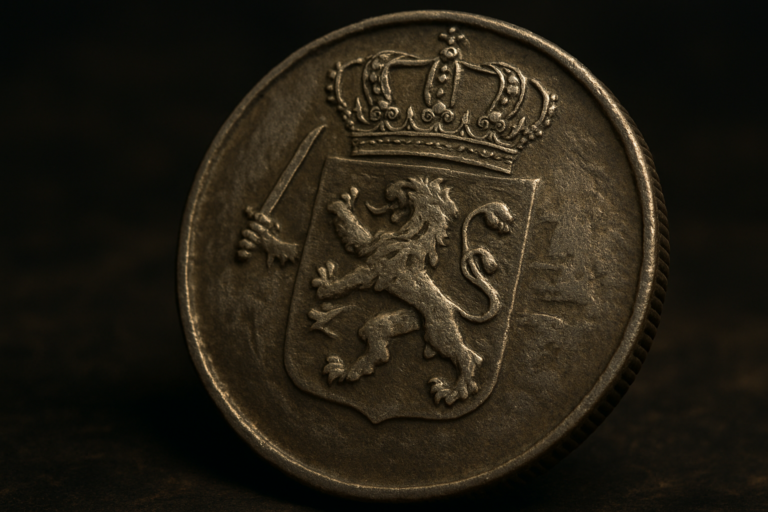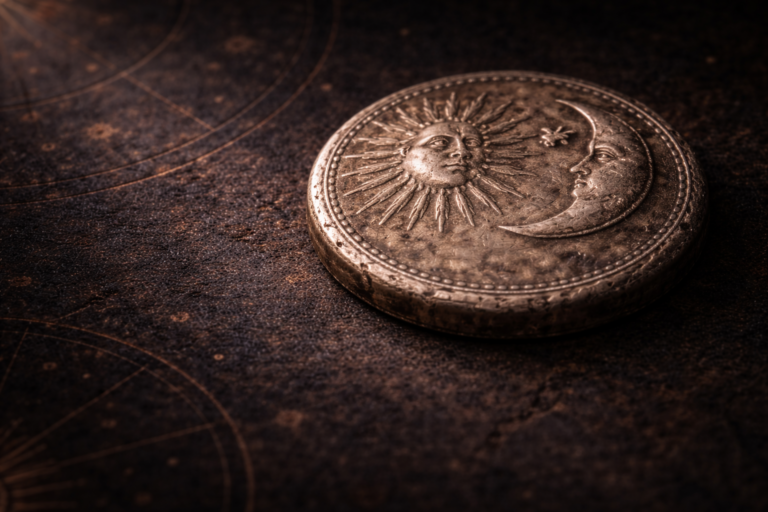
The Devil’s Penny – Europe’s Darkest Coin Legend
This story is brought to you by HistoraCoin – where every coin hides a shadow.
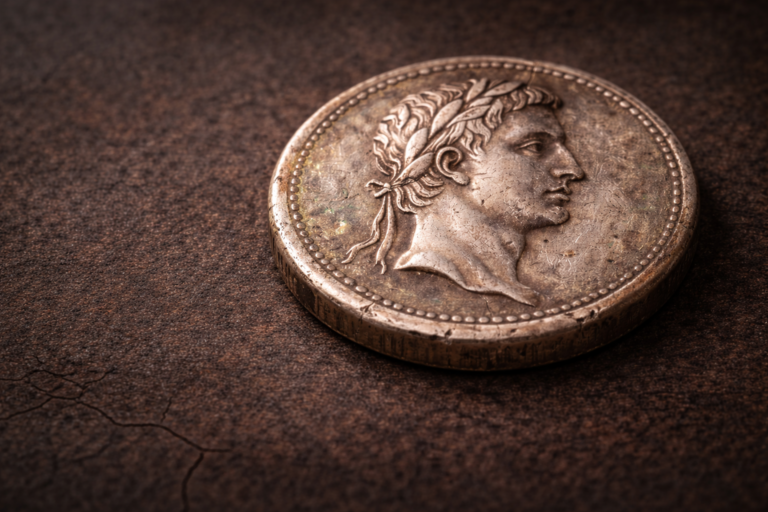
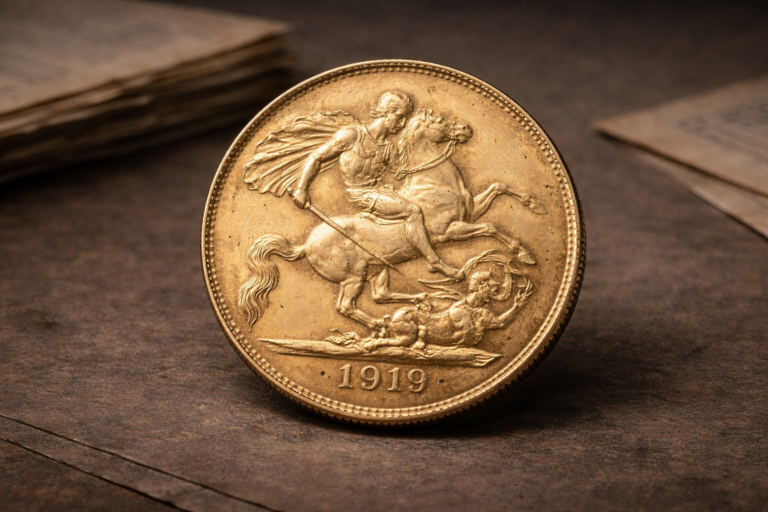
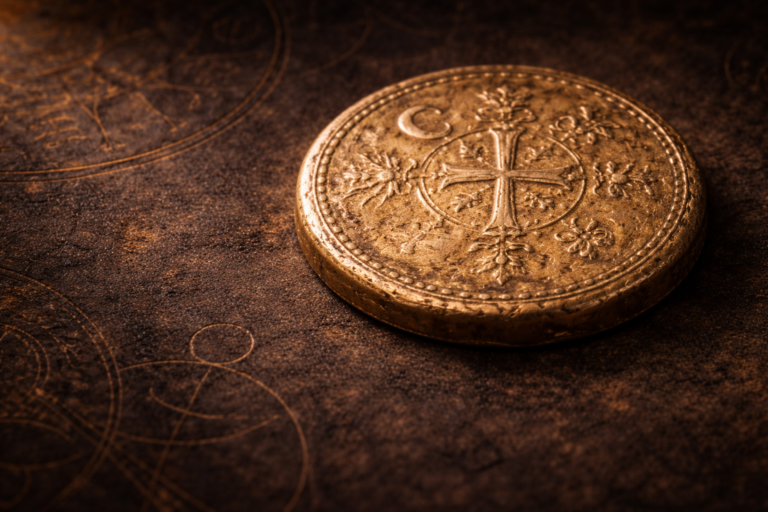
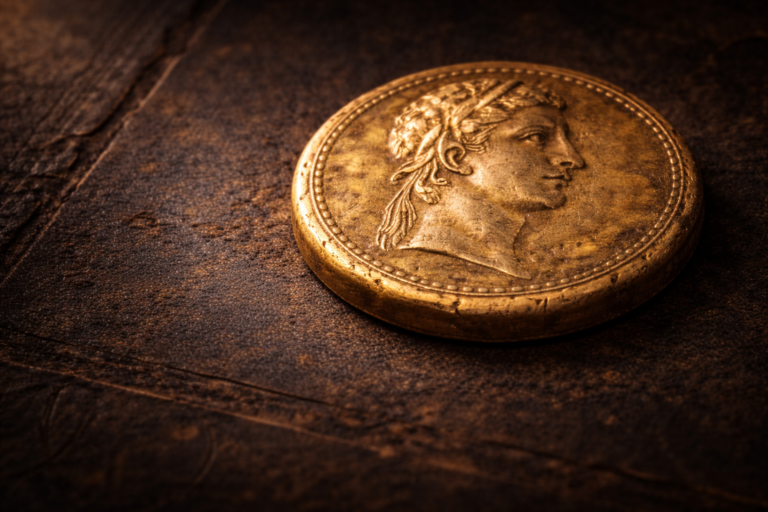
Have you ever held a coin and wondered what it’s seen? Whose hands it’s passed through? Some coins carry stories of kings, others of empires. But there’s one coin, my friend, whispered about in the dark corners of Europe — a coin not meant to exist at all. They call it The Devil’s Penny.
It’s said that those who find it gain fortune beyond belief — but every blessing has its price. The coin gives, then takes. Some say it doesn’t buy goods… it buys souls.
🌑 A Penny That Shouldn’t Be
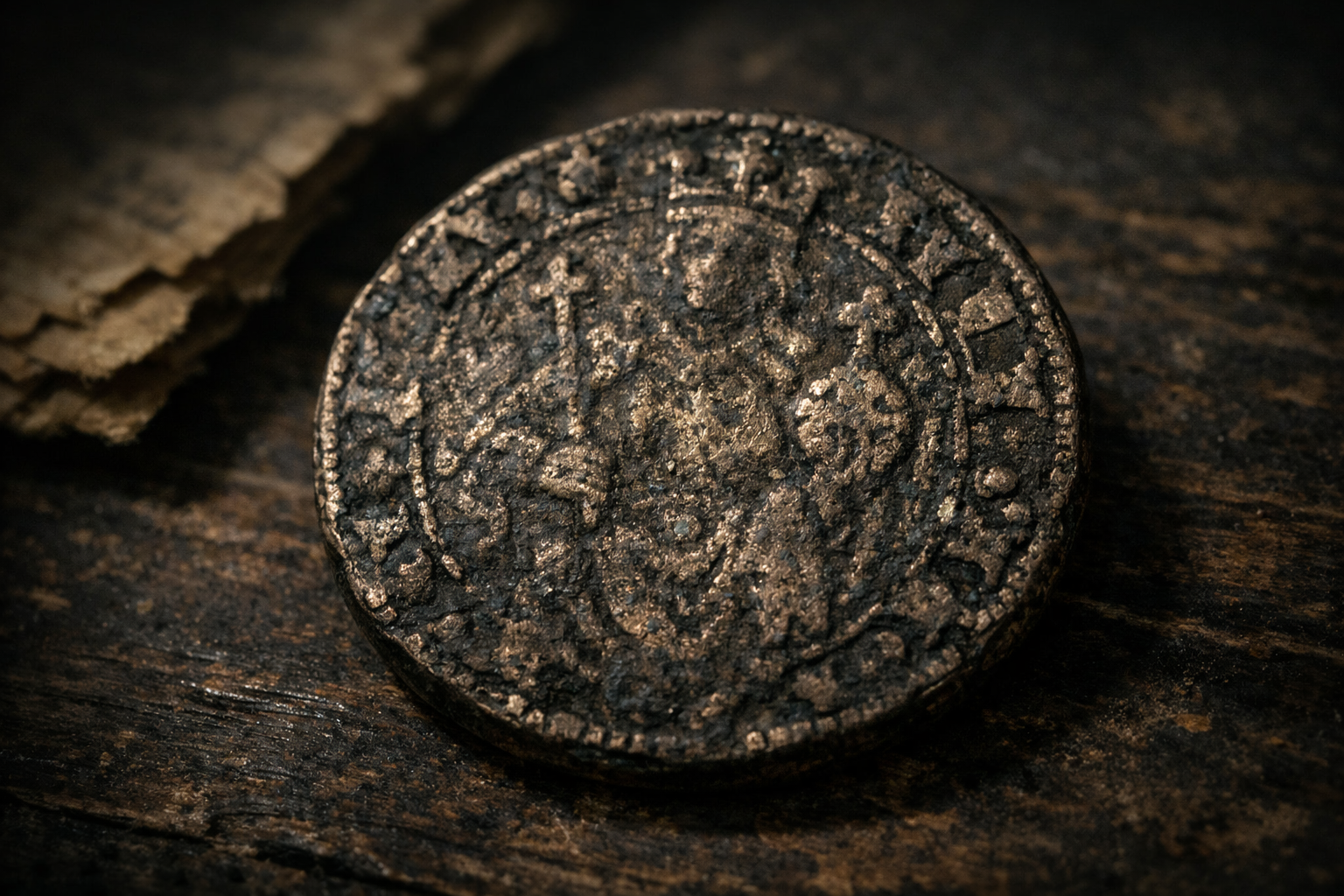
The story begins in 1629, in a fog-covered village in northern England called Ravenshollow. The villagers were poor, the church crumbling, and winter came early that year. One evening, a blacksmith named Thomas Hale found a coin outside his forge door — a single copper penny, shining unnaturally bright beneath the snow.
He bent to pick it up, and as his fingers touched it, the air grew warmer. The metal pulsed — faintly, like a heartbeat. “Strange,” he muttered. But the cold was biting, and a penny was a penny. He slipped it into his pocket.
That night, when he opened his till, he found not one penny… but fifty. By morning, his forge roared hotter than ever, his debts were paid, and customers flooded in. “God has blessed me,” Thomas said with a grin. The village priest disagreed.
“No blessing comes from the dark,” Father Alden warned. “Burn that coin.” Thomas laughed — and that laughter echoed far longer than it should have.
🔥 The Bargain
Within days, Thomas’s fortune grew. His hammer never missed. His fire never died. But then came the dreams. He saw a figure — tall, cloaked, with eyes like burning coals. It spoke in whispers, words that crawled under his skin: “All that glitters is borrowed.”
When he woke, the coin was resting on his chest. He threw it into the furnace — yet the next morning, it was back on his anvil, cool as ever. “It wants something,” said his wife, trembling. “Then let it have it,” Thomas replied grimly, “if it means we never starve again.”
And so he worked — day and night, fueled by greed, pride, and a strange warmth that filled his blood. But the villagers began to whisper. Livestock died near his house. The church bell tolled at midnight with no wind to move it. And Thomas’s eyes — once blue — had turned the color of old copper.
🕯️ The Fire at Ravenshollow
On the final day of winter, smoke rose from the forge. Flames devoured the roof. The villagers gathered, shouting, praying, some running to help. They found Thomas inside, hammering still — laughing as fire licked his arms. “It’s mine!” he screamed. “He promised it’s mine!”
When the fire died, only ashes remained. The hammer was melted, the anvil cracked — and in the soot lay a single coin, untouched by flame. Father Alden took it, placed it in a silver box, and buried it beneath the church altar.
He sealed it with wax and wrote in his journal:
“A coin forged not by man, but by a promise. May it never see light again.”
For a century, Ravenshollow slept peacefully. Until 1732 — when the church collapsed during renovation, and a young boy found a copper coin glinting in the rubble.
💀 The Penny Returns
The boy’s name was Edward Finch. He was ten, curious, poor, and fascinated by shiny things. He showed the coin to his mother, who smiled and said, “You’re lucky, my boy. Keep it safe.” That night, Edward dreamed of fire and a whispering voice: “Say my name, and never want again.”
In the morning, the family’s old mule gave birth to two healthy foals. The next week, their crops doubled. The town called it a miracle. Edward’s mother wept with joy — until Edward stopped speaking. He stared at the coin, turning it slowly in his hands. “It’s warm,” he murmured. “It knows me.”
Days later, he vanished. Searchers found his clothes by the riverbank — and in the mud beside them, the coin, gleaming brighter than ever.
⚙️ The Collector’s Curse
Centuries passed. Wars came and went. The Devil’s Penny resurfaced again in 1891, this time in Paris. A numismatist named Henri Duval bought it from a traveling merchant who claimed it “whispered when held under the moon.” Henri laughed, calling it nonsense. But he loved rare things — and this coin was unique. Its markings didn’t match any mint. Around the edge were faint words in Latin: “Pretium animae” — The Price of the Soul.
Within weeks, Duval’s reputation skyrocketed. He made discoveries that stunned museums. His failing health reversed. But his nights grew darker. He began hearing footsteps in his study, though the door was locked. And sometimes, he swore the coin’s reflection showed not his face, but something smiling behind him.
One morning, his servant found him slumped over his desk, eyes wide open — and a perfect copper circle burned into the wood. The coin was gone.
🌘 The German Manuscript
In 1937, a Nazi occult unit stumbled across records of “Die Teufelsmünze” — The Devil’s Coin — while searching European monasteries. A captured priest described it as “a relic of temptation, one that always finds a master.” The coin was reportedly taken to Berlin for study, then disappeared during an air raid.
Witnesses claimed strange fires erupted near the bunker it was stored in — flames that burned blue and left no ash. After the war, Allied soldiers searching the ruins found a single copper coin embedded in concrete, glowing faintly in the dark. It was seized and transferred to an anonymous vault in Switzerland. Officially, it never existed.
🔮 The Modern Sightings
In 2014, security footage from a small museum in Prague showed an artifact case opening by itself. Inside had been an “unidentified 17th-century penny.” The coin vanished that night. Guards reported smelling smoke and hearing faint laughter echoing through the hallways. The museum dismissed it as a prank — but one guard quit, saying, “It whispered my name.”
Collectors on dark web forums trade rumors of the coin resurfacing. One post claimed it appeared at a London estate sale, wrapped in cloth, sold for £666. The buyer’s name was never disclosed. Two months later, the house burned down — origin unknown.
🕯️ The Legend Explained
So what is the Devil’s Penny? Scholars of European folklore trace its origins to old Celtic myths about “blood coins” — offerings left at crossroads to bargain with spirits. In medieval times, blacksmiths were said to forge coins during lunar eclipses and toss them into the fire while reciting forbidden prayers, hoping for wealth or talent beyond mortal reach.
One legend claims the Devil’s Penny was the first of these — a coin forged in hellfire and cooled in human blood. It was meant to buy favor from a fallen angel, but instead, it became his mark. Whoever owned it carried both fortune and ruin, prosperity and damnation. As the saying went in Ravenshollow: “Rich today, ash tomorrow.”
🌕 The Sound of the Penny
Witnesses across history describe a distinct sound — a faint metallic ring in the air when the coin is near, even when it’s not moving. It’s said to grow louder the longer it’s owned. Some say it mimics a heartbeat; others swear it’s laughter.
One modern researcher, Dr. Amelia Ross, recorded an EVP (electronic voice phenomenon) near the last known site of the coin. The static resolved into a single whisper: “You already paid.”
Her notes end abruptly there. Her camera was found days later — melted.
💭 What the Devil Takes
Maybe the Devil’s Penny isn’t real. Maybe it’s just Europe’s way of warning us about greed. After all, every era has its cursed object — a mirror, a book, a coin. But think about it: coins are the purest form of human desire. They pass through countless hands, carrying ambition, envy, and hope. What if one coin finally absorbed too much of it?
They say money can’t buy happiness — maybe because happiness was never part of the deal.
So if one day, you find an old copper penny glowing in moonlight, don’t pick it up. Just nod, walk away, and whisper what Father Alden wrote on his last page:
“The Devil’s bargain is not what he gives, but what you forget you gave.”
🌩️ The Lesson Beneath the Legend
The Devil’s Penny is a mirror — one that reflects humanity’s oldest temptation: the promise of something for nothing. Its story survives because it speaks to every generation that believes they can outwit consequence. Whether myth or metaphor, its whisper remains the same: every fortune has a cost, and every cost leaves a mark.
🧭 Reality Check
While no verified artifact called “The Devil’s Penny” exists, Europe’s folklore is filled with stories of cursed coins and haunted wealth. From the Faustian pacts of Germany to England’s “Wishing Pennies,” these tales remind us that greed and guilt often weigh heavier than gold.
🏁 Final Verdict
Maybe the Devil’s Penny isn’t buried in any church or vault. Maybe it’s in your pocket right now — the coin you didn’t notice, the deal you didn’t mean to make. Because legends like this don’t vanish. They change shape. They become stories, told over fires and screens, whispered when the lights flicker and someone says, “Let me tell you what I heard…”
🎥 Watch More on HistoraCoin
If tales like this spark your curiosity — where history meets the supernatural — explore more haunting stories of rare coins, myths, and hidden treasures on our YouTube channel: HistoraCoin on YouTube – where history’s mysteries never stop whispering.
❓ FAQ
Is the Devil’s Penny real?
There’s no confirmed evidence, but similar myths of cursed coins exist across Europe’s history and oral traditions.
Why is it called the Devil’s Penny?
Because legends say it was a gift — or a trap — from the Devil himself, rewarding greed and punishing those who keep it.
What happens to people who find it?
Every tale ends the same way — sudden wealth, strange dreams, and an unexplainable tragedy that follows soon after.
Where is the coin now?
Unknown. Some believe it’s sealed in a monastery vault in Austria; others say it’s still out there, waiting for its next owner.
Focus Keyword: devils penny
Keywords: devils penny, cursed coin europe, haunted coins, dark coin legends, european mythology coins, satan coin legend, cursed currency, mysterious coins europe, gothic coin tales, haunted money