The First New World Silver Coin – 1536 Mexican Cob
⏱️ Estimated Reading Time: 14 minutes
The First New World Silver Coin – 1536 Mexican Cob
Long before the United States existed, before the first English settlements, and even before the idea of “America” had taken shape, a different kind of coin dominated the continent — a coin born from conquest, forged by hand, and destined to change global history. In 1536, deep in the heart of Spanish-controlled Mexico, the world witnessed a revolution in money: the birth of the Mexican Cob, the first silver coin ever minted in the New World.
Crude, irregular, and hammered one by one, these early coins would become the financial engine of an empire — and the foundation of currency in early America.
⚔️ The Conquest That Changed Global Wealth
In 1519, Hernán Cortés launched one of the most dramatic and violent military campaigns in history: the conquest of the Aztec Empire. After the fall of Tenochtitlan in 1521, Spain suddenly controlled vast lands rich in gold and silver — more wealth than Europe had ever seen.
But Spain faced a problem: how to turn this raw silver into real money.
The solution was revolutionary. Instead of shipping raw silver across the Atlantic, Spain would create a mint in the New World itself. This would speed up production, reduce theft by pirates, and establish a monetary system for the colonies.
🏛️ The Mexico City Mint – A New Empire’s Heart
By royal decree in 1535, the Spanish Crown established the first mint in the Americas: La Casa de Moneda de México — the Mexico City Mint. It opened officially in 1536 and began striking coins within months.
This was an extraordinary moment. For the first time in history, Europeans were producing official currency outside of Europe itself.
🪙 The Birth of the Cob Coin
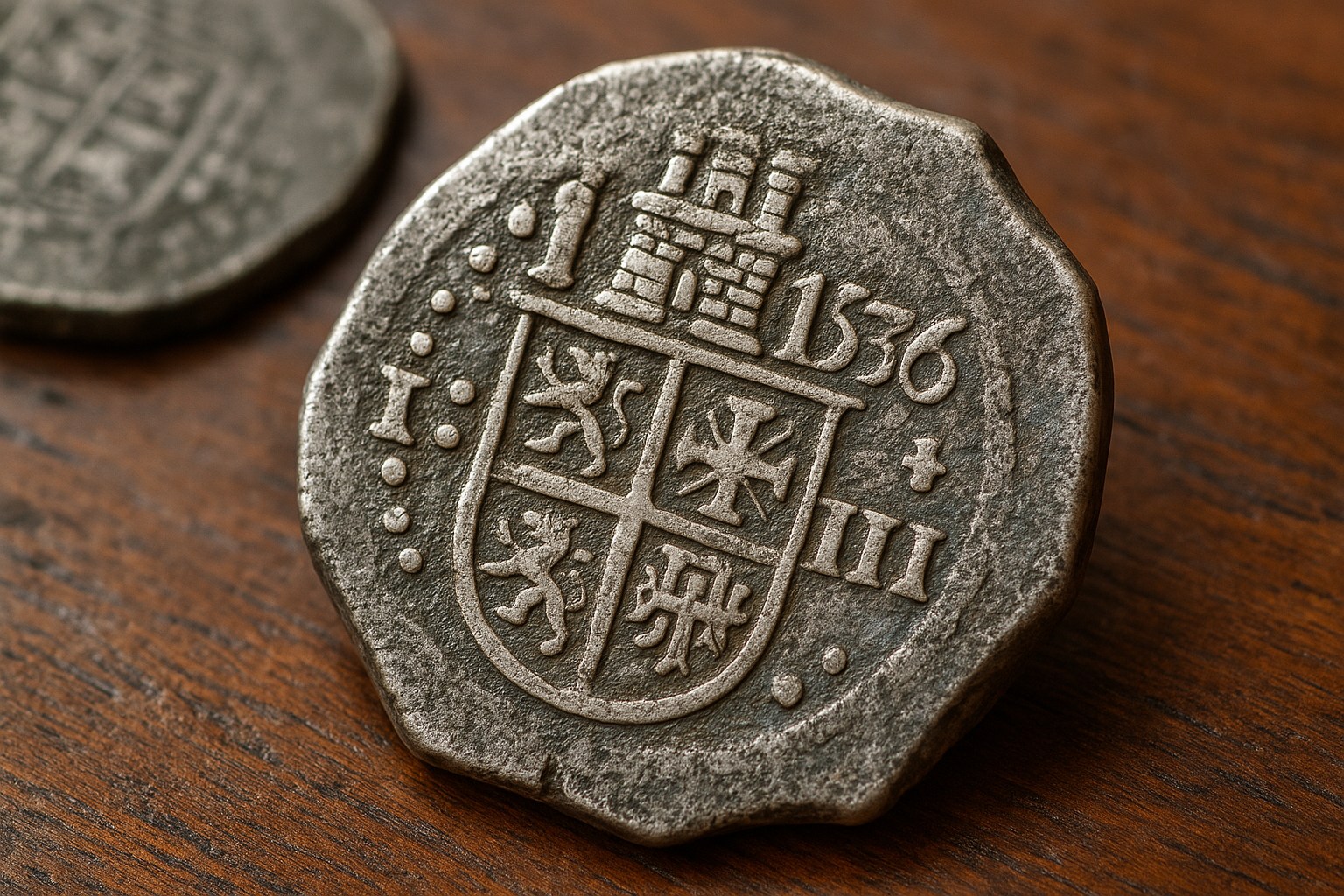
The earliest coins struck were called “cobs”, from the Spanish word “cabo” — meaning “chunk” or “piece.” These coins were NOT round. They were irregular, uneven, and hammered by hand.
🔥 How a Cob Was Made
The process was simple but brutal:
- A bar of silver was cast.
- The bar was chopped into rough blanks.
- Each blank was placed between two dies.
- A worker struck it with a massive hammer.
The result was a coin that looked rugged and wild — but contained a precise amount of silver.
🔍 The First Denominations
The 1536 coins came in:
- 1 real
- 2 reales
- 3 reales (rare)
- 4 reales
- 8 reales — the famous “Piece of Eight”
The 8 reales coin would later become the global currency of the oceans — and the grandfather of the U.S. dollar.
🦅 The Design – Symbols of Power and Faith
The early cobs carried unmistakable Spanish imagery:
- Crowned pillars representing the Pillars of Hercules
- “Plus Ultra” — “More Beyond,” Spain’s imperial motto
- Crosses symbolizing Catholic authority
- Mint mark “M” for Mexico City
- Assayer’s initial indicating purity control
Unlike modern coins, the design often looked off-center, incomplete, or distorted — a badge of its hand-struck origins.
🌎 How the Cob Became the Dollar’s Ancestor
The Mexican 8 reales coin quickly became the most important currency in the world. It circulated in:
- Spain and Portugal
- Europe and West Africa
- Asia via the Manila Galleons
- Every colony in the Americas
It was so trusted for its purity that merchants used it as the universal standard of trade. When the United States later created its own currency, the founders based the U.S. dollar directly on the weight and value of the Spanish 8 reales.
In short: The U.S. dollar exists because of the 1536 Mexican cob.
🛳️ Pirates, Shipwrecks, and Treasure
No story of the cob is complete without the seas. Millions of cob coins were transported by Spanish galleons — and many never reached Spain.
Hurricanes, pirates, and naval battles sent countless ships — and their treasure — to the ocean floor.
Today, some of the most valuable cobs come from:
- 1715 Fleet Shipwreck (Florida)
- 1622 Atocha Shipwreck
- 1600s Caribbean pirate caches
Collectors prize these coins not just for age, but for the adventures they survived.
📜 The Cob in Early North America
Long before the U.S. Mint was founded in 1792, Spanish cobs served as the first currency of the American colonies. They were used in:
- Jamestown
- New York
- Boston
- Charleston
- Philadelphia
Colonial governments even set official exchange rates for them. For 200 years, the cob was America’s unofficial money.
💰 How Rare Is the 1536 Cob Today?
Early cobs (1536–1550s) are exceptionally rare because:
- Most were melted for reuse
- Shipwrecks destroyed many
- Few early examples were saved
- Minting was low in the earliest years
A genuine 1536 silver cob can sell for:
- $3,000–$10,000+ for lower grades
- $20,000–$50,000+ for well-struck examples
- $100,000+ for rare denominations like 3 reales
🧠 Quick Facts About the 1536 Cob
- First year of minting: 1536
- Mint: Mexico City
- Metal: Silver
- Striking method: Hand-hammered
- Shape: Irregular, non-round
- Historical role: First coin of the New World
⚖️ Reality Check
The early Mexican cobs are heavily counterfeited today, especially shipwreck “fantasy” pieces. Most authentic 16th-century cobs show:
- Deep hammering marks
- Off-center designs
- High-purity silver
- Mint mark “M”
- Crude craftsmanship
🔥 Final Verdict
The 1536 Mexican Cob is more than the first coin of the New World — it is the spark that ignited global commerce in the Americas. It shaped the economic foundations of early America, inspired the creation of the U.S. dollar, and survived wars, storms, pirates, and empires.
Rough, rugged, and hammered by hand, each cob carries the story of an empire and the birth of a continent. Few coins in history hold such power, such mystery, and such raw authenticity.
Visit HistoraCoin.com for more legendary stories from the world of rare coins.