The Gold Coins of Brazil – Empire and Independence
This article is brought to you by HistoraCoin – where every coin tells a story.
For more than three centuries, gold defined Brazil’s destiny. From the colonial mines of Minas Gerais to the Imperial Palace in Rio de Janeiro, the story of Brazilian coinage is the story of power, ambition, and transformation. The nation’s gold coins, struck with royal crests and Latin legends, carried not only immense value but also the weight of empire. Let’s explore the glittering journey of Brazil’s golden coins — from colonial wealth to independence and beyond.
⛏️ The Birth of Brazil’s Gold Economy
In the early 18th century, Brazil became the crown jewel of the Portuguese Empire. The discovery of vast gold deposits in Minas Gerais sparked what historians call the “Brazilian Gold Rush.” Towns like Ouro Preto and Sabará flourished overnight, and Portugal’s royal mint began issuing gold coins that would circulate throughout Europe and its colonies.
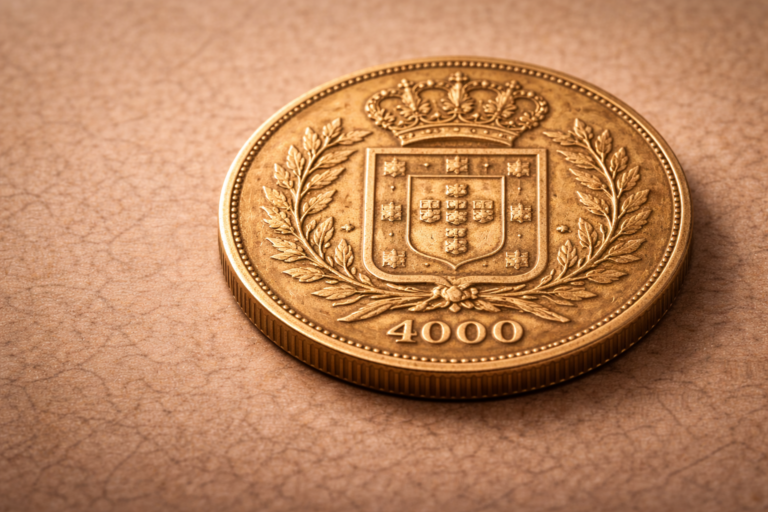
These early issues — the 6400, 4000, and 2000 Réis — were struck under the reign of King João V. Their shimmering surfaces bore the royal coat of arms and the cross of the Order of Christ, reflecting both faith and dominion. Each coin was a portable emblem of Europe’s colonial reach, and yet, forged in Brazilian earth.
👑 The Era of Imperial Gold (18th Century)
As Portugal’s dependence on Brazilian gold deepened, the colonies minted larger and finer coins. The 6400 Réis of João V became a symbol of both wealth and exploitation. It wasn’t just money — it was propaganda in metal, designed to showcase the Portuguese crown’s divine right to rule.
Minted mainly in Rio de Janeiro, Bahia, and Minas Gerais, these coins were struck with meticulous craftsmanship. Their purity (22 carats) and brilliant designs made them some of the most admired coins in the world. Today, surviving examples are highly sought after, with pristine specimens selling for $30,000–$50,000.
🌍 The Transition to Independence (1820s)
By the early 19th century, winds of change swept across Latin America. In 1808, fleeing Napoleon’s armies, the Portuguese royal family relocated to Brazil — transforming Rio de Janeiro into the capital of the empire. This move elevated Brazil’s status, setting the stage for independence.
When Dom Pedro I declared Brazil’s independence in 1822, the nation’s coinage underwent a dramatic transformation. The royal symbols gave way to the new empire’s identity. The 6400 and 10000 Réis gold coins were reissued with the portrait of the emperor and the legend “Imperio do Brazil.” They became tangible proof of sovereignty — gold forged for freedom rather than foreign rule.
🪙 The Dom Pedro II Gold Coins (1840–1889)
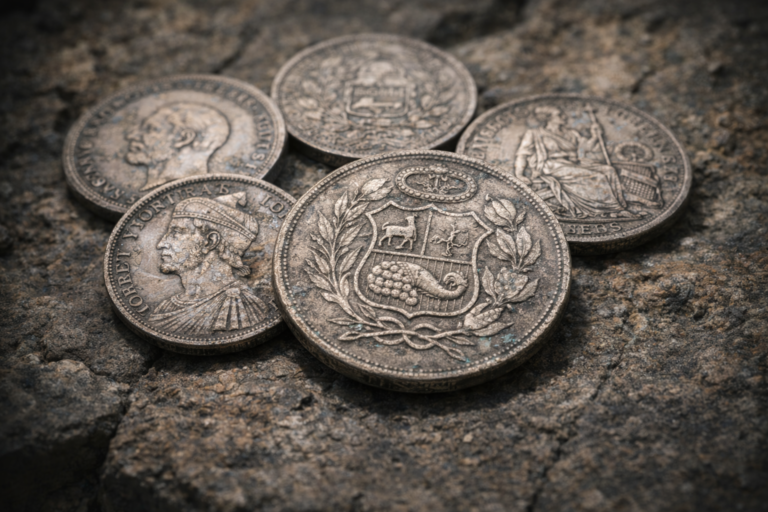
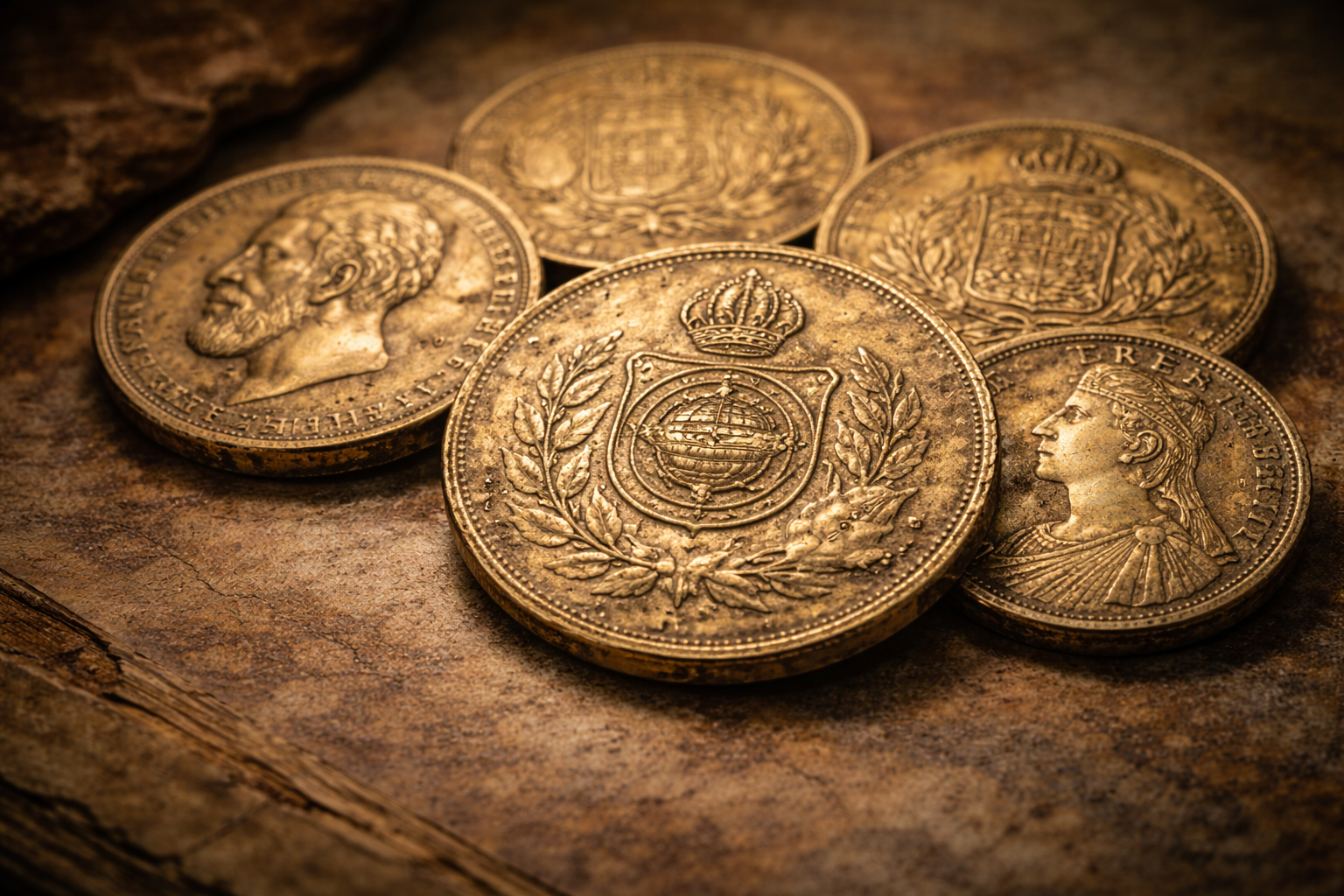
Under the reign of Dom Pedro II, Brazil reached its golden age — literally and metaphorically. His coins, including the famous 20000 Réis, combined neoclassical beauty with unmatched precision. Each piece depicted the young emperor’s profile surrounded by inscriptions in Latin, while the reverse displayed Brazil’s imperial coat of arms framed by laurel leaves.
Struck primarily in Rio and São Paulo, these coins were produced in very limited quantities, often for ceremonial or diplomatic use. Today, they stand among the most valuable South American coins ever minted — with examples in mint condition fetching $200,000–$400,000.
What makes them truly special isn’t just their rarity, but their symbolism: they capture the dignity of an empire trying to define itself between tradition and progress.
💰 The Legacy of the Réis
The Réis (plural of Real) system dominated Brazil’s currency for centuries. Gold coins of various denominations circulated alongside silver and copper pieces, creating a complex but deeply rooted monetary identity. Even after the monarchy fell in 1889 and the Republic of Brazil adopted new coinage, the echoes of the Réis continued to define economic language — influencing phrases and cultural expressions for generations.
Collectors today see these coins as more than numismatic artifacts; they are fragments of Brazil’s cultural DNA. The craftsmanship, purity, and beauty of the imperial Réis coins still mesmerize anyone who holds them under light — a golden reflection of a nation’s evolution.
⚖️ Identifying Authentic Brazilian Gold Coins
With their popularity among collectors, Brazilian gold coins are often replicated or counterfeited. Genuine pieces exhibit crisp details, accurate Latin inscriptions, and proper weight (typically 14–17 grams for 6400 Réis, and 27 grams for 20000 Réis). Look for authentic mint marks such as “R” for Rio de Janeiro, “B” for Bahia, or “SP” for São Paulo.
Professional grading by NGC or PCGS remains the best way to authenticate and preserve value. Expert collectors also study rim design and edge lettering — small details that counterfeiters often overlook.
🌟 Cultural and Artistic Significance
Beyond economics, Brazil’s gold coins represent artistic triumphs. Engravers like Antônio Gomes da Silva and José de Medeiros left their mark through designs that balanced European classicism with local identity. The sunburst motifs, elegant crowns, and finely detailed portraits on these coins turned currency into art.
Each piece tells a story — of miners who braved the jungles, emperors who dreamed of progress, and a people who built one of the largest economies in the Southern Hemisphere from the soil beneath their feet.
🧭 Reality Check
Not every Brazilian gold coin is worth a fortune, but each holds a slice of history. Even modest coins with worn surfaces are gateways into an era of discovery and empire. For collectors, the goal isn’t just profit — it’s connection. To hold a coin that once crossed oceans is to feel Brazil’s past pulse through time.
🏁 Final Verdict
The gold coins of Brazil stand among the finest in the world — symbols of resilience, artistry, and national pride. From colonial excess to imperial elegance, they reflect a nation’s transformation from colony to kingdom, and finally to independence. For anyone who loves history and beauty, these coins are more than treasures — they’re Brazil’s golden heartbeat.
❓ FAQ
What is the rarest Brazilian gold coin?
The 1853 20000 Réis of Dom Pedro II is among the rarest, often fetching hundreds of thousands of dollars in auctions.
Where were Brazil’s gold coins minted?
Mainly in Rio de Janeiro, Bahia, São Paulo, and Minas Gerais — the major hubs of gold mining and trade.
Are colonial Brazilian coins still collectible today?
Absolutely. Their craftsmanship and historical significance make them highly sought after by collectors worldwide.
How can I confirm authenticity?
Check for mint marks, weight accuracy, and professional certification from grading services such as NGC or PCGS.
Focus Keyword: brazil gold coins
Keywords: brazil gold coins, brazilian coins, rare brazil coins, empire of brazil coins, dom pedro ii coin, 20000 reis, old brazilian currency, gold reis, brazil numismatics, rare coins south america