The Hidden Error Inside the 1965 Dime
⏱️ Estimated Reading Time: 6 minutes
The Hidden Error Inside the 1965 Dime
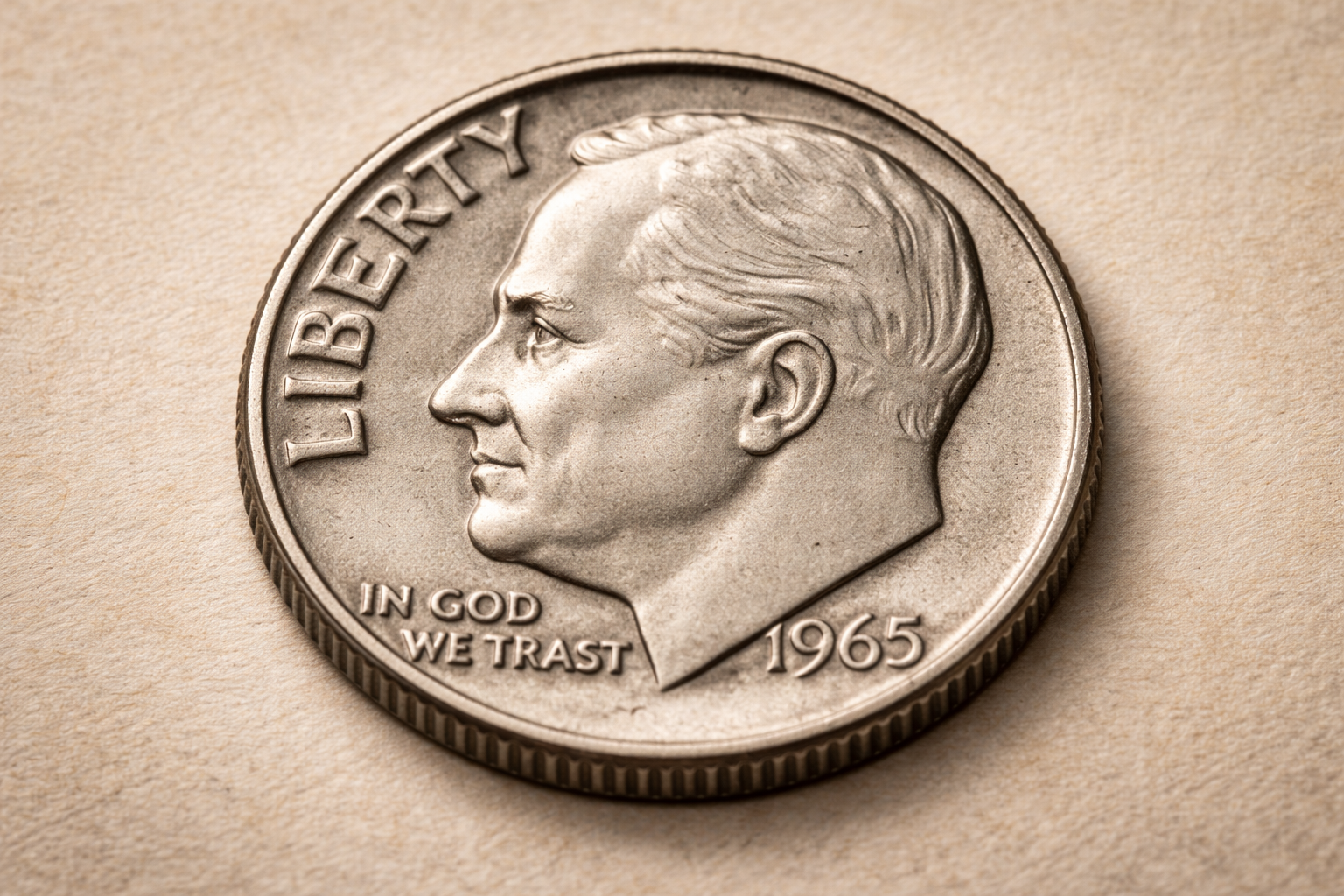
It looked like any other dime — small, silver-colored, and ordinary. But beneath its simple shine, the 1965 Roosevelt Dime hides one of the most fascinating minting mysteries in American history. A story that begins with a national crisis… and ends with collectors hunting ghosts in pocket change.
💰 The Year Silver Disappeared
In the early 1960s, silver prices began to soar. The U.S. Mint realized that soon, the silver in every coin would be worth more than the coin itself. By 1965, the government decided to remove silver entirely from dimes and quarters — replacing it with a copper-nickel blend.
But transitions rarely go smoothly. As the new materials rolled in, old silver blanks were still scattered around minting presses. And that’s when the accident happened.
⚙️ A Mistake Hidden in Plain Sight
Somewhere in the chaos, a few silver planchets from 1964 were accidentally fed into presses meant for the new 1965 design. The result? A small batch of 1965 dimes struck on silver instead of copper-nickel — coins that technically should not exist.
To the naked eye, they looked identical to regular dimes. No one noticed. They slipped quietly into circulation — and vanished into the hands of everyday Americans buying coffee or paying for parking.
🔍 The Discovery Years Later
It wasn’t until decades later that collectors began identifying the difference. Under close examination, these error dimes were lighter in tone, rang differently when dropped, and most importantly — tested positive for silver.
The U.S. Mint confirmed the existence of these rare pieces, though they were the result of a “transitional error.” Only a handful were ever confirmed authentic, making them among the most elusive dimes ever struck.
💨 How to Tell If You Have One
If you ever find a 1965 dime, look closely. The easiest test is weight: A normal copper-nickel dime weighs 2.27 grams, while the silver error version weighs around 2.50 grams. The edge of the coin is also key — if it lacks the visible copper stripe, you may be holding a treasure worth thousands.
⚖️ Reality Check
Despite internet rumors, not every bright dime from 1965 is made of silver. Many are simply well-preserved copper-nickel coins. Authentic silver-error dimes are professionally verified, and only a few dozen have ever surfaced in certified collections.
🔥 Final Verdict
The 1965 Dime proves that history can hide in plain sight. What began as a small production error became a symbol of a nation’s monetary shift — from real silver to modern alloys. A dime that shouldn’t exist, yet refuses to be forgotten.
Visit HistoraCoin.com for more legendary stories from the world of rare coins.