The History of U.S. Copper Pennies – How American Cents Changed Over Time
Estimated reading time: 28 minutes
The story of the American penny is not just about a small coin. It is about how a nation built trust in its money, how materials shaped everyday life, and how economic pressure quietly changed something people used every single day. For more than a century, copper defined the identity of the U.S. penny.
From large early coins that barely fit in a pocket to the familiar Lincoln cent, copper pennies reflect a long journey of design, metal, and practicality. Understanding this history reveals how even the smallest coin can carry a powerful story about change.
Early American Copper Coins
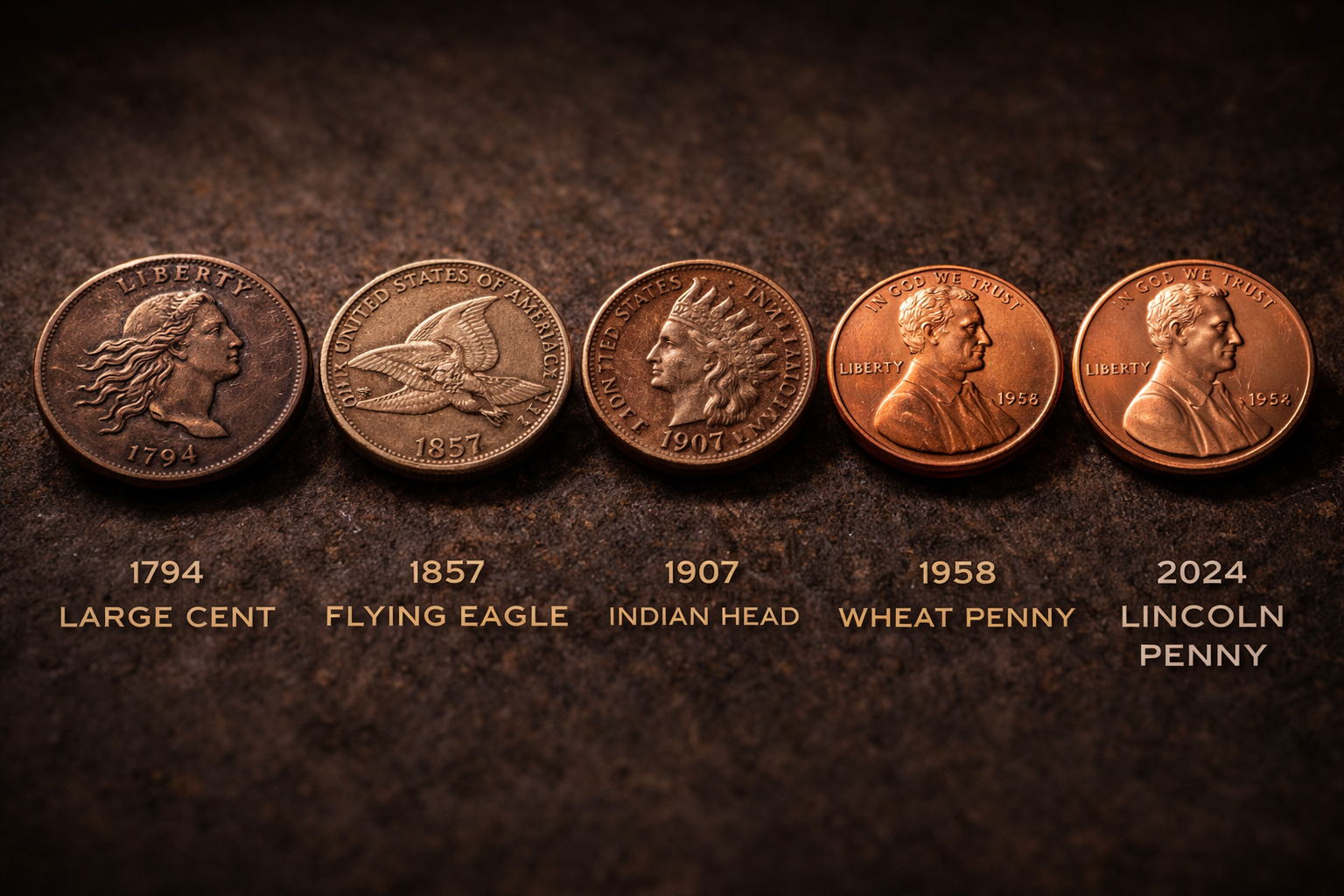
In the earliest years of the United States, copper was one of the most practical materials available for coin production. The first official cents, known as large cents, were introduced in the late eighteenth century. These coins were significantly larger than modern pennies and made entirely of copper.
At the time, size mattered. A coin’s physical size helped represent its value. Because copper was less valuable than silver or gold, copper coins needed to be larger to carry meaningful worth.
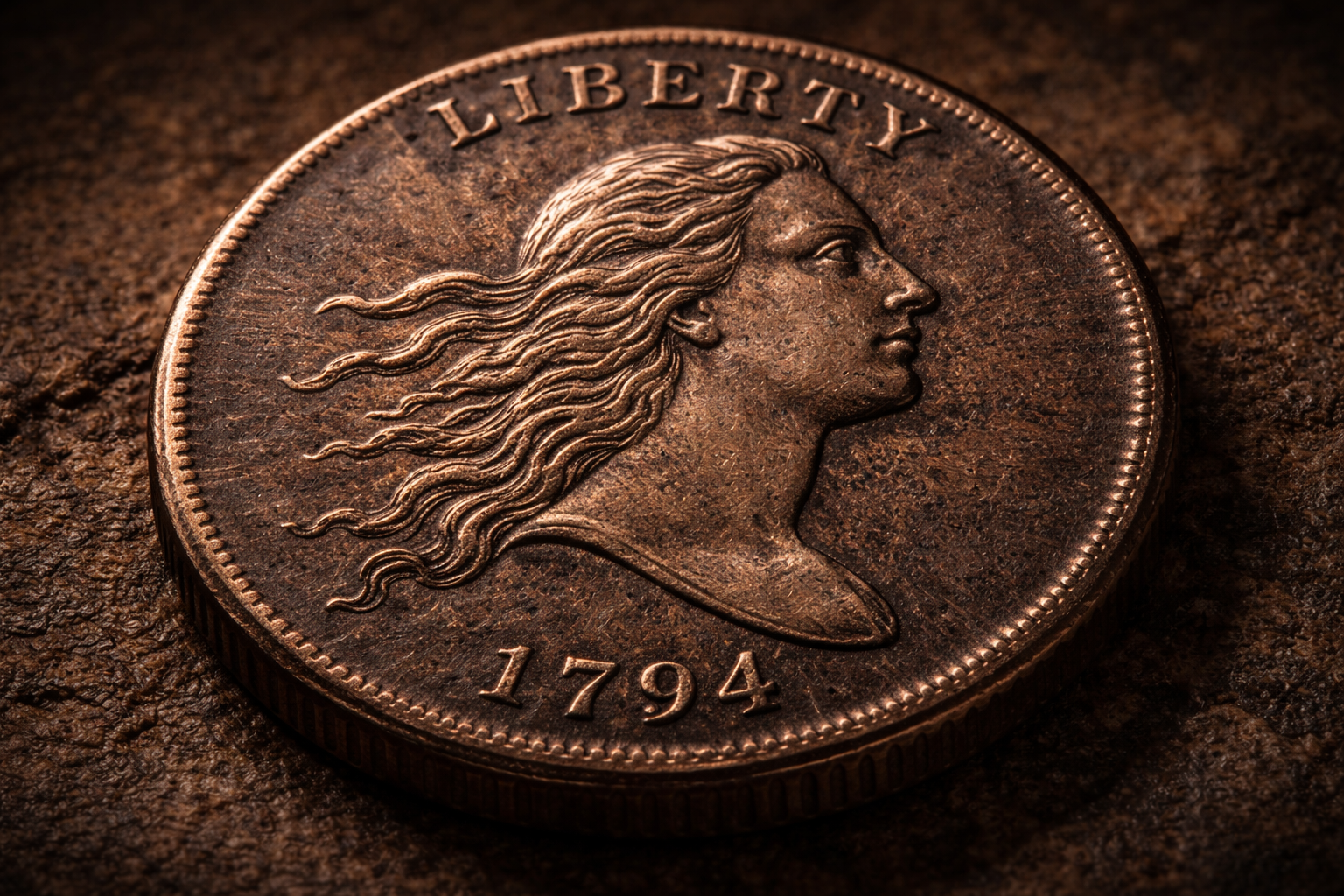
These early coins were not just currency. They were a statement of independence. The new nation needed its own system of money, and copper played a central role in building that foundation.
However, the large size of these coins made them inconvenient. People found them heavy and difficult to carry, especially in large quantities.
Why Copper Was Important
Copper was not chosen randomly. It was widely available, relatively affordable, and easy to shape into coins. These qualities made it ideal for mass production.
More importantly, copper coins allowed the government to create small denominations that people could use daily. Without copper, everyday transactions would have been much more difficult.
Copper also gave coins a distinctive look. Its reddish tone made pennies easy to recognize, even in poor lighting or crowded markets.
Over time, copper became closely associated with small change in American life.
From Large Cents to Small Cents
By the mid nineteenth century, the large cent was becoming impractical. The cost of copper, combined with the inconvenience of size, led to a redesign.
In 1857, the United States introduced the small cent. This new coin was smaller, lighter, and easier to use. It marked a major shift in how pennies were produced and handled.
Although the composition changed slightly over time, copper remained a key component. The new design made pennies more practical while preserving their identity.
This transition shows how coin design evolves based on real-world needs rather than tradition alone.
The Lincoln Penny Era
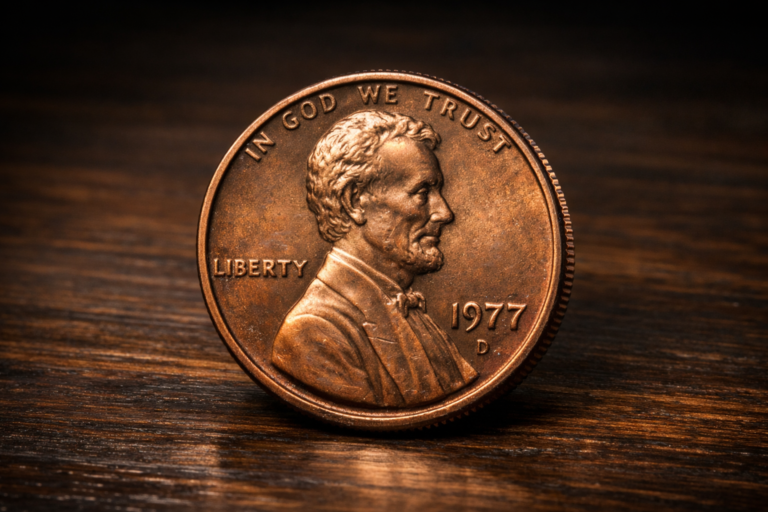
In 1909, the Lincoln penny was introduced. This was the first time a real historical figure appeared on a regular U.S. coin. The design honored Abraham Lincoln and marked a new chapter in American coinage.
The coin kept its copper-based composition, maintaining continuity with earlier pennies. This decision helped preserve familiarity while introducing a new visual identity.
Over the decades, the Lincoln penny became one of the most recognized coins in the world. It remained largely unchanged in appearance, even as the country itself evolved.
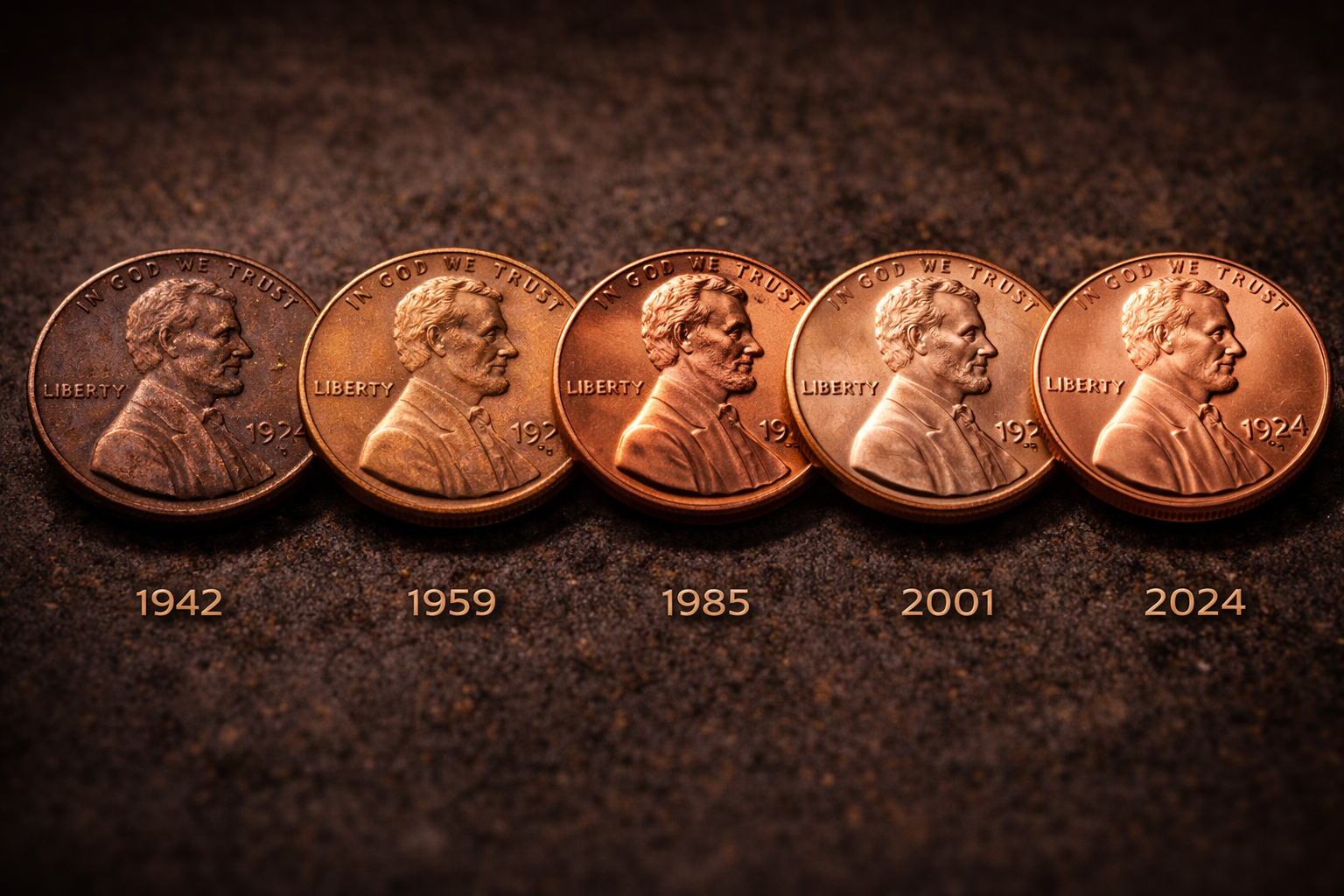
Despite small changes in design details, the core identity of the coin stayed the same. Copper continued to define its character.
Pre-1982 Copper Composition
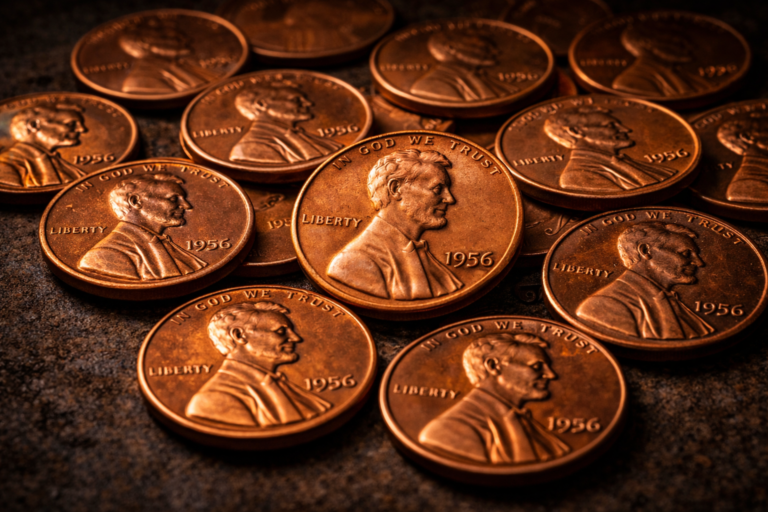
Before 1982, most U.S. pennies were made from an alloy of 95 percent copper and 5 percent tin and zinc. This composition provided strength while maintaining the familiar copper appearance.
These coins had a weight of about 3.11 grams, making them noticeably heavier than modern pennies. This difference is one of the easiest ways to identify them today.
For decades, this composition remained stable. It became a standard that people rarely questioned.
You can explore the identification process in how to tell if a penny is copper or zinc.
Rising Copper Costs
By the late twentieth century, the economic environment began to shift. Copper prices increased significantly due to global demand and industrial use.
As prices rose, the cost of producing pennies also increased. Eventually, it became clear that continuing to use mostly copper was no longer practical.
This situation mirrored earlier changes in silver coinage, where rising metal prices forced a transition to cheaper materials.
The penny was about to face a similar transformation.
The 1982 Change
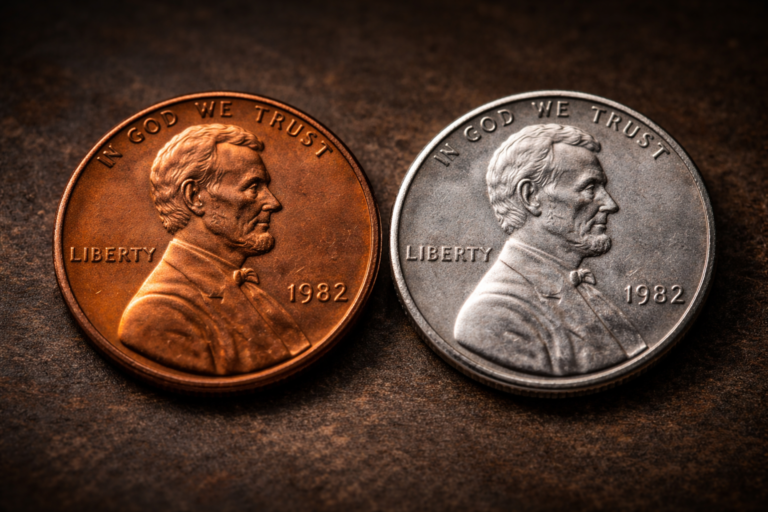
In 1982, the United States Mint made a major decision. The composition of the penny was changed to a zinc core with a thin copper coating.
This allowed the coin to maintain its familiar appearance while significantly reducing production costs.
Interestingly, both copper and zinc pennies were produced during this year. This makes 1982 one of the most important dates in penny history.
To understand this transition fully, you can also read why pre-1982 U.S. pennies are made of copper.
Copper Pennies Today
Although new pennies are no longer made from solid copper, older coins are still in circulation. They continue to appear in everyday transactions, mixed with modern coins.
For many people, these coins go unnoticed. But for those who understand their history, they represent a connection to an earlier era of American money.
Holding a copper penny is like holding a small piece of the past. It reflects a time when even the smallest coin carried real metal value.
Timeline Table
| Period | Change |
|---|---|
| Late 1700s | Large copper cents introduced |
| 1857 | Small cent replaces large cent |
| 1909 | Lincoln penny introduced |
| 1982 | Transition from copper to zinc core |
Related HistoraCoin Stories
FAQ
Why were early pennies made of copper
Copper was affordable, durable, and widely available, making it ideal for small denomination coins.
When did pennies stop being made of copper
The major change occurred in 1982 when pennies switched to a zinc core.
Are copper pennies still in circulation
Yes, they are still found alongside modern coins.
Why is 1982 important for pennies
It was the transition year when both copper and zinc pennies were produced.