The Japanese Yen Coins That Whispered Through History
Estimated reading time: 12 minutes.
Some coins shout with bright propaganda and grand portraits. Japanese yen coins rarely do. They prefer something quieter like a whisper that survives in metal. If you’ve ever held a yen coin and felt that strange calm in your palm, you already know what I mean. The yen does not beg to be admired. It waits. It watches. And over time, it tells you what it witnessed.
In this journey, we won’t chase numbers or comparisons. We’ll follow the yen through reforms, wars, recovery, and identity reading the designs the way you’d read an old diary written in symbols.
Table of Contents
- The Birth of the Yen: A New Nation Needs a New Voice
- Imperial Symbols: The Chrysanthemum and the Weight of Authority
- Trade, Silver, and the Dragon That Traveled
- Everyday Japan in Small Metal: Sen and Rin
- The Taishō Mood: Modernity Without Noise
- The Shōwa Storm: Coins in an Era of Tension
- Postwar Reset: When the Yen Learned to Breathe Again
- How to Read Era Dates: The Hidden Calendar on Japanese Coins
- What Collectors Love About the Yen: Beauty, Precision, and Silence
- Reality Check
- Final Verdict
- FAQ
The Birth of the Yen: A New Nation Needs a New Voice
The yen did not appear in a peaceful, finished world. It arrived in a Japan that was actively rebuilding its identity. The country was transitioning from a patchwork of feudal domains into a modern state that could speak to the outside world with confidence. And nothing speaks faster than money.
Before the yen, everyday exchange could feel like a maze: regional systems, older standards, inherited habits. A new national currency meant more than convenience. It meant clarity. It meant unity. It meant one handshake that could be recognized across the entire archipelago—and beyond it.
When Japan embraced modern minting, it wasn’t copying the West so much as translating itself into a new language. The yen became that language: crisp, measured, standardized. Yet even in the most technical decisions, Japan embedded symbolism—quiet markers of legitimacy and tradition, placed exactly where they could not be ignored.
Imperial Symbols: The Chrysanthemum and the Weight of Authority
If you want to understand the emotional gravity of Japanese coinage, start with the chrysanthemum. It is not simply decoration. It carries a sense of imperial presence an emblem that feels less like a logo and more like a seal pressed into time.
On coins, the chrysanthemum often appears with an almost paradoxical character: elegant, symmetrical, restrained yet undeniably authoritative. It’s the kind of symbol that doesn’t need dramatic flair because it already represents something deeper than an individual ruler. It represents continuity.
In the hand, the crest feels like a small reminder that currency is not only economics. It is permission. It is trust. It is a promise that the metal in your palm belongs to a larger story.
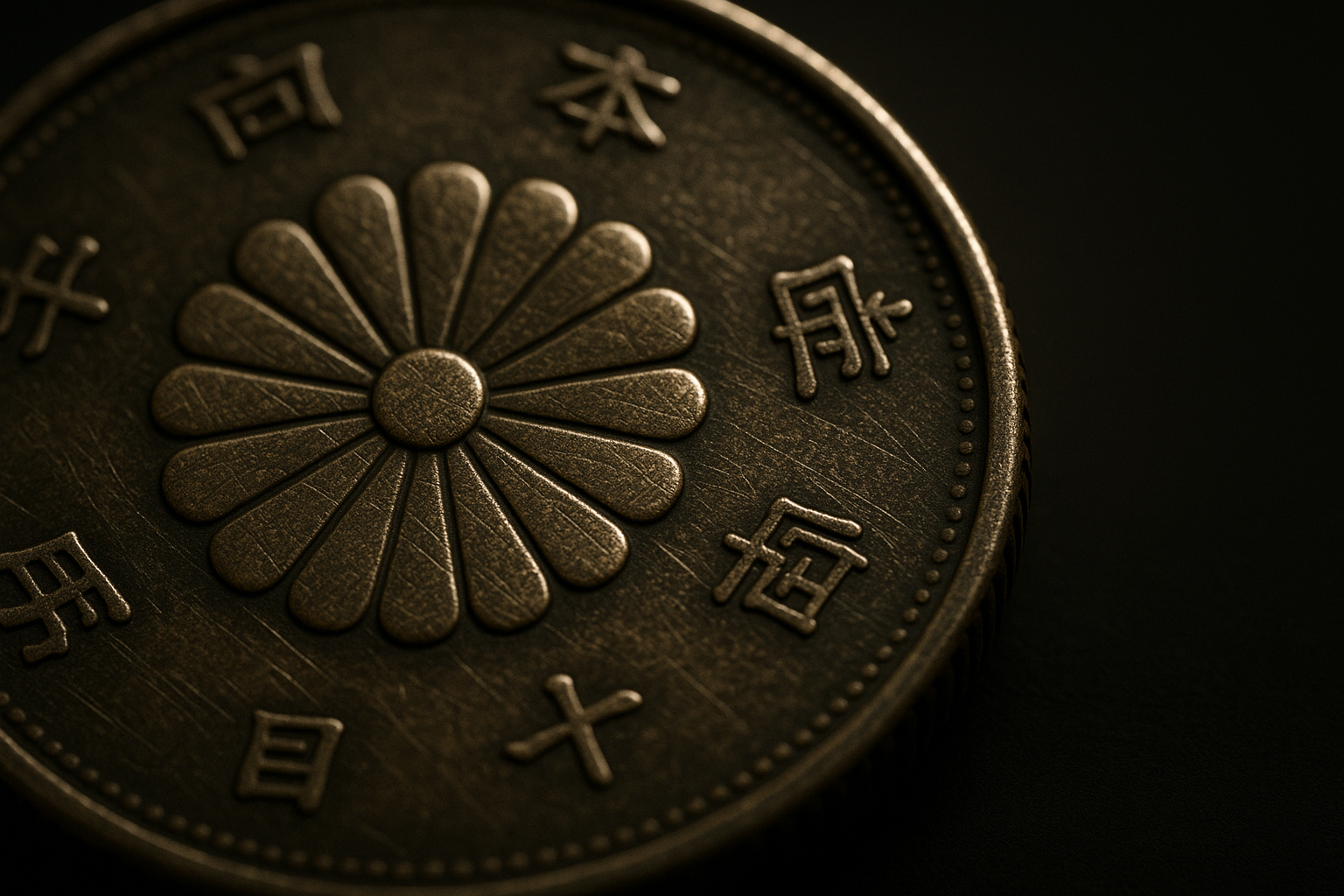
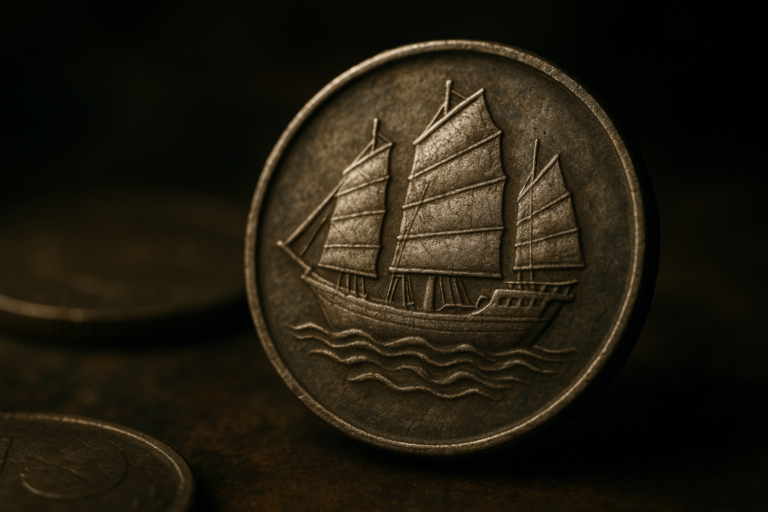
A close look at the chrysanthemum crest—Japan’s quiet imperial signature on coinage
Image credit: HistoraCoin.com
Trade, Silver, and the Dragon That Traveled
Some yen coins were designed for pockets. Others were designed for the world.
In the age when Japan was negotiating its place in global trade, certain coin types became more than local currency. They became ambassadors. A strong silver coin could travel through ports and markets, into foreign hands that might never visit Japan—but would still recognize Japan’s craftsmanship.
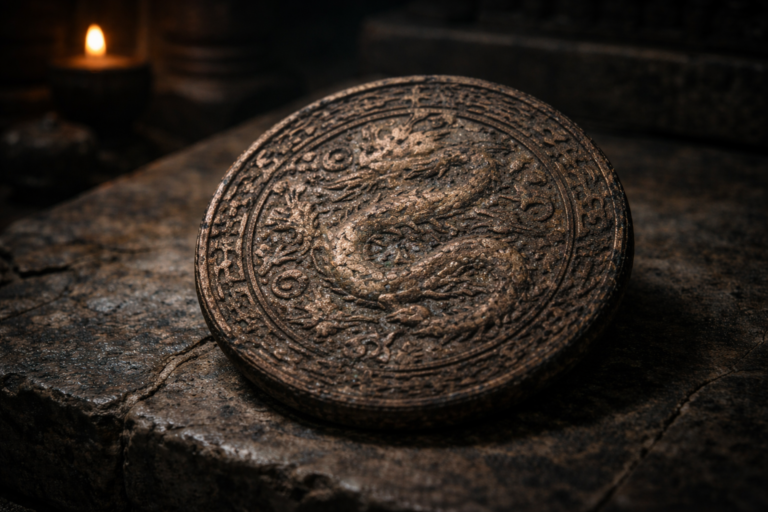
And here, the dragon becomes impossible to ignore. In many East Asian traditions, the dragon is not merely a monster. It is power with purpose—storms guided by intelligence, energy guided by order. On coinage, that energy becomes diplomatic. It says, “We are here. We are capable. We are precise.”
What’s fascinating is how the dragon is often balanced by restraint. The engraving can be energetic, but it’s never chaotic. The message is controlled strength. And that control—more than the dragon itself is what made Japan’s minting reputation feel undeniable.
Everyday Japan in Small Metal: Sen and Rin
If the higher denominations spoke to the outside world, the smaller ones spoke to daily life.
Sen and rin pieces carried the rhythm of ordinary Japan: a shop counter, a train ticket, a small purchase after school, a household budget measured carefully. When you study these smaller coins, you begin to realize something: history is not only written by dramatic events. It is written by routines.
Design choices here often feel more intimate. You’ll notice clean typography, balanced motifs, and a certain humility. These coins were meant to be handled constantly. They were designed not to impress a museum—yet many of them now feel like miniature artifacts precisely because they were so deeply woven into everyday life.
And this is where the yen becomes emotionally powerful: it doesn’t only represent governments and eras. It represents hands. Millions of hands. People who lived through changing decades without ever imagining their pocket change would someday be studied like a historical document.
The Taishō Mood: Modernity Without Noise
Some eras feel loud when you read about them. Others feel like a shift in lighting—subtle, gradual, almost polite. The Taishō period is often remembered with that softer tone: a time when modernization continued, culture expanded, and society experimented with new ideas.
Coinage from this wider modern transition can feel similarly balanced. The designs remain disciplined, but the mood changes. It’s as if Japan was refining not only its currency, but its identity: how it wanted to be seen, how it wanted to feel, how it wanted to communicate stability.
When you place coins from different periods side by side, you can sometimes feel this shift without reading any date. The edges, the typography, the arrangement of symbols—small decisions that collectively whisper, “We are moving forward.”
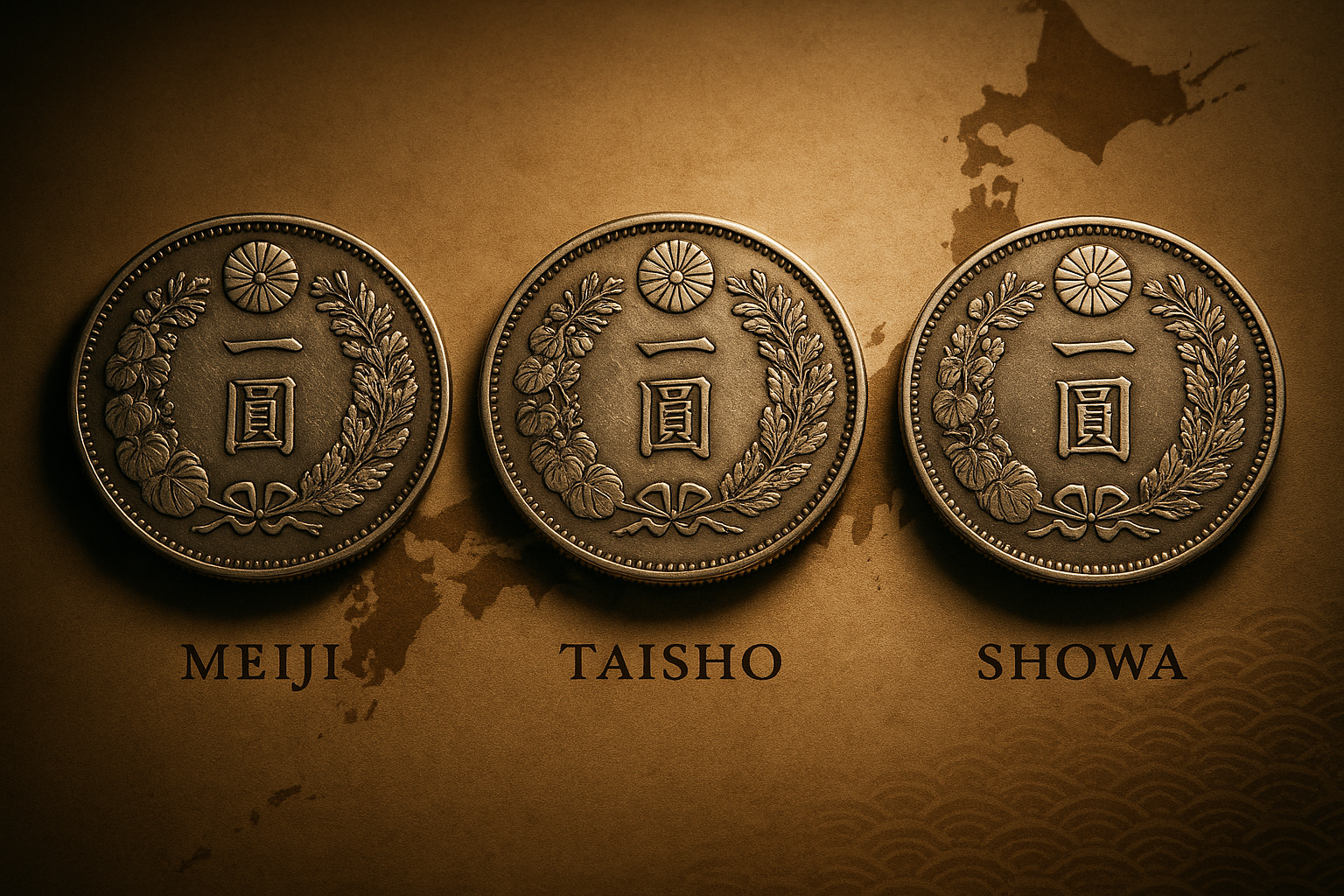
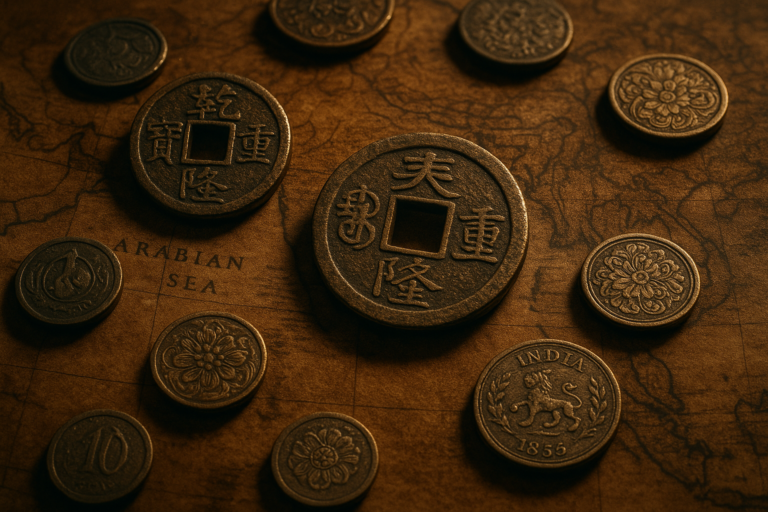
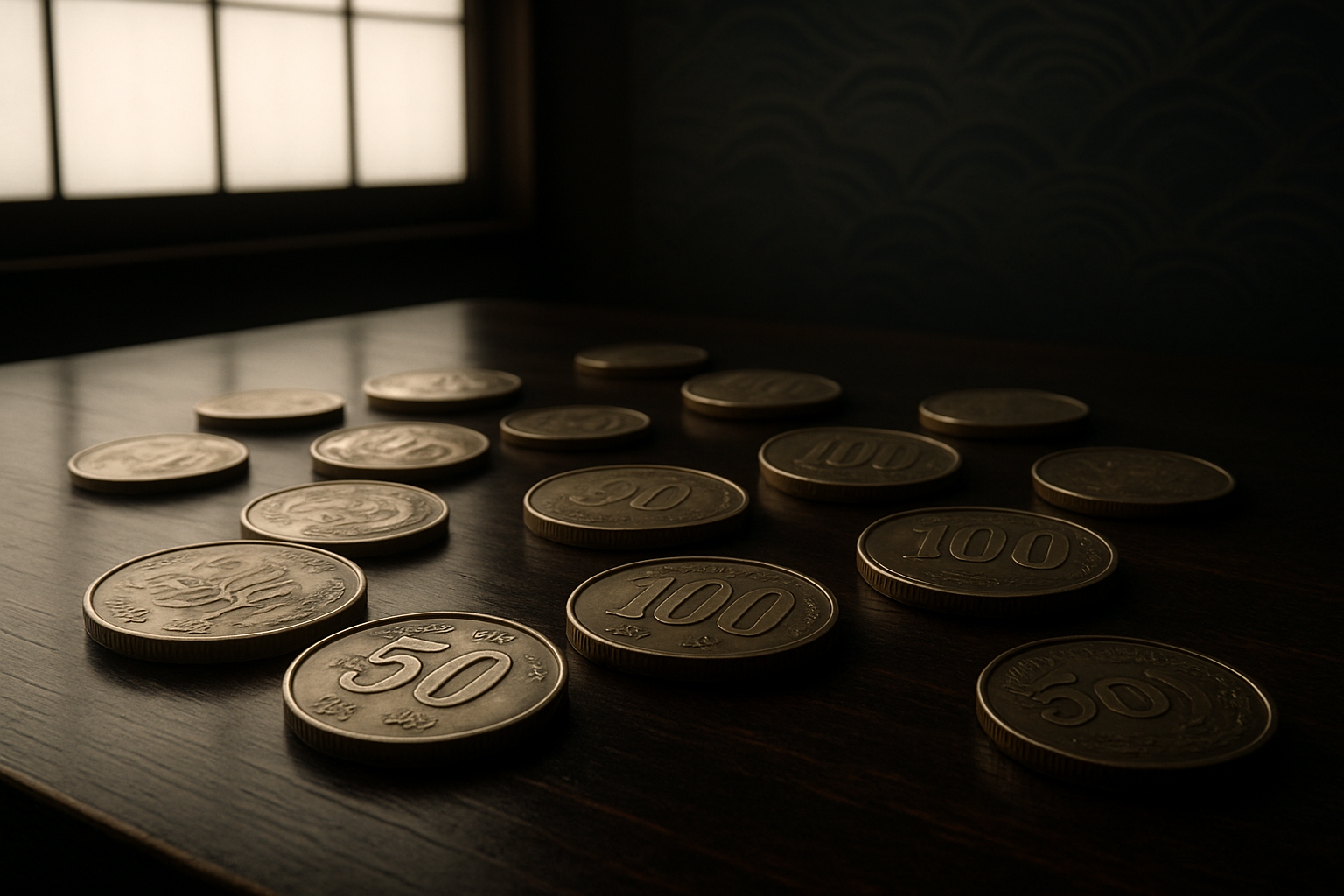
Three eras, three moods—how the yen’s design evolved with Japan’s changing identity
Image credit: HistoraCoin.com
The Shōwa Storm: Coins in an Era of Tension
The Shōwa era is long, complex, and emotionally charged. It holds contradictions: expansion and collapse, hardship and recovery, shadows and rebuilding. When you study coins tied to such an era, you learn quickly that metal can carry tension.
Sometimes the tension shows up in materials and production choices—what is available, what is practical, what must be prioritized. Sometimes it shows up in the way designs simplify or harden, becoming more functional than poetic.
But the most striking thing is that coins remain, even when everything else shifts. Governments change. Policies change. Daily life changes. Yet the coin continues to pass between strangers like a quiet messenger, saying nothing out loud while absorbing the texture of the times.
If you ever wondered how a nation “feels” during a difficult decade, a coin can offer an unexpected clue. Not through drama—through restraint. Through what it chooses to keep. Through what it chooses to let go.
Postwar Reset: When the Yen Learned to Breathe Again
After extreme turbulence, societies don’t instantly return to calm. They rebuild in layers. Currency is one of those layers—because people need stability that can be touched.
Postwar Japanese coinage reflects this need. You can sense practicality, efficiency, and a kind of forward-looking focus. The yen begins to sound less like a declaration and more like a steady heartbeat: reliable, consistent, modern.
And yet, Japan never abandons symbolism entirely. Even when designs become cleaner, they remain intentional. The yen becomes a bridge: honoring tradition without being trapped by it, embracing the future without pretending the past never happened.
How to Read Era Dates: The Hidden Calendar on Japanese Coins
One of the most beautiful “secrets” of Japanese coins is that they often carry dates that don’t look like dates—at least not in the Western sense.
Many Japanese coins use era-based dating, tied to an emperor’s reign. That means the coin can record history in a uniquely Japanese way: not just “what year,” but “whose era.” It’s a cultural fingerprint.
Here’s a simple way to approach it:
- Look for the era name (often in kanji), which indicates the reign period.
- Find the year number within that era (also in characters), which tells you the specific year of that reign.
- Remember that era-year is not the same as a Western year—it must be converted if you want the modern calendar equivalent.
Even if you never convert anything, the era system itself is meaningful. It turns a coin into a small time capsule. The date becomes not only a number, but a chapter title.
What Collectors Love About the Yen: Beauty, Precision, and Silence
Collectors are drawn to Japanese coinage for reasons that often go beyond rarity. The appeal is frequently emotional and artistic:
- Precision: Japan’s minting tradition often favors clean detail and disciplined engraving.
- Symbolism: crests, plants, and mythic motifs that point to identity rather than ego.
- Design restraint: the feeling that nothing is random—every curve is chosen.
- Historical continuity: the yen carries modernization, conflict, and recovery in one long arc.
And sometimes, the simplest reason is the strongest: the yen feels honest. It doesn’t try to overwhelm you. It invites you to look closer. That invitation is the whisper.
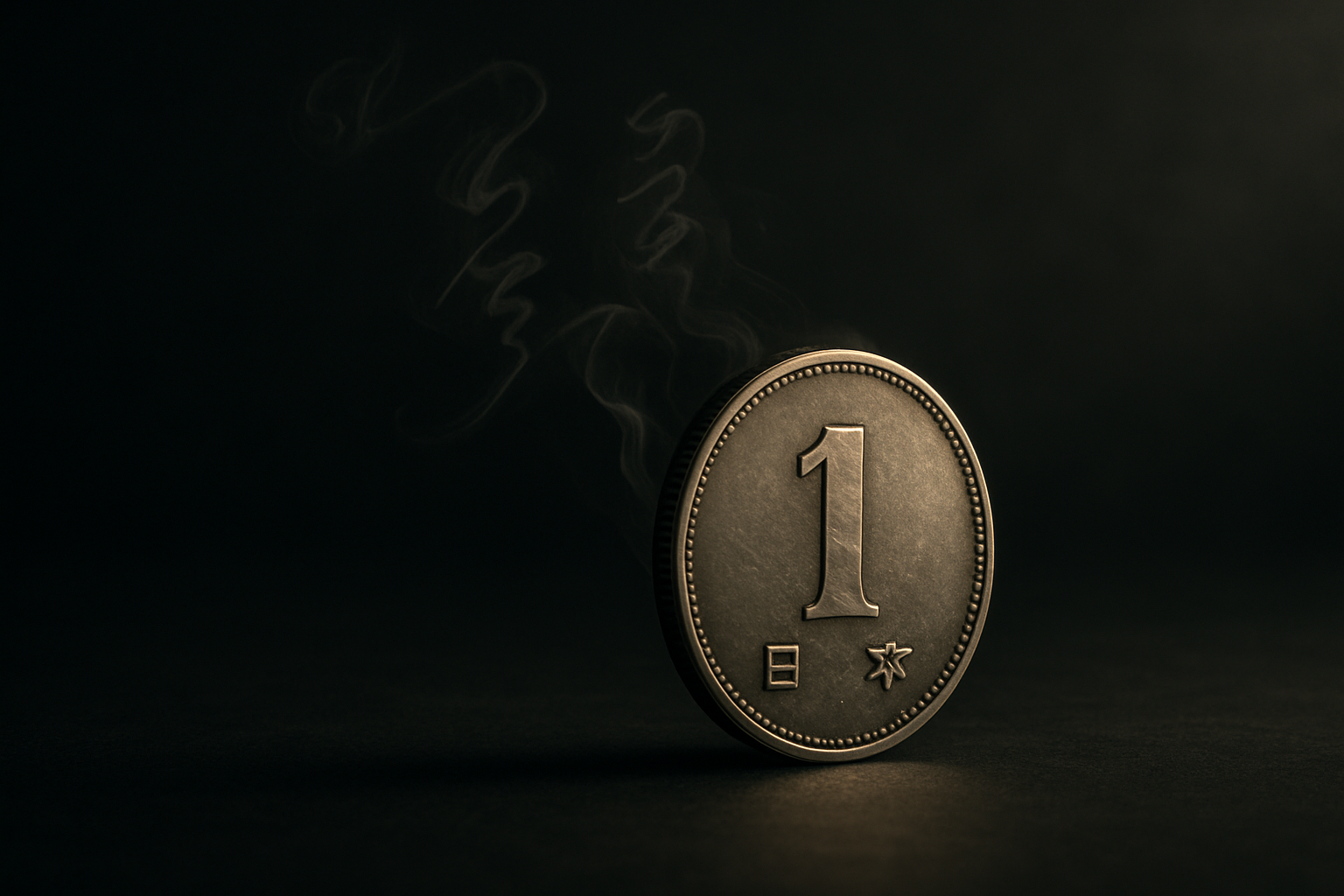
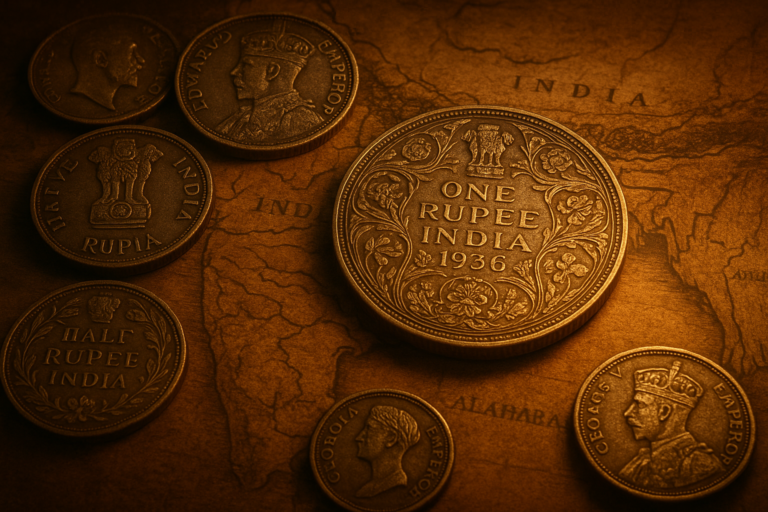
The “whisper” of history—what a single coin can carry across generations
Image credit: HistoraCoin.com
Reality Check
Not every Japanese coin is meant to be treated like a headline. Many are meaningful because they are common—because they were touched by real life. The best way to enjoy Japanese yen coins is to approach them as historical witnesses first: small artifacts of culture, design, and continuity.
Final Verdict
The Japanese yen doesn’t roar through history. It whispers through it—quietly carrying crests, eras, reforms, and the daily rhythm of a changing nation. If you listen closely, you’ll realize the yen isn’t just a currency. It is a timeline you can hold.
FAQ
Why do Japanese coins sometimes have “non-Western” dates?
Many Japanese coins use era-based dating tied to imperial reigns. The coin’s date becomes a cultural marker, not just a calendar number.
What is the chrysanthemum crest on Japanese coins?
The chrysanthemum is an imperial symbol associated with authority and continuity. When it appears on coinage, it often signals official identity and tradition.
Do I need to know Japanese to appreciate these coins?
Not at all. Learning a few recurring symbols and the idea of era dates is enough to unlock the story. Over time, the designs become surprisingly readable.
What is the best way to start exploring Japanese coin history?
Start with one era—then compare designs across periods. The differences will teach you how Japan’s identity evolved in metal.
Share This Story
Link: https://historacoin.com/the-japanese-yen-coins-that-whispered-through-history/
Want More Coin History?
If you love coins that feel like time capsules, explore more stories on HistoraCoin. Every piece has a past—sometimes quiet, sometimes wild, but always worth uncovering.

HistoraCoin Team
We publish cinematic, history-first stories about coins from every era—focused on culture, symbolism, and the human moments hidden in metal.
For more historical coin stories, visit HistoraCoin.