The South American Coins of Myth and Memory
Somewhere between the Andes and the Atlantic, between jungle rivers and high desert plateaus, millions of small coins once moved through the hands of South Americans who never imagined they would be remembered. They clinked across wooden counters in corner shops, slid across bus ticket windows, and rested in the pockets of farmers, students, traders, and travellers from Lima to Buenos Aires, from Bogotá to Santiago. Most of those coins disappeared into the flow of time. A few remained, quietly carrying stories of myth and memory.
This is not a catalogue or a ranking. It is a journey across a continent seen through the small circles of metal that recorded its everyday life. The coins of South America watched revolutions and reforms, festivals and blackouts, crowded markets and silent nights. Each one was created for simple use, yet some have risen into legend, not because of charts or publicity, but because they refused to disappear and kept their stories hidden in plain sight.
Estimated reading time: 9–10 minutes
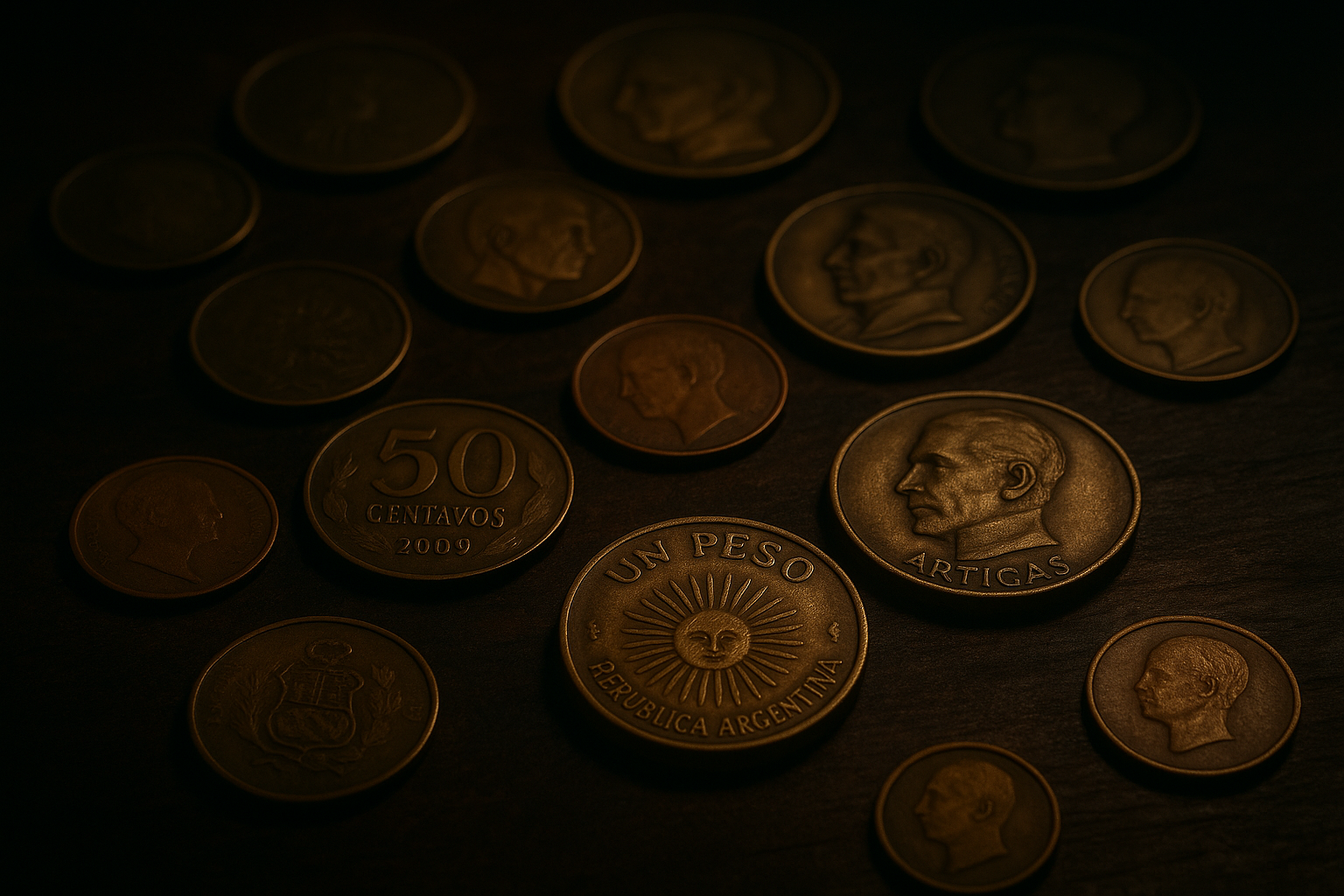
Image credit: HistoraCoin
A Continent Written in Metal
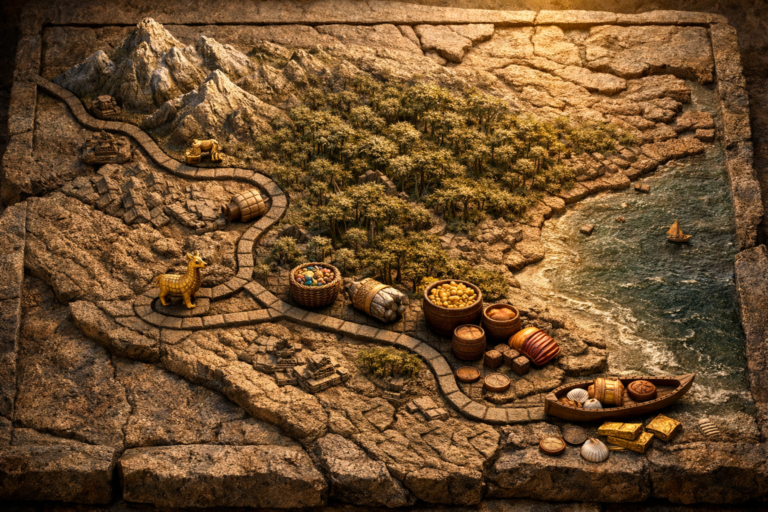
South America is often described in terms of its mountains and forests, its rivers and cities, its music and languages. Yet another map lies hidden in plain sight – a map drawn in metal. Every country on the continent has told part of its story through its coins, choosing images and words that speak of independence, identity, and hope.
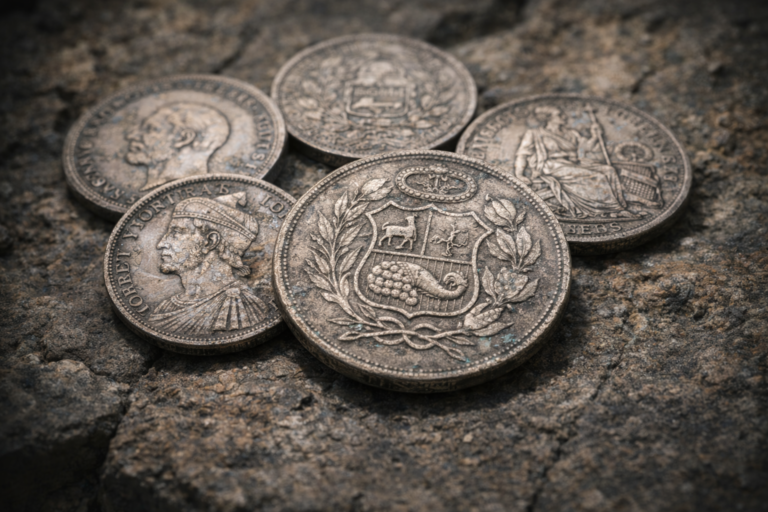
In some places, early republic issues carried powerful declarations of liberty and union, struck soon after colonial rule ended. In others, coins blended native motifs with European styles, reflecting both older roots and newer institutions. Over the decades, designs changed as governments rose and fell, as constitutions were rewritten, and as economies adjusted to new realities. If you lay out a long line of South American coins from different years and countries, you can watch the continent’s history unfold step by step.
These coins do not belong to a single narrative. They tell many stories at once – of remote mining towns and coastal ports, of capitals that grew rapidly, of quiet villages where the same design might circulate for years before a new series arrived. Together, they form a metallic chorus, each piece adding a small note to the larger song of South America.
Coins That Crossed Borders and Languages
One of the most fascinating things about South American coins is the way they move beyond borders. A coin minted in one country might later be found in the pocket of someone living thousands of kilometres away. Migrants, traders, tourists, and workers carry pieces across frontiers, sometimes intentionally, sometimes by accident.
Imagine a Brazilian coin that travels into Bolivia in the pocket of a truck driver who crosses the border regularly. Or a Chilean piece that ends up in Peru after a long bus journey along the Pacific coast. An Argentine coin might be kept as a small keepsake by someone who visited family in another country, then forgotten in a drawer for years. A small Colombian piece might remain at the bottom of a suitcase that later settles in a new city on a different shore.
As these coins cross borders, they carry their designs and dates into new contexts. They lie alongside other currencies in jars, trays, and pockets, forming mixed little constellations of metal that silently record the flows of people around the continent. Each piece becomes more than an economic tool. It becomes a tiny, durable passport stamped by use rather than ink.
Even when a coin can no longer be used in shops, it may still travel in this way. People keep them as souvenirs, attach them to key rings, or place them on desks. In this second life, the coin stops moving for necessity and begins moving for memory.
Markets, Bus Rides, and Everyday Moments
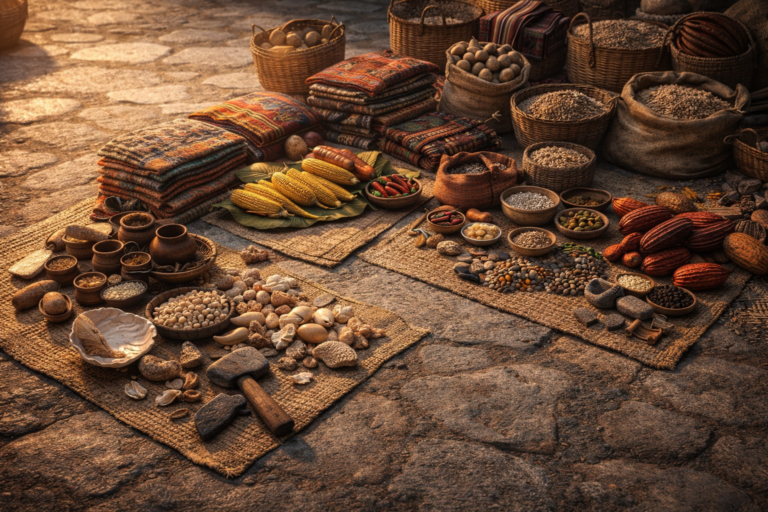
To understand why certain South American coins feel mythical today, it helps to picture the world they once moved through. Early mornings in open–air markets where vendors set up stalls under colourful tarps. Midday crowds in bus terminals where passengers hurry to find the right platform. Evening scenes in small cafés where coins rest on saucers beside cups stained by strong coffee or maté.
In a market in Lima, a coin might pass from a vendor selling fruit to a customer who has been buying from the same stall for years. In a neighbourhood shop in Montevideo, it might pay for bread while the owner and customer exchange local news. In a hillside town in Ecuador, a coin might change hands at a kiosk that has stood in the same spot for decades, watching the children of one generation grow into the adults of the next.
Coins move through bus drivers’ hands as they make change for passengers climbing aboard in the rain. They live in small cash boxes in street stands selling empanadas or arepas. They sit in pockets during long conversations on park benches, or during quiet tram rides where passengers stare out of windows at city lights flickering in the evening.
Most of these moments are forgotten, but their traces remain in the physical wear on each coin. A smooth rim, flattened details, or tiny nicks along the edge speak of thousands of such exchanges. When we hold a worn South American coin today, we are not just touching metal. We are touching countless everyday scenes that together formed the living fabric of the continent.

Image credit: HistoraCoin
Images and Symbols on South American Coins
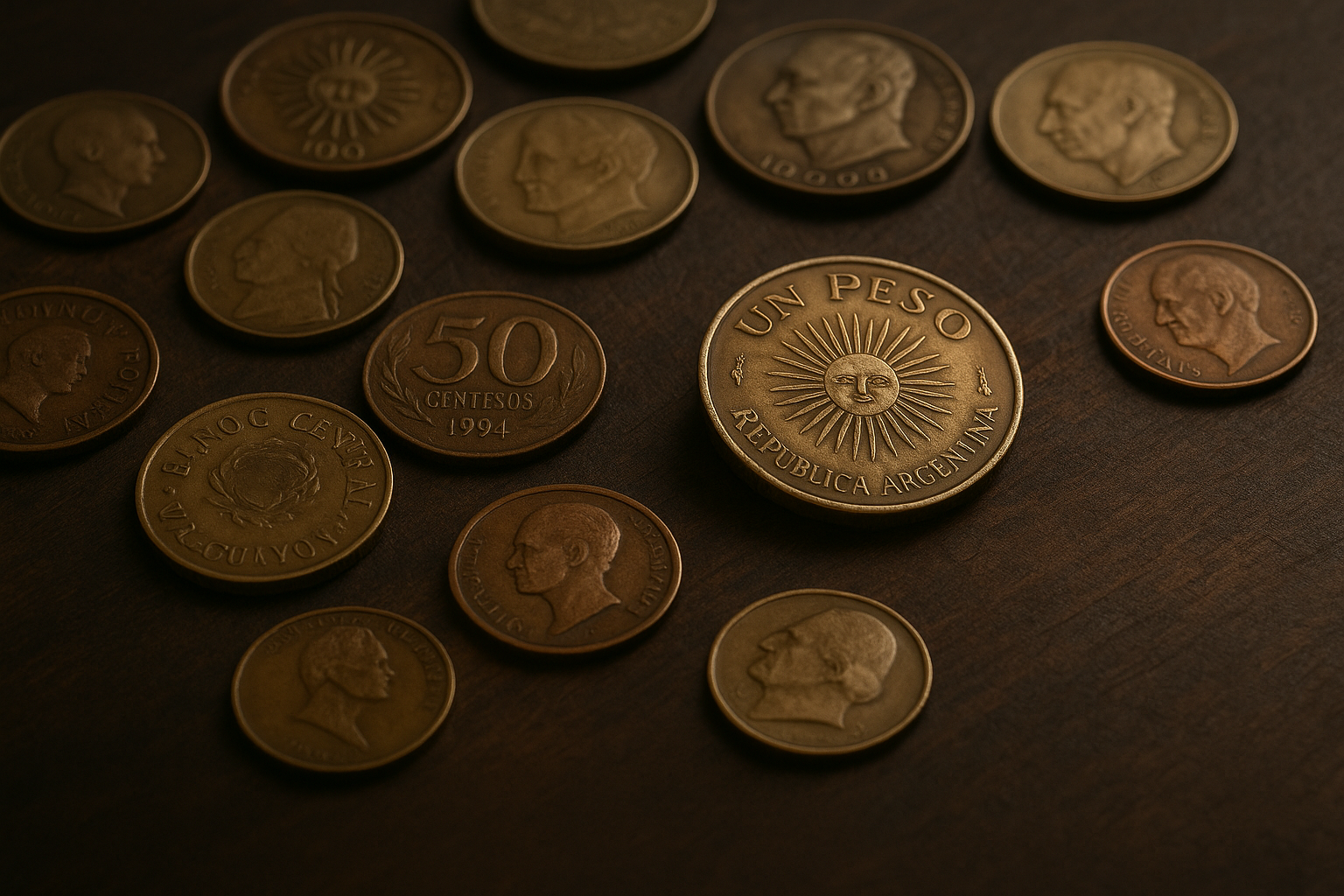
The designs on South American coins read like a visual library of the continent’s identity. Portraits of leaders and national heroes share space with personifications of liberty, allegorical figures, and symbols drawn from local flora and fauna. Mountains, condors, llamas, coffee branches, sunbursts, and shields all make appearances, chosen carefully to capture the spirit of each place.
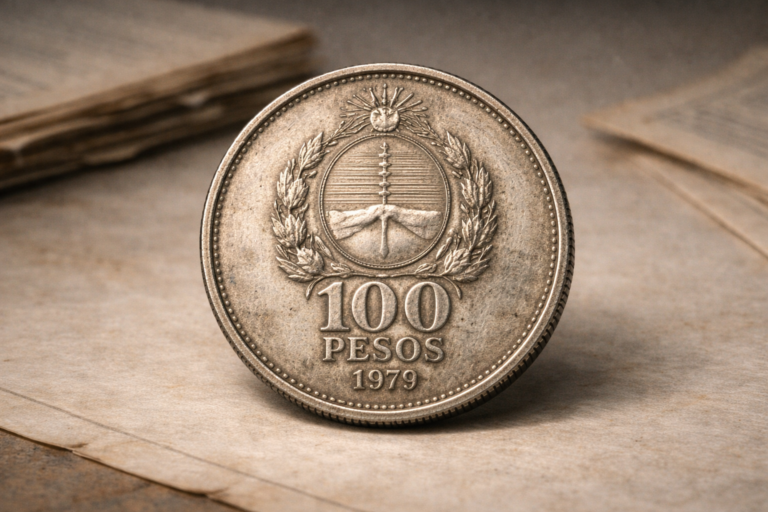
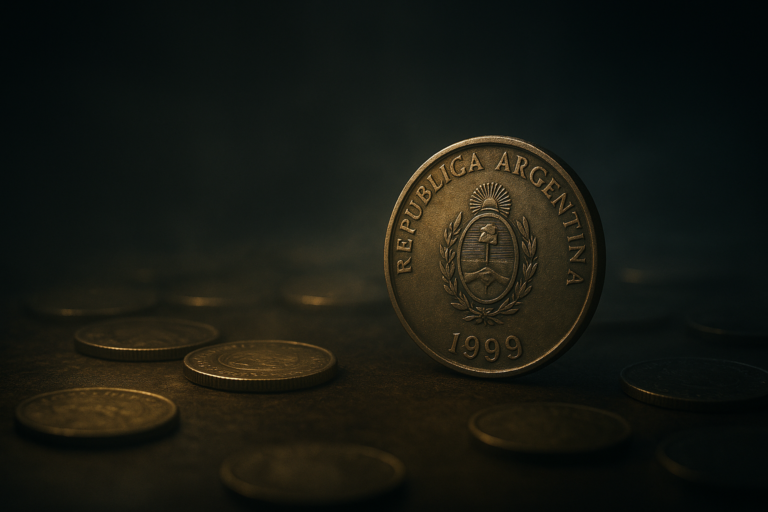
A coin from Chile might show the Andean condor spreading its wings over a shield, evoking both strength and altitude. A Peruvian piece might feature historical figures or emblems tied to ancient cultures whose roots predate the modern state by centuries. Brazilian coins might weave together the image of the Republic with stars, spheres, and other motifs suggesting the nation’s scale and ambitions. In Argentina, suns, wreaths, and caps of liberty have long been part of the visual language on coinage.
Typography plays a quiet but important role. Bold, angular letters can make a design feel powerful and modern, while more delicate scripts might echo older engraving traditions. Changes in lettering style over the years hint at shifts in artistic taste and technology. Even small details such as the thickness of a line, the spacing of words, or the way numbers are shaped can reveal the era that produced a coin.
When collectors and historians study these images, they do more than identify official symbols. They listen for the stories behind them – the reasons certain motifs were chosen, what they meant to the people who first saw them in their change, and how those meanings have evolved over time.
Turbulent Decades Etched in Circulation
South America has passed through periods of calm and periods of intense change. Political shifts, economic reforms, and social movements have all left their marks on the continent, and its coins quietly reflect these transitions. Sometimes the change is obvious, such as when a new emblem replaces an old one, or when entirely new denominations appear. In other cases, the clues are more subtle.
During times of difficulty, coins may have circulated more rapidly as people adjusted to new realities. They might have passed through the hands of families making hard decisions or businesses trying to adapt. In more stable periods, certain designs might have been used for many years, becoming deeply familiar to everyone who handled them. In both cases, the coins served as constant companions through uncertainty and routine alike.
Some series were short–lived, quickly replaced by new issues as policies changed. Others continued for decades, forming a steady visual backdrop to life in a particular country. When you place a small group of coins from a turbulent decade next to each other, their dates, wear, and designs offer a quiet commentary on what people were living through at the time, even if no event is directly mentioned on the metal.
For those who study them today, these circulating pieces are not just reminders of specific policies or reforms. They are witnesses to how those large movements felt in the everyday rhythm of purchases, wages, and small acts of exchange in markets and streets.
Myths and Stories That Grew Around Coins
Over time, certain South American coins attracted stories that reached far beyond their official origins. A slightly unusual design, a limited series, or a piece that seemed to appear and disappear unpredictably could give rise to rumours and legends shared among friends, families, and hobbyists.
In one city, people might recall a specific coin that older relatives always told them to watch for, not because of anything written in a book, but because of a local tale. In another place, stories might arise about coins from a particular year that were said to bring good luck if kept in a wallet, or about pieces from a distant country in the region that people treated as secret keepsakes rather than as tools for everyday use.
These myths are often impossible to verify, and that is part of their charm. They grow slowly over time, shaped by memory, exaggeration, and nostalgia. What matters is not whether the story is strictly accurate, but the way it attaches meaning to something small and easily overlooked. A coin becomes a reminder of a grandmother’s story, a childhood rumour, or a moment when someone believed that a simple piece of metal carried more significance than its official inscription suggested.
When collectors listen to these tales, they hear more than folklore. They hear how people related emotionally to the coins they used, how they turned routine objects into carriers of belief, comfort, or curiosity.

Image credit: HistoraCoin
Hidden Places Where Coins Waited in Silence
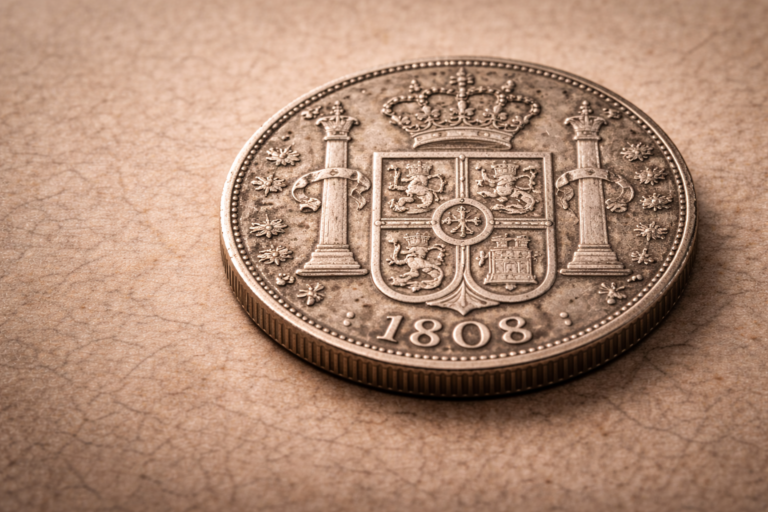
Many of the coins that now feel legendary did not spend their final years in circulation. They vanished quietly into hidden places long before anyone thought to treat them as special. They lay in ceramic bowls on top of fridges, in tin boxes inside wardrobes, or in drawers filled with receipts, spare keys, and old identity cards. Some travelled abroad, resting in small containers on the desks of people who had moved far from home.
In one apartment, a handful of South American coins might sit for decades in a jar that nobody empties, gathering dust while generations change around them. In another, a single coin might be taped into a notebook or photo album as a marker of a particular trip or a specific year. In yet another, a box of mixed coins from different countries might become a toy for children, who roll them across the floor without realising that some pieces will one day be almost impossible to find in the wild.
When someone finally rediscovers these coins, perhaps while cleaning a house or sorting through belongings after a relative has passed away, the effect can be powerful. The metal is cool to the touch, yet it warms quickly in the hand. The designs feel both familiar and distant. For a moment, the person holding the coin is standing in two times at once – the present and the era when that coin last travelled through the streets.
In that moment of rediscovery, ordinary coins of the past become the coins of myth and memory. They have not changed physically, but the way they are seen has transformed them.
Final Reflection – South American Coins of Myth and Memory
The South American coins of myth and memory did not set out to become legendary. They began their lives like any others, stacked in banks, poured into tills, and handed over at markets and bus stations. They moved through daily life without attracting attention, doing the simple work they were made for. Only later, when they disappeared from circulation and resurfaced in small personal collections and family keepsakes, did people begin to see them differently.
Today, when we study these coins, we find far more than metal. We find traces of music in open plazas, voices in crowded buses, rain on corrugated roofs, heat shimmering over paved streets, and the quiet hush of late–night conversations in small kitchens. We see capitals lit at dusk, remote villages at dawn, and countless journeys that never made it into official history, but left their marks on the surfaces of these coins.
Their legends are not grand tales of conquest or empire. They are intimate stories of work, travel, patience, and resilience. Each coin that survived long enough to be held today links the present to a specific time and place in South America’s past. When we turn one of them in the light, we are not just examining an object. We are listening to a continent that once spoke through metal long before screens and digital balances became the main language of exchange.
For those who love history, these coins offer a rare privilege. They make it possible to hold fragments of stories that would otherwise remain invisible. They invite us to slow down, to notice the details, and to remember that even the smallest objects can carry the weight of oceans, mountains, cities, and lives. In the end, the South American coins of myth and memory are exactly that – small, persistent witnesses that refused to vanish, waiting patiently for someone to hear what they have to say.
For more journeys into the stories behind historical coins from around the world, visit HistoraCoin.