
The Story Behind Italy’s Famous 100 Lire Coin – A Hidden Chapter of the Mint
Estimated reading time: 11 minutes.
The Story Behind Italy’s Famous 100 Lire Coin | A Hidden Chapter of the Mint
There are coins that simply paid for bread, tram tickets, or a quick espresso at the bar on the corner. And then there are coins that quietly carried a country’s story in their metal. The Italian 100 Lire coin belongs firmly in the second group. For decades it travelled through millions of hands, yet it remained strangely invisible – just another small, round disk with a familiar woman and an olive tree.
Today, long after the lira disappeared and the euro took its place, the 100 Lire has become a tiny time capsule. When you hold one in your palm, you are not just touching Italian money from another era – you are touching a chapter of history shaped by designers, engravers, mint workers, and a country rebuilding itself after war and moving towards a modern European identity.
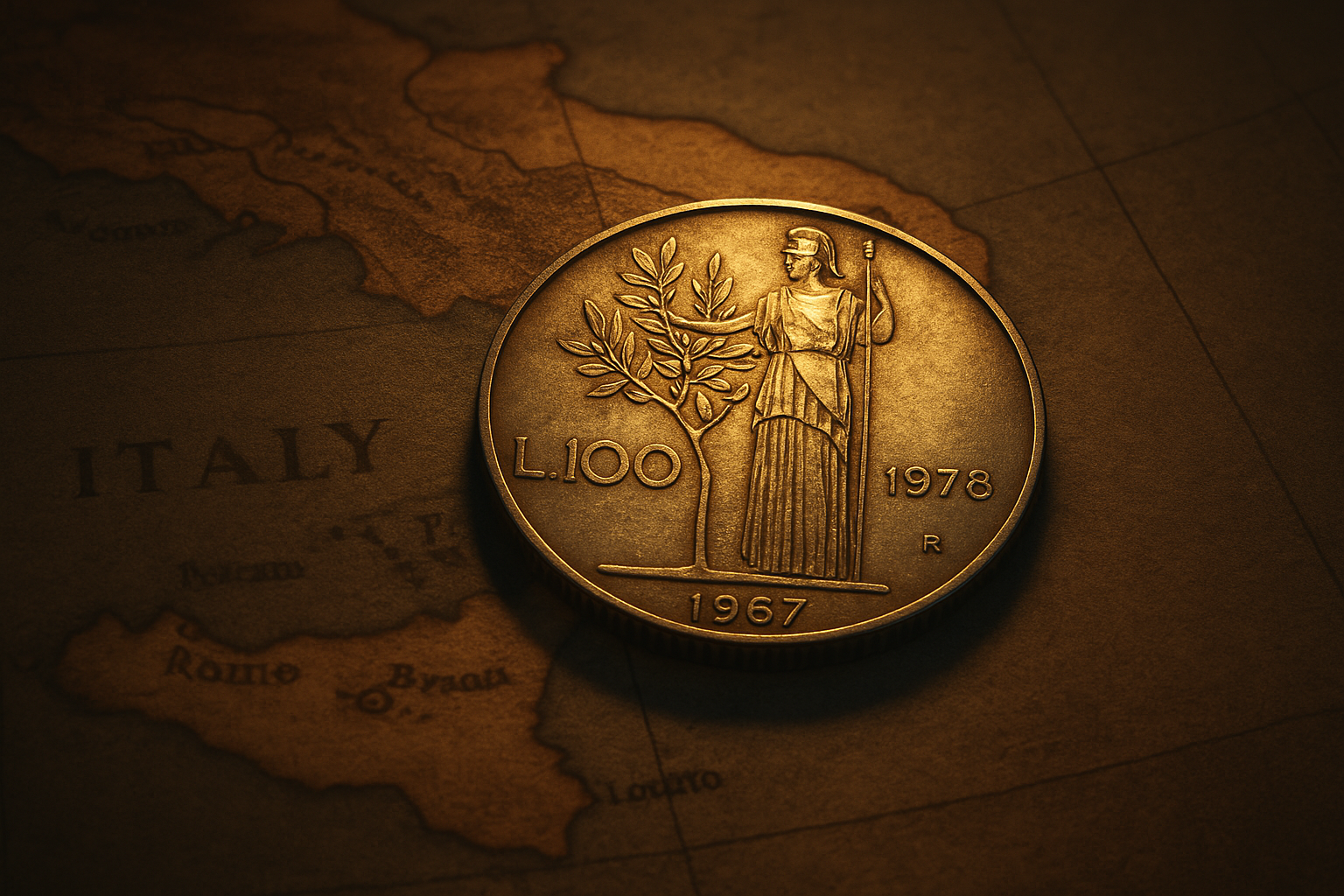
This article explores the story behind Italy’s famous 100 Lire coin: how it was born, what its design really means, how it followed Italians through ordinary days and important moments, and why it continues to fascinate collectors, historians, and anyone who loves the hidden stories behind everyday objects.
1. Origins of the Italian Lira and the 100 Lire
To understand the 100 Lire coin, we first have to step back and look at the Italian lira itself. The lira served as Italy’s national currency for over a century, guiding the country through monarchy, dictatorship, war, reconstruction, and eventually membership in the European Union. Banknotes and coins changed their faces several times, but they always carried the same message: “This is Italy’s money. This is how we measure our work, our savings, our future.”
After the Second World War, Italy emerged damaged but determined. The country had to rebuild its infrastructure, its institutions, and its sense of identity. In this climate, the design of national coins was not a trivial decision. Every symbol mattered. The young republic wanted imagery that looked forward without forgetting the classical roots of Rome and the rich artistic heritage of the peninsula.
The 100 Lire coin that would become so iconic appeared in this post-war environment. It was introduced in the nineteen-fifties and gradually became one of the most recognizable coins in daily Italian life. Its relatively high face denomination within the circulating coins meant it felt important in the pocket, yet it was common enough to be seen almost everywhere – from city cafes to countryside markets.
| Feature | Details |
|---|---|
| Country | Italy |
| Denomination | 100 Lire |
| Theme | Minerva and the olive tree |
| Metal | Acmonital (stainless steel alloy) |
| Period of issue | Second half of the twentieth century |
These basic facts tell us what the coin is. But the deeper story comes from the artwork, the materials, and the way people used it day after day. That is where the Italian 100 Lire transforms from a simple object of exchange into a witness of history.
2. Minerva and the Olive Tree – A Design Full of Symbols
One of the most striking elements of the 100 Lire coin is the figure of Minerva. In classical mythology, Minerva is the Roman goddess of wisdom, strategy, crafts, and sometimes even just, measured conflict. She is often shown carrying a spear or wearing a helmet, combining intelligence with strength.
On the 100 Lire, Minerva appears in a calm, almost contemplative pose. She stands facing left, wearing a long, flowing robe that recalls sculptures from antiquity. In one hand, she holds a staff or spear; with the other, she reaches out towards an olive tree. The tree itself is carefully drawn, with leaves and branches that look almost like the pages of a family tree.
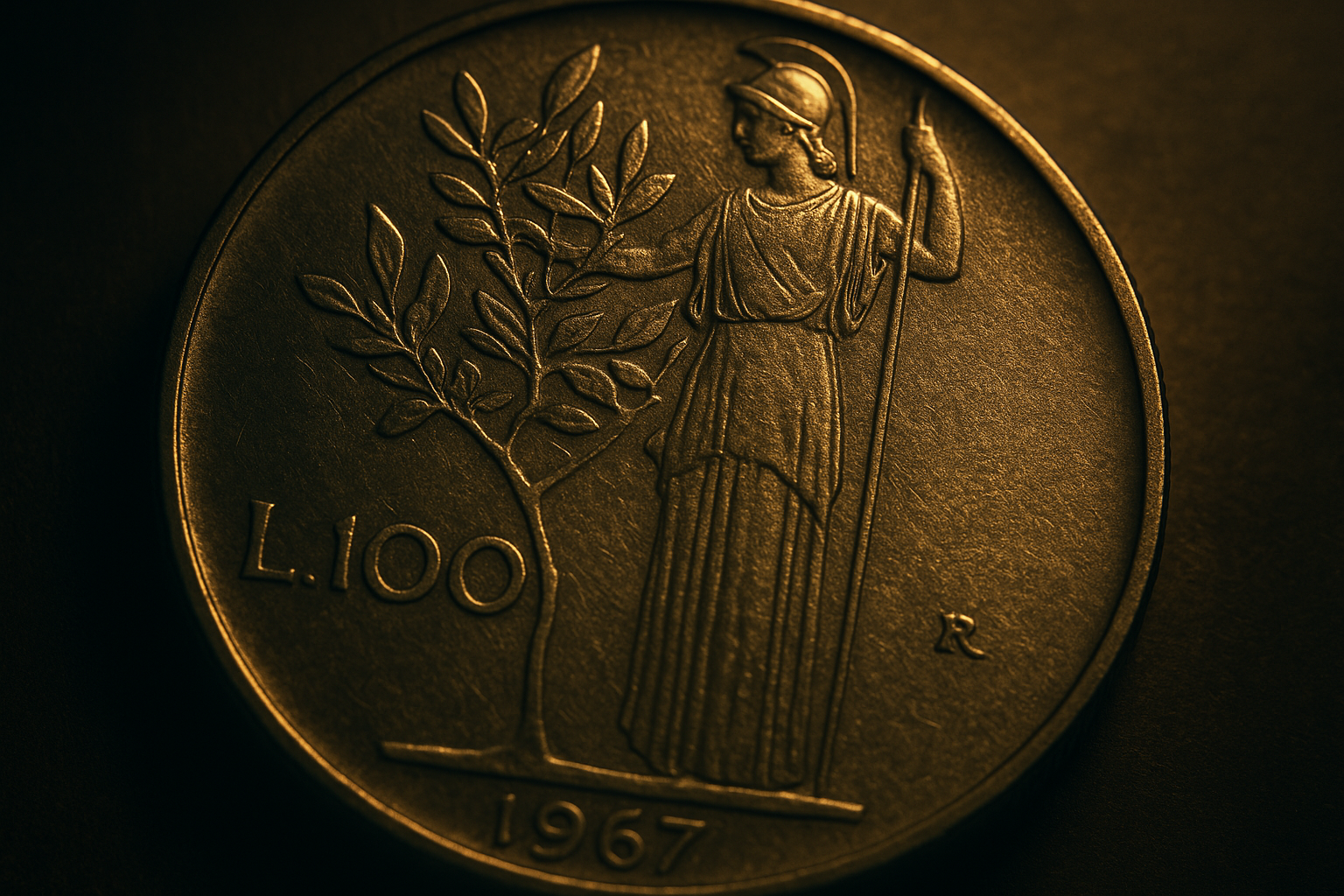
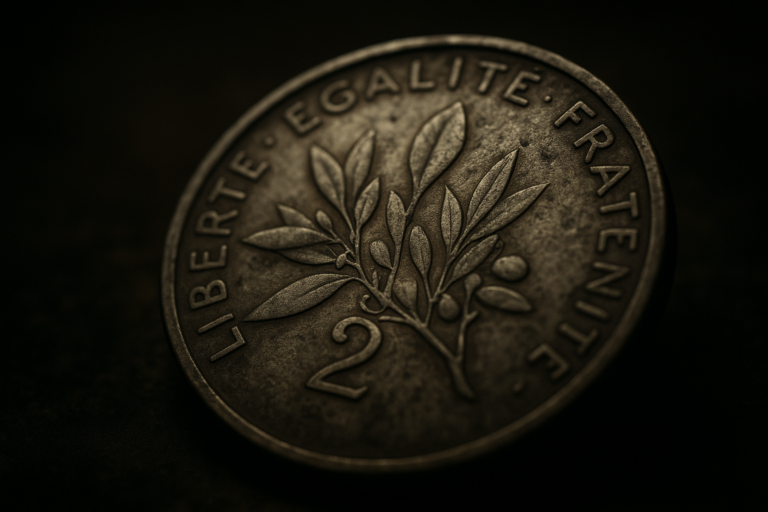
The olive tree is no random choice. The olive is one of the most important plants in the Mediterranean world. It represents peace, continuity, patience, and careful cultivation. An olive tree does not grow overnight. It takes years to become strong and productive, and it can survive for centuries. In this way, the tree on the 100 Lire becomes a metaphor for Italy rebuilding itself, slowly and thoughtfully, after the difficult years of conflict and uncertainty.
Together, Minerva and the tree create a message that is both subtle and powerful: wisdom guiding growth. The goddess does not cut the tree down. She does not ignore it. She supports it, encourages it, perhaps protects it. The coin quietly tells every person who uses it that progress needs both intelligence and patience.
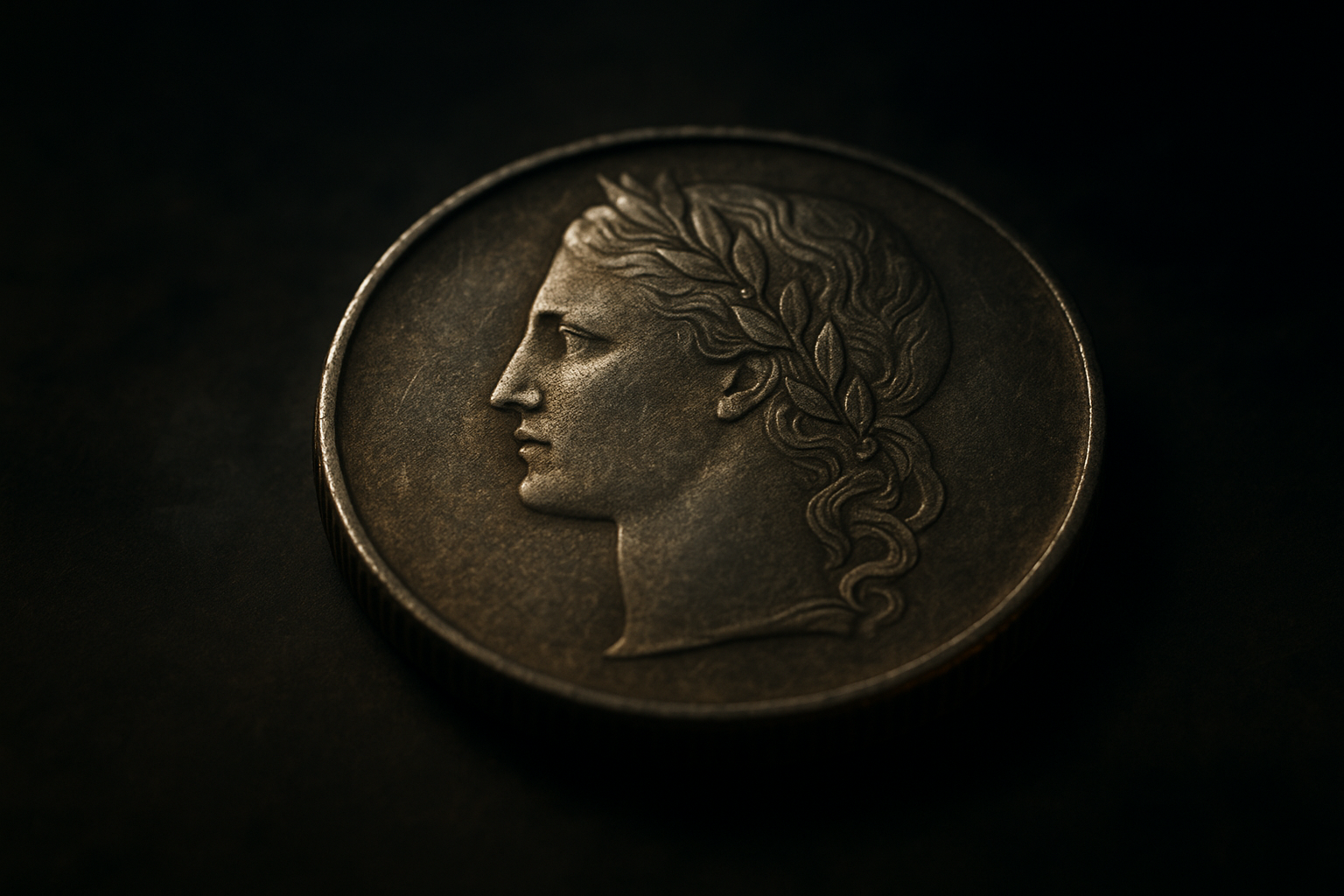
On the obverse side of the coin, a portrait and the inscription “REPVBBLICA ITALIANA” underline the republican identity of the state. This combination of classical symbolism and modern political identity is one of the reasons why the 100 Lire design is still appreciated today by artists, historians, and collectors.
3. Inside the Italian Mint – Technology, Alloy, and Everyday Durability
Behind every coin there is not only an artist, but also a team of metallurgists, engineers, and mint workers. For the 100 Lire, the choice of metal was particularly important. The coin was struck in Acmonital, a stainless steel alloy that resists corrosion, retains its shine, and can survive decades of circulation without falling apart.
Stainless steel is harder to work with than softer metals like copper or bronze. It requires precise machinery and strong presses to create sharp details in the design. That means each 100 Lire is the result of carefully controlled pressure and temperature inside the Italian mint. When you look closely at the hair of Minerva, the folds of her robe, or the texture of the olive leaves, you are looking at the fingerprint of that process.
The edges of many 100 Lire coins are smooth, without complicated reeding or lettering, but the overall feel of the coin is solid and practical. It was built to survive pockets, purses, coins jars, and cash registers for years on end. In an era when cash was the main medium of exchange, that durability was essential.
This is where the “whisper of the mint” begins. Every mark, every tiny scratch, every slightly off-center strike tells a micro-story: a moment in the manufacturing process, a small variation in pressure, a tiny difference in the die alignment. These details are often invisible to casual users but fascinating to the trained eye.
4. The 100 Lire in Everyday Italian Life
For many Italians who grew up in the second half of the twentieth century, the 100 Lire coin is not just an object from a museum or a collector’s album. It is a fragment of memory. It might recall the sound of coins dropped on a café counter, the small change given at a newspaper stand, or the first time a child learned to count money.
The coin travelled through open-air markets filled with vegetables, fruit, and fresh fish. It passed through ticket offices in train stations and through toll booths on highways crossing the peninsula from north to south. It was present in supermarkets, in cigarette vending machines, and in the pockets of students leaving school.
Because it was so common, most people barely looked at its design. And yet the image of Minerva and the tree stayed in their peripheral vision, like the pattern of tiles on a familiar street. Only later, when the lira was replaced by the euro, did many realize that this small coin had been a faithful companion through so many moments of daily life.
It is this combination of familiarity and depth that makes the 100 Lire such an interesting coin to study. It is both ordinary and extraordinary, both a tool of commerce and a tiny piece of art.
5. The “Whisper of the Mint” – Hidden Stories in a Small Coin
The phrase “whisper of the mint” captures a simple idea: coins are silent, but if you pay attention, they can tell you stories. The Italian 100 Lire is full of these quiet messages.
Some coins carry small die differences, slightly thicker lines, or almost invisible changes in the olive tree’s leaves. Others show gentle signs of circulation: smooth high points where the details have faded, little contact marks from years of being stacked and counted. These features do not make every piece rare, but they remind us that each one has lived a unique journey.
Imagine how many hands a single 100 Lire might have passed through: a factory worker receiving wages, a grandmother buying sweets for her grandchild, a student paying for a bus ticket. The coin does not keep a written record of these events, but they leave traces on its surface in the form of wear and microscopic marks.
For collectors and historians, learning to read these signs is like learning a new language. The mint’s choice of design, metal, and technique speaks through the coin. Time and circulation answer back, adding new layers of meaning. Together, they create a conversation between art, industry, and everyday life.
6. From Lira to Euro – Farewell to a Familiar Coin
At the turn of the millennium, Italy – along with many other European countries – prepared to adopt the euro. This transition was not just a financial decision. It was also an emotional one. For generations, people had counted their savings, their salaries, and their dreams in lire. Now they had to think in a new unit.
When euro coins and banknotes finally entered circulation, the 100 Lire and its companions began to disappear from daily use. Some were turned in at banks. Others stayed in drawers, jars, or forgotten pockets. A few remained in cash registers for a while, like guests who linger at the door after a long visit.
The Italian state organized deadlines for exchanging old currency, and gradually the lira stepped back from the stage. Yet the memory of the 100 Lire remained vivid in the national imagination. It became a symbol of a particular era – one of rapid growth, strong cultural identity, and big social changes.
Today, when someone finds a 100 Lire coin at the bottom of a box or inside an old wallet, it often triggers a smile and a wave of nostalgia. The piece is no longer a tool of everyday trade, but it has gained a new kind of significance: it connects the present to a world that feels both distant and familiar.
7. Collecting the 100 Lire Today – History in Your Hand
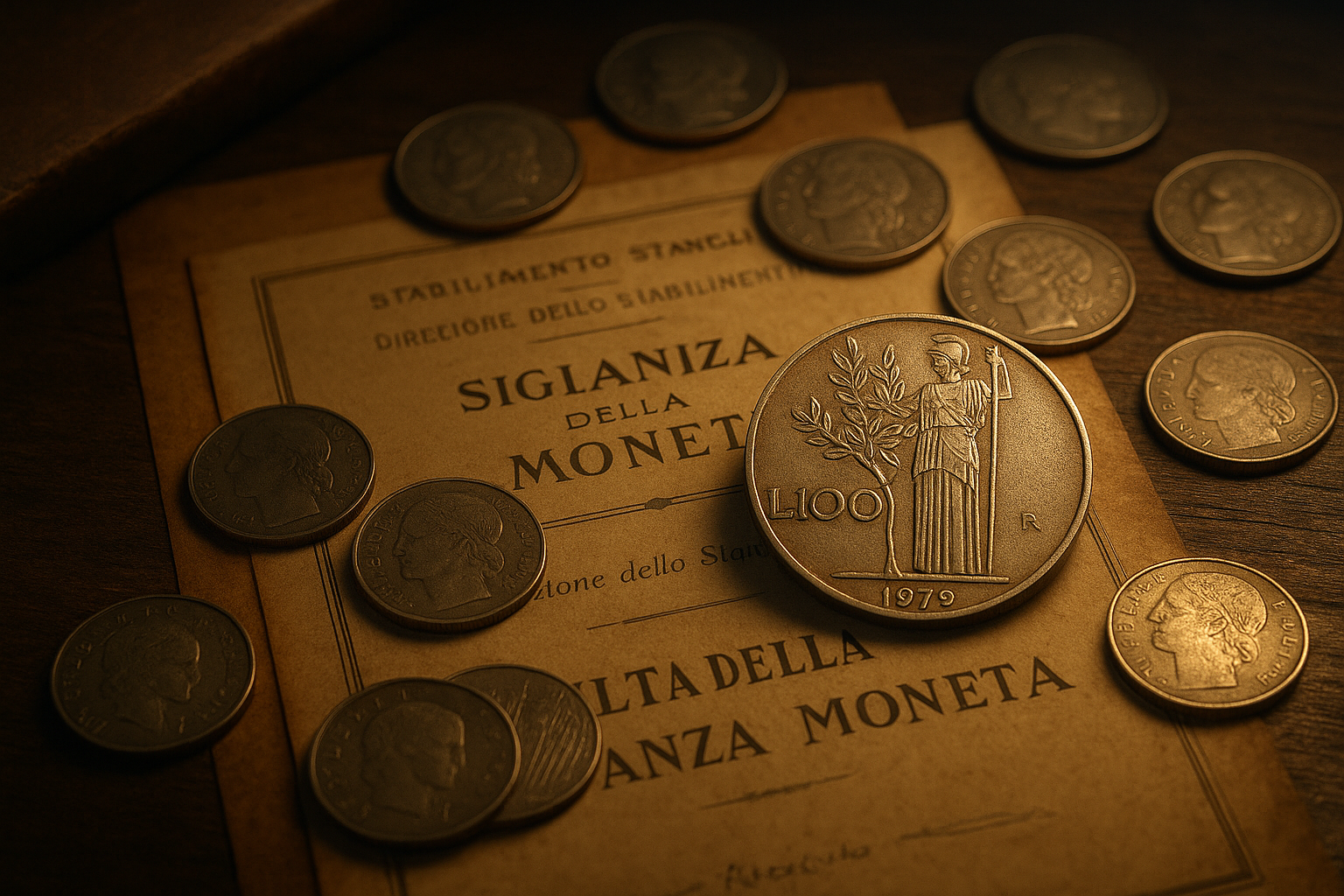
For coin enthusiasts, the Italian 100 Lire sits at a comfortable intersection between accessibility and depth. It is not a distant, unreachable treasure locked away in a museum. Many pieces are still easy to find, whether in old family drawers, flea markets, or small local coin shops. This makes the coin an ideal starting point for people who want to learn more about Italian numismatics.
At the same time, the series offers a surprising level of detail for those who look closely. Different years, small design variations, and the overall condition of individual pieces create a wide range of possibilities for building a collection. Some collectors enjoy focusing on a specific decade, while others try to assemble an almost complete run of dates.
More important than any catalogue or checklist, however, is the personal connection people develop with these coins. A person with Italian roots living abroad might keep a 100 Lire as a reminder of their grandparents’ stories. A traveller who visited Italy before the euro may remember paying for a gelato with these coins on a summer evening. The metal disc becomes a marker of identity, memory, and emotion.
In this sense, collecting the 100 Lire is less about chasing something rare and more about collecting fragments of lived experience. Each coin carries a little piece of Italy’s journey through the twentieth century – not in numbers and charts, but in metal, imagery, and human connection.
8. Watch the Story – 100 Lire in Motion
Reading about the 100 Lire coin is one way to explore its history, but seeing it in motion adds another layer. The light on the metal, the reflections, and the small details of Minerva and the olive tree all come alive when the coin is shown from different angles.
To dive deeper into the visual story of the Italian 100 Lire, you can watch this dedicated video, which highlights the design, the symbolism, and the historical background of the coin in a short, engaging format:
Video content and written storytelling complement each other perfectly. Together, they help preserve not only the image of the 100 Lire, but also the atmosphere of the times in which it circulated.
9. Frequently Asked Questions about the Italian 100 Lire
Was the 100 Lire coin important in everyday Italian life?
Yes. For many years, the 100 Lire coin played a constant role in daily transactions across Italy. It was used for small purchases, public transportation, snacks, and countless other routine expenses. Because it was so common, it became a familiar and almost comforting presence in people’s pockets and purses.
What makes the design of the 100 Lire special?
The combination of Minerva and the olive tree gives the coin a rich symbolic language. It connects ancient Roman mythology with modern Italian identity, and it expresses ideas such as wisdom, growth, and peaceful strength. This thoughtful artwork is one reason why the 100 Lire is still admired today.
Why is stainless steel used for this coin?
Stainless steel, or Acmonital, was chosen for its durability and resistance to corrosion. A coin made for constant use must be strong enough to survive years of circulation without losing its integrity. The choice of alloy reflects the practical side of coin production, while the design represents the artistic side.
How did the introduction of the euro change the role of the 100 Lire?
When the euro replaced the lira, the 100 Lire disappeared from daily transactions. However, the coin did not disappear from memory. It moved from wallets to personal collections, from cash registers to drawers and boxes, becoming a nostalgic symbol of life in Italy before the new currency.
Why do collectors still care about the 100 Lire today?
Collectors appreciate the 100 Lire for several reasons: its beautiful and meaningful design, its connection to an important period in Italian history, and the personal memories many people associate with it. Even a single coin can serve as a compact history lesson, a piece of art, and a family story all at once.
Final Thoughts – A Small Coin with a Long Echo
The Italian 100 Lire coin is more than a retired piece of currency. It is a small, circular witness to decades of social change, economic growth, and cultural pride. Through Minerva and the olive tree, through stainless steel and careful minting, through the hands of millions of people, it tells a story that reaches far beyond numbers.
Whether you encounter a 100 Lire in a collection, in an old family box, or in a video online, it invites you to listen carefully to that quiet “whisper of the mint.” Behind the metal, there is always a human story – and that is what makes coins like this so endlessly fascinating.
Tenho uma
Tenho uma quero negociar