The Untold Stories Behind Britain’s Rare Coins
Estimated reading time: 14 minutes.
The Untold Stories Behind Britain’s Rare Coins
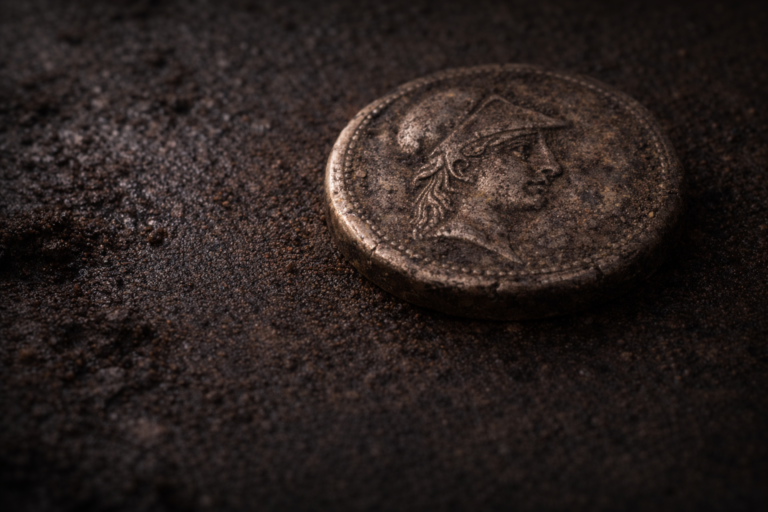
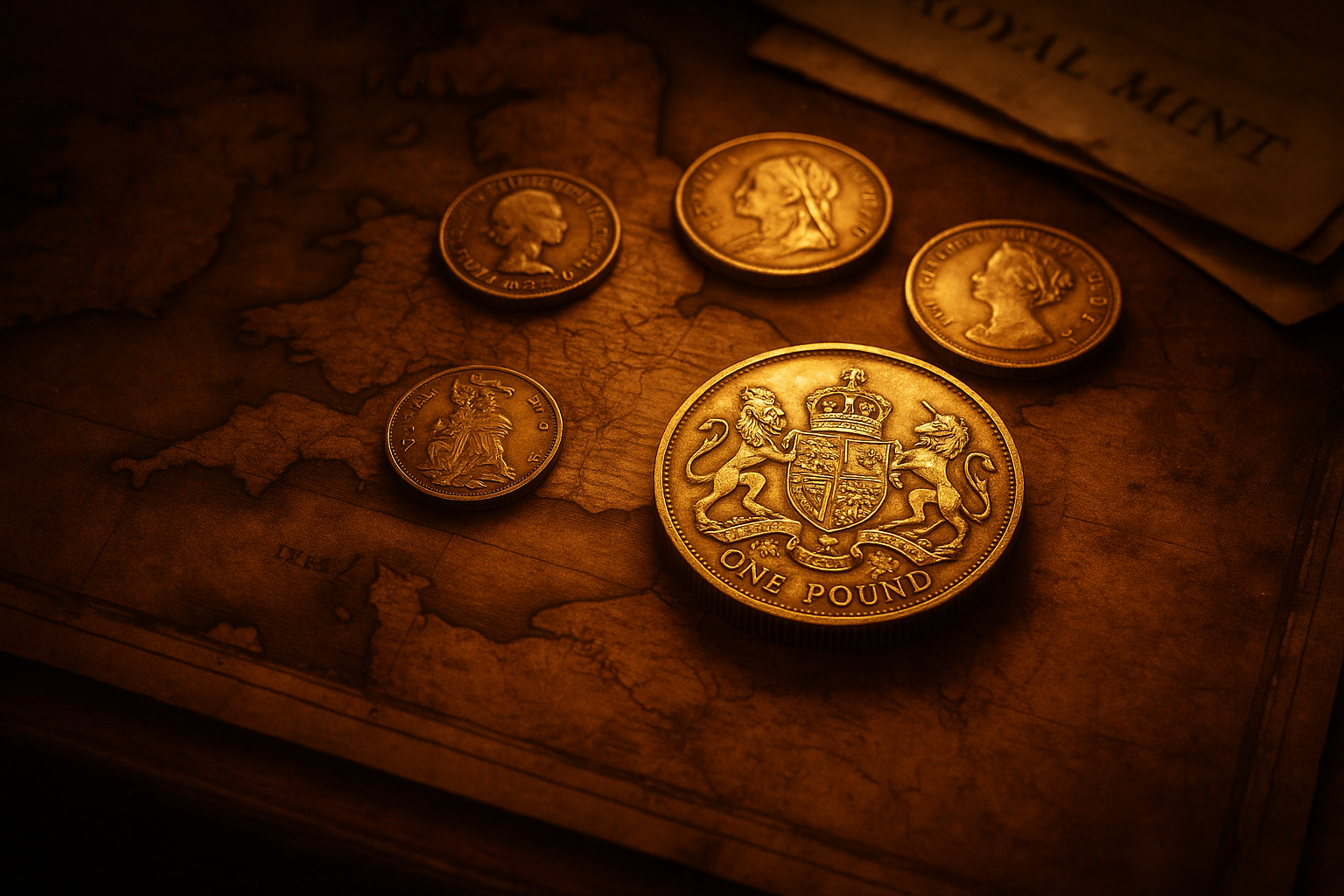
For centuries, Britain’s coins have served as far more than units of currency. They have carried the faces of monarchs, the symbols of empires, and the echoes of decisive turning points in British history. Each coin that survived the collapse of a kingdom, a royal succession, a civil conflict, or the birth of a new era is—quite literally—a tiny metal witness to the story of Britain itself. Some coins are treasured today because of their rarity, but rarity alone is never the whole story. Behind many of Britain’s most intriguing coins lie forgotten legends, minting controversies, and cultural footprints that reveal far more than catalog numbers ever could.
This article dives deep into those untold stories. It explores how coins transitioned from medieval silver hammered by hand to the sophisticated machine-struck designs of the modern Royal Mint. It looks at the conflicts, political statements, and symbolic messages that shaped some of the United Kingdom’s most elusive pieces. From the mysterious coins of the Anglo-Saxons to the controversial issues of the Tudor era to the unexpected minting decisions of the twentieth century, each chapter uncovers how coins became vessels of identity, power, and legacy.
To study rare British coins is to walk through the corridors of British history—monarch by monarch, war by war, belief by belief. And while some coins are widely known among collectors, their full stories often remain hidden in the shadows of time. The goal of this exploration is not to discuss monetary value, but to rediscover the deeper meaning behind these metallic artifacts and the stories they preserve.
1. Origins of British Coinage: A Nation in Metal
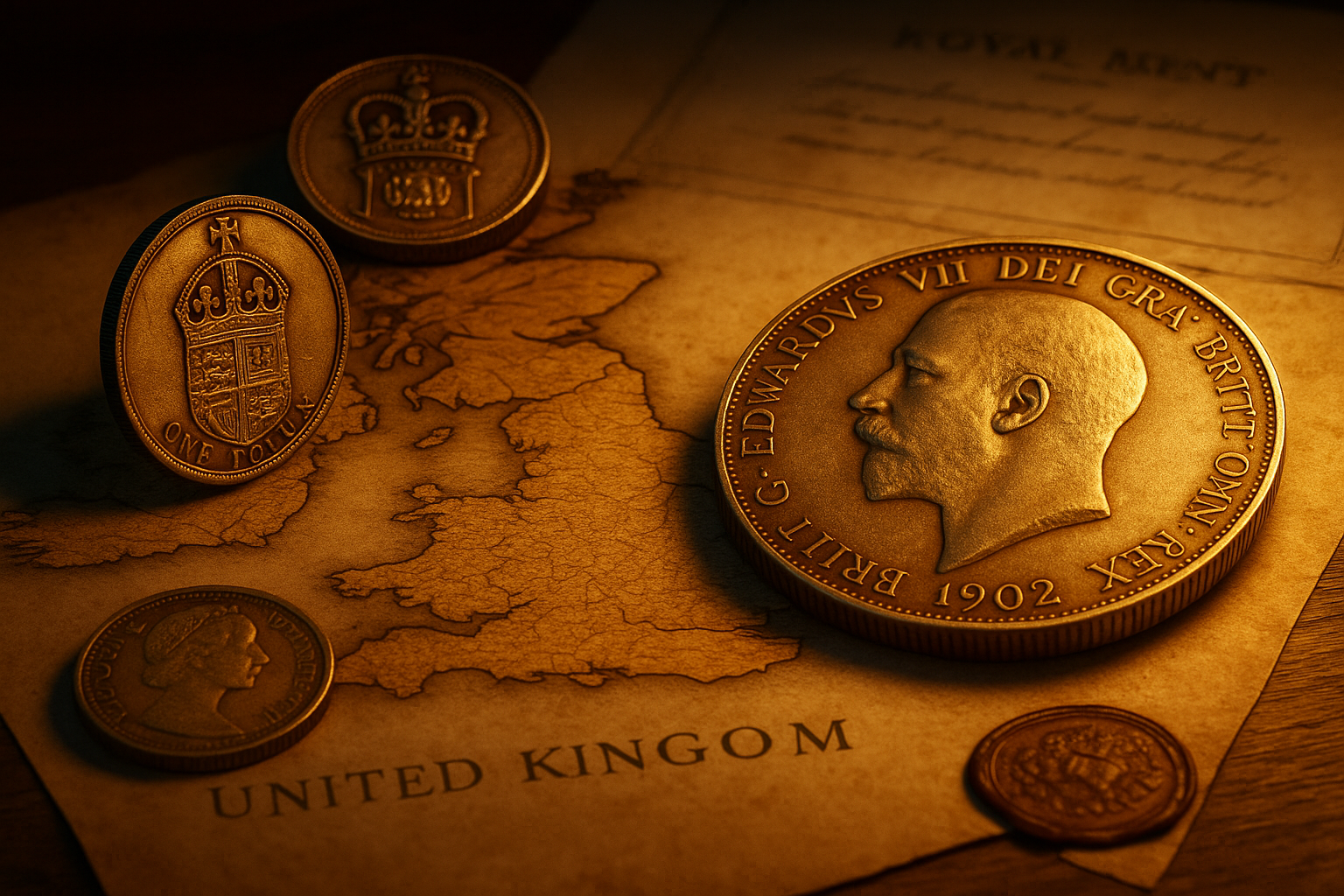
Centuries before Britain became a unified kingdom, tribal groups across the British Isles minted their own coins, many of them inspired by ancient Greek and Roman designs. These pre-Roman issues featured abstract horses, spirals, and symbols of tribal identity. Although primitive compared to later standards, they reveal that even early Britons understood the power of minting as a statement of authority. A coin was proof of control, trust, and cultural expression.
When the Romans arrived, they introduced a sophisticated monetary system, marking the first time Britain saw coins as professional tools of governance. But when Rome fell, the coinage system collapsed with it. What followed was one of the most fascinating rebirths in European history: the rise of Anglo-Saxon coinage.
2. Anglo-Saxon Rarities and the Birth of English Symbolism
Anglo-Saxon coins are among the most historically revealing artifacts in Britain. They show how kingdoms like Wessex, Mercia, and Northumbria fought not only with swords, but with silver. Coins carried the names of kings, bishops, and mints—effectively mapping power in a fragmented world.
Some Anglo-Saxon coins are rare because their kingdoms were short-lived. Others are rare because they were minted during conflicts or transitional periods. Many depict cross-inspired motifs reflecting the Christianization of England, making them markers of religious evolution as well.
The introduction of portraiture—often crude but symbolically important—helped define the idea of kingship. The physical faces stamped onto these early pennies formed the first attempts to unify people under a recognizable leader. These small silver disks were the propaganda tools of their time.
3. The Norman Transformation and the King’s Imprint
After 1066, the Norman Conquest revolutionized British coinage. William the Conqueror and his successors implemented a strict, centrally controlled minting system. Each English monarch struck coins bearing their portrait, reinforcing the idea that authority flowed from the crown alone.
Some of the rarest Norman coins exist because new designs were issued frequently—sometimes every few years—as a method to combat clipping and counterfeiting. This constant redesign resulted in numerous small-run types, many of which are prized today not for their rarity alone, but for what they reveal about medieval economic control.
4. Tudor Power, Royal Messaging, and Controversial Mints
Under the Tudors, coinage became a declaration of royal strength. Henry VIII, for example, altered his coin portraits to emphasize power and majesty—broader shoulders, stronger facial features, and more elaborate regalia. Some coin types associated with his reign became controversial due to debasements, yet they also became essential historical records.
Elizabeth I later brought stability and refinement to British coinage, restoring silver content and promoting designs that celebrated maritime power and religious authority. The symbolism in Tudor coins—from roses to portcullises to Latin inscriptions—reflected a dynasty determined to broadcast strength and continuity.
5. Stuart-Era Coins and the Shadow of Civil War
The Stuart period introduced some of the most dramatic and historically significant coins in British history. With the English Civil War dividing the nation, emergency mints appeared in various strongholds. Some were struck under siege conditions, with irregular shapes and rushed designs that now serve as tangible artifacts of chaos.
The coins minted by Charles I during the conflict—especially those from Oxford, York, and Bristol—tell the story of a country grappling with identity and authority. Their rarity is not accidental; it is directly connected to the violence, urgency, and instability of the era.
After the restoration of Charles II, coin designs shifted once again. Machine-struck coins were introduced, bringing greater precision and consistency. This transition marked the beginning of modern British minting as we know it.
6. The Industrial Revolution and the Birth of Modern Minting
By the eighteenth and nineteenth centuries, Britain was undergoing industrial transformation. New technologies revolutionized the Royal Mint, allowing for more intricate designs, stronger metals, and higher-precision dies. This period produced some of the most elegant coins in British history.
One of the defining innovations was the use of steam-powered presses at the Soho Mint under Matthew Boulton. These machines revolutionized coin quality and security, producing pieces with crisp details and consistent edges. Some patterns and experimental strikes from this era are exceedingly rare, offering insights into the technological ambitions of the time.
Victorian coinage, meanwhile, carried symbolism that reflected empire, commerce, and progress. The famous Gothic florin, for example, showcases Britain’s artistic flair at its height—an intricate blend of medieval-inspired styling and nineteenth-century precision.
7. Royal Portraits: More Than a Monarch’s Face
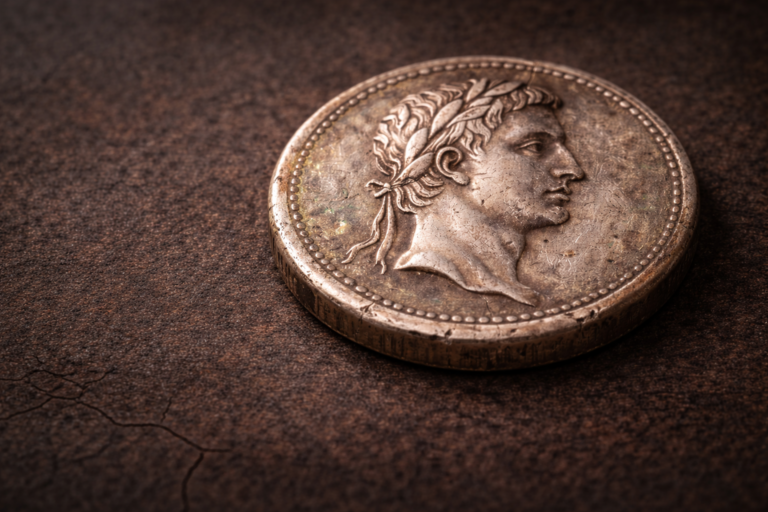
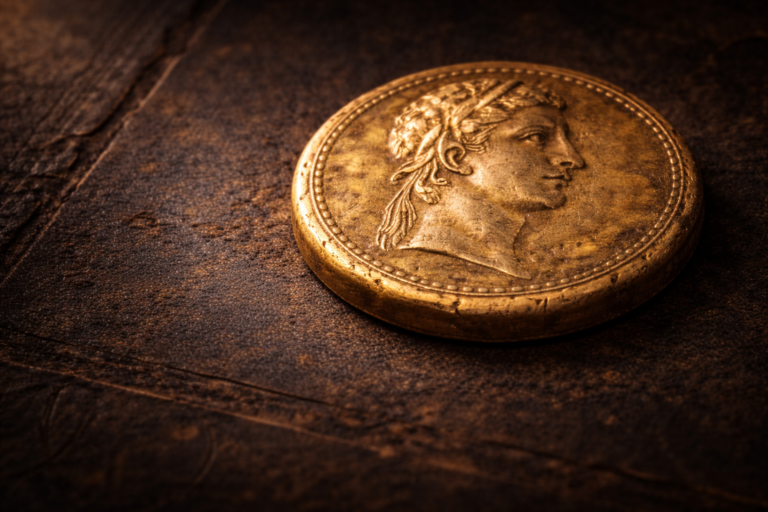
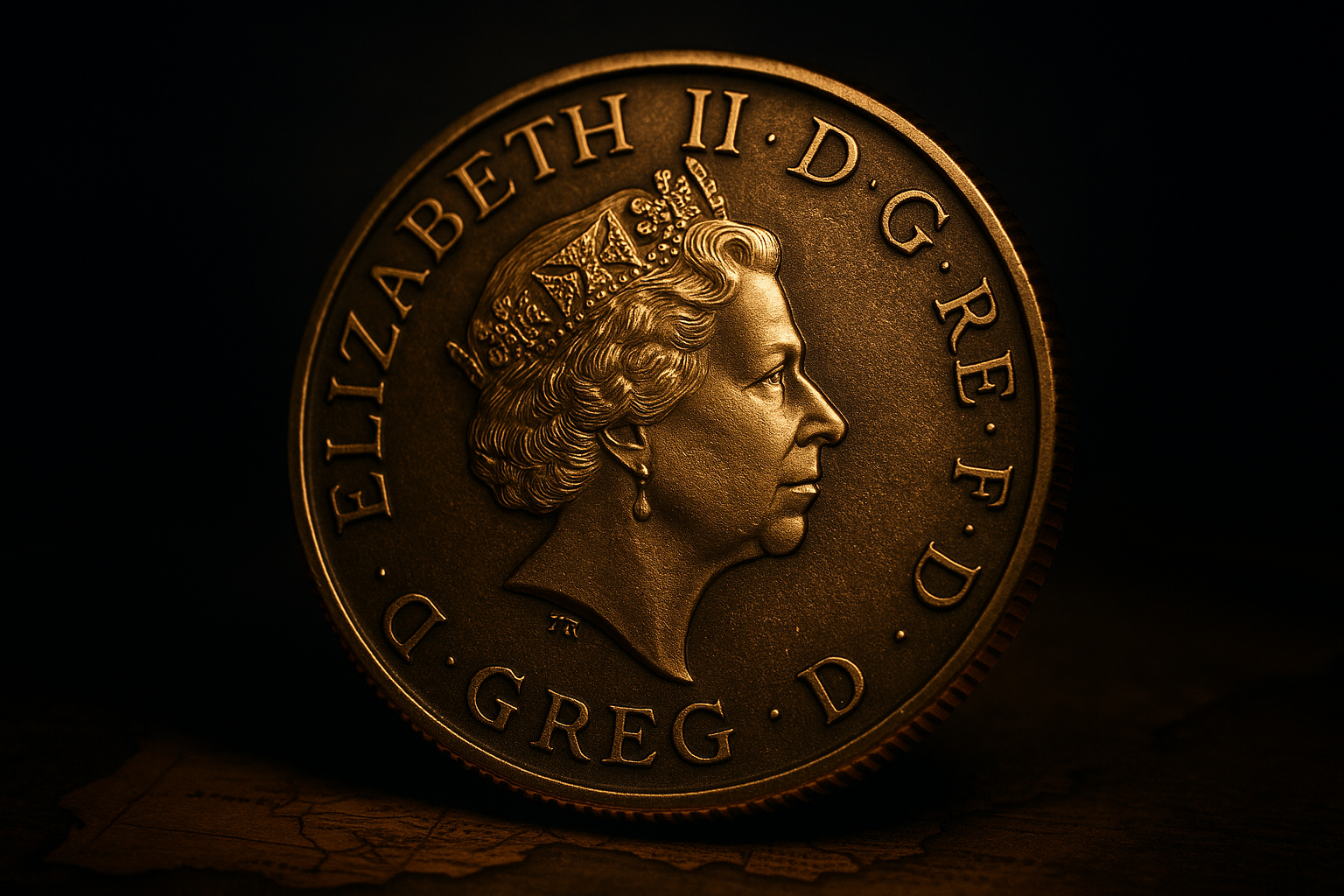
Every British coin bearing a monarch’s portrait communicates more than a likeness. It conveys political messaging, dynastic identity, and shifts in artistic style. From the young, idealized image of Queen Victoria to the elegant and modern features of Queen Elizabeth II, each portrait reflects not only the monarch but the nation’s self-image at the time.
Portrait transitions are particularly important for historians because they mark moments of national change. A new portrait signals a new reign, a new era, and often a new artistic direction. Many rare portrait types exist because they were used for short periods, minted during political tensions, or replaced due to stylistic debate inside the Royal Mint.
8. Myths, Misstrikes, and Unexpected British Coin Legends
Beyond official minting policies and historical transitions, Britain’s coins also carry legends—stories about unexpected errors, unusual dies, and mysterious issues that slipped into circulation. Some misstrikes occurred during mint upgrades, while others emerged during wartime confusion. These anomalies help illuminate the human element of coin production: mistakes, improvisations, and the persistence of craftsmanship even under pressure.
There are also coins tied to folklore, such as pieces believed to bring luck or associated with major events. These stories, though not always historically verifiable, reveal how deeply coins have embedded themselves in British cultural imagination. A coin is not merely an object; it is a talisman of memory.
9. Summary Table: Key Historical Themes
| Historical Period | Key Characteristics | Coin Legacy |
|---|---|---|
| Anglo-Saxon | Religious symbolism, emerging kingship, silver pennies | Foundation of English numismatic identity |
| Norman | Royal portraits, frequent redesigns, strict mint control | Clear centralization of authority in coinage |
| Tudor | Royal propaganda, religious symbolism, restored coin standards | Powerful visual messaging of royal legitimacy |
| Stuart | Civil War issues, emergency minting, conflicting authorities | Rare artifacts shaped by conflict |
| Industrial Era | Machine striking, steam-powered technology, artistic innovation | Beginning of modern British minting |
10. Closing Thoughts – Britain’s Story in Silver and Gold
Rare British coins represent far more than collectible pieces or historical curiosities. They are fragments of British identity forged into metal. They echo the ambitions of monarchs, the turbulence of wars, the quiet persistence of artisans, and the evolution of a nation that has continually reinvented itself across centuries.
Each coin tells a different chapter of Britain’s unfolding narrative—from the earliest tribal issues to the refined masterpieces of the modern Royal Mint. And while some pieces are celebrated for their scarcity, their true significance lies in the stories they preserve. To hold one of these coins is to touch history itself: a moment, a ruler, a belief, a nation—captured forever in silver or gold.
Share This Historical Story
Enjoyed the journey through Britain’s rare coins? Share it with others:
Explore More Hidden Histories
Britain’s rare coins reveal centuries of artistry, symbolism, and cultural evolution. If you enjoy discovering the forgotten stories behind world coinage, continue exploring more historical narratives on HistoraCoin.
Discover Related Stories
Frequently Asked Questions
Why are some British coins considered historically important?
Many British coins were issued during major political transitions, wars, or reforms. Their survival helps historians understand how power, symbolism, and minting policy evolved across the centuries.
Does rarity always mean a coin had a small mintage?
Not always. Some coins became rare because they were withdrawn early, redesigned quickly, destroyed in conflict, or minted in short-lived emergency locations.
What makes British coinage unique in world history?
Britain’s coinage spans ancient Celtic tribes, Roman rule, Anglo-Saxon kingdoms, the Norman dynasty, the Tudors, the Stuarts, and the Royal Mint—offering one of the longest and richest numismatic traditions in the world.
Reality Check
The historical significance of British coins lies not only in their rarity but in the turbulent eras they represent. From civil wars to royal transitions to technological revolutions, each surviving coin is a historical footprint rather than a collectible defined by monetary value.
Final Verdict
Britain’s rare coins are miniature chronicles—capturing wars, dynasties, religious shifts, and artistic innovations. Their true meaning lies not in market value but in the history they preserve. For those who seek the stories behind the metal, these coins remain timeless windows into the soul of Britain’s past.
HistoraCoin Team
The HistoraCoin Team documents the hidden histories, artistic symbolism, and cultural stories behind world coinage. Each article brings numismatic history to life through cinematic storytelling and meticulous research.