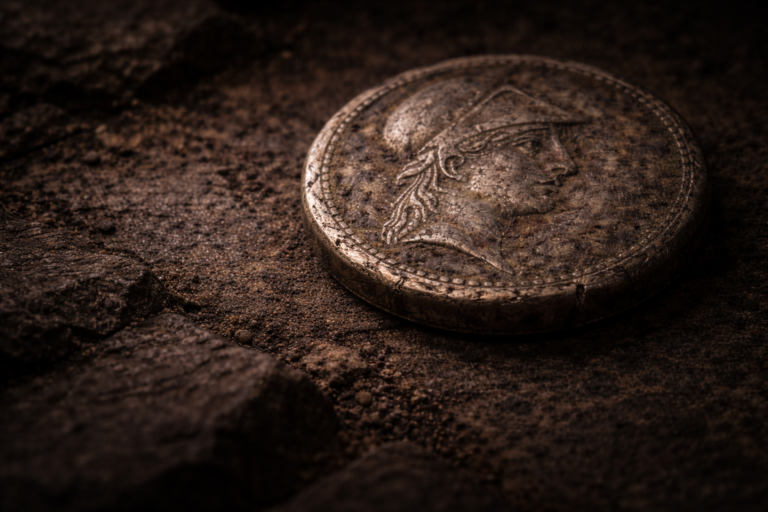
The Whispering Coin of Rome – The Emperor’s Secret

This story is brought to you by HistoraCoin – where history’s whispers become legend.
Rome has many ghosts, my friend. They linger not in its ruins, but in its relics — in marble, in metal, in whispers. And among the endless treasures of the empire, there is one coin that collectors fear to touch. A coin said to carry the last breath of an emperor — the Whispering Coin of Rome.
Some say it murmurs secrets when the world is silent. Others swear it answers when spoken to. But one thing is certain — wherever the coin goes, truth follows… and truth, in Rome, was often deadly.
🪙 The Emperor’s Last Breath
The legend begins in the year 217 A.D., during the reign of Emperor Caracalla — a ruler both admired and feared. He was known for his temper, his endless wars, and his obsession with immortality. In the final months of his reign, Caracalla summoned a secret craftsman, Lucius Faustus, to create a coin unlike any other — a coin that would preserve his voice forever.
Lucius was a metalsmith and philosopher who believed sound could live within matter. He claimed that when a person speaks over molten metal, the vibrations remain inside the alloy forever. “Then make it so,” Caracalla ordered. “Let Rome never forget me.”
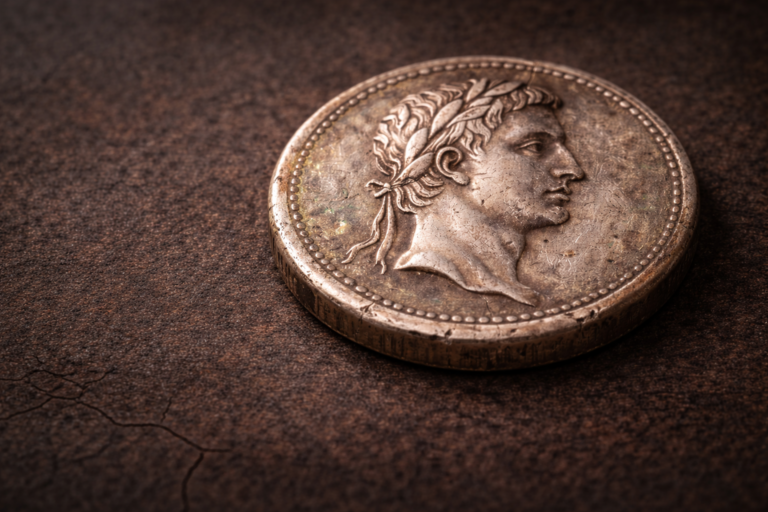
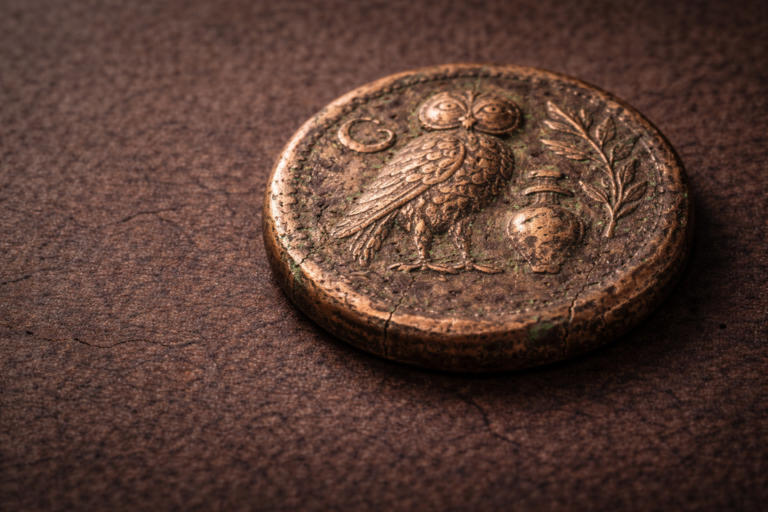
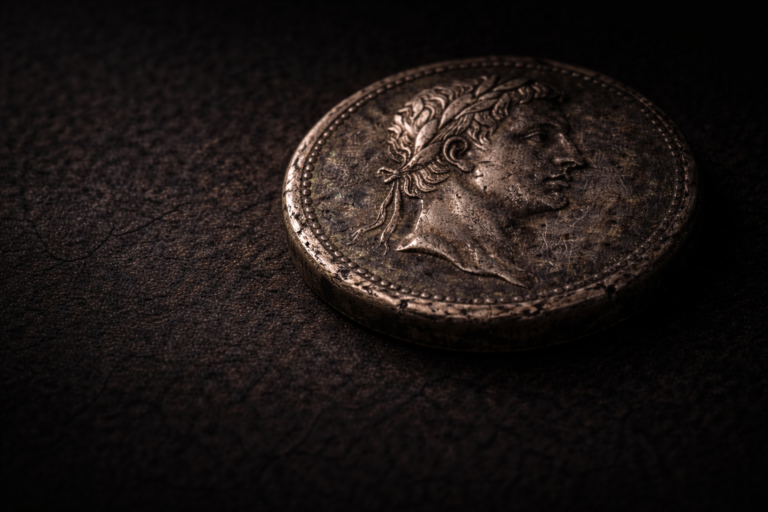
And so, one night beneath the moon, Lucius forged the coin — a golden aureus bearing the emperor’s profile on one side and the goddess Discordia on the other. As the metal cooled, Caracalla leaned close and whispered into it: “Roma, audi me semper” — “Rome, hear me forever.”
The next morning, he was dead — stabbed by one of his own guards on the road to Carrhae. Lucius vanished, and the coin disappeared into legend.
🔥 The Curse of the Aureus
For centuries, the coin was thought to be myth — until 1493, when a Florentine merchant named Antonio Grimaldi bought a strange Roman coin from a grave robber. He described it as “warm to the touch, even after a night in the cold.” When he pressed it to his ear, he claimed to hear faint whispering — a man’s voice repeating the same Latin phrase over and over: “Roma, audi me semper.”
Days later, Grimaldi went mad. He sealed his house and refused to speak. When his body was found, every mirror in his home was shattered — and the coin was gone.
👁️ The Coin of the Inquisition
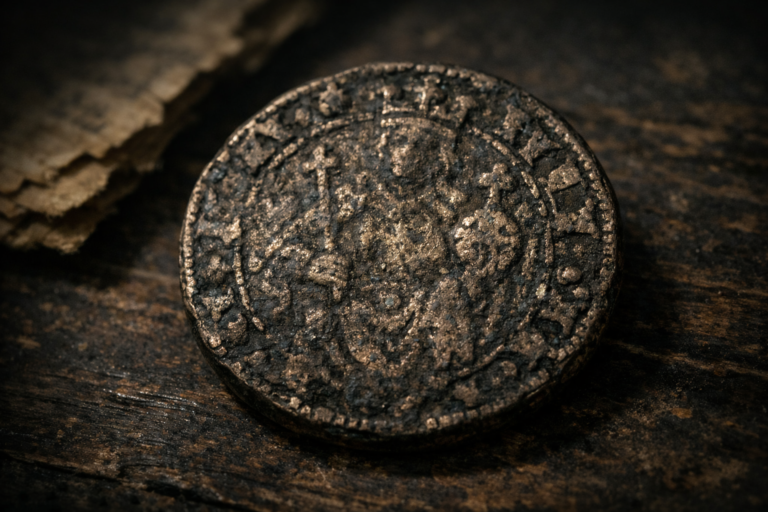
In 1602, the Whispering Coin reappeared in Rome, in the possession of a Spanish inquisitor named Father Mateo Corvus. He believed it to be a relic of divine punishment — proof that the sins of emperors echoed beyond death. He kept it locked in a wooden box, wrapped in silk. Yet at night, monks heard voices from his chamber — one pleading, one laughing.
When they broke in one morning, they found the box open, the coin resting on his tongue. His eyes were wide, his throat blackened. On the wall behind him, someone — or something — had written in soot: “I am still emperor.”
🏺 The Scholar’s Obsession
By the 19th century, the coin had become a fascination among historians. In 1874, a young archaeologist named Elena Vescari claimed to have rediscovered it during excavations near the Baths of Caracalla. She described the object as “glowing faintly under moonlight” and noted strange etchings invisible by day. Elena became obsessed, spending nights recording its whispers with early phonographs. One surviving cylinder plays a single sound: a long exhale, followed by a heartbeat.
Her diary ends abruptly. The final entry reads:
“The voice calls my name now. It says Rome is not dead — only waiting.”
🌕 The Collector of Shadows
In 1928, the coin surfaced in the private collection of Count Lorenzo di Savona, an Italian noble with a taste for cursed artifacts. Guests who visited his villa reported hearing voices echoing from the display room when it was empty. One said the coin “whispered like wind through marble halls.” Another claimed it spoke directly: “Serve me.”
The Count laughed it off — until his servants found him drowned in his fountain, the coin clenched in his hand. The fountain’s water was warm, though the night had been freezing.
🕯️ The Vatican Secret
After the Count’s death, the coin was quietly seized by Vatican officials. It was classified under the name “Aureus Noctis” — “The Golden Coin of Night.” Stored deep within the archives, it was studied by theologians and scientists alike. Reports mention an anomaly: when placed in complete silence, the coin produced measurable sound waves — frequencies matching the human voice.
One priest wrote, “It speaks only when you stop listening.” The file was sealed. No further research was authorized.
💭 The 20th Century Mystery
In 1986, a Vatican archivist leaked photos of the coin to an Italian journalist. Within a week, both men vanished. The journalist’s car was found abandoned near the Appian Way, engine still running. On the passenger seat — a cassette tape, playing static punctuated by faint Latin words. Audio analysis later confirmed the phrase: “Roma, audi me semper.” — “Rome, hear me forever.”
Experts dismissed it as coincidence — a radio overlap, a hoax, a trick of noise. But the archivist’s home contained no radio, no phone, and no sign of struggle. Only one coin impression pressed into the wooden table — as if something heavy and circular had burned through the varnish.
🏛️ The Modern Discovery
In 2017, a team restoring the underground chambers of the Roman Forum uncovered a lead-lined box hidden within the ruins. Inside: a single golden coin wrapped in silk. Its surface bore the faint image of Caracalla — and the Latin words around the edge read: “Vox imperii aeternum” — “The voice of the empire is eternal.”
When the box was opened, nearby microphones recorded a strange resonance — as if the walls themselves sighed. Within seconds, the recording equipment failed. The restoration site was sealed, and the artifact was transferred to an undisclosed location. The official report ended with one chilling line:
“The coin whispered before it was moved.”
🌩️ Between Myth and Memory
Historians argue whether the Whispering Coin truly exists or if it’s merely a fable born of Rome’s obsession with eternity. After all, what better symbol of power than a ruler whose voice never dies? But skeptics can’t explain the centuries of identical accounts — of warmth, sound, and death surrounding the same relic. Coincidence? Or a message that refuses to fade?
Maybe Caracalla’s whisper still lingers in the metal, vibrating across time — a voice trapped in gold, seeking ears willing to listen. And maybe, if you ever hold a Roman coin long enough in the quiet, you’ll hear it too — a breath beneath the centuries, whispering softly: “I am still emperor.”
🌕 The Lesson Beneath the Legend
The Whispering Coin of Rome reminds us that empires fall, but ambition doesn’t. It’s the echo of every ruler who thought he could outlive time, carved into the very thing humans trust most — currency. Because power, like gold, never truly fades — it just changes hands.
🧭 Reality Check
No verified record of a “Whispering Coin” exists, but ancient Roman coins often bore inscriptions and imagery designed to project divine authority. The myth captures Rome’s enduring fascination with eternity — where even a coin could carry the weight of an emperor’s soul.
🏁 Final Verdict
Whether artifact or allegory, the Whispering Coin remains one of Rome’s most haunting legends — a story of pride, power, and the price of being remembered. If you ever visit the ruins of Caracalla, listen closely when the wind passes through the stone. You might just hear a whisper saying, “Roma, audi me semper.”
🎥 Watch More on HistoraCoin
If this Roman legend stirred your imagination — where history, myth, and metal collide — explore more haunting stories of ancient coins and lost empires on our YouTube channel: HistoraCoin on YouTube – where the past still speaks.
❓ FAQ
Is the Whispering Coin of Rome real?
No official record exists, but the story echoes multiple ancient sources referencing “talking coins” linked to Caracalla’s reign.
What makes this coin special?
It’s said to contain the emperor’s last words, trapped within the gold through a forgotten metallurgical ritual.
Where could the coin be today?
Rumors place it within Vatican archives or private European collections, though none confirmed publicly.
What’s the meaning of “Roma, audi me semper”?
It means “Rome, hear me forever” — a haunting declaration of Caracalla’s desire to outlive his own death.
Focus Keyword: whispering coin rome
Keywords: whispering coin rome, roman coin legend, emperor secret coin, ancient rome mystery, cursed roman coin, haunted coin legend, roman empire relic, mysterious roman treasure, ancient coins italy, roman mythology coins