When the 1973 Canadian Penny Was Everywhere – A Small Coin in Everyday Canadian Life
Estimated reading time: 16 minutes
Today the Canadian penny feels like a memory from another time. It disappeared from circulation years ago, and many younger people in Canada have never used one in daily shopping. But during the early nineteen seventies the penny was everywhere. It sat in kitchen jars, rolled through grocery store tills, and collected quietly in pockets across the country.
Among those countless small coins was the 1973 Canadian penny. At the time it was simply another ordinary cent. It was not rare, not unusual, and not something people studied carefully. Yet decades later collectors and historians often return to this coin because it represents a moment when the penny was still deeply woven into everyday Canadian life.
- The Penny in Daily Canadian Life
- The Economic Atmosphere of the Early Seventies
- Design That Canadians Recognized Instantly
- Where Pennies Appeared in Everyday Transactions
- Pennies in Childhood Memories
- How the Royal Canadian Mint Produced Millions of Pennies
- How Pennies Traveled Through the Country
- Why the Penny Slowly Lost Its Importance
- Why Collectors Still Study the 1973 Penny Today
- Understanding the Penny in the Larger Canadian Story
- Related HistoraCoin Stories
- FAQ
The Penny in Daily Canadian Life
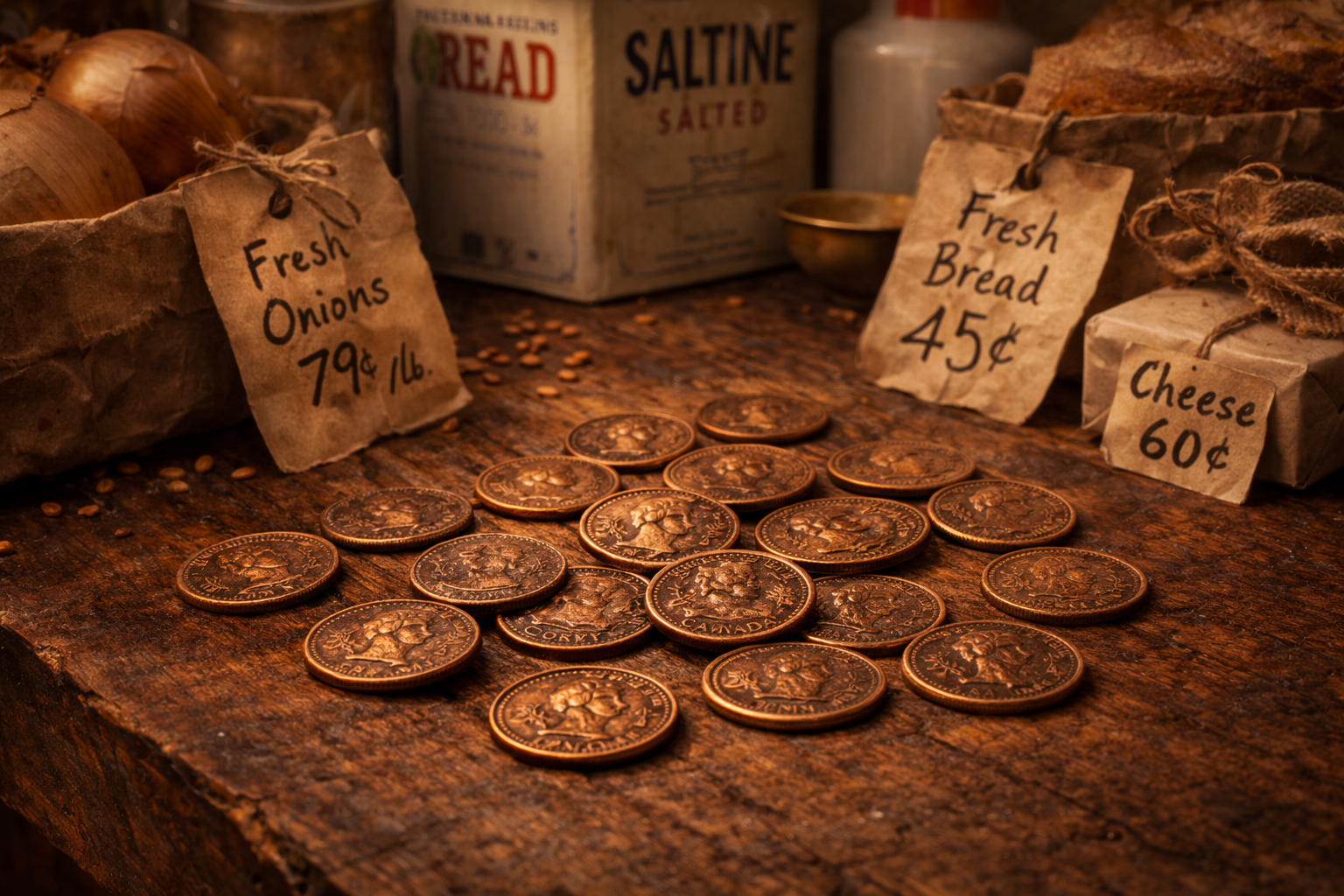
In the nineteen seventies everyday purchases often ended with a handful of small coins. Prices were written with cents at the end, and pennies helped balance transactions exactly. Whether someone was buying bread, milk, a newspaper, or candy from a corner store, the penny was part of the final exchange.
The 1973 Canadian penny belonged to that environment. It passed through countless hands every day. A shopper might receive several pennies in change after buying groceries. A child might drop them into a piggy bank. A bus rider might gather them with other coins before paying a fare.
Because pennies were used so frequently, most people never stopped to examine them closely. They were familiar objects, like buttons or paper clips. The design of the coin was recognized instantly, yet rarely studied in detail. Only decades later did collectors begin paying closer attention to individual years like 1973.
If you want to understand the larger background behind these coins, you can explore the hidden story of Canadian pennies. That broader perspective explains how the penny became one of the most recognizable coins in Canadian history.
The Economic Atmosphere of the Early Seventies
To understand why the penny mattered, it helps to imagine the economic atmosphere of Canada during the early nineteen seventies. Prices were lower than they are today, and small coins still had meaningful purchasing power.
A single cent could not buy much by itself, but combined with other coins it completed prices precisely. Stores often listed prices like thirty nine cents or seventy four cents. Pennies made those exact amounts possible. Without them, rounding would have been necessary in everyday transactions.
This is why millions of pennies were produced every year. They were not decorative objects. They were practical tools of daily commerce. Every grocery store cash register expected them. Every bank counted them. Every household accumulated them in jars and drawers.
Design That Canadians Recognized Instantly
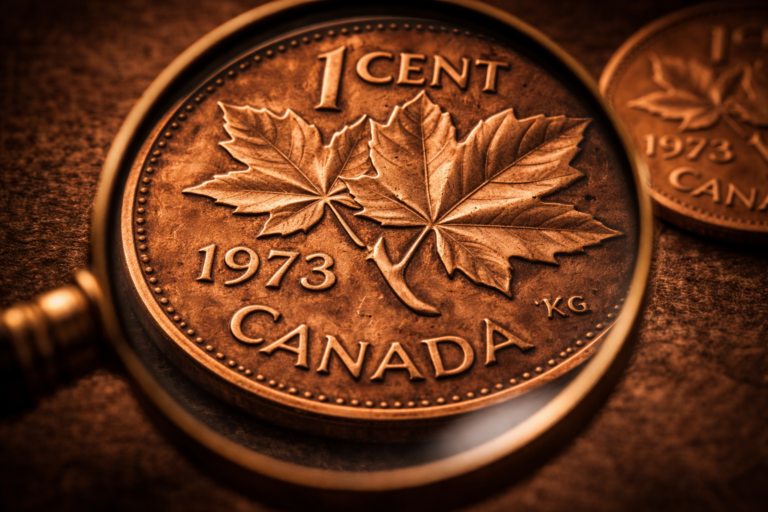
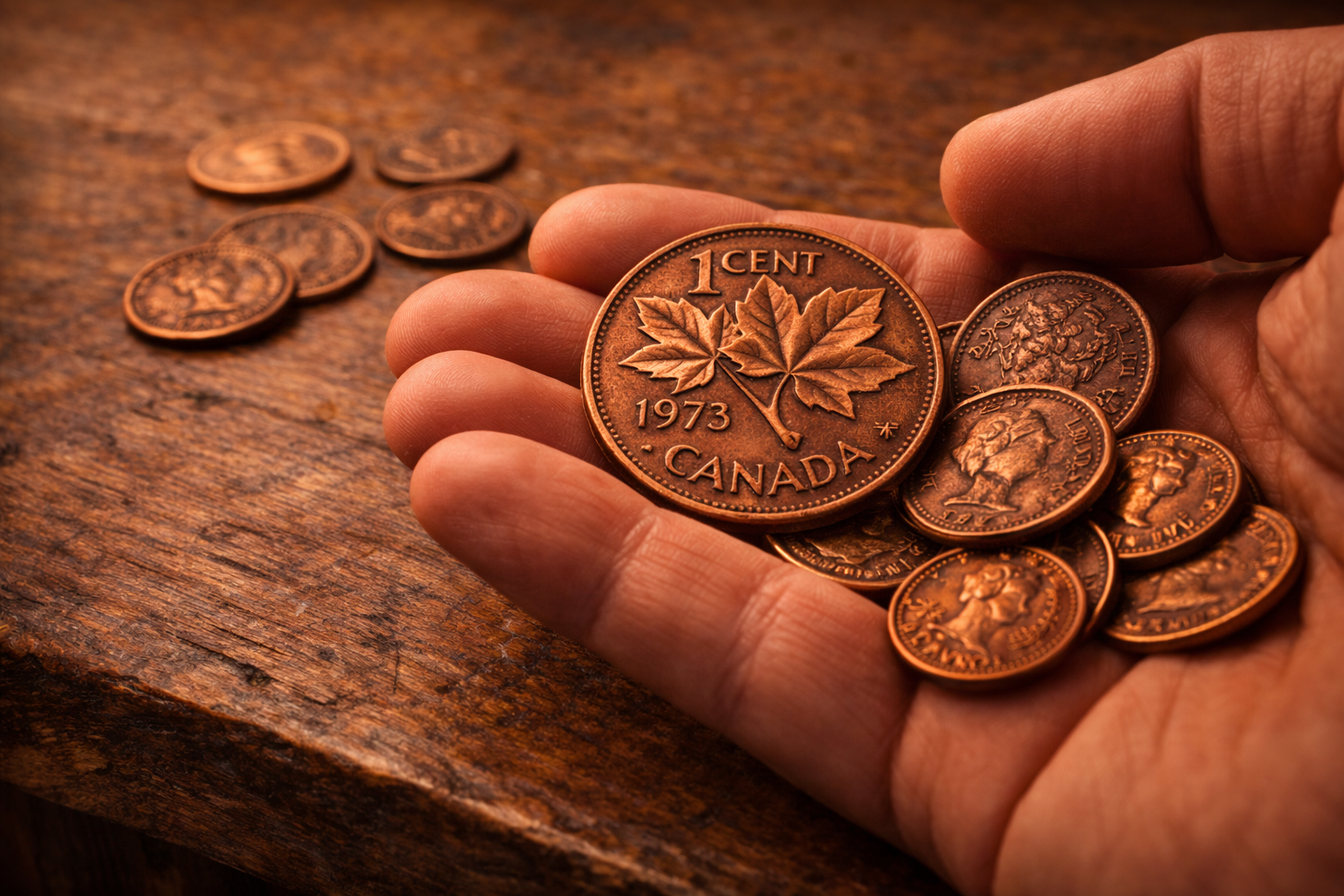
The design of the Canadian penny remained remarkably consistent for decades. On one side appeared the portrait of Queen Elizabeth the Second, representing the country’s connection to the monarchy. On the other side appeared the famous maple leaf design that symbolized Canada itself.
This combination made the penny both practical and symbolic. It was a working coin used in everyday purchases, but it also carried national imagery that Canadians recognized immediately.
The maple leaf design had already become deeply associated with Canada long before 1973. By the time this coin entered circulation, the leaf had appeared on Canadian coins for generations. That continuity helped make the penny feel familiar across the country.
Where Pennies Appeared in Everyday Transactions
Imagine walking into a Canadian grocery store in 1973. A shopper might purchase a loaf of bread, a carton of milk, and perhaps a small treat for a child. The final price could easily include cents that required pennies to complete the transaction.
Cashiers would quickly count out change. A nickel, a dime, perhaps a quarter, and then a few pennies to reach the exact amount. The process was routine and rarely noticed.
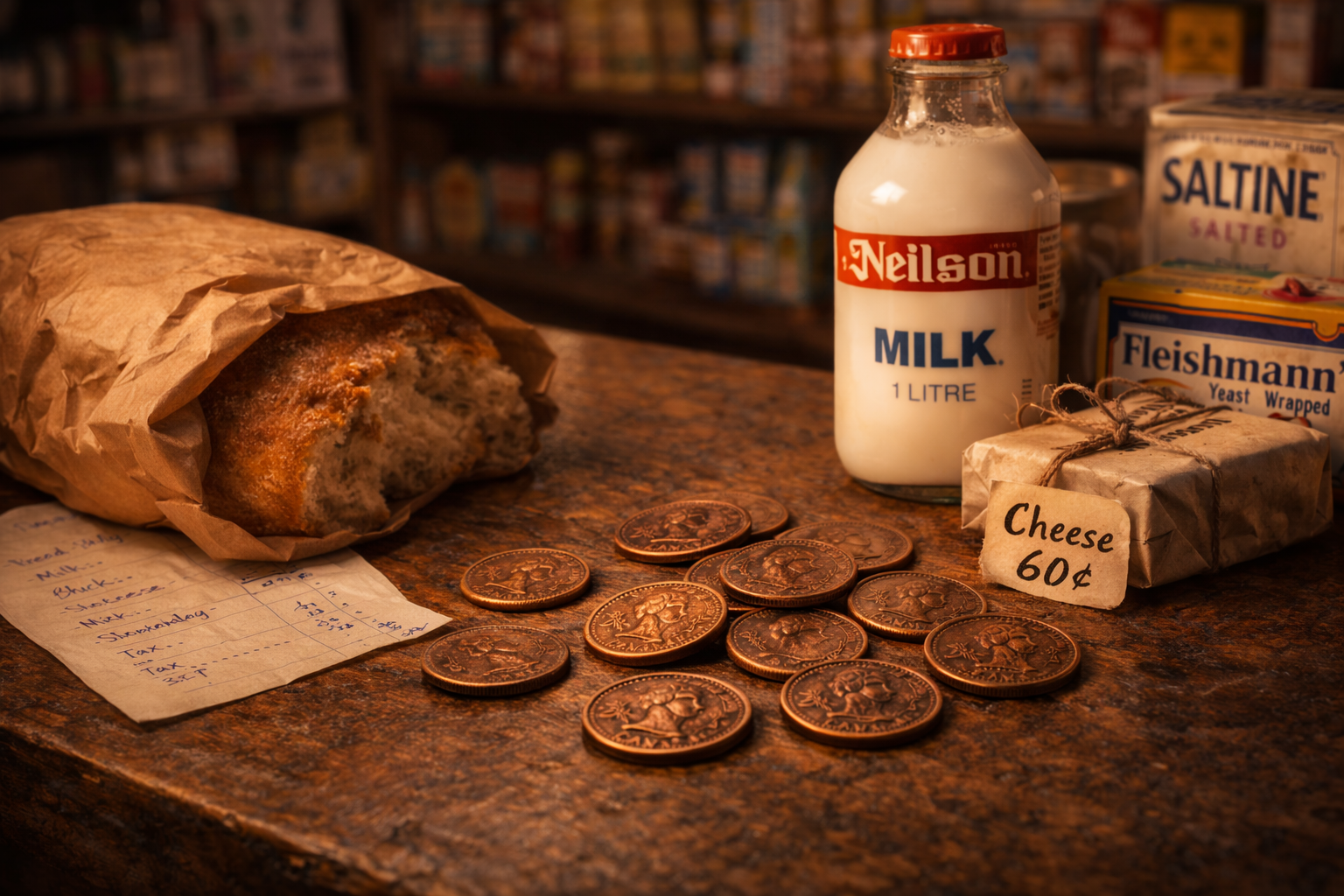
Pennies also appeared in other places. Vending machines sometimes accepted them along with larger coins. Parking meters occasionally required combinations that included pennies. Even charity boxes often filled with small copper coins dropped in casually by passersby.
Because pennies circulated constantly, they rarely stayed in one place for long. A coin minted in one region might travel across the country through thousands of transactions.
Pennies in Childhood Memories
For many Canadians the penny carries strong childhood memories. Children often collected pennies in small jars or piggy banks. The goal might be to save enough for a toy, a comic book, or a simple treat.
Counting pennies became a familiar activity. A child might spread them across a table and group them into small stacks. Each stack represented a tiny step toward a desired purchase.
These small rituals helped make the penny emotionally meaningful. Even though its monetary value was small, it represented effort and patience. Many adults still remember the sound of pennies dropping into a jar or being counted carefully on a kitchen table.
How the Royal Canadian Mint Produced Millions of Pennies
Behind the scenes the Royal Canadian Mint worked continuously to produce enough coins for the country’s needs. Pennies were among the most frequently minted coins because they circulated heavily and were easily lost or removed from circulation.
Production involved preparing metal blanks, striking them with dies, and inspecting the results before distribution. Although the design remained the same, each coin could show small differences due to the realities of mass production.
These small variations are explored in more detail in tiny design details on the 1973 Canadian penny. Observing these differences helps historians understand how coins were manufactured and how dies changed over time.
How Pennies Traveled Through the Country
Once produced, pennies entered circulation through banks and financial institutions. From there they spread quickly through everyday commerce. Stores received them as change from customers and redistributed them to the next buyer.
This constant circulation meant that a penny rarely stayed in one location. Over time a single coin could travel across cities and provinces through countless small transactions.
Because pennies moved so freely, they became one of the most widely recognized objects in Canadian daily life. People from different regions shared the same familiar coin.
Why the Penny Slowly Lost Its Importance
Over time economic conditions changed. Inflation gradually reduced the purchasing power of the penny. Prices increased, and the smallest coin began to feel less useful in everyday transactions.
Handling large numbers of pennies also became inconvenient for businesses. Counting them slowed transactions, and transporting them added logistical costs.
Eventually Canada decided to stop producing pennies for circulation. While older coins remained legal tender, new ones were no longer minted. This decision marked the end of an era in Canadian currency history.
Why Collectors Still Study the 1973 Penny Today
Today collectors look back at coins like the 1973 Canadian penny with curiosity. Not because they were rare when produced, but because they represent a time when small coins played a larger role in daily life.
Collectors often study design details, production differences, and circulation patterns. These investigations reveal how coins evolved and how people interacted with them over time.
The 1973 penny serves as a window into that period. It shows how a simple copper coin connected national symbolism with everyday economic activity.
Understanding the Penny in the Larger Canadian Story
Every coin tells a story that extends beyond its metal surface. The Canadian penny tells a story about commerce, design, and daily routines across generations.
During the early nineteen seventies the penny was not merely a leftover coin. It was part of how people measured value and completed transactions. It represented the smallest visible unit of everyday exchange.
Studying coins like the 1973 penny helps historians reconstruct how ordinary life once functioned. The coin may be small, but its story connects to millions of daily interactions across Canada.
Related HistoraCoin Stories
FAQ
Was the 1973 Canadian penny rare when it was minted
No. The coin was produced in large numbers and circulated widely across Canada. Its significance today comes from historical interest rather than original rarity.
Why did Canada stop producing pennies
The cost of producing and handling pennies eventually exceeded their practical value in everyday transactions. This led to the decision to end their production.
Did people actually use pennies often in the 1970s
Yes. Prices frequently included exact cents, so pennies were needed to complete transactions accurately in stores and markets.
Why do collectors still keep Canadian pennies
They represent an important part of Canadian monetary history and illustrate how everyday commerce once functioned.
What does the maple leaf on the penny represent
The maple leaf is a long standing national symbol of Canada and has appeared on Canadian coins for many decades.